Cybersecurity | | 21 min read
Analyst Workflow Automation ROI: How SOC Teams Prove Value

Key Takeaways
Time released is only the start of the value case
166 hours released, 58 credited
Eligibility, adoption, quality, and a 35 percent value capture assumption reduce the capacity that receives financial credit.
Year one ROI is negative 34.9 percent
Positive monthly operating value does not recover the full implementation and recurring cost within year one.
Failed gates receive no value
A scenario with more misses or weaker valid escalation receives zero capacity and avoided cost credit in the model.
Analyst workflow automation ROI is the verified value of a defined workflow after quality, adoption, rework, exceptions, and full cost are counted. Time saved alone is not ROI.
A credible business case follows one case population from arrival through analyst decision and outcome. It measures the work before and after automation, protects miss and escalation performance, joins every automated run to an eligible case, and records how released capacity is actually used. Only then should the team assign financial value.
This guide extends the broader workflow automation ROI guide into the security operations queue. Use the SOC Automation hub for the wider cluster, the main SOC automation guide for authority boundaries, the AI security alert triage guide for review design, and the build versus buy guide for sourcing decisions.
Prove one workflow before you price a program.
GS Consulting helps security teams define a bounded population, quality gates, evidence joins, full cost, and a finance ready value decision.
Plan a Bounded SOC PilotAnalyst Workflow Automation ROI: The Short Answer
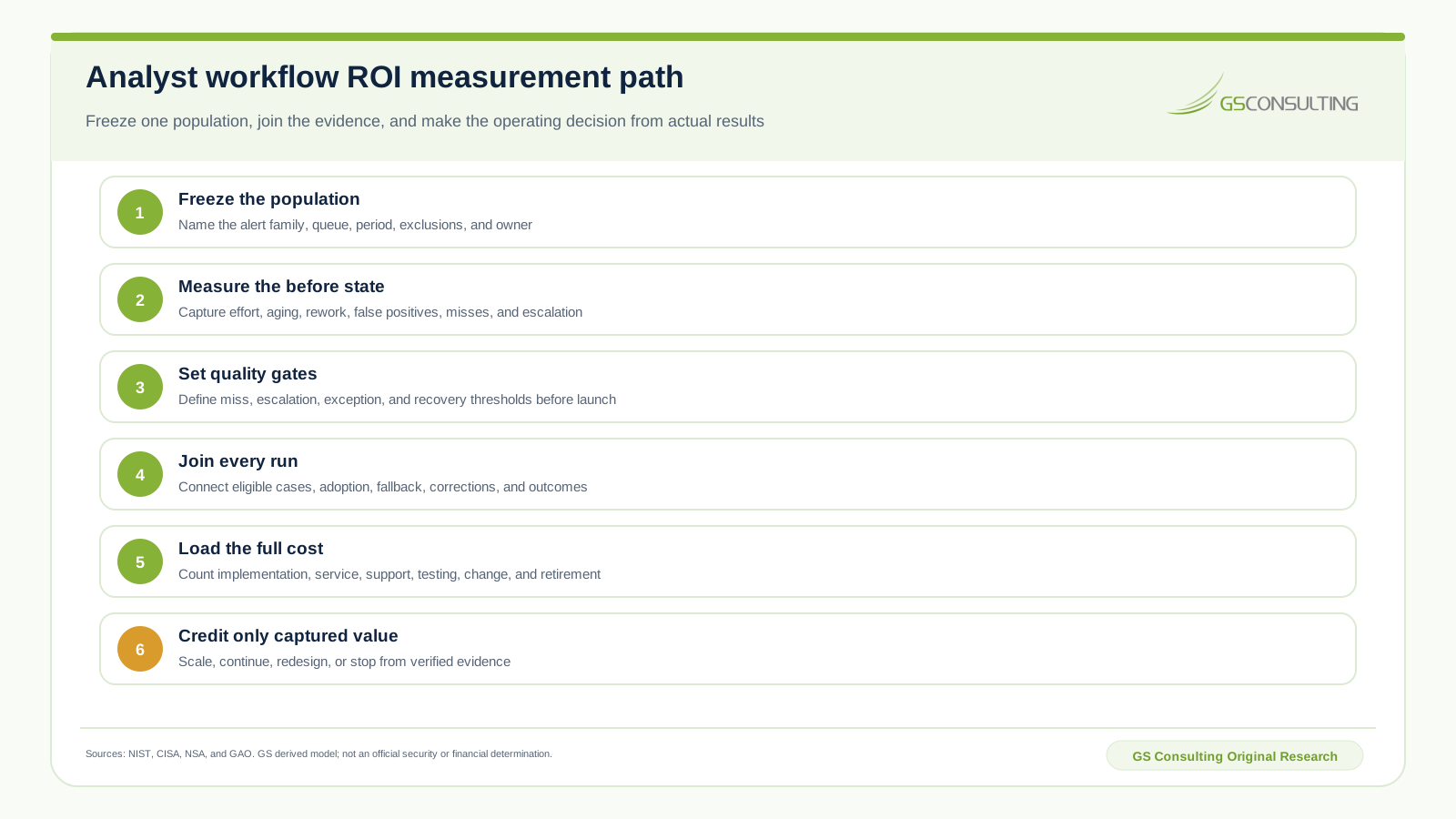
Measure ROI with a chain of evidence, not a claim about platform speed. Freeze the workflow and eligible population. Apply actual adoption. Compare direct analyst minutes, rework, false positive review, and exception recovery for the same cohort. Require miss and valid escalation gates to pass. Multiply released hours by an approved value capture share and loaded labor rate. Add only verified direct avoided cost. Then subtract implementation and recurring cost.
The resulting number should drive an operating decision: scale with controls, continue and verify, redesign the economics, or hold for quality. A result can be operationally useful and still have negative year one ROI. That is not a model failure. It is the information a sound decision needs.
Freeze the Measurement Boundary First
Begin with one workflow contract. Name the alert family or case type, source systems, queue, time period, severity range, exclusions, start event, stop event, responsible owner, and decision the pilot must support. Keep ineligible work visible. If the pilot accepts only clean, familiar cases while the baseline contains every difficult case, the comparison is invalid.
Separate eligibility from adoption. Eligibility asks whether a case matches the frozen contract. Adoption asks whether the automation actually ran and its output reached the analyst. A deployment can exist while adoption remains low because analysts bypass it, connectors fail, source data arrives late, or a manual path remains easier.
Use the same effort clock before and after. Direct handling time is only one part. Count returned cases, corrections, false positive review, exception investigation, recovery, and any downstream effort shifted to another team. Automation does not create value by moving work beyond the reporting boundary.
Public Guidance Supports Measurement Discipline, Not a Universal Benchmark
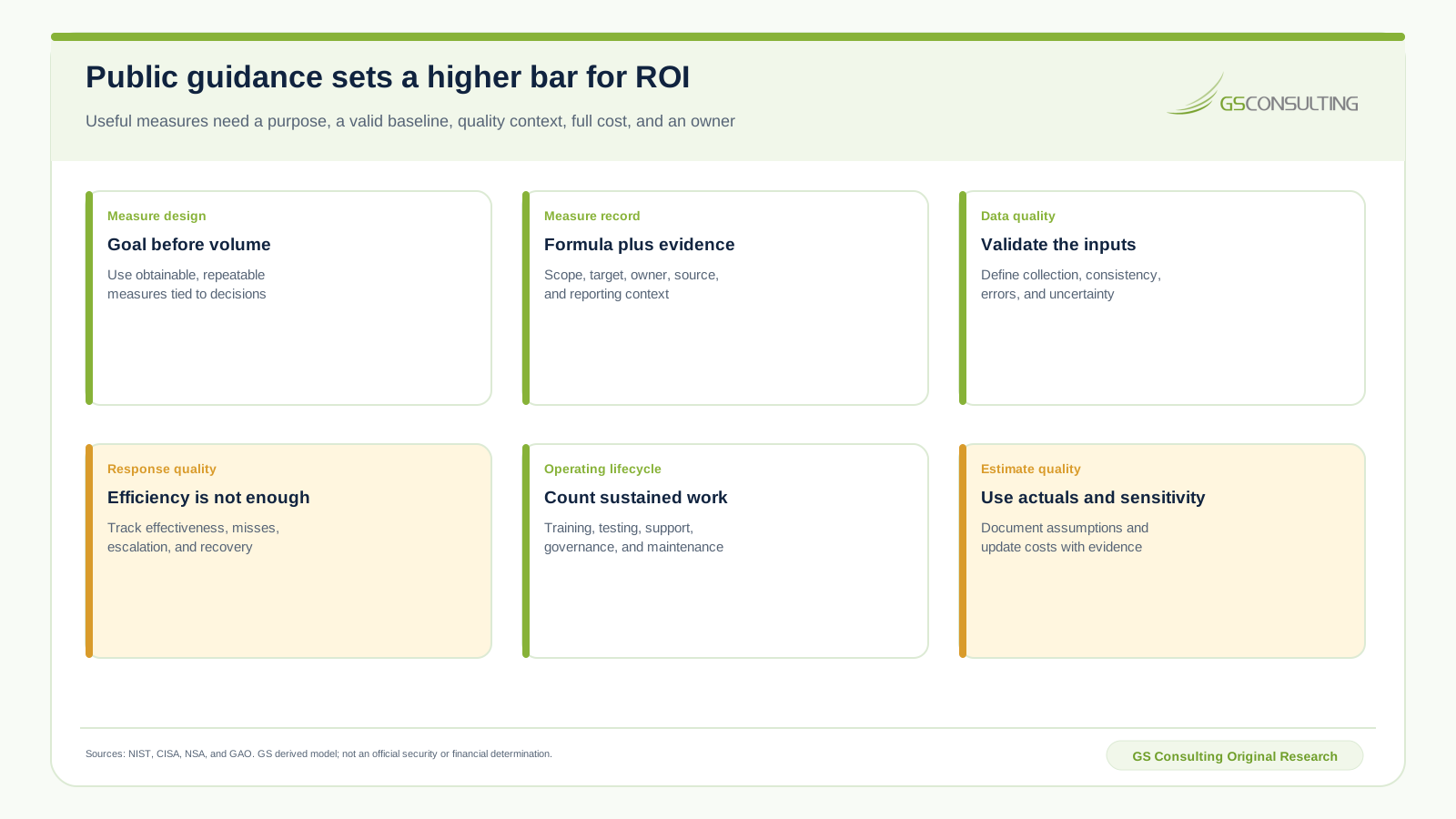
NIST SP 800-55 Volume 1 says useful security measures should be meaningful, obtainable, repeatable, and feasible. It also describes measure records with scope, formulas, targets, evidence, owners, data sources, and reporting context. Volume 2 adds program roles, periodic analysis, reporting, and the use of measures in resource decisions.
NIST SP 800-61 Revision 3 connects incident response across all six Cybersecurity Framework functions and addresses effectiveness, efficiency, prioritization, tracking, automation, and manual review. The CISA incident and vulnerability response playbooks reinforce baseline procedures, roles, evidence, tracking, coordination, recovery, and review.
The joint NSA guidance for SIEM and SOAR implementation addresses procurement, establishment, maintenance, scope, training, testing, cost, and human oversight. The GAO Cost Estimating and Assessment Guide supports a technical baseline, lifecycle cost, explicit assumptions, actual cost updates, sensitivity, risk, and management review.
None of these sources publishes a universal SOC productivity rate or automation payback target. They support the design of the measurement system. Local records must supply the values.
Original GS Research: The Analyst Workflow Value Capture Model
GS Consulting built an illustrative four case planning model. It tests a conservative capture case, an illustrative base, a verified capture case, and a quality decline case. The model combines demand, eligibility, actual adoption, before and after effort, queue age, rework, false positive review, exception recovery, misses, valid escalation, loaded labor, approved value capture, direct avoided cost, implementation cost, and recurring cost.
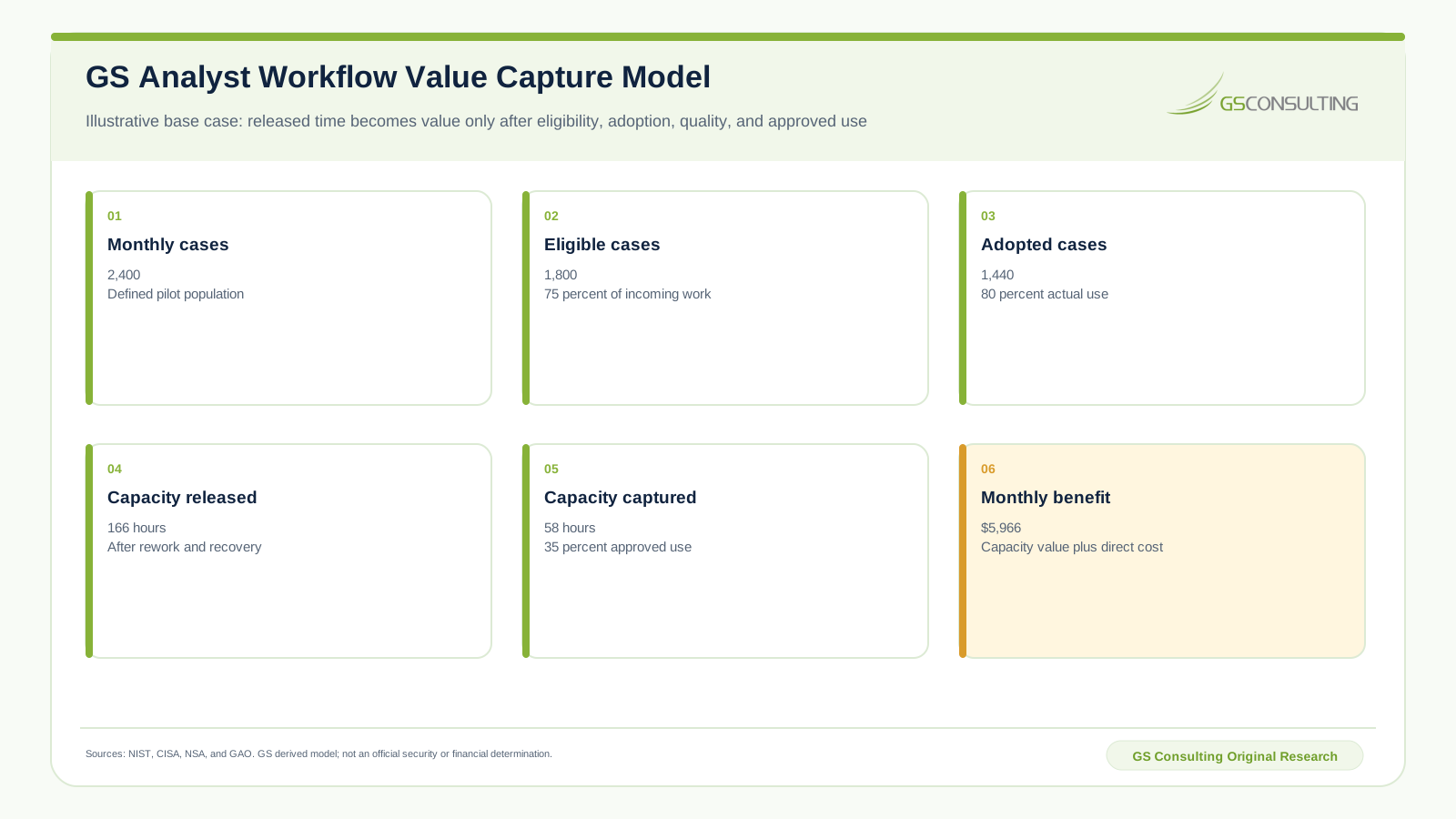
The base starts with 2,400 monthly cases. Seventy five percent are eligible and 80 percent of eligible cases use the automation, leaving 1,440 adopted cases. Baseline effort is 14.44 minutes per adopted case after direct effort, rework, and false positive review. After effort is 7.52 minutes when the same categories plus exception recovery are counted.
The cohort releases 166.08 hours per month. The model credits only 35 percent, or 58.13 hours, because the organization must name how that capacity improves staffing, contractor spend, backlog, coverage, or service. At an illustrative loaded rate of $82 per hour plus $1,200 of direct avoided monthly cost, gross benefit is $5,966 per month.
Year one cost is $110,000: $68,000 of implementation and $3,500 for each month of operation. Annual gross benefit is $71,598. Year one net value is negative $38,402, and ROI is negative 34.9 percent. Positive monthly operating value after recurring cost creates a 27.6 month simple payback. These are GS assumptions for method demonstration, not SOC benchmarks or promises.
Use a Formula That Preserves the Operating Truth
For each eligible and adopted case, calculate baseline minutes as direct effort plus expected rework minutes plus expected false positive review minutes. Calculate after minutes the same way and add expected exception recovery. Multiply each by adopted case volume and divide by 60. Gross capacity is baseline cohort hours minus after cohort hours, never less than zero.
Next apply a strict quality gate. If the gate passes, captured hours equal gross capacity multiplied by the approved value capture share. Monthly capacity value equals captured hours multiplied by the loaded labor rate. Add documented direct avoided cost only when the gate passes. Annual gross benefit is twelve months of that result.
Year one cost equals implementation plus twelve months of recurring cost. Year one ROI equals annual gross benefit minus year one cost, divided by year one cost. Simple payback divides implementation cost by positive monthly benefit after recurring cost. Keep the assumptions, formulas, evidence source, owner, and update date beside each value.
Protect Quality Before Crediting Value
Do not let a productivity measure outvote security quality. Set the miss threshold by severity before launch. Define valid escalation against reviewed criteria. Preserve disagreement and delayed discovery records so a late finding can update an earlier claim. A small sample may not observe a rare severe miss, so retrospective review must continue after the pilot decision.
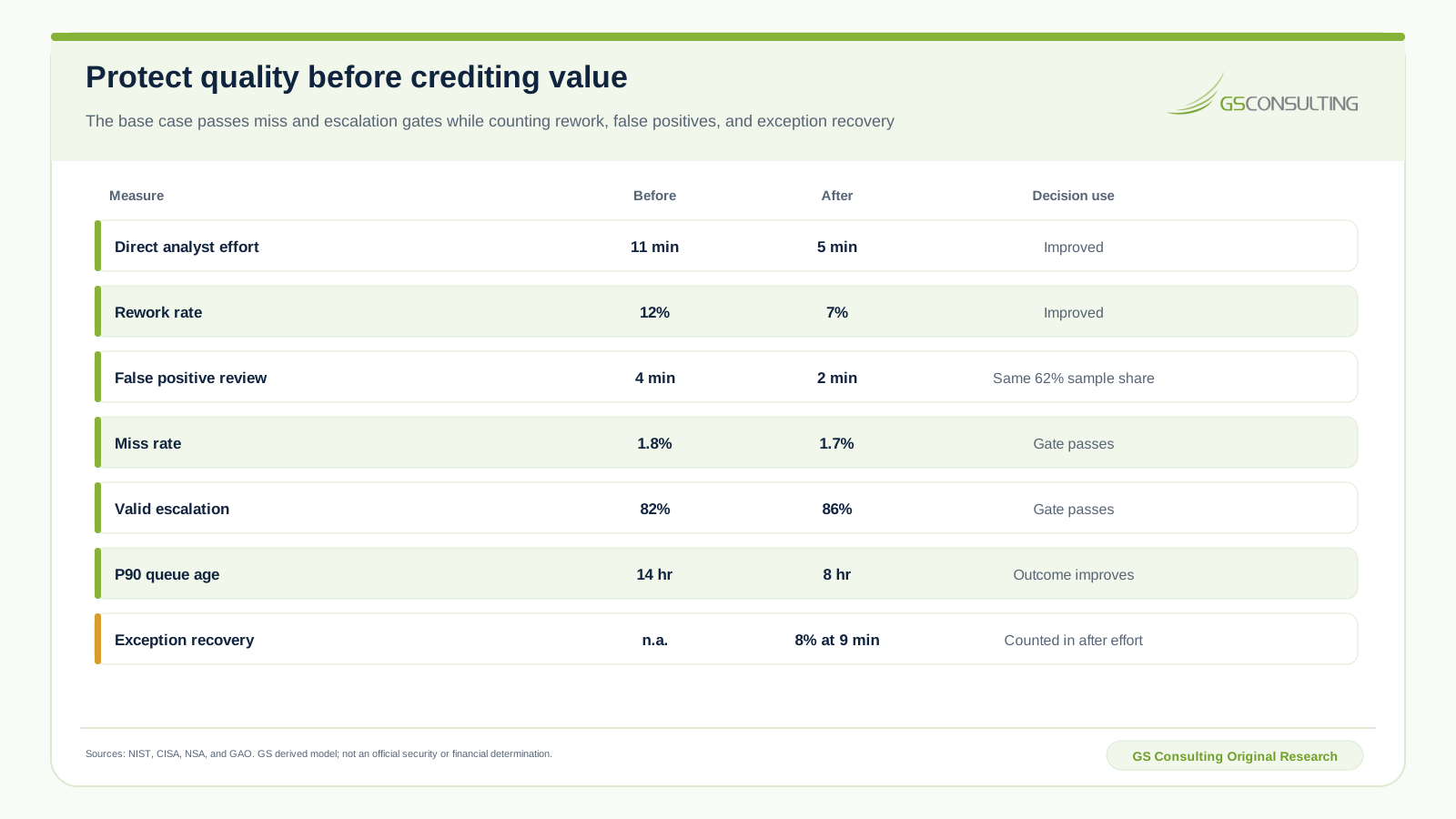
The base allows no increase in miss rate and no decline in valid escalation. Its miss rate changes from 1.8 to 1.7 percent, and valid escalation changes from 82 to 86 percent. Both gates pass. In the quality decline case, the miss rate rises to 2.1 percent and valid escalation falls to 79 percent. The model credits no capacity or direct avoided cost even though the calculated effort reduction is unchanged.
Quality gates need owners and adjudication rules. Detection engineering may own the sampled alert decision. Response leadership may own valid escalation. The workflow owner may own exceptions and recovery. A finance owner should not be asked to decide whether the security evidence is sound.
Measure Queue Age, Rework, and Exceptions Together
Average handling time can improve while important cases wait longer. Report a distribution such as the median and 90th percentile queue age by severity and workflow population. The illustrative base reduces the 90th percentile from 14 hours to 8. That outcome belongs beside effort, not inside it.
Record rework as both a rate and minutes. A returned case with a small correction is different from a case that must be investigated again. Preserve the reason, downstream impact, responsible workflow step, and final result. Otherwise a faster first pass can hide more expensive correction later.
Exceptions are after state labor. Include connector failures, missing data, stale context, model refusal, conflicting evidence, invalid output, routing failure, timeout, and failed recovery. The base assumes an 8 percent exception rate and 9 recovery minutes. Removing that line would overstate the benefit.
Load the Full Lifecycle Cost
Implementation cost includes discovery, workflow design, data preparation, integration, access, security review, testing, validation, documentation, training, rollout, and initial management. Recurring cost includes licenses, infrastructure, data, monitoring, support, quality sampling, incident handling, change, vendor management, assurance, and ongoing training.
Keep actual cost separate from avoided cost. A license retired, contractor task removed, or planned hire no longer needed may create direct avoided cost when finance accepts the evidence. Released analyst hours are different. They need an approved use such as reducing queue age, expanding detection coverage, completing threat hunts, lowering overtime, or absorbing demand without added staff.
Update estimates with actuals. If implementation runs longer, data charges rise, or exception support grows, the decision record should change. The purpose of the model is not to preserve the original business case. It is to preserve decision quality.
Test the Assumptions That Can Reverse the Decision
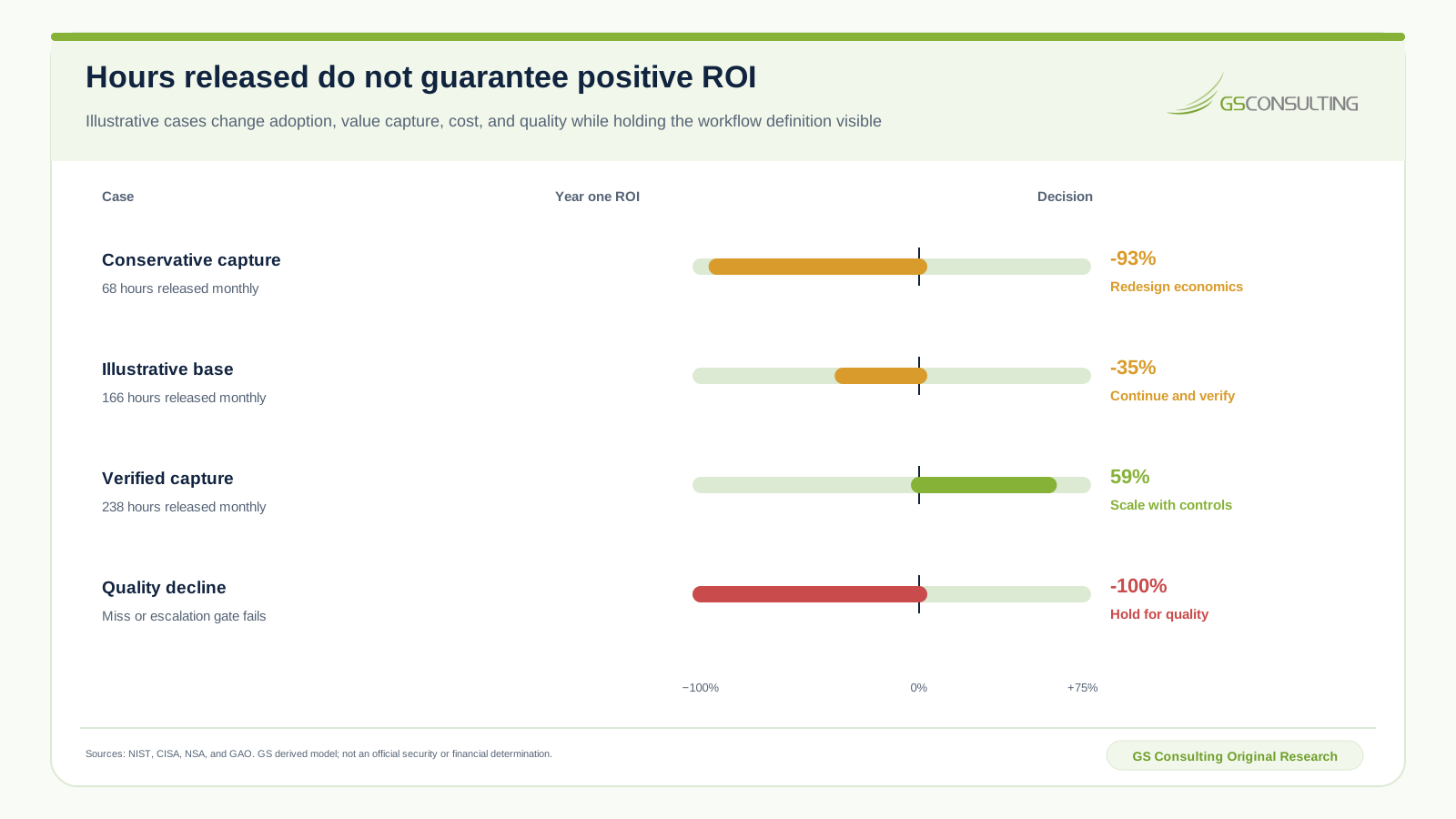
The conservative case releases 68 monthly hours but produces negative 92.7 percent year one ROI because adoption and value capture are low while cost is high. The base releases 166 hours and remains negative 34.9 percent. The verified capture case releases 238 hours, captures 55 percent of them, lowers cost, and reaches positive 59.3 percent.
The quality decline case is negative 100 percent because its gates fail and the model withholds all benefit. This treatment is deliberately strict. It prevents labor arithmetic from justifying a workflow that weakens the security decision.
Run sensitivity on case volume, eligibility, adoption, effort, rework, false positive share, recovery, labor rate, value capture, direct avoided cost, implementation cost, recurring cost, and quality. Show the values that cause the recommendation to change. An executive should be able to see which assumptions deserve verification next.
Use a Bounded SOC Pilot to Produce the Evidence
Choose one repeatable, reversible workflow with enough volume and reliable outcome review. Enrichment, grouping, context assembly, case creation, routing, and evidence preparation are often stronger starting points than automated containment. The cybersecurity workflow automation use cases compare bounded candidates.
Operate in observation mode first. Join eligible cases to run identifiers, automation output, analyst acceptance, override, correction, escalation, final outcome, and exception records. Then allow controlled use with the same evidence. Keep manual fallback visible. Do not remove the comparison path until the team can recover failures and reproduce results.
GS Consulting uses this bounded approach in its SOC assessment and pilot service. The private AI cyber analysis case study shows a related pattern of controlled preparation, structured analysis, validation, visible workflow state, human review, and approved delivery.
Six Ways the ROI Claim Fails
Platform time becomes savings. A vendor estimate replaces observed analyst work and local adoption. The average hides the queue. Faster mean handling masks old, important cases. False positives move outside scope. A cleaner pilot population receives credit as better automation.
Misses arrive after the report. Delayed findings never update the quality result. Exceptions disappear into support. Recovery effort sits outside the model. Capacity has no approved use. Released hours are called savings without a staffing or output decision.
Each failure breaks traceability. The repair is the same: preserve the population, event, evidence, owner, formula, assumption, and decision in linked records.
Build the Minimum Evidence Packet
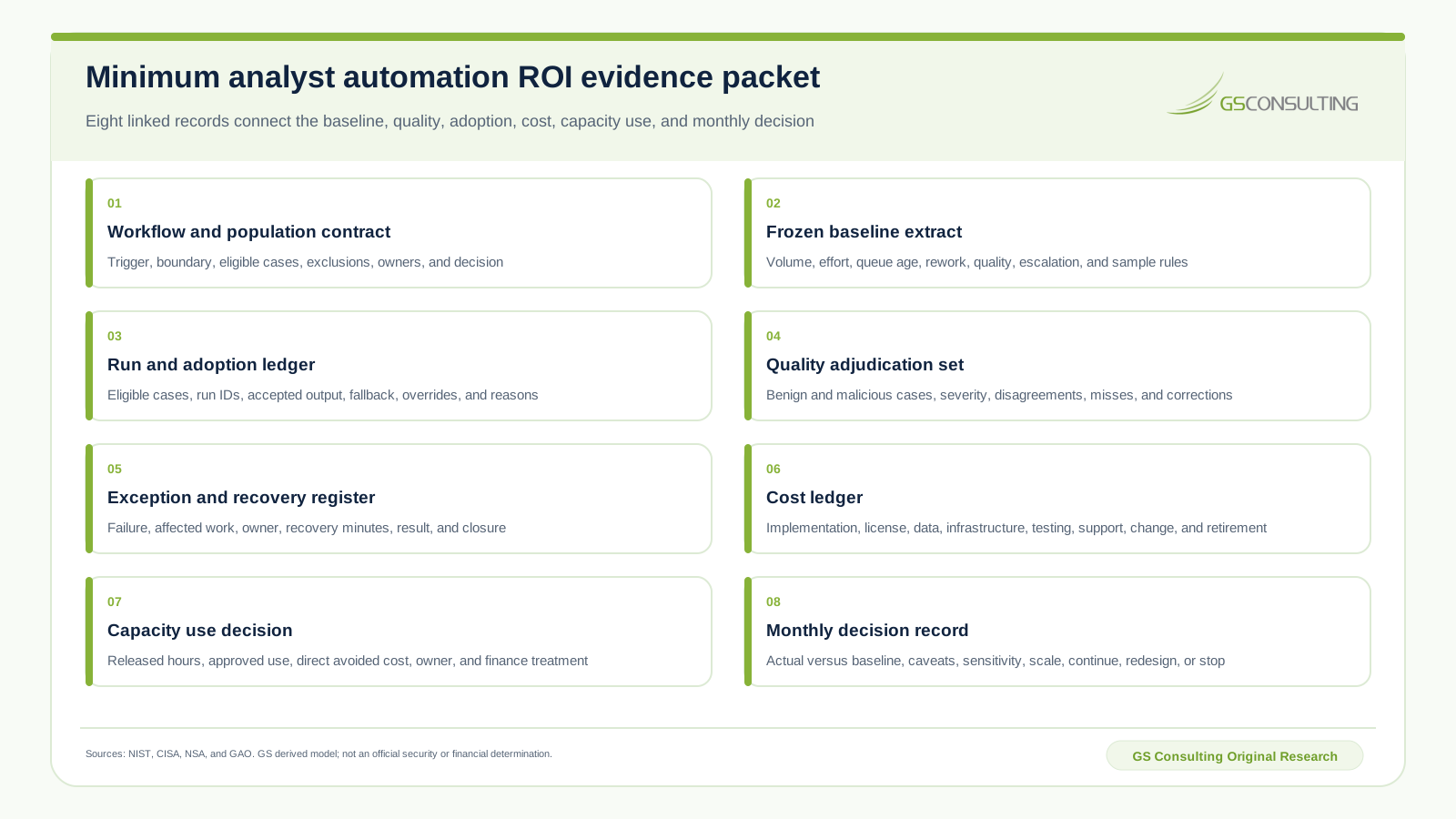
Keep a workflow and population contract, frozen baseline extract, run and adoption ledger, quality adjudication set, exception and recovery register, cost ledger, capacity use decision, and monthly decision record. Each record needs an owner, date, evidence location, version, and relationship to the others.
The monthly record should compare actuals with baseline and forecast. It should state missing data, late corrections, material population changes, sensitivity, and the next action. A decision to continue gathering evidence is valid when monthly operation is positive but year one recovery is incomplete. It should not be disguised as a scale approval.
A 90 Day Analyst Workflow ROI Plan
Days 1 through 30: contract and baseline
- Choose one workflow, freeze eligibility, exclusions, start and stop events, owners, and the decision date.
- Extract case volume, effort, queue age, rework, false positive review, misses, escalation, exceptions, and cost.
- Define quality gates, sampling, delayed finding treatment, recovery tests, and evidence retention.
- Ask finance to define loaded labor, direct avoided cost, and acceptable capacity uses.
Days 31 through 60: observation and controlled use
- Run the automation in observation mode and join every eligible case, run, output, analyst decision, and outcome.
- Test missing, stale, conflicting, duplicate, delayed, unavailable, and malformed inputs.
- Measure adoption, direct effort, rework, false positive review, exception recovery, queue age, misses, and escalation.
- Move only approved cases into controlled use with visible fallback and recovery.
Days 61 through 90: actuals and decision
- Replace model assumptions with observed results and actual implementation and recurring cost.
- Adjudicate quality, delayed findings, overrides, corrections, and severe exceptions.
- Document the use of released capacity and obtain finance treatment for any claimed dollar value.
- Scale with controls, continue and verify, redesign the economics, or hold for quality.
Sources, Method, and Caveat
- NIST SP 800-55 Volume 1 and Volume 2 for security measurement design and program operation.
- NIST SP 800-61 Revision 3 and the NIST Cybersecurity Framework 2.0 for response and outcome context.
- CISA federal incident and vulnerability response playbooks for operating records, roles, response, recovery, and review.
- NSA and international partner SIEM and SOAR guidance for platform lifecycle, cost, testing, maintenance, and human oversight.
- GAO Cost Estimating and Assessment Guide and the GAO Agile Assessment Guide for baselines, full cost, actuals, sensitivity, cycle time, and decision focused measures.
The public sources support measurement, response, lifecycle, and cost disciplines. They do not provide the scenario values or a universal automation benchmark. Every case, formula, threshold, failure mode, decision rule, and evidence packet item in the GS model is an analyst assumption for planning. Replace it with local operating, security, financial, contractual, and mission evidence. This article is not an official legal, audit, compliance, NIST, CISA, NSA, GAO, security, financial, or regulatory determination.
Make the scale decision from joined evidence.
Define one population, preserve quality, count every recovery minute, and credit only the capacity the organization can use.
Scope a SOC Automation PilotAnalyst Workflow Automation ROI FAQ
How do you calculate analyst workflow automation ROI?
Measure the same eligible workflow before and after, including direct effort, rework, false positive review, and exception recovery. Apply actual adoption, require quality gates to pass, credit only capacity with an approved use, add verified direct avoided cost, and compare annual benefit with implementation plus recurring cost.
Is analyst time saved a financial benefit?
Not automatically. Time released is capacity. It becomes financial value only when the organization documents how it changes staffing, contractor spend, backlog, coverage, service level, or another approved output. Otherwise report it separately from cash savings.
Which quality measures should a SOC protect during automation?
Protect miss rate by severity, valid escalation rate, rework, false positive adjudication, evidence completeness, exception recovery, and any outcome tied to the workflow. Set thresholds before the pilot and withhold value credit when a critical gate fails.
How long should a SOC automation ROI pilot run?
Run long enough to observe the defined population, operating exceptions, review outcomes, and delayed quality findings. A 90 day structure is often useful, but rare severe events may require continued retrospective monitoring.
What costs belong in a SOC automation ROI model?
Include design, integration, data, licenses, infrastructure, security review, testing, training, documentation, support, monitoring, exception handling, change, vendor management, assurance, and retirement. Separate implementation from recurring cost and update both with actuals.
When should a SOC stop or redesign an automated workflow?
Stop or redesign when quality gates fail, exceptions cannot be recovered safely, adoption stays weak, the population changes materially, costs exceed verified operating value, or runs cannot be traced to cases, outcomes, and owner decisions.
That is the standard: define the workflow, protect the security outcome, count the full operation, and credit only value the evidence can defend.