AI Workflow Automation | | 22 min read
AI Workflow Automation Requirements Guide

Key Takeaways
Requirements must make proof possible
Five domains score 97 or higher
Security, action authority, transaction integrity, recovery, and identity create the strongest pressure for early proof.
Every material statement gets a test
A requirement without a threshold, owner, evidence field, and failure response is a preference, not a release condition.
Change must replay acceptance
Model, prompt, data, tool, provider, and permission changes must identify and rerun the affected proof.
AI workflow requirements are not a feature list. They are the operating contract between the business outcome, the data, the model, the systems, the human decision maker, and the evidence.
A screen description can tell a builder what to display. It cannot say which record is authoritative, what the model may infer, when a person must decide, which action the service may take, how a failed transaction is reconciled, or what proof must survive a release. Those are the requirements that determine whether an AI workflow can operate.
Write the accepted outcome first. Then define the workflow states, data and system boundary, authority, controls, tests, failure response, operating measures, and change rules. Each material requirement needs an owner and a verification method. If the team cannot test it or observe it, the team has not finished specifying it.
The Enterprise AI Process Transformation hub connects requirements to process selection, orchestration, testing, governance, and production operations. Pair this guide with Business Process Mapping for AI Automation, AI Workflow Quality Assurance, and Transitioning AI Workflows from Pilot to Production. GS Consulting turns the specification into a controlled service through AI Workflow Automation.
Turn workflow intent into testable operating requirements.
GS Consulting helps teams map the process, define authority and data boundaries, write acceptance proof, and establish the operating records required for production.
Plan a Requirements WorkshopAI Workflow Requirements: The Short Answer
Start with one bounded workflow and one accepted business outcome. Record the trigger, user, current baseline, in scope work, excluded work, terminal result, and accountable owner. Map every state from intake through completion, exception, cancellation, and recovery. Define which source is authoritative for each field and which system may commit the final record.
Separate model output from action authority. A model may read, classify, draft, recommend, or propose. A person or deterministic control should approve consequential action until the evidence supports a broader boundary. Name the allowed tools, permissions, targets, parameters, volume, and time window. State what the workflow can never do.
For each material requirement, add a test case, threshold, test owner, required evidence, and response to failure. Then specify production measures, alert rules, support ownership, rollback, reconciliation, incident handling, and change triggers. This produces a requirements set that can guide design, acceptance, release, and operation.
The Requirements Document Is an Operating Contract
Most weak requirements documents describe a happy path. AI workflow requirements have to govern a service that can receive ambiguous input, produce uncertain output, call changing providers, cross system boundaries, and influence human decisions. The document must tell the team what is allowed when the normal path breaks.
Use one requirement set across product, engineering, data, security, risk, legal, records, and operations. Do not create isolated checklists that disagree about scope. The process owner owns the accepted result. The service owner reconciles the complete operating boundary. Specialists retain authority for the obligations and controls they own.
A useful document keeps four kinds of statements distinct:
- Business requirements define the user, trigger, accepted outcome, baseline, value, and service boundary.
- Functional requirements define workflow states, decisions, data movement, model tasks, system actions, approvals, and exceptions.
- Quality and control requirements define security, privacy, records, accuracy, grounding, fairness where relevant, resilience, misuse resistance, and human authority.
- Operating requirements define service levels, support, monitoring, capacity, cost, incident response, recovery, evidence, change, and retirement.
Keep assumptions beside the statement they affect. If a source is expected to be complete within fifteen minutes, say so and name the evidence. If a reviewer is expected to handle twenty cases per hour, measure it. Hidden assumptions become production incidents.
Public Sources Support Lifecycle Requirements
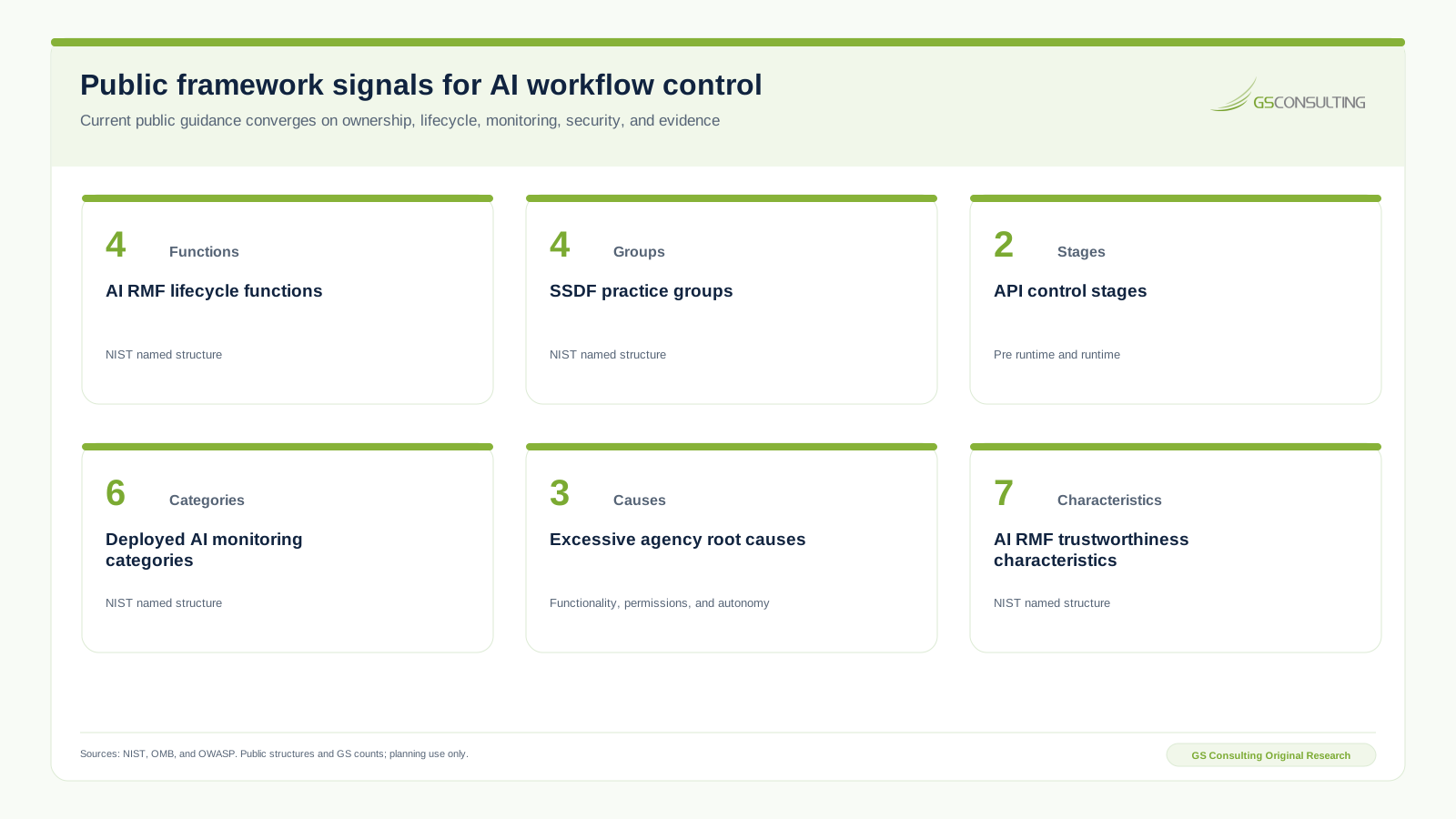
The NIST AI Risk Management Framework Core connects context, measurement, management, and governance across the lifecycle. Its Map function supports purpose, users, impacts, assumptions, and operating boundaries. Measure supports representative tests, thresholds, and deployment like evaluation. Manage connects results to treatment, monitoring, recovery, change, and retirement decisions. AI RMF 1.0 is voluntary and is being revised. It is not a certification.
NIST SP 800-218 organizes secure software work around preparing the organization, protecting software, producing well secured software, and responding to vulnerabilities. NIST SP 800-228 Update 1 addresses API risks and controls before and during runtime. These publications do not write the workflow requirements for you. They show why secure delivery and interface behavior must be specified.
The OMB M-25-22 memorandum emphasizes clear requirements, cross functional engagement, interoperability, data controls, documentation, performance tracking, and lifecycle risk management for covered federal acquisition. The OMB M-25-21 memorandum addresses testing, monitoring, human oversight, feedback, remedies, and fail safe practices for covered agency use. These memoranda do not automatically govern every contractor workflow. Contract terms and agency direction determine applicability.
OWASP guidance on excessive agency identifies excessive functionality, permissions, and autonomy as root causes. Its prompt injection guidance reinforces the need to treat untrusted input as capable of influencing model behavior. OWASP is useful security guidance, not a regulatory determination or certification.
Original Research: GS AI Workflow Requirement Proof Priority Index
Security, misuse, and prompt injection score 100. Action authority, transaction integrity, failure recovery, and identity each score 97. Audit evidence scores 96. These are the requirement domains that should receive measurable acceptance proof before connected build work expands.
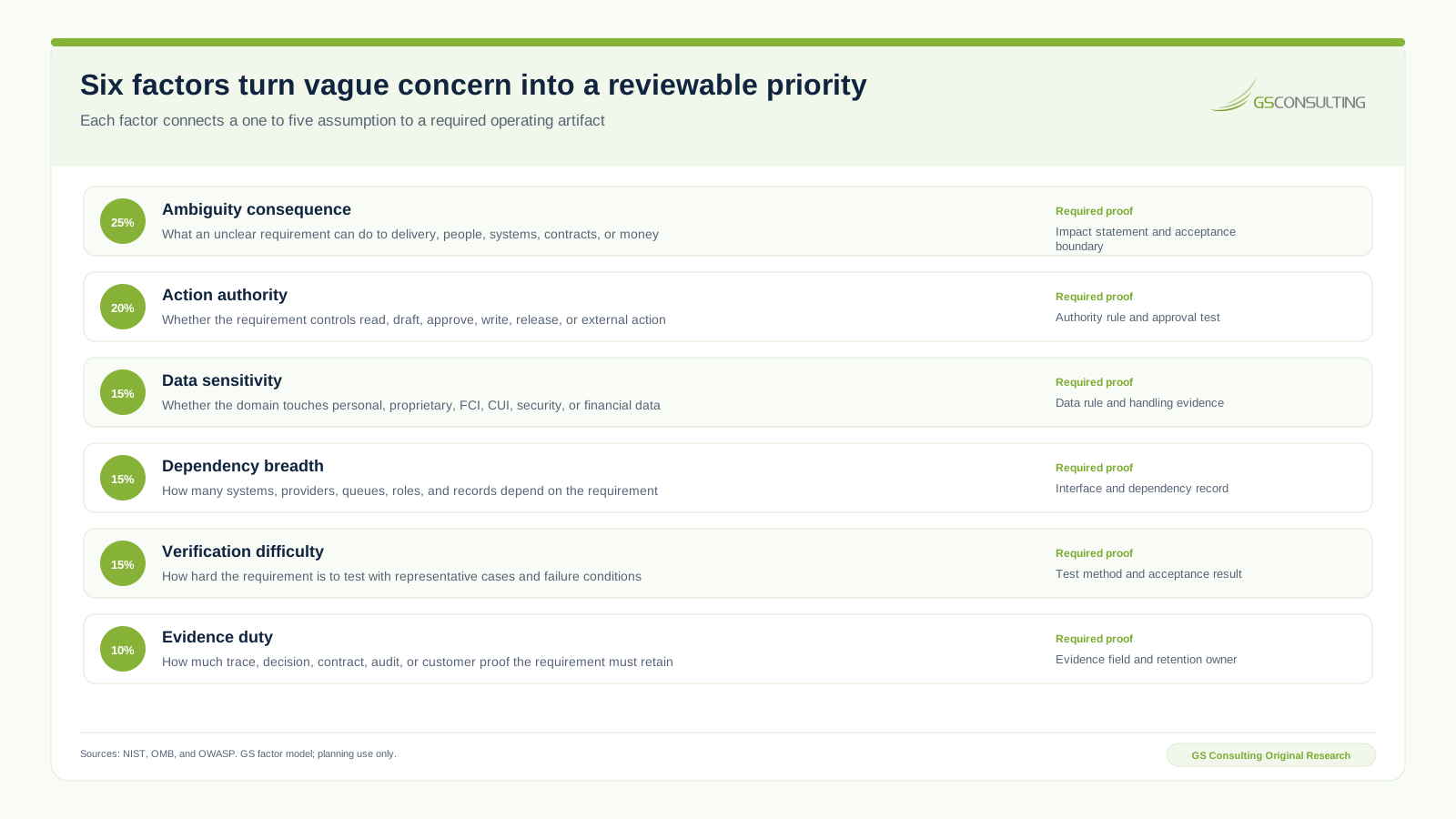
GS Consulting rated twelve requirement domains from one to five across ambiguity consequence, action authority, data sensitivity, dependency breadth, verification difficulty, and evidence duty. Base weights are 25, 20, 15, 15, 15, and 10 percent. The weighted result is normalized to a zero to 100 pressure score.
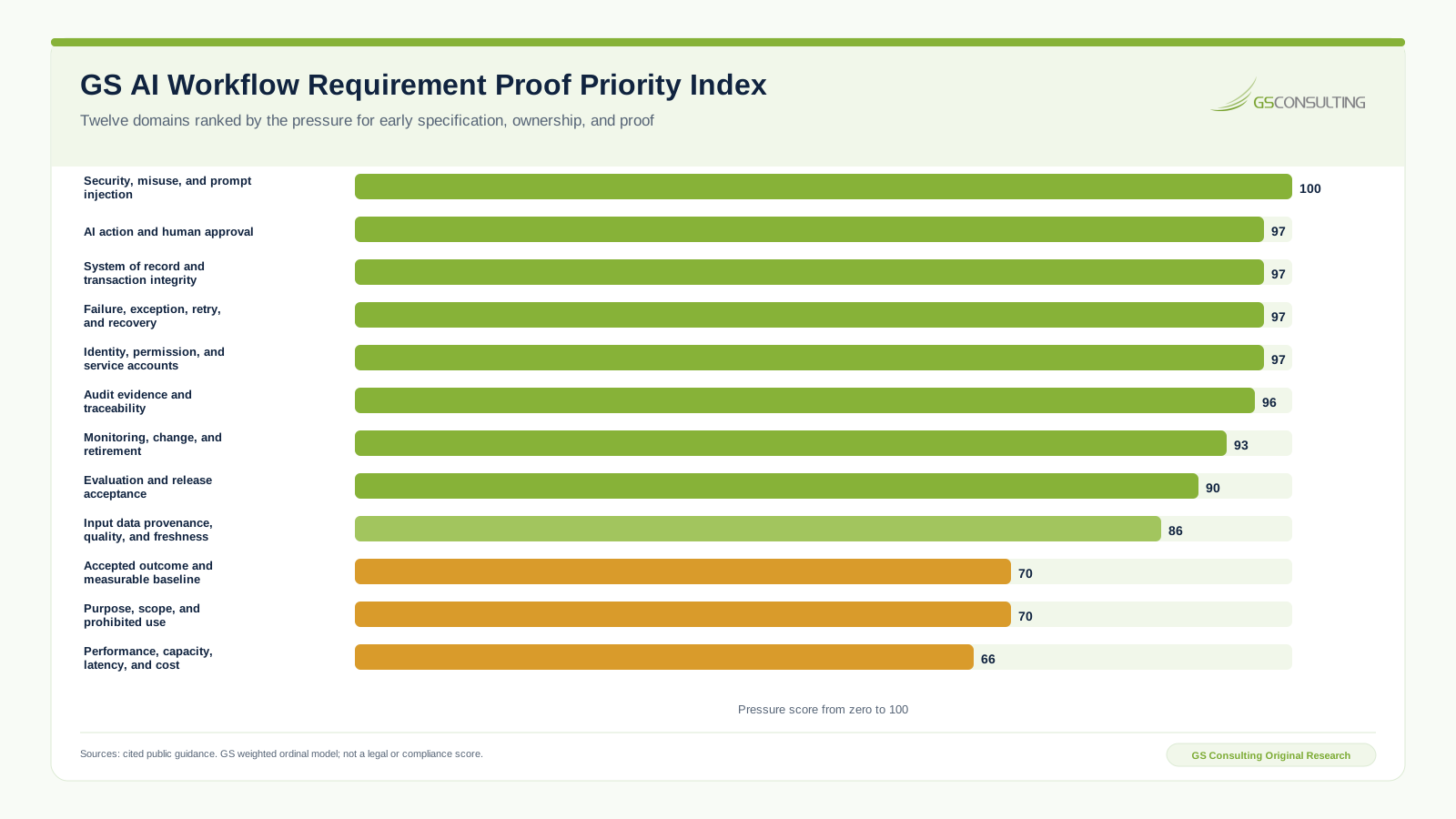
Monitoring, change, and retirement score 93. Evaluation and release acceptance score 90. Input data provenance, quality, and freshness score 86. Accepted outcome and measurable baseline score 70. Purpose, scope, and prohibited use score 70. Performance, capacity, latency, and cost score 66.
Those lower scores do not mean the domains are optional. The model asks where unclear requirements create the strongest combined pressure for early proof. A team still needs an accepted outcome and bounded purpose before it can rate the other domains. The score helps sequence depth and review.
The alternate case moves five percentage points from action authority to ambiguity consequence. No domain moves more than two points. The order remains stable. That sensitivity check tests the arithmetic, not the truth of an analyst rating. Replace every rating with evidence from the actual workflow.
This is a GS Consulting derived planning model based on cited public sources and documented assumptions. It is not an official legal, audit, contract, compliance, NIST, OMB, OWASP, security certification, or regulatory determination.
Twelve Requirement Domains
Use the domains as a coverage map, not twelve disconnected chapters. The outcome gives the workflow a reason to exist. Purpose and prohibited use set the boundary. Data and system contracts make inputs and commits explicit. Model and quality criteria define acceptable behavior. Authority rules govern what can happen next.
- Accepted outcome and baseline: user, trigger, current performance, accepted terminal result, value measure, and exit condition.
- Purpose, scope, and prohibited use: allowed users, requests, environments, records, decisions, and explicit exclusions.
- Input data provenance, quality, and freshness: authoritative sources, field definitions, class, access, lineage, validation, timing, and retention.
- System of record and transaction integrity: read source, write target, identifier, version, duplicate control, commit rule, and reconciliation.
- AI action and human approval: read, draft, recommend, approve, write, release, and external action boundaries.
- Identity, permission, and service accounts: user identity, workload identity, least privilege, secrets, separation, expiry, and emergency access.
- Security, misuse, and prompt injection: trust boundaries, untrusted content, allowed tools, output handling, abuse cases, and mandatory stops.
- Evaluation and release acceptance: representative cases, expected results, thresholds, reviewers, environments, and retained results.
- Audit evidence and traceability: source anchors, versions, decisions, actions, errors, approvals, exceptions, and retention ownership.
- Failure, exception, retry, and recovery: timeout, duplicate, partial commit, provider failure, bad input, queue overflow, rollback, and reconciliation.
- Monitoring, change, and retirement: operating signals, alert owners, release triggers, review intervals, rollback, restrictions, and end of service.
- Performance, capacity, latency, and cost: volume, concurrency, response time, queue age, availability, provider limits, budget, and service levels.
Write Every Material Requirement the Same Way
A good requirement is small enough to test and complete enough to operate. Use a stable identifier. State the condition and required behavior. Name the rationale, owner, source, priority, acceptance method, evidence location, and change trigger. Avoid words such as appropriate, robust, seamless, accurate, secure, fast, and reasonable unless the document defines the measure.
For example: when an invoice total differs from the purchase order by more than the approved tolerance, the workflow must stop before posting, route the case to the accounts payable exception queue, preserve the source documents and comparison result, and record the reviewer decision. Acceptance requires representative tests for exact match, allowed tolerance, over tolerance, missing order, duplicate invoice, and unavailable system of record.
That statement identifies state, threshold, action boundary, queue, evidence, and test cases. “Flag unusual invoices” does not. Precision is not bureaucracy. It is how the owner prevents code, policy, and operations from making different assumptions.
Bind Data, Identity, and Action Authority
Draw the workflow boundary before choosing a model or orchestration product. Mark trusted and untrusted inputs. Name each data class, source owner, permitted use, freshness rule, validation, storage location, retention period, and outbound destination. Identify the authoritative record at every decision point.
Use separate identities for people, services, models, tools, and external providers. State what each identity can read and change. A service account with broad write access can erase the value of a careful prompt. Limit permission to the smallest action, target, parameter range, time, and volume the workflow requires.
Write authority as verbs. Read is not draft. Draft is not recommend. Recommend is not approve. Approve is not write. Write is not release. Public release, payment, access change, production change, contractual commitment, and a decision affecting a person usually need explicit accountable authority.
Human review is a requirement only when the person has the information, time, skill, independence, and system authority to reject or correct the result. Clicking approve under queue pressure is not a control. Specify the review inputs, reason codes, escalation, workload limit, and evidence.
Turn Every Important Claim into Acceptance Proof
Accuracy alone is too narrow. Test the complete workflow. Use representative normal cases, difficult cases, missing data, contradictory records, malicious input, dependency failure, timeouts, duplicates, partial commits, permission denial, provider changes, human disagreement, and recovery.
Define the test population and expected result before running it. A threshold without a sample can hide weak coverage. A sample without an accepted threshold can invite a release decision after the result is known. Preserve failed cases, reviewer disagreements, exclusions, and remediation, not only the final pass rate.
Acceptance should cover:
- business outcome and task completion;
- source grounding and data handling;
- model quality and known error patterns;
- permission, action, and human decision boundaries;
- security and misuse resistance;
- transaction integrity and system reconciliation;
- failure detection, containment, retry, rollback, and recovery;
- latency, capacity, availability, cost, and support;
- trace, evidence, records, and reviewability.
Connect each acceptance result to release authority. A miss should produce a defined response: fix, restrict, add review, lower volume, change the design, accept a documented risk through the proper authority, or stop.
Specify Failure Before Production Finds It
For every state, ask what can fail before entry, during processing, after an action, and during recovery. Define timeout, retry limit, duplicate control, dead letter handling, partial commit response, queue ownership, user message, system reconciliation, and escalation. Never let the model invent a recovery path.
Separate a business exception from a technical incident. A missing approval is a workflow exception. A compromised service account may be a security incident. A provider outage may create both. Each path needs its own owner, severity, communication, evidence, and return to service decision.
Production requirements must define the signals that keep the accepted boundary visible. Measure result quality, exception rate, override rate, queue age, action volume, permission denials, provider errors, latency, cost, reconciliation gaps, security events, and user harm or complaint signals where relevant. Set alert owners and review cadence before release.
Use Continuous Monitoring for AI Workflows to design production signals and Human in the Loop AI Workflow Design to make review authority real.
Make Every Change Replay the Right Tests
A traceability matrix links the requirement to design element, code or configuration, test case, result, exception, approval, and change trigger. The matrix is not a compliance ornament. It tells the release owner what proof must be replayed after a change.
Track versions for models, prompts, policies, retrieval sources, data schemas, tools, APIs, providers, permissions, thresholds, evaluation sets, and operating procedures. A change to any one of them may invalidate a different part of acceptance. The matrix makes that dependency explicit.
Use stable identifiers in tickets, test records, release records, monitoring rules, and incident reviews. Keep the plain language requirement readable. The identifier connects evidence without turning the document into code.
Run Discovery Around Decisions, Not Features
Start with the people who perform, receive, review, support, secure, and reconcile the work. Bring actual forms, records, queue data, error logs, policies, contracts, and examples. A workshop built from imagined process steps will miss the exceptions that consume operating time.
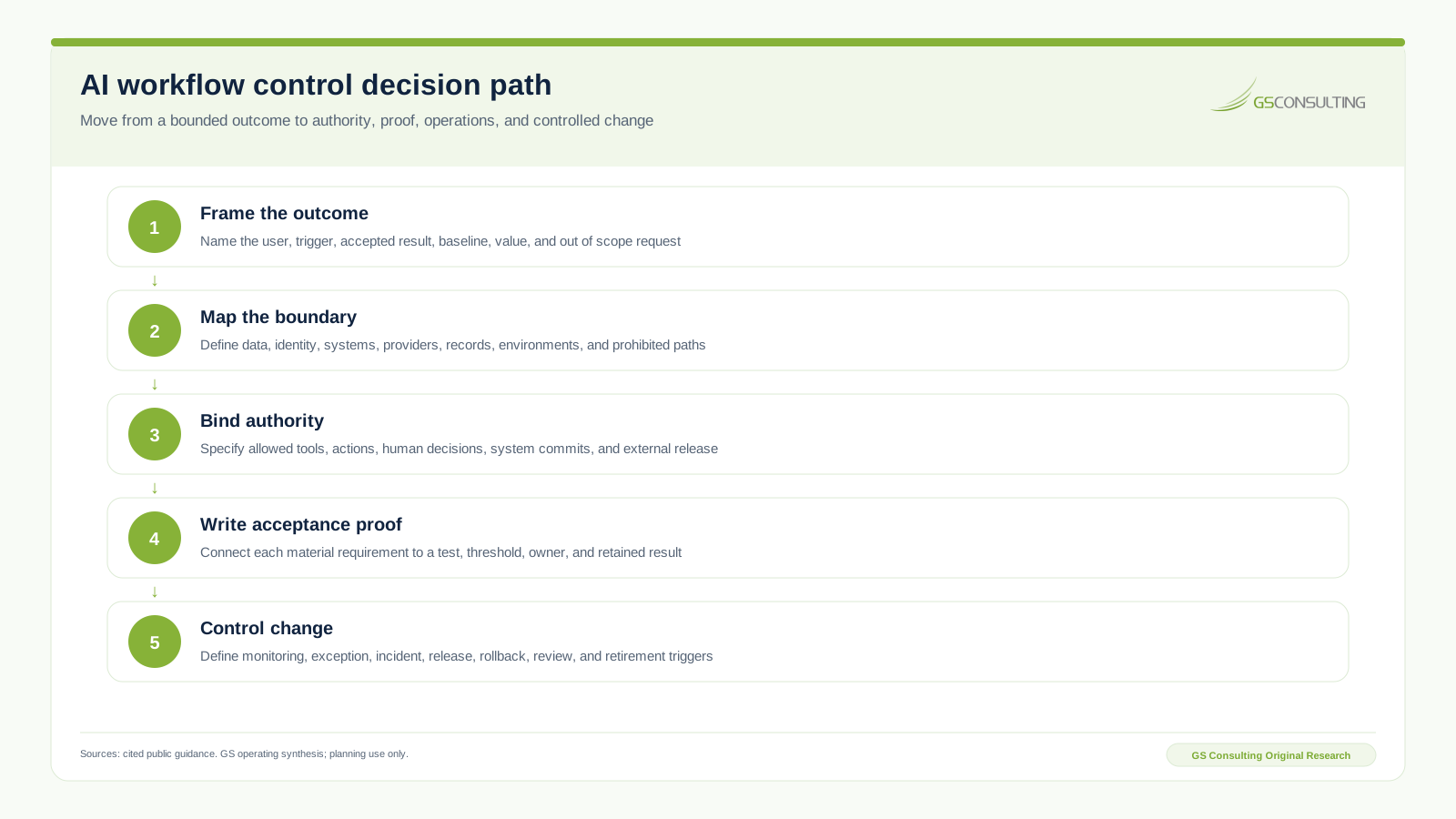
Use five sessions. Frame the outcome and baseline. Map states, data, systems, and exceptions. Bind identity and action authority. Write acceptance cases and thresholds. Finish with operating measures, evidence, release, change, and retirement. Assign unresolved decisions to named authorities with dates.
Do not ask stakeholders what AI should do in the abstract. Ask which decision they make, what evidence they use, what can go wrong, what they can reverse, and what they must explain later. Concrete work produces concrete requirements.
Six Ways Requirements Work Fails
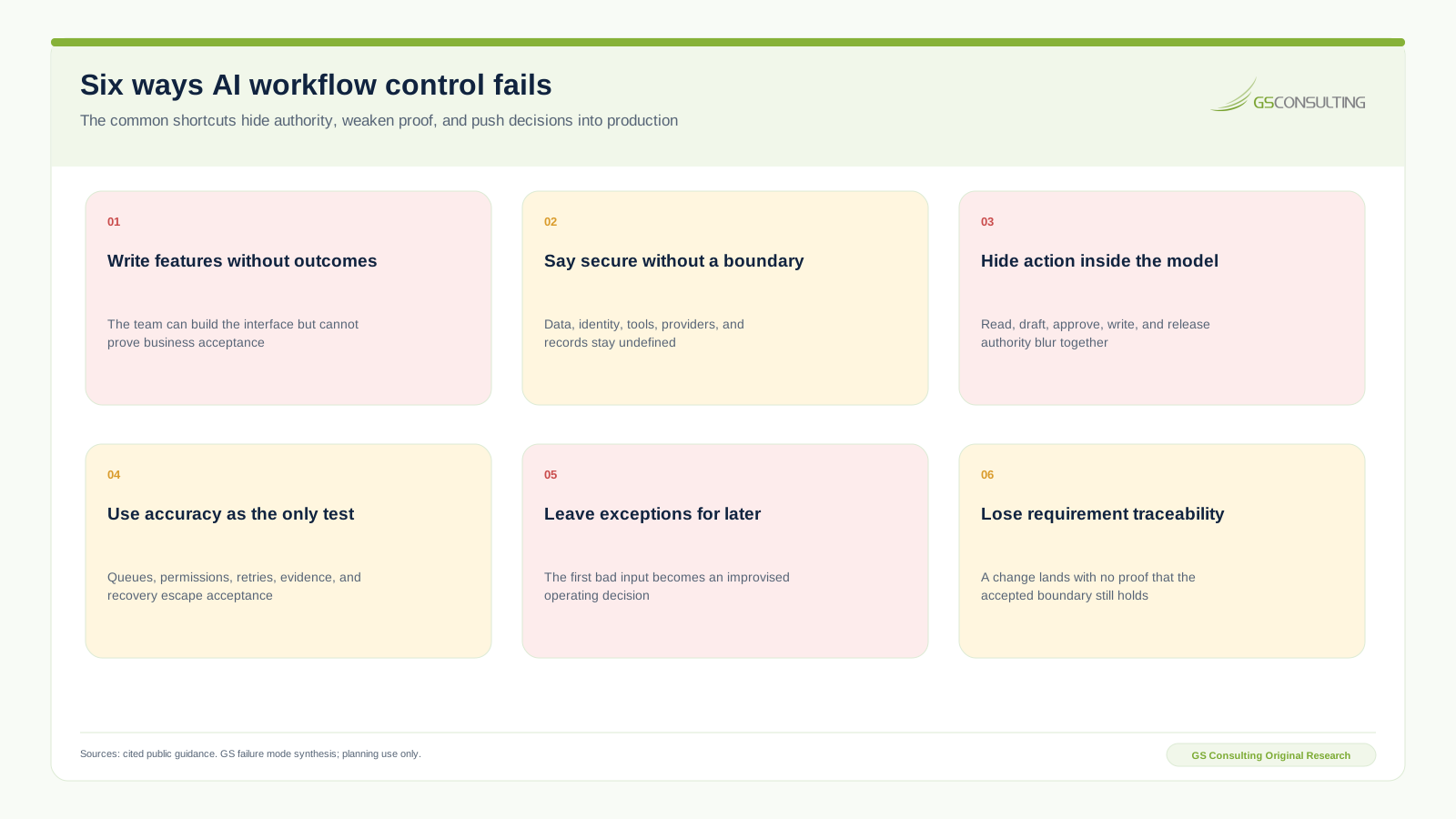
Feature lists fail because they describe what the interface can do without defining an accepted business result. Security adjectives fail because they do not name data, identities, tools, providers, permissions, or evidence. Model centric requirements fail because they hide action authority inside a technical component.
Accuracy only testing misses queues, permissions, retries, records, and recovery. Happy path designs push the first bad input into an improvised operating decision. Weak traceability lets a model, prompt, source, or connector change land with no proof that the accepted boundary still holds.
The correction is straightforward: write the state, owner, threshold, authority, test, evidence, and failure response. If one is missing, the requirement is not ready.
Keep the Minimum Evidence Packet
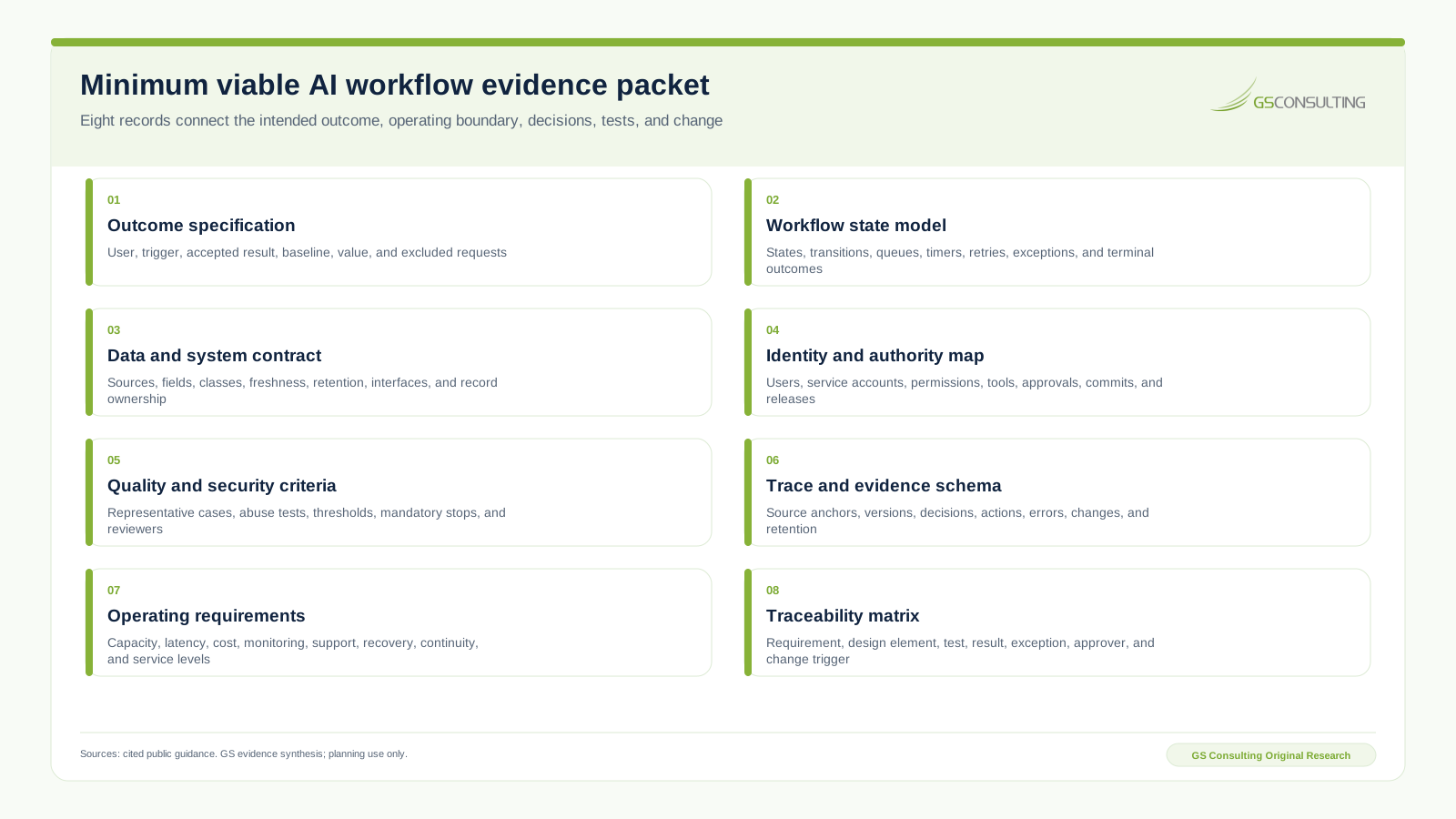
Keep the outcome specification, workflow state model, data and system contract, identity and authority map, quality and security criteria, trace and evidence schema, operating requirements, and traceability matrix. Give each record an owner, version, approval, evidence link, and next review trigger.
The packet should let a reviewer answer what the workflow was intended to do, which boundary was approved, which tests supported release, which exceptions remain, who accepted them, what the service is doing now, and whether a recent change invalidated prior proof.
A Practical Requirements Plan
During the first ten business days, define the workflow outcome, baseline, owner, states, data sources, systems, users, actions, exceptions, and prohibited use. Gather representative records and failure examples. Resolve any question that changes the architecture or approval path.
During the next ten business days, write the requirement set, authority map, test cases, thresholds, evidence schema, operating measures, support model, and traceability matrix. Challenge the set with security, data, risk, records, legal, and operations owners as applicable.
Before connected testing, prove identity, permission, data, action, transaction, and failure boundaries. Before pilot use, complete representative quality, misuse, recovery, and human review tests. Before production, approve the operating requirements, monitoring, evidence, incident path, rollback, change control, and next review date.
The operating standard is simple: no material workflow behavior enters production without a named owner, explicit authority, measurable acceptance proof, a recoverable failure path, and evidence that can survive the next change.
Research Sources and Method
The research package separates public observations, GS analyst assumptions, workbook formulas, sensitivity results, and figure data. Sources were accessed September 1, 2026.
- NIST AI Risk Management Framework Core
- NIST AI RMF Playbook Map Function
- NIST AI RMF Playbook Measure Function
- NIST SP 800-218
- NIST SP 800-228 Update 1
- OMB M-25-21
- OMB M-25-22
- OWASP Excessive Agency
- OWASP Prompt Injection
Planning caveat: The GS index is a derived planning tool. It does not establish legal duties, determine contract coverage, certify security, replace professional review, or predict failure. Organizations should validate sources, assumptions, thresholds, and decisions against their own obligations and operating evidence.
Frequently Asked Questions
What are AI workflow requirements?
AI workflow requirements define the accepted outcome, workflow states, data and system boundaries, model behavior, human authority, allowed actions, security controls, quality thresholds, failure response, operating measures, evidence, and change rules for one bounded workflow.
How are AI workflow requirements different from software requirements?
They include normal software behavior and service qualities, but they also specify uncertain model behavior, source grounding, evaluation cases, human judgment, action authority, misuse controls, production monitoring, and the evidence needed to explain decisions and changes.
What should be written before an AI workflow pilot?
Before a pilot, write the outcome and baseline, users and triggers, in scope and prohibited uses, workflow states, data sources, permissions, human decisions, allowed actions, acceptance tests, failure paths, evidence fields, pilot limits, and the decision rule for expansion or shutdown.
How should AI workflow acceptance criteria be written?
Write each criterion as a measurable condition with a representative test set, threshold, owner, environment, evidence location, and required response when the threshold is missed. Include normal cases, edge cases, misuse, dependency failure, recovery, and human review.
Who owns AI workflow requirements?
A business process owner owns the accepted outcome and operating boundary. Product and engineering own the implementable specification. Data, security, privacy, legal, risk, records, and operations owners approve the requirements within their authority. One named service owner reconciles the complete set.
When should AI workflow requirements change?
Review them when purpose, users, data, model, provider, prompt, tools, permissions, integrations, volume, risk, law, contract terms, failure patterns, or operating conditions materially change. Every material change should identify affected requirements and repeat the linked tests.
Suggested Reading
Use the Enterprise AI Process Transformation hub for the complete cluster. Continue with Workflow Orchestration in Secure Environments, Secure API Integration for AI Workflows, AI Workflow Quality Assurance, and AI Workflow Automation Operating Model.