AI Workflow Automation | | 24 min read
AI Workflow Quality Assurance: Tests, Exceptions, and Evidence

Key Takeaways
Test the workflow that will actually operate
The answer is only one component
Source access, tool authority, retries, review, records, and recovery can fail even when the model response looks convincing.
Five domains justify release blocking proof
Identity, action authority, sensitive data, source grounding, and retry safety lead the GS Assurance Proof Index.
No evidence means no release decision
Bind every result, exception, approval, and production signal to the exact workflow version and accepted outcome.
AI workflow quality assurance is not an answer score. It is proof that the whole workflow can be trusted.
A polished response can hide a bad source, excessive tool authority, a duplicate transaction, an ignored exception, or a reviewer who lacks the context to decide. Testing only model accuracy leaves those failures untouched. Quality has to follow the work from source record to action, decision, evidence, production signal, and recovery.
The practical standard is simple: define accepted work, test normal and denied paths, record the result against the exact system version, and refuse release when mandatory proof fails. Everything else is a demonstration.
This guide sits in the enterprise AI process transformation hub and supports the AI workflow automation service. Use AI Workflow Automation Requirements to define the acceptance contract, the AI Workflow Automation Operating Model to assign production authority, and the guide to move AI workflows from pilot to production to assemble release proof.
AI Workflow Quality Assurance: The Short Answer
AI workflow quality assurance is a decision system. It connects six things: an accepted outcome, a representative source set, a versioned test catalog, an exception policy, a release record, and production feedback. The output is not a general claim that the workflow is good. It is a reviewable conclusion that a named version passed a named set of tests for a named operating scope.
The test catalog should cover the model, but it cannot stop there. It should exercise source permissions, data handling, tool calls, business rules, retries, queues, approvals, audit records, deployment, rollback, monitoring, and recovery. A failure becomes useful only when policy says whether to stop, hold, review, or watch.
NIST AI RMF calls for objective, repeatable, and documented test, evaluation, validation, and verification before deployment and regularly in operation. The NIST Generative AI Profile adds governance, content provenance, testing before deployment, and incident disclosure as primary considerations. Those sources do not prescribe one universal test suite. They make the operator responsible for a test system that fits the actual context.
AI Workflow Quality Needs Six Proof Layers
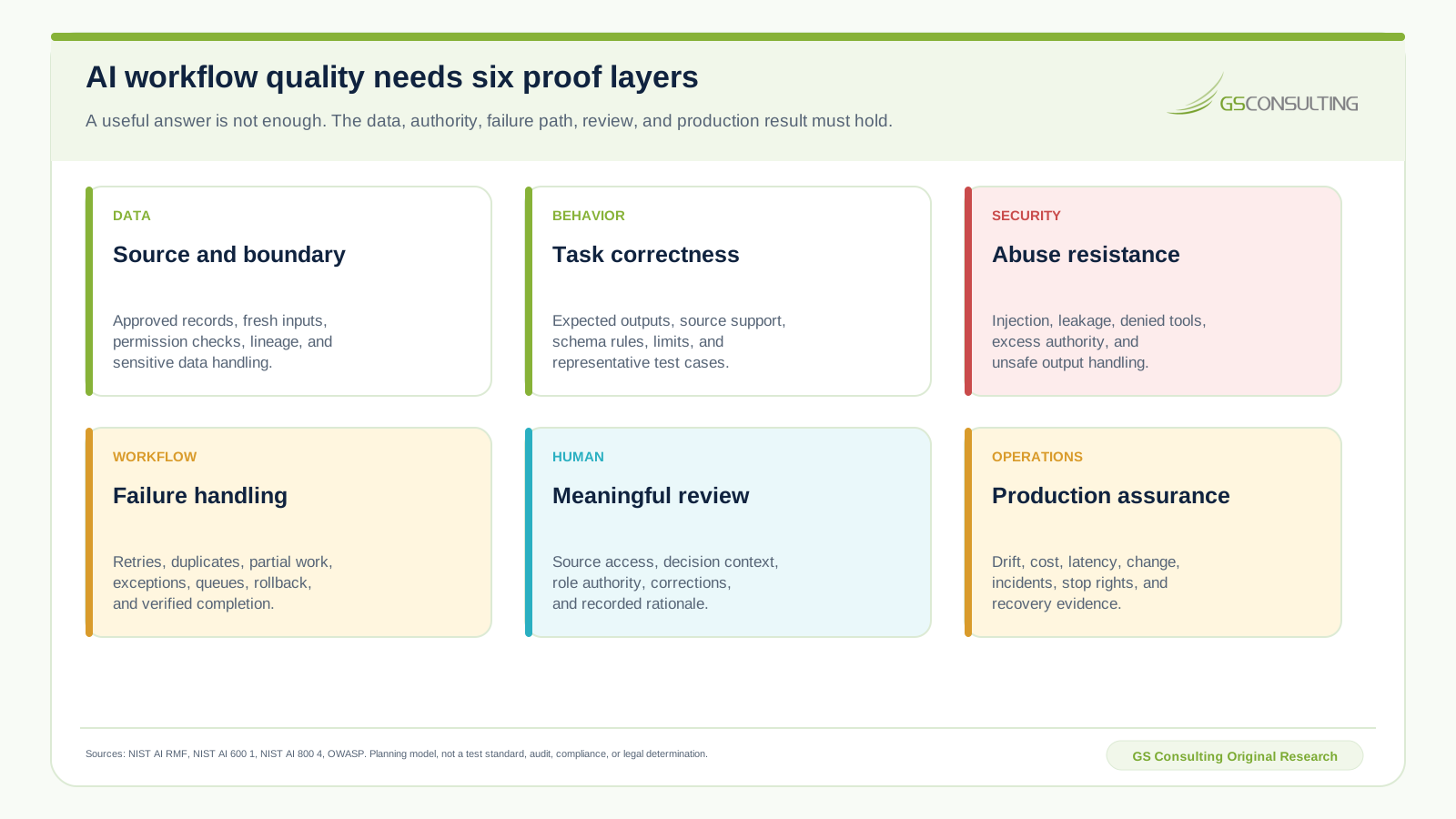
Data proof shows that the workflow used approved records, current inputs, enforceable permissions, traceable lineage, and correct sensitive data handling. Behavior proof shows that outputs satisfy the task, cite or use sources correctly, follow schemas and limits, and survive representative cases.
Security proof covers injection, leakage, denied tools, excessive authority, and unsafe output handling. Workflow proof covers retries, duplicates, partial completion, queues, rollback, and verified completion. Human proof shows that a reviewer had the source, decision context, role authority, correction path, and time needed to make a real decision. Operations proof covers drift, cost, latency, incidents, stop rights, recovery, and change.
The six layers stop a common mistake: treating model performance as workflow quality. A model can pass its evaluation while a stale index supplies the wrong policy, a tool writes to the wrong record, or a retry creates a second payment. The complete path owns the outcome.
Build the Test Catalog From Decisions
Start with a quality charter, not a scanner list. Name the task, user, approved sources, permitted actions, consequence, accepted output, forbidden output, pass threshold, reviewer, release authority, and recovery objective. Every mandatory test should prove one part of that charter.
| Test family | What to prove | Required records | Example failure |
|---|---|---|---|
| Source and data | Authority, freshness, completeness, permission, lineage, and sensitive data handling | Source version, access decision, test record, expected source | A user receives content from a record outside the permitted scope |
| Behavior | Correct outcome, source support, format, business rules, limits, and refusal | Expected result, actual result, score, evaluator version | A valid looking answer contradicts the cited source |
| Security | Denied tools, injection resistance, output handling, permission boundaries, and abuse limits | Attack case, identity, tool call, policy result, log | Untrusted content changes a tool instruction |
| Workflow | Retries, duplicate safety, queue state, partial work, rollback, and completion | Run identifier, state transition, exception, recovery result | A timeout causes the same external action twice |
| Human review | Source access, decision context, authority, correction, and disagreement handling | Decision packet, reviewer, rationale, disposition, time | A reviewer approves without seeing the source or proposed action |
| Operations | Quality drift, cost, latency, capacity, incidents, stop, change, and recovery | Signal, threshold, owner, incident, change record, retest | A source change reduces answer support without triggering a retest |
Use representative records, rare cases, denied paths, malformed inputs, stale sources, missing fields, conflicting sources, interrupted work, permission changes, and known incidents. Curated clean prompts prove almost nothing about live work.
GS AI Workflow Assurance Proof Index
GS Consulting built a derived planning model to answer one question: which assurance domains deserve the strongest release and operating attention? We selected twelve domains supported by current NIST, GAO, or OWASP guidance and tied each domain to a concrete decision.
Each domain receives a one to five analyst rating for source convergence, decision consequence, detection leverage, evidence value, change sensitivity, and recovery value. The base weights are 20, 20, 20, 15, 15, and 10 percent. Each rating is divided by five and multiplied by its weight. The sensitivity case moves five percentage points from change sensitivity to decision consequence.
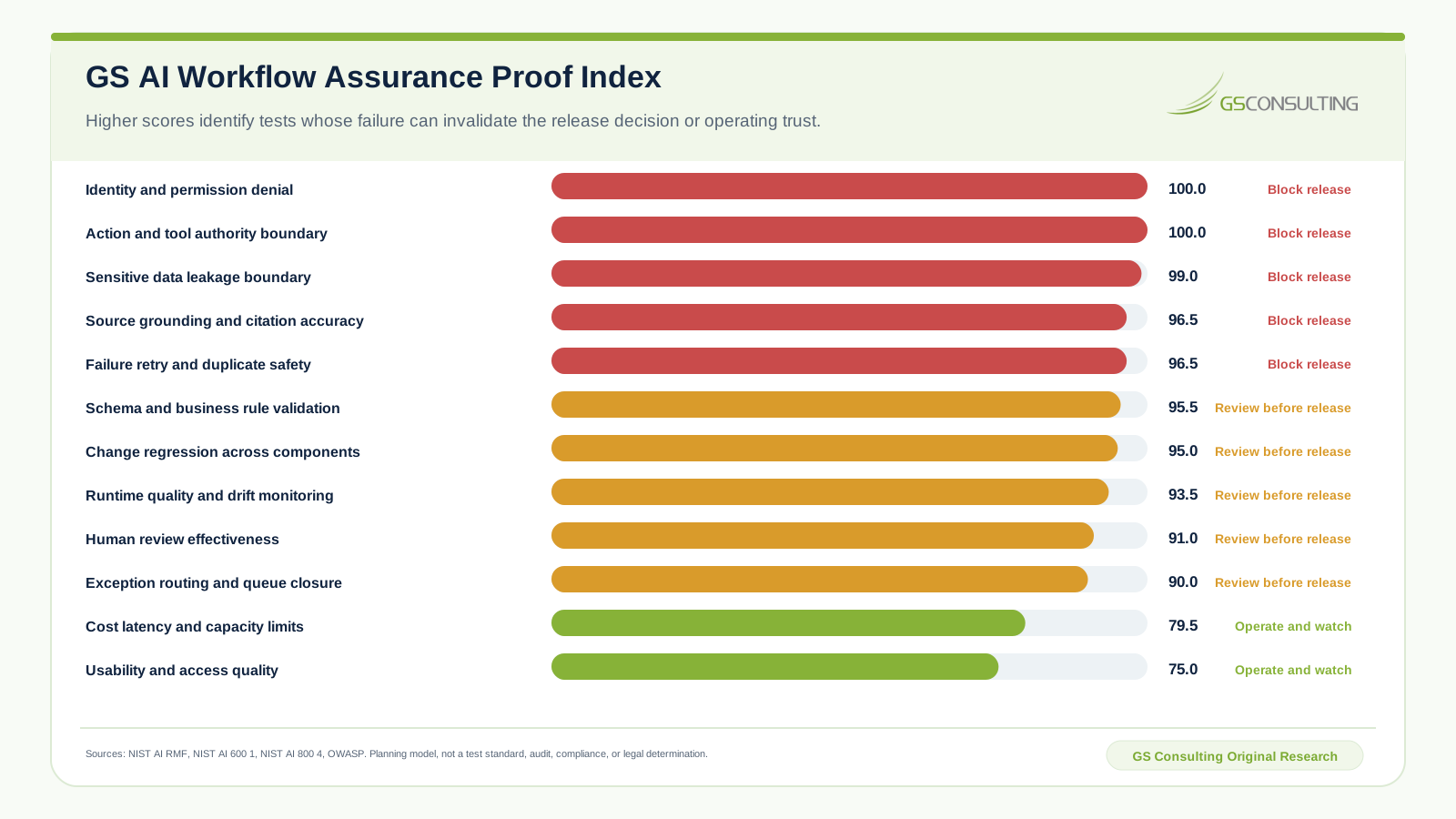
Identity and permission denial and action authority both score 100. Sensitive data leakage scores 99. Source grounding and retry safety each score 96.5. These five domains lead because failure can break trust, cause an unauthorized action, expose data, or make a completed transaction unreliable.
Schema and business rule validation scores 95.5. Change regression scores 95. Runtime monitoring scores 93.5. Human review scores 91, and exception routing scores 90. Cost and latency scores 79.5, while usability and access quality score 75. Those last domains still matter, but they usually support operating improvement unless the charter makes them mandatory.
The alternate weights move no score by more than 0.5 points and do not change a main decision tier. That stability does not validate the ratings. It shows that this specific planning conclusion is not sensitive to a modest weight shift. The workbook, source register, ratings, formulas, sensitivity table, figure data, and limitations are stored in the article research package.
Exceptions Need Different Burdens
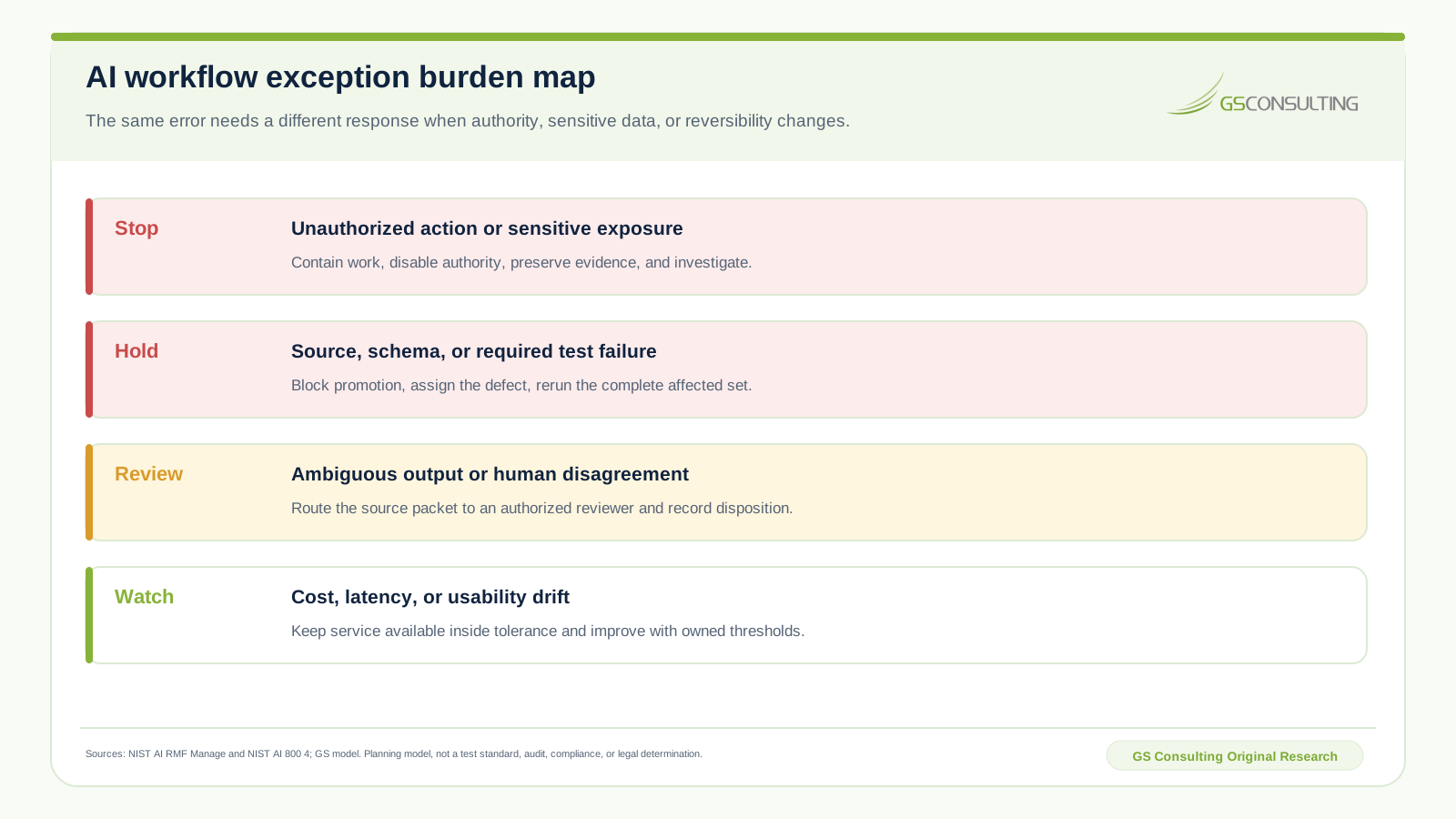
Stop when the workflow takes an unauthorized action or exposes sensitive data. Contain the work, disable the affected authority, preserve evidence, and investigate. Hold when a required source, schema, business rule, or mandatory test fails. Block promotion, assign the defect, and rerun the complete affected set.
Review when the output is ambiguous, sources conflict, or authorized reviewers disagree. Give the reviewer the source packet and record the disposition. Watch when cost, latency, capacity, or usability drifts inside an accepted tolerance. Keep the service available, but assign an owner and improvement threshold.
An exception is a controlled decision, not a bypass. Record the failed requirement, affected workflow version, scope, consequence, mitigation, owner, approving authority, expiry, review trigger, and closure proof. If any one of those fields is absent, the team cannot reconstruct why the release remained acceptable.
Use One Release Decision Path
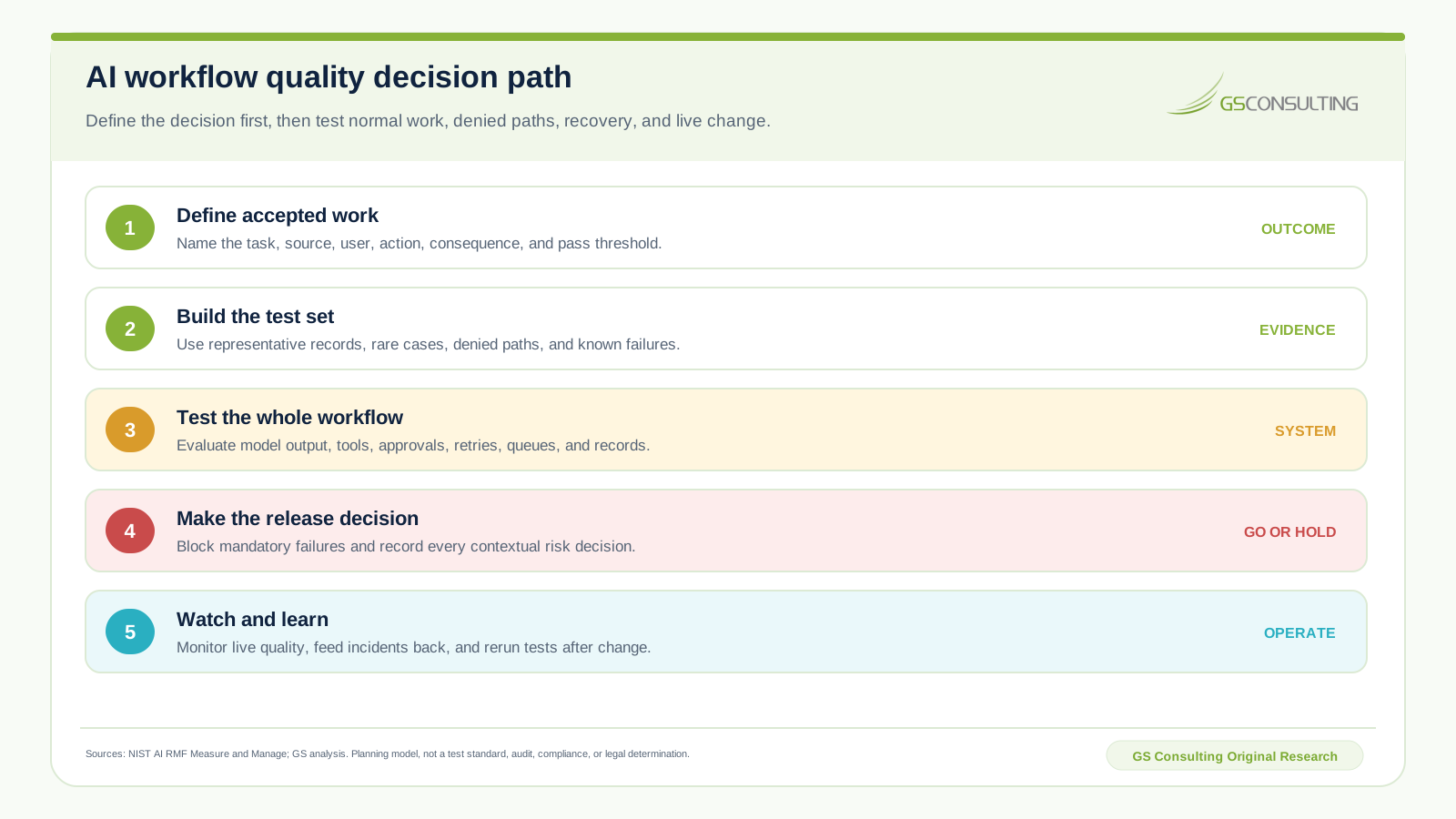
First, define accepted work. Second, build the source set and test catalog. Third, test the whole workflow with the exact model, prompts, rules, tools, permissions, connectors, and target environment that will operate. Fourth, make a release decision that separates mandatory failures from contextual risks. Fifth, monitor live quality and feed incidents, overrides, and drift back into the test catalog.
Every change needs an impact decision. A model update can affect output behavior. A prompt change can affect refusal and source use. A new connector can affect permissions. A rule change can affect approvals. A tool update can affect action parameters. A source change can affect freshness and authority. Do not let version labels hide those dependencies.
Six AI Workflow Quality Failures
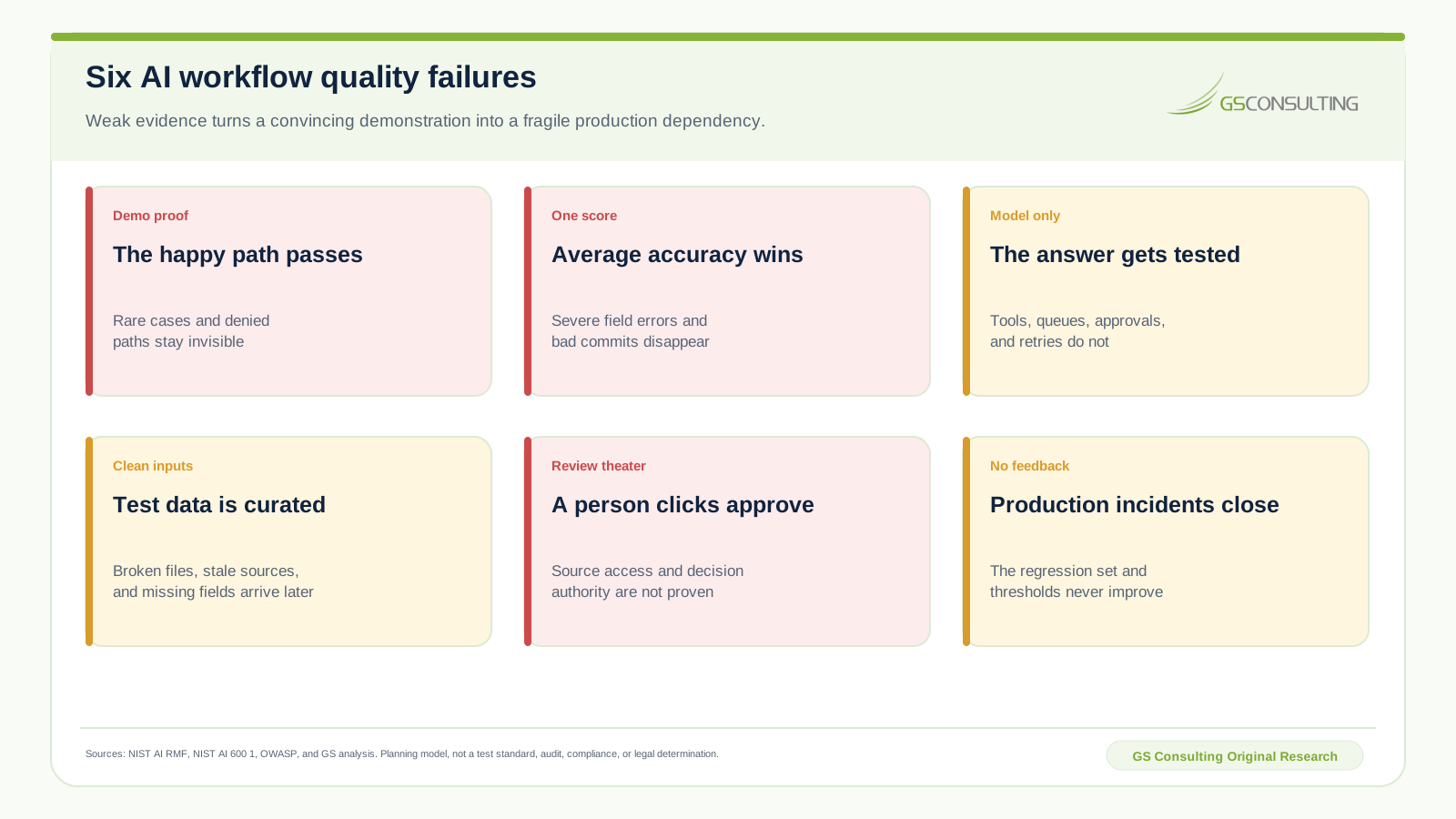
The happy path passes. Rare cases and denied paths remain invisible. Average accuracy wins. Severe field errors disappear inside a combined score. The answer gets tested. Tools, queues, approvals, retries, and records do not.
Test data is curated. Broken files, stale sources, missing fields, and adversarial inputs arrive later. A person clicks approve. The reviewer lacks source access or decision authority. Production incidents close. The regression set, thresholds, and workflow design never improve.
These failures are governance failures as much as technical failures. They persist because nobody owns the accepted outcome and the evidence chain together.
Production Assurance Is Part of Quality
Controlled tests cannot capture every live condition. NIST AI 800 4 identifies six categories of deployed AI monitoring challenges across functionality, operations, human factors, security, compliance, and broad impact. It also notes that monitoring methods remain immature. That is a reason to define owned signals and response paths, not a reason to promise complete detection.
At minimum, monitor quality against sampled reviewed work, source freshness, permission denials, tool failures, retries, duplicate prevention, exception volume, override rate, reviewer disagreement, incident severity, cost, latency, capacity, rollback, and change. Bind every signal to a threshold, owner, review period, and response.
Continuous monitoring does not replace release testing. Release testing establishes the known boundary. Monitoring shows where live behavior may be leaving it. Incidents and material drift should add cases to the regression set and trigger focused review.
Build One AI Workflow Quality Evidence Packet
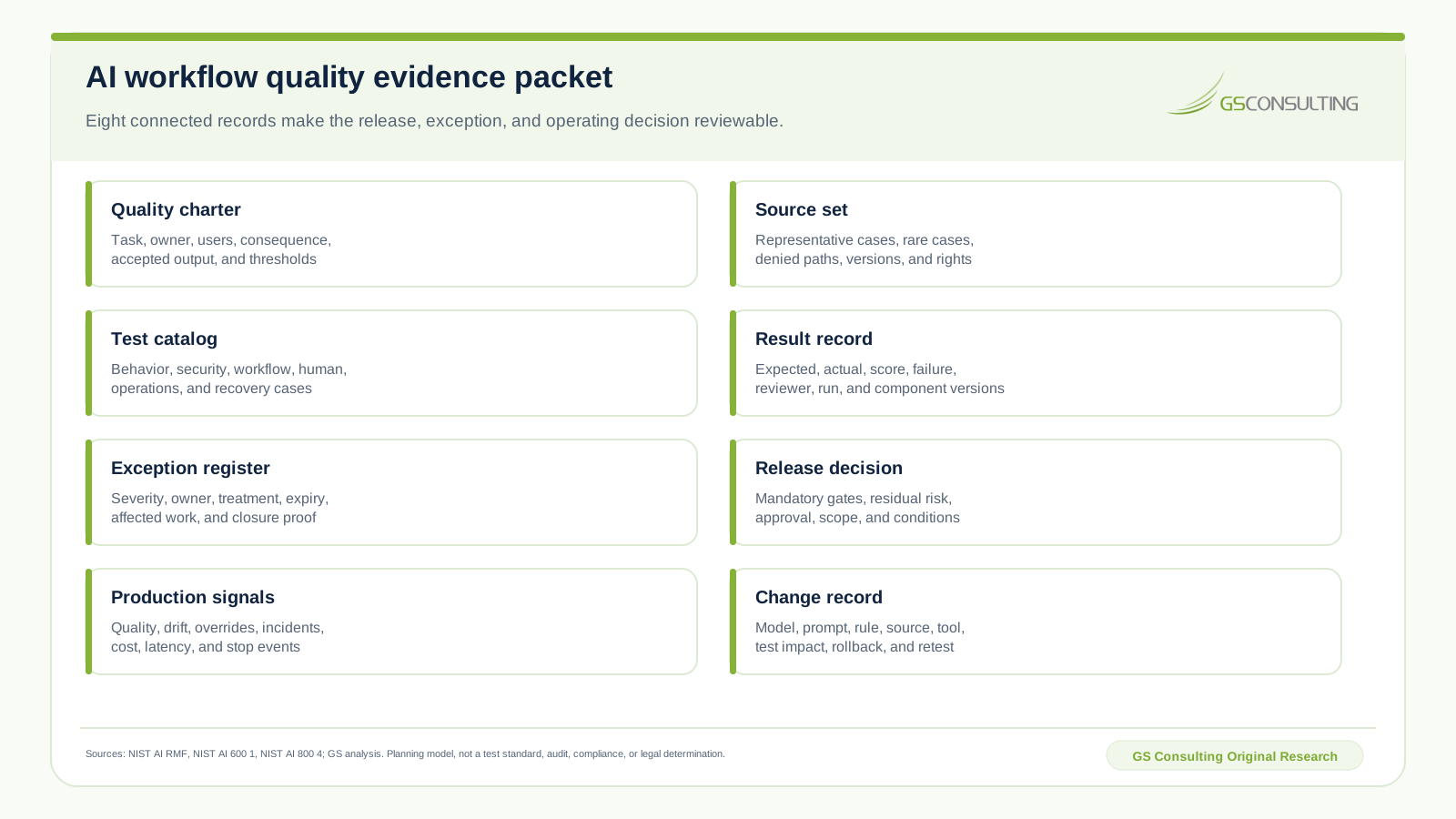
The packet needs eight connected records: the quality charter, source set, test catalog, result record, exception register, release decision, production signals, and change record. Each record needs stable identifiers. A reviewer should be able to move from a production incident to the workflow version, release approval, test run, source version, exception, and change that shaped the result.
Do not rebuild this packet with screenshots after an audit request. Capture machine readable evidence during the run, then render the human view from the same record chain. Evidence that cannot be traced to the operating artifact is documentation, not proof.
A Practical Implementation Plan
- Name the quality owner. Give one role authority over the accepted outcome, test catalog, exception policy, and release recommendation.
- Write the quality charter. Define users, sources, actions, consequences, thresholds, mandatory tests, reviewers, and stop conditions.
- Build a representative source set. Include real formats, rare cases, denied paths, stale records, conflicting sources, missing fields, and known failures.
- Test the complete workflow. Exercise model behavior, data, identity, tools, rules, queues, approval, records, deployment, rollback, and recovery.
- Automate mandatory proof. Block promotion when a deterministic trust boundary or required behavior test fails.
- Route contextual decisions. Give reviewers the exact source, consequence, mitigation, authority, expiry, and affected scope.
- Bind evidence to versions. Record source, model, prompt, rule, tool, connector, test, target, and release identifiers.
- Close the feedback loop. Convert incidents, overrides, disagreement, drift, and recovery lessons into regression cases and design changes.
The decisive operating standard is this: no AI workflow release without named accepted work, mandatory proof, controlled exceptions, an accountable decision, and production evidence tied to the exact version that runs.
Sources and Research Notes
- NIST AI Risk Management Framework Core
- NIST AI 600 1 Generative Artificial Intelligence Profile
- NIST AI 800 4 Challenges to the Monitoring of Deployed AI Systems
- NIST AI Test, Evaluation, Validation, and Verification
- NIST SP 800 53 Revision 5 Update 1
- OWASP LLM06 Excessive Agency
- OWASP LLM01 Prompt Injection
- GAO Artificial Intelligence Accountability Framework
Frequently Asked Questions About AI Workflow Quality Assurance
What is AI workflow quality assurance?
AI workflow quality assurance is the system of accepted outcomes, representative tests, exception rules, release decisions, production signals, and evidence records used to decide whether an AI enabled workflow is safe and useful enough to operate.
How is AI workflow testing different from model evaluation?
Model evaluation measures model behavior. Workflow testing also covers source data, identity, tool authority, business rules, retries, queues, human review, records, deployment, monitoring, and recovery. A model can score well while the complete workflow fails.
What should block an AI workflow release?
A release should normally stop when required tests show unauthorized action, sensitive data exposure, broken identity or permission enforcement, invalid source grounding, unsafe retry behavior, or another failure that invalidates the accepted operating boundary. The exact mandatory set belongs in the approved quality charter.
How should AI workflow exceptions be managed?
Every exception should name the failed requirement, affected scope, owner, treatment, approving authority, expiry, review trigger, compensating control, and closure proof. An exception without expiry and evidence is a hidden policy change.
How often should AI workflow tests run?
Run mandatory tests before release and after a material change to the model, prompt, rule, source, tool, permission, workflow component, or target environment. Production monitoring should trigger focused retests when quality, drift, overrides, incidents, or operating conditions change.
Does an AI quality score prove compliance or safety?
No. A score is a planning aid. Compliance, safety, approval, and legal conclusions depend on the actual use case, authority, data, system, contract, controls, test evidence, and accountable decision maker.
Build quality evidence before production decides for you.
GS Consulting helps teams define accepted outcomes, build representative test catalogs, control exceptions, automate evidence, and establish production feedback for AI workflows.
Plan an AI Workflow Quality Review