AI Workflow Automation | | 23 min read
AI Workflow Automation Operating Model

Key Takeaways
Production needs named authority
Two domains score 98
Identity, data, and action boundaries tie with incident, pause, and recovery for the highest operating pressure.
A committee cannot own a service
One service owner carries outcome, boundary, performance, evidence, and funding accountability across specialist decisions.
Evidence earns a wider boundary
Volume, users, data, tools, actions, and autonomy expand only after value and control evidence support the next decision.
An AI workflow operating model is not a committee chart. It is the system that makes somebody own the service, the decision, the evidence, and the stop button.
A pilot can survive on the attention of its builders. A production service cannot. Users need support. Exceptions need queues. Changes need approval. Security events need containment. Records need owners. Leaders need value and cost evidence. When those duties remain implicit, the workflow is still a demonstration even if it handles live work.
Build the operating model around one bounded service. Assign the owner, decision rights, measures, forums, evidence, escalation, funding, and retirement authority. Keep business accountability with the process outcome while specialist authorities retain security, data, legal, risk, records, and technology decisions.
The Enterprise AI Process Transformation hub connects the operating model to process selection, orchestration, quality, monitoring, and value. Pair this guide with AI Workflow Automation Requirements, AI Workflow Quality Assurance, and Transitioning AI Workflows from Pilot to Production. GS Consulting establishes the service through AI Workflow Automation.
Turn the pilot team into a durable service.
GS Consulting helps leaders assign operating ownership, decision rights, review cadence, evidence, incident response, change control, and scale authority.
Plan an Operating Model WorkshopAI Workflow Operating Model: The Short Answer
Name one business service owner for the accepted outcome, operating boundary, performance, evidence, and funding. Assign separate authorities for release, access, data use, risk acceptance, exceptions, incidents, changes, provider decisions, scaling, restrictions, and retirement. Define what evidence each decision requires.
Run the service through three connected cadences. A delivery cadence handles queues, failures, support, and immediate control signals. A monthly control cadence reviews quality, security, data, exceptions, changes, evidence, and unresolved actions. A quarterly portfolio cadence decides whether value and residual risk support continued funding, a wider boundary, new restrictions, replacement, or retirement.
Use one service scorecard and one evidence packet. Monitor the assumptions that supported release. Give an incident commander independent authority to pause actions when the workflow crosses a defined threshold. No committee vote should be required to stop unsafe or uncontrolled operation.
Operate the Workflow as a Service
An AI workflow is a chain of business steps, model tasks, deterministic rules, human decisions, data movement, system actions, and external dependencies. The operating unit is that complete service, not the model endpoint. A healthy model can still sit inside a broken queue, excessive permission, stale source, failed connector, weak review step, or unreconciled system transaction.
Give the service a catalog record. Name the business purpose, owner, users, support hours, accepted volume, systems, data classes, providers, tools, actions, human decisions, evidence stores, upstream and downstream dependencies, recovery objectives, and prohibited use. Link it to the model inventory and application inventory without collapsing those records into one.
Set the service boundary in operating terms. State which users, requests, records, systems, actions, targets, volume, geography, and time window are approved. A broader user group or a new write action is a boundary change even if no code changes. This is where many quiet expansions escape review.
The Workflow Orchestration in Secure Environments guide covers execution states and control points. The operating model assigns the people who own those states after release.
Seven Layers of the Operating Model
The model should be complete enough to run but compact enough to use. Seven layers cover the decisions that usually fragment after a pilot:
- Service charter: purpose, outcome, owner, users, boundary, value, funding, and prohibited use.
- Decision rights: release, access, data, risk, incident, exception, change, scale, restriction, and retirement authority.
- Delivery operations: queues, support, approvals, human review, provider management, reconciliation, capacity, and cost.
- Quality and control: evaluation, monitoring, security, privacy, records, data quality, human factors, and compliance as applicable.
- Incident and recovery: detection, severity, pause, containment, communication, rollback, restoration, reconciliation, and learning.
- Change and release: versions, tests, approvals, deployment, rollback, observation, and evidence refresh.
- Portfolio lifecycle: intake, prioritization, investment, scale, periodic review, replacement, and retirement.
Each layer needs a named accountable role, operating procedures, measures, evidence, and escalation. Do not assign every layer to the same engineering lead. That arrangement works until demand, risk, or staff turnover exposes the missing service organization.
Public Frameworks Point to Lifecycle Ownership
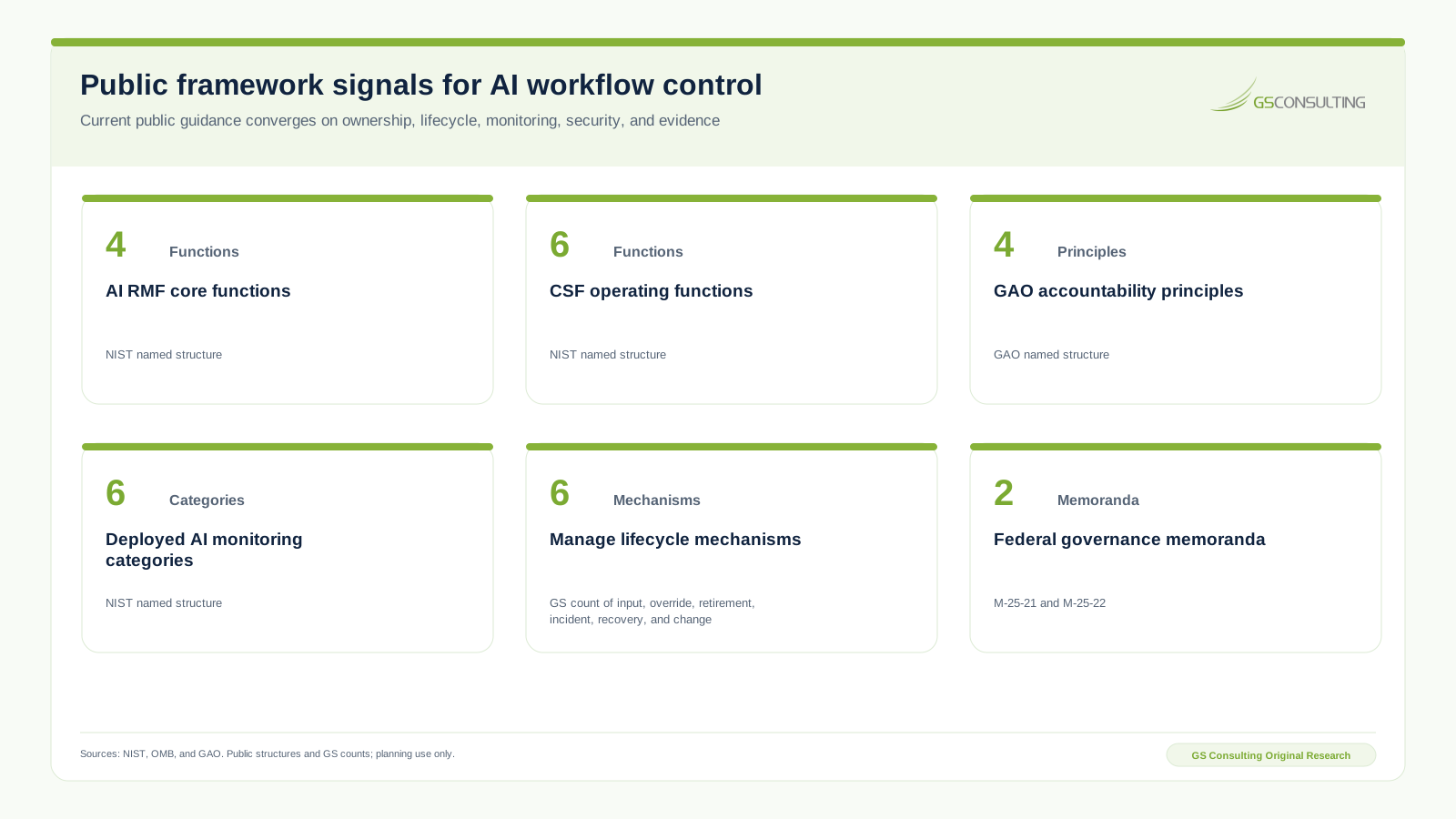
The NIST AI Risk Management Framework Core organizes work through Govern, Map, Measure, and Manage. Govern is cross cutting. The core addresses roles, executive responsibility, monitoring, incident response, recovery, change, and decommissioning across the lifecycle. AI RMF 1.0 is voluntary and is being revised. It does not prescribe one organization chart.
The NIST AI RMF Playbook Govern Function calls for clear roles, communication, risk tolerance, inventory, training, periodic review, and lifecycle responsibility. The playbook is useful design guidance, not a universal checklist.
NIST AI 800-4 groups deployed AI monitoring challenges into functionality, operations, human factors, security, compliance, and large scale impacts. The NIST Cybersecurity Framework 2.0 uses Govern, Identify, Protect, Detect, Respond, and Recover. Together they show why model quality alone is not an operating scorecard.
The GAO AI Accountability Framework organizes accountability around governance, data, performance, and monitoring. OMB M-25-21 and OMB M-25-22 provide federal agency signals on governance, testing, monitoring, training, human oversight, documentation, performance tracking, and lifecycle risk. They apply to covered federal activities, not automatically to every contractor internal workflow.
Original Research: GS AI Workflow Operating Accountability Index
Identity, data, and action boundary score 98. Incident, pause, and recovery also score 98. Operating charter and scope score 95, as do decision rights and escalation. These four domains need explicit authority and live evidence before production dependence grows.
GS Consulting rated twelve operating domains from one to five across mission consequence, authority exposure, dependency breadth, failure burden, evidence duty, and change cadence. Base weights are 25, 20, 15, 15, 15, and 10 percent. The weighted result is normalized to a zero to 100 pressure score.
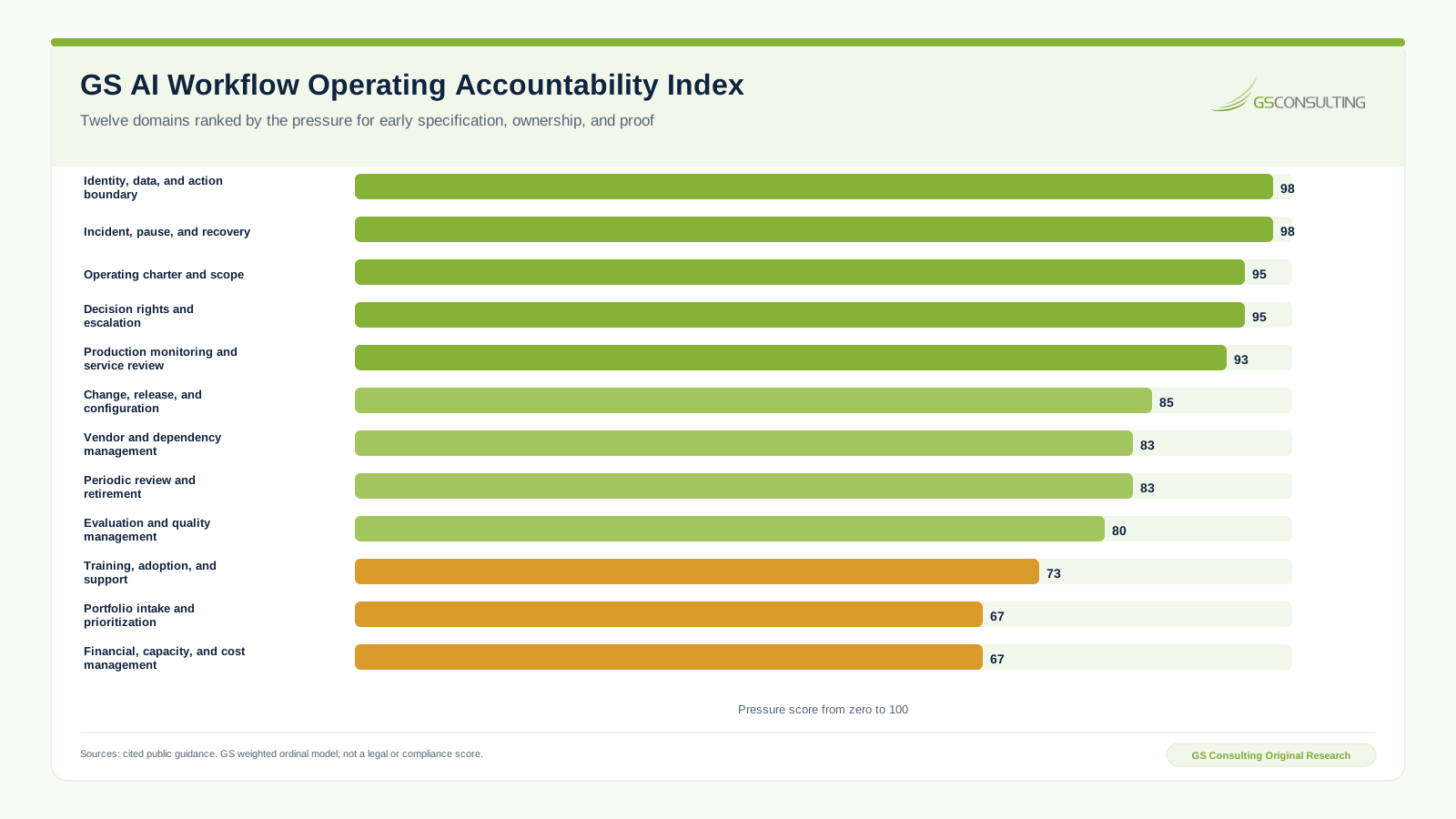
Production monitoring and service review score 93. Change, release, and configuration score 85. Vendor and dependency management score 83, tied with periodic review and retirement. Evaluation and quality management score 80. Training, adoption, and support score 73. Portfolio intake and financial management each score 67.
A lower score does not make funding or intake optional. It means the combined consequence, authority, dependency, failure, evidence, and change pressure is lower in this illustrative model. The service still needs every domain. Use the index to sequence ownership and depth.
The alternate case distributes more weight to dependency breadth and less to mission consequence. No domain moves more than one point, and the priority lanes remain stable. This tests the arithmetic, not the validity of a local rating. Replace every input with evidence from the actual service.
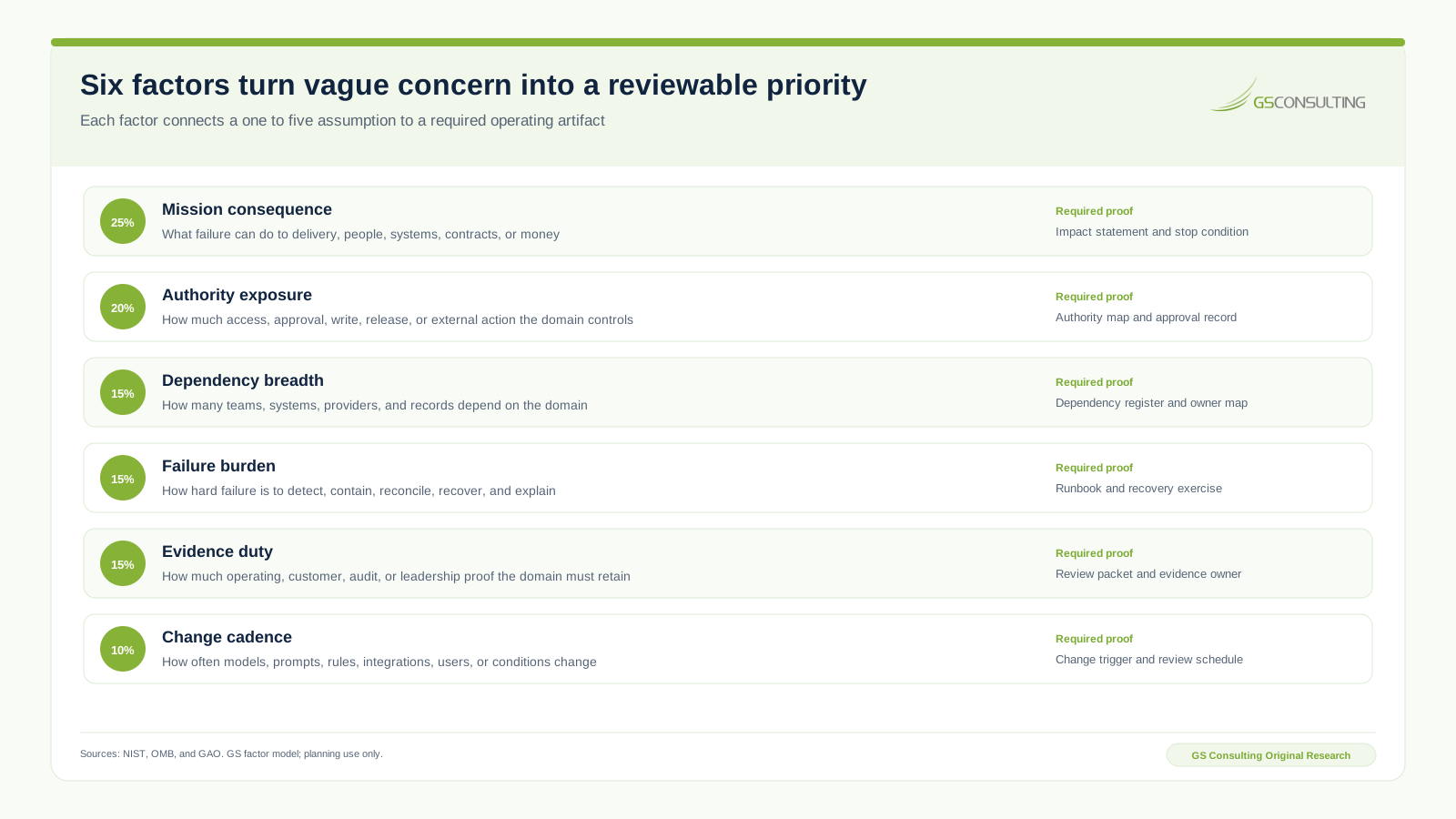
This is a GS Consulting derived planning model based on cited public sources and documented assumptions. It is not an official legal, audit, contract, compliance, NIST, OMB, GAO, security certification, or regulatory determination.
Assign Roles Around Decisions
The business service owner is accountable for outcome, boundary, service performance, evidence, funding, and continued use. The process owner defines accepted work and exception rules. The product owner manages the service backlog and release scope. The technical owner maintains architecture, integrations, reliability, and recovery.
The data owner approves source use, quality rules, access, retention, and authoritative records. The security owner approves identity, permission, tool, interface, detection, and response controls. Legal, privacy, records, safety, procurement, and risk owners retain their own decisions where applicable. The incident commander directs containment and recovery during an event.
A governance forum should challenge evidence and resolve decisions that cross authorities. It should not become a substitute owner. For every material decision, record the decision maker, required contributors, required evidence, service impact, escalation, and expiry or next review date.
Separate advice from authority. Separate daily service ownership from risk acceptance. Separate release approval from the person who built the change. Separate incident command from the sponsor who wants the service kept live. These separations protect the decision when schedule pressure arrives.
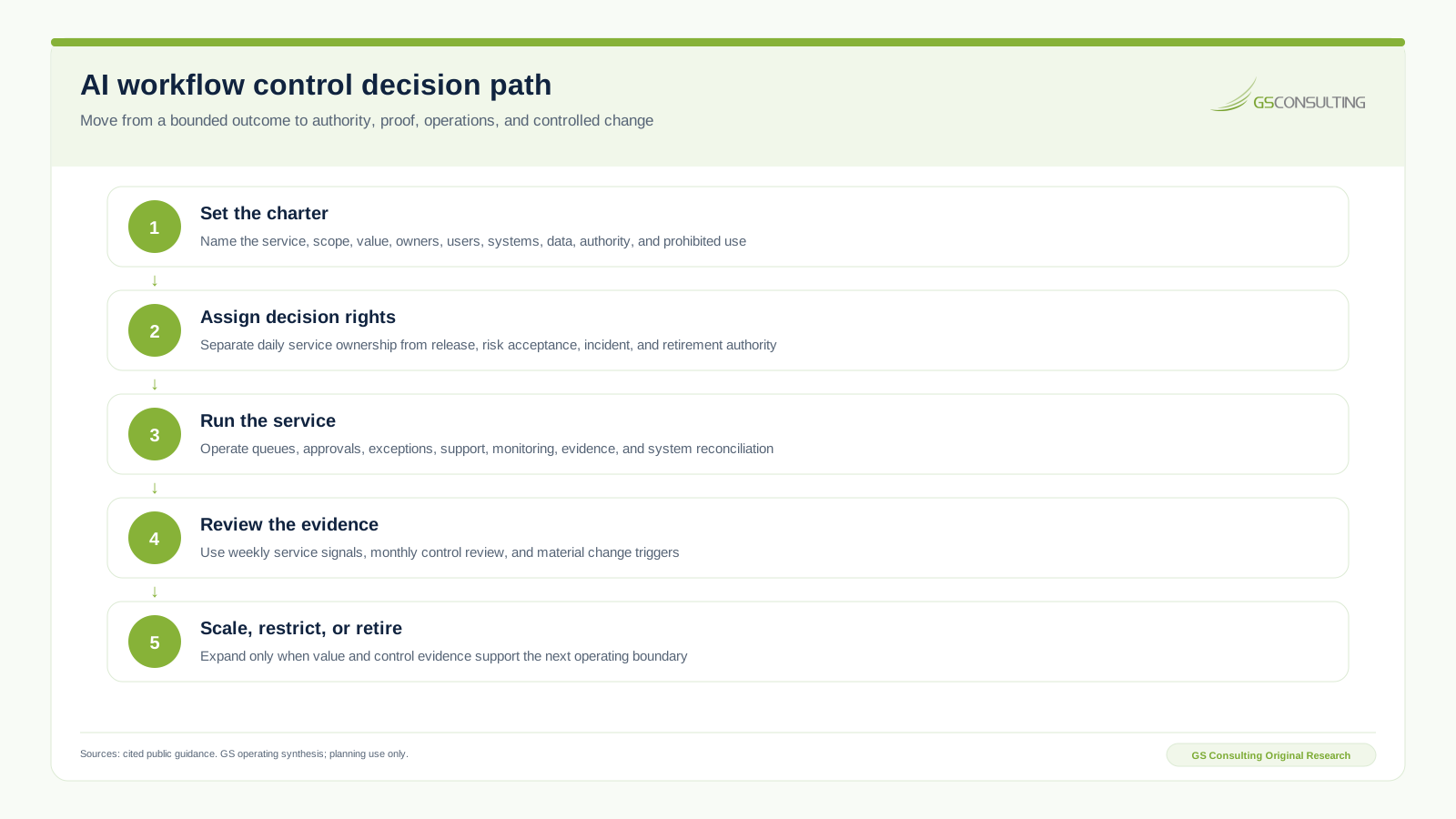
Use Three Operating Cadences
The delivery cadence runs daily and weekly. It covers queue age, failed runs, incomplete transactions, user support, access issues, provider limits, exceptions, security alerts, reconciliation, and immediate recovery. The service owner and operations lead own action, not presentation.
The control cadence runs monthly during normal operation and more often after release or material change. It reviews quality, data, permissions, human decisions, exceptions, incidents, provider performance, evidence completeness, open findings, and the assumptions behind the approved boundary.
The portfolio cadence runs quarterly or at a material decision. It reviews outcome value, adoption, cost, capacity, residual risk, dependency health, planned changes, and whether the service should scale, remain bounded, be restricted, be replaced, or retire.
Calendar meetings do not replace trigger based review. A new model, prompt family, provider, tool, permission, source, user population, action, law, contract term, incident pattern, or material threshold breach should open a decision when it happens.
Build One Service Scorecard
The scorecard should connect business outcome, workflow quality, operations, human factors, security, compliance where applicable, value, and cost. Avoid a page of isolated technical metrics. Each measure needs an owner, target, threshold, response, evidence source, and decision it informs.
- Outcome: accepted completions, cycle time, rework, backlog, customer or mission result, and value realized.
- Quality: task success, grounded support, error types, false action, missed action, review disagreement, and affected cases.
- Operations: availability, latency, queue age, retries, failures, duplicate control, reconciliation, recovery time, and support demand.
- Human factors: review load, override rate, approval time, escalation, user confusion, training completion, and complaint signals.
- Security and data: permission denial, unusual action, malicious input, sensitive data event, source freshness, quality failure, and provider alert.
- Control and value: incidents, exceptions, open actions, evidence age, changes, cost per accepted outcome, capacity, and benefit against baseline.
Use counts and rates together. Ten bad outcomes can look small against total volume but still matter if consequence is severe. Use distribution and case review, not one average. Link the measure to raw evidence so a reviewer can replay the result.
Separate Exceptions, Incidents, and Risk Acceptance
An exception is a known departure from normal workflow or a required control. An incident is an event that threatens service, data, security, users, mission, or obligations and requires coordinated response. Risk acceptance is a decision by an authorized person to operate with a known residual exposure for a defined period and boundary. Do not mix these records.
Define severity using consequence, spread, action authority, data, detectability, reversibility, and external exposure. Give the incident commander authority to pause calls, revoke service credentials, disable write actions, restrict users, switch to manual processing, or stop the service. Test those controls.
Recovery is not complete when the endpoint responds. Reconcile every pending and committed transaction. Identify affected users and records. Restore the correct source of truth. Preserve evidence. Review whether the accepted boundary, monitoring, and controls remain valid.
Use AI Governance Exception Management for formal exceptions and Continuous Monitoring for AI Workflows for production detection.
Control Model, Prompt, Tool, and Provider Change
Keep a configuration record for the complete service. Include model and provider, prompts, policies, retrieval sources, tools, APIs, data schemas, service identities, permissions, thresholds, test sets, runbooks, monitoring rules, and dependent systems. The approved service is that versioned combination.
Classify changes by the boundary they affect. A wording correction may need a focused test. A new data class, tool, write permission, external recipient, user group, model family, or provider can require full review. The change record should identify affected requirements, tests, controls, evidence, rollback, and observation period.
Provider management belongs inside the service model. Record service limits, security and data terms, notice duties, model change practices, support, incident communication, continuity options, export, termination, and evidence access. A vendor dashboard is not a substitute for the owner knowing what the workflow did.
Use AI Workflow ROI Calculation to connect change and scale decisions to observed value instead of projected benefit alone.
Six Ways the Operating Model Fails
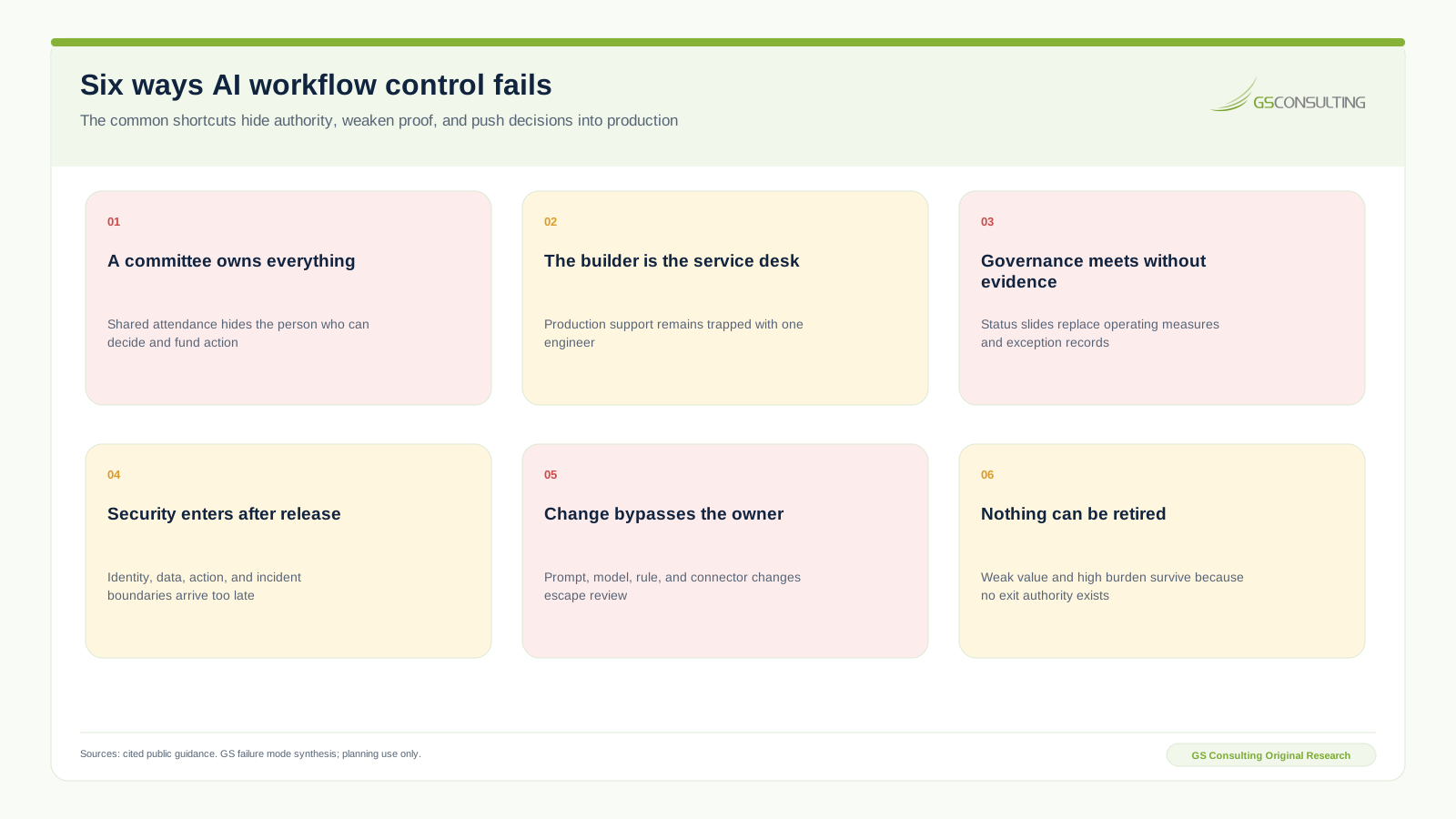
A committee that owns everything leaves no person with authority to decide and fund action. A builder who remains the service desk creates fragile dependence on one engineer. A governance meeting without live evidence turns operating risk into status slides.
Security review after release arrives too late to shape identity, data, action, and incident boundaries. Change that bypasses the service owner lets models, prompts, rules, and connectors alter the accepted service without a decision. A portfolio with no retirement authority keeps low value, high burden services alive.
Correct these failures with named decisions, recurring evidence, tested stop authority, independent escalation, versioned change, and a periodic continue or retire decision.
Keep the Minimum Operating Evidence Packet
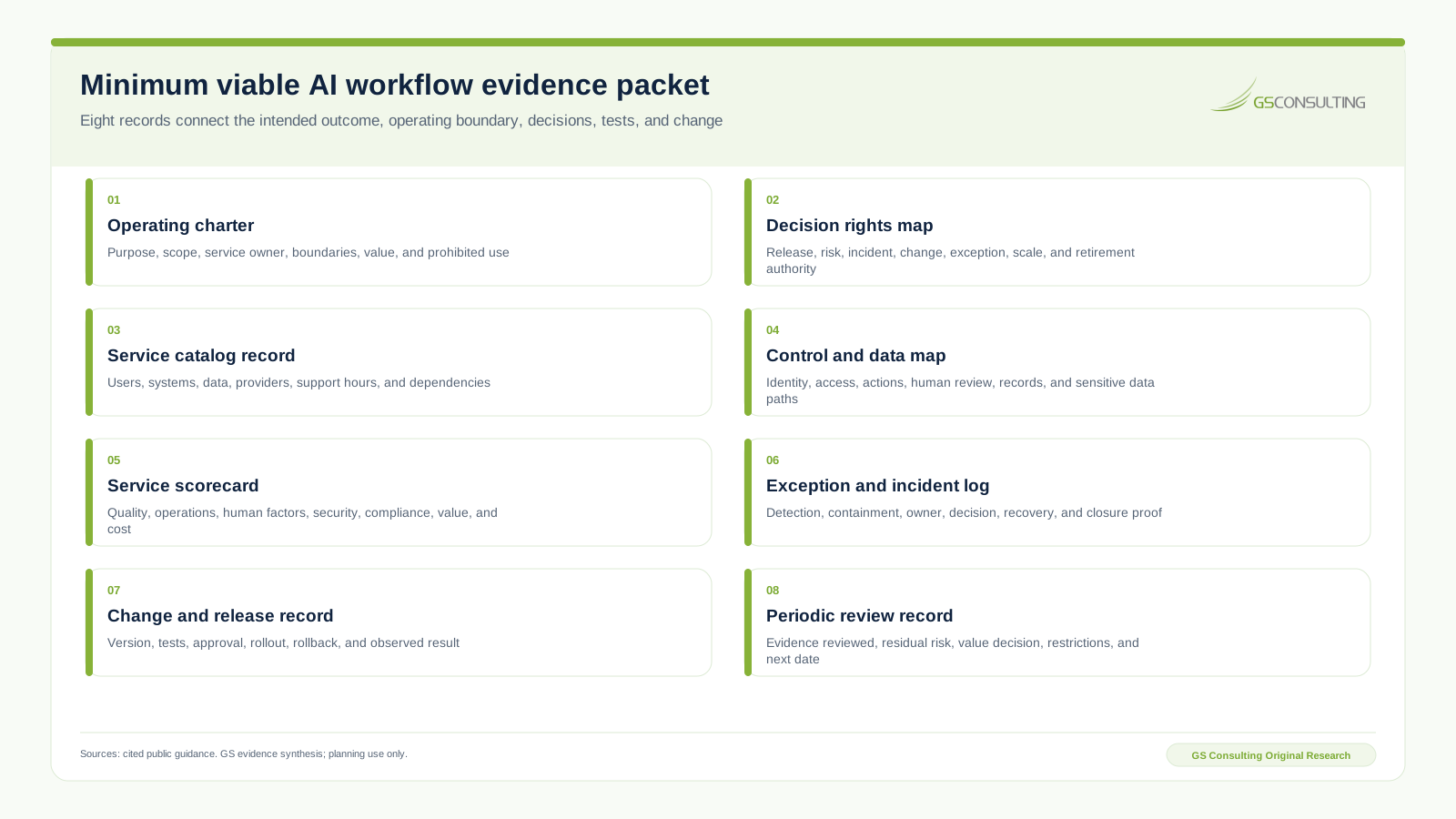
Keep the operating charter, decision rights map, service catalog record, control and data map, service scorecard, exception and incident log, change and release record, and periodic review record. Link each record to its owner, version, evidence source, approval, open actions, and next trigger.
The packet should answer practical questions. What was approved? Who could decide? What happened? What changed? Which cases failed? Which transactions were reconciled? What risk remains? Is the service producing enough value to justify its cost and control burden?
A 30, 60, and 90 Day Operating Plan
By day 30, name the service owner and specialist authorities. Write the charter, boundary, service catalog record, decision rights, support route, stop conditions, incident authority, and initial scorecard. Inventory all production models, prompts, data, tools, identities, providers, and systems.
By day 60, run the delivery and control cadences. Test pause, containment, rollback, recovery, and reconciliation. Establish exception, incident, change, release, and risk acceptance records. Tie each measure to an owner and response threshold.
By day 90, run a portfolio review using actual value, cost, quality, service, security, control, and user evidence. Decide whether to scale, maintain, restrict, replace, or retire. Resolve ownership gaps and fund the service work that remains.
The operating standard is decisive: no AI workflow earns production dependence without one accountable service owner, explicit decision rights, live operating evidence, tested stop and recovery authority, controlled change, and a scheduled continue or retire decision.
Research Sources and Method
The research package separates public observations, GS analyst assumptions, workbook formulas, sensitivity results, and figure data. Sources were accessed September 1, 2026.
- NIST AI Risk Management Framework Core
- NIST AI RMF Playbook Govern Function
- NIST AI 800-4
- NIST Cybersecurity Framework 2.0
- GAO-21-519SP AI Accountability Framework
- OMB M-25-21
- OMB M-25-22
- NIST SP 800-61 Rev. 3
Planning caveat: The GS index is a derived planning tool. It does not establish legal duties, determine contract coverage, certify security, replace professional review, or predict failure. Organizations should validate sources, assumptions, thresholds, and decisions against their own obligations and operating evidence.
Frequently Asked Questions
What is an AI workflow operating model?
An AI workflow operating model defines how a production AI enabled service is owned, funded, supported, measured, governed, changed, paused, recovered, and retired. It assigns decision rights, recurring forums, evidence, and escalation across business, product, engineering, data, security, risk, and operations.
Who should own an AI workflow in production?
One business service owner should own the outcome, operating boundary, service performance, and funding. Technical, data, security, risk, and process owners retain decisions within their authority. A committee can advise and challenge, but it should not replace a named accountable owner.
What decisions belong in the operating model?
The model should assign authority for scope, release, access, data use, risk acceptance, exceptions, incidents, model and prompt changes, provider changes, scaling, restrictions, rollback, recovery, and retirement. Each decision should name the required evidence and escalation path.
How often should an AI workflow be reviewed?
Review live service signals at least weekly during early operation, control and risk evidence monthly, and value, cost, residual risk, and continued use quarterly. Material changes, incidents, repeated exceptions, or threshold breaches should trigger an immediate review outside the calendar.
What should an AI workflow service scorecard include?
Include outcome value, completion and exception rates, quality, human review, queue health, latency, availability, security events, data issues, reconciliation gaps, incidents, changes, provider performance, cost, user impact, and unresolved control actions. Every measure needs an owner and response threshold.
When should an AI workflow be retired?
Retire or replace it when value remains below the accepted threshold, control burden is no longer justified, failure or exception patterns remain unacceptable, dependencies cannot be supported, obligations change, or a safer and simpler process meets the need. Retirement requires records, access removal, data handling, communication, and recovery closure.
Suggested Reading
Use the Enterprise AI Process Transformation hub for the full cluster. Continue with AI Workflow Automation Requirements, Human in the Loop AI Workflow Design, Continuous Monitoring for AI Workflows, and AI Workflow ROI Calculation.