AI Governance | | 24 min read
AI Governance Roles and Responsibilities

Key Takeaways
Accountability belongs to a named person
Residual risk scores 98.5
Accepting remaining AI risk has the greatest combined consequence, coordination, independence, evidence, and time pressure.
One decision, one owner
Specialists can provide proof and challenge, but one named role must own the approval, restriction, pause, or rejection.
Participation is not approval
OMB lists broad governance board perspectives for covered agencies, but that does not turn every participant into an approver.
AI governance roles are not committee seats. They are decision rights with named consequences.
A role is real when a person knows the decision they own and the evidence they must consider. They also know the limit they cannot cross, the event that requires escalation, and the record that proves they acted. A committee roster answers none of that.
The operating model should separate purpose, delivery, control evidence, independent challenge, and residual risk acceptance. Those functions can collaborate closely. They should not blur into a group decision that no one owns after a failure.
The AI Governance hub connects these roles to policy, risk review, human oversight, testing, and operating evidence. Use the AI model inventory guide to assign owners at the record level, the AI governance risk classification guide to assign approval lanes, and the AI governance exception management guide to route deviations and control failures. The NIST AI RMF implementation guide translates Govern, Map, Measure, and Manage into recurring work. GS Consulting designs the broader model through AI governance and risk oversight.
Assign the decision before scheduling the committee.
GS Consulting helps leaders define AI governance roles, delegated limits, evidence, escalation, and operating cadence around actual use cases.
Design the Governance ModelAI Governance Roles and Responsibilities: The Short Answer
Start with the decisions, not the organization chart. List the recurring decisions that govern AI: portfolio priority, use case intake, data permission, test acceptance, production release, residual risk, incidents, material change, exceptions, and retirement. Assign exactly one accountable owner to each decision. Then name the people who provide evidence, challenge assumptions, execute actions, receive notice, and act as backup.
Use delegated lanes. A trained business owner may approve a reversible use over approved data when the use stays inside defined limits. A consequential use involving sensitive data, affected people, production action, external release, broad authority, or difficult recovery should require stronger control evidence and independent challenge. Residual risk beyond the delegated limit moves to an executive risk acceptor.
The governance board sets policy, reviews portfolio exposure, resolves disputes, and hears escalations. It should not own every release. The accountable business or risk owner remains named in the record.
Public Guidance Separates Accountability, Participation, and Work
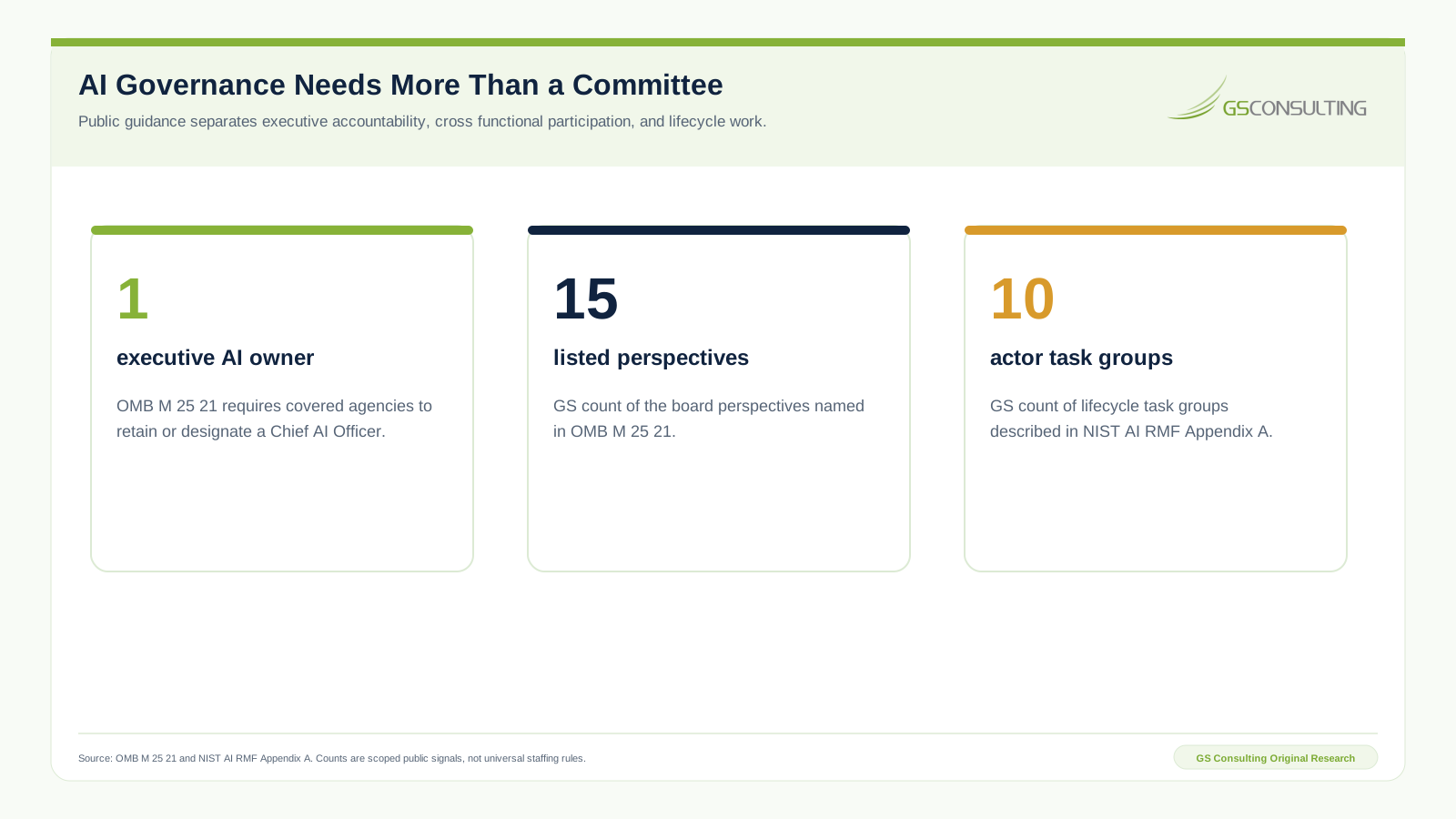
NIST AI RMF Govern 2.1 calls for documented roles, responsibilities, and communication lines. Govern 2.3 places responsibility for AI risk with executive leadership. Govern 3.2 calls for differentiated human roles and responsibilities in AI configurations and oversight. NIST AI RMF is voluntary and context dependent. It describes outcomes, not one required set of titles.
NIST AI RMF Appendix A describes ten groups of actor tasks. They cover design and development; deployment and operation; testing and evaluation; human factors and domain expertise; impact assessment; procurement; governance. That breadth explains why a governance committee cannot substitute for lifecycle ownership.
OMB Memorandum M-25-21 requires covered agencies to retain or designate a Chief AI Officer and describes an AI Governance Board with broad executive and specialist perspectives. GS counted 15 listed perspectives in the board provision. The memorandum applies to covered federal agencies under its terms. Other organizations can use the separation of executive ownership and broad input as an architecture signal, not a blanket staffing mandate.
Original Research: The GS Decision Rights Pressure Index
The most consequential AI decisions need named authority, independent challenge, and evidence that can survive an incident.
GS Consulting modeled 12 recurring governance decisions. Each decision receives an ordinal rating from zero to ten across five factors. Decision consequence carries 30 percent. Coordination load and independent challenge each carry 20 percent. Evidence burden and time pressure each carry 15 percent. The weighted sum is multiplied by ten and reported on a zero to 100 planning scale.
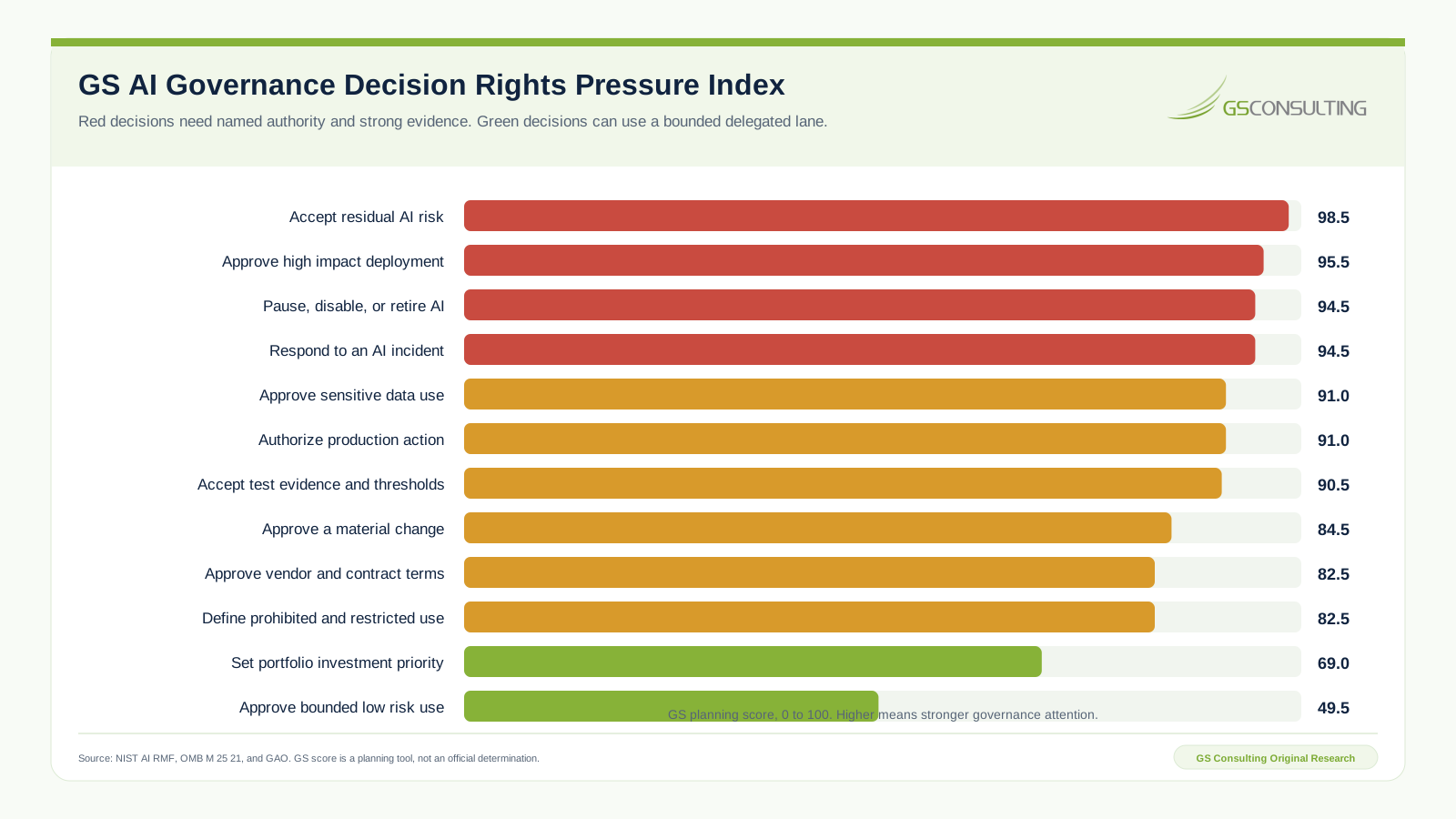
Accepting residual AI risk scores 98.5. Approving a high impact deployment scores 95.5. Pausing, disabling, or retiring AI and responding to an AI incident each score 94.5. Sensitive data approval and production action authorization each score 91. Test acceptance scores 90.5. These decisions combine consequence with specialist evidence, independence, and urgent action.
Material change approval scores 84.5. Vendor and contract terms and prohibited use each score 82.5. Portfolio priority scores 69. A bounded low risk approval scores 49.5. The lower score does not mean no governance. It supports delegation when the lane is reversible, uses approved data, preserves user accountability, and has clear stop conditions.
The sensitivity case moves five percentage points from consequence to independent challenge. Every decision moves by one point or less. The priority sequence remains stable under that alternate emphasis.
The GS AI Governance Decision Rights Pressure Index is a derived planning tool. It is not an official NIST, OMB, GAO, legal, audit, compliance, board governance, certification, or regulatory determination. Replace the ratings and weights with local authority, evidence, and risk decisions.
The Core AI Governance Roles
Titles vary. Keep the accountabilities intact.
- Executive sponsor: sets direction, risk tolerance, funding priority, and executive escalation. This person protects the operating model from becoming optional.
- Governance lead: owns the framework, intake route, inventory standard, decision catalog, meeting cadence, evidence quality, issue tracking, and reporting.
- Business owner: owns the problem, intended value, users, affected workflow, operating limits, release readiness, continued need, and retirement outcome.
- Technical owner: owns architecture, integration, model or service selection, tools, permissions, implementation, technical change, support, and recovery mechanics.
- Data owner: authorizes purpose, source, access, class, handling, retention, sharing, provider use, derived data, and disposition.
- Control owners: security, privacy, legal, compliance, records, finance, procurement, accessibility, safety, and other specialists own the truth of their evidence and conditions.
- Independent reviewer: challenges methods, test cases, results, assumptions, gaps, and treatment without owning delivery. The needed independence rises with consequence.
- Human operator or reviewer: performs defined review, override, escalation, correction, notice, or remedy duties with enough context, time, training, and authority to act.
- Incident commander: coordinates containment, impact assessment, records, communication, repair, investigation, and controlled resume during an AI incident.
- Risk acceptor: owns the final residual risk decision, its conditions, expiration, exceptions, and consequences. This role must sit at the level authorized for the exposure.
A Chief AI Officer may hold executive and governance duties. That title does not erase business, data, technical, control, or risk ownership. One leader cannot personally validate every source, test, contract term, operating change, and incident action.
Map One Accountable Owner to Every Decision
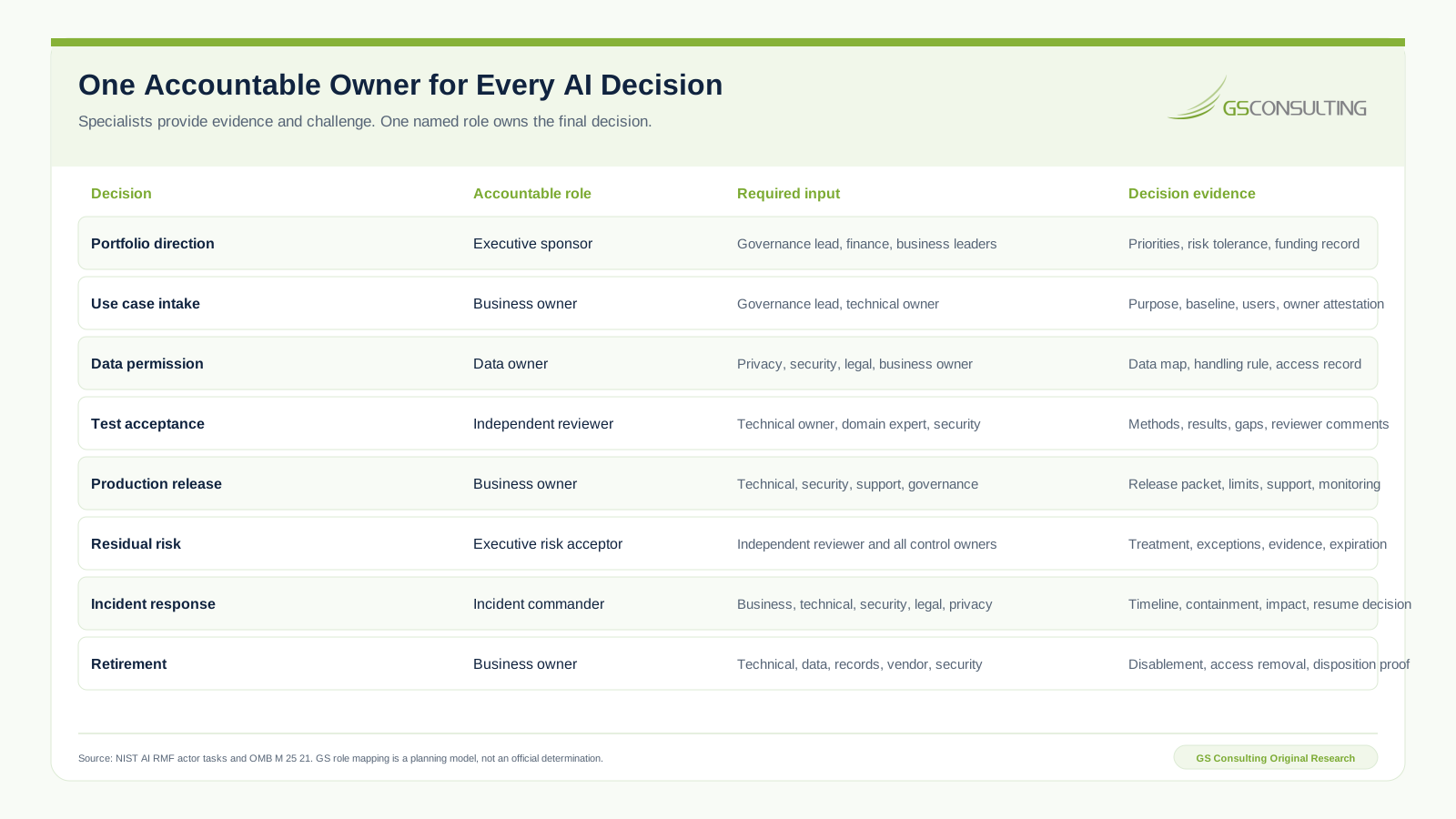
The executive sponsor owns portfolio direction. The business owner owns use case intake and production release. The data owner owns data permission. An independent reviewer owns test acceptance, provided that role has the needed competence and separation. An executive risk acceptor owns material residual risk. The incident commander owns coordinated response. The business owner owns retirement, with technical, data, records, vendor, and security proof.
This is a planning pattern, not a universal legal assignment. An organization may place release authority with a product leader, operational leader, authorization official, or another designated person. The essential rule is one accountable owner with documented authority and evidence.
Add six fields to every decision right: scope, required inputs, delegated limit, escalation trigger, backup, and record location. Without those fields, a RACI often says who attends but not who can say yes, no, stop, or resume.
What the AI Governance Board Should Do
The board should approve the governance framework, risk tier rules, prohibited and restricted uses, delegated lanes, exception route, portfolio priorities, and reporting standard. It should review material risk, repeated control failures, overdue actions, major incidents, disputed decisions, and changes that exceed delegated authority.
Every agenda item needs a decision statement, accountable owner, evidence packet, options, recommendation, decision deadline, and requested authority. Minutes should record the decision, rationale, conditions, dissent or challenge, owner, due date, and next review. A slide deck alone is not a decision record.
Keep routine work out of the board. Low risk intake, standard evidence checks, owner updates, and ordinary monitoring should move through delegated operations. Otherwise the board becomes a queue and teams route around it.
How a Small Team Can Combine Roles
A small organization does not need 12 full time governance positions. It still needs the decisions. One executive can serve as sponsor and risk acceptor. One program lead can run governance and inventory quality. One business leader can own several use cases. A technical lead can own architecture and operations. Security, privacy, legal, procurement, and data expertise can come from existing roles or qualified outside support.
Combination has limits. The person who designed and built a consequential system should not be the only person who accepts its test evidence and residual risk. The person selling a use case should not alone decide whether its value justifies harm to affected people. The person operating an incident should have a clear path to an executive who can pause the use.
Document the conflict and the compensating review. Use an outside reviewer, board member, peer from another function, or higher approver where internal separation is not practical. The evidence should show what was challenged and how the final owner resolved it.
Use a Five Stage Escalation Path
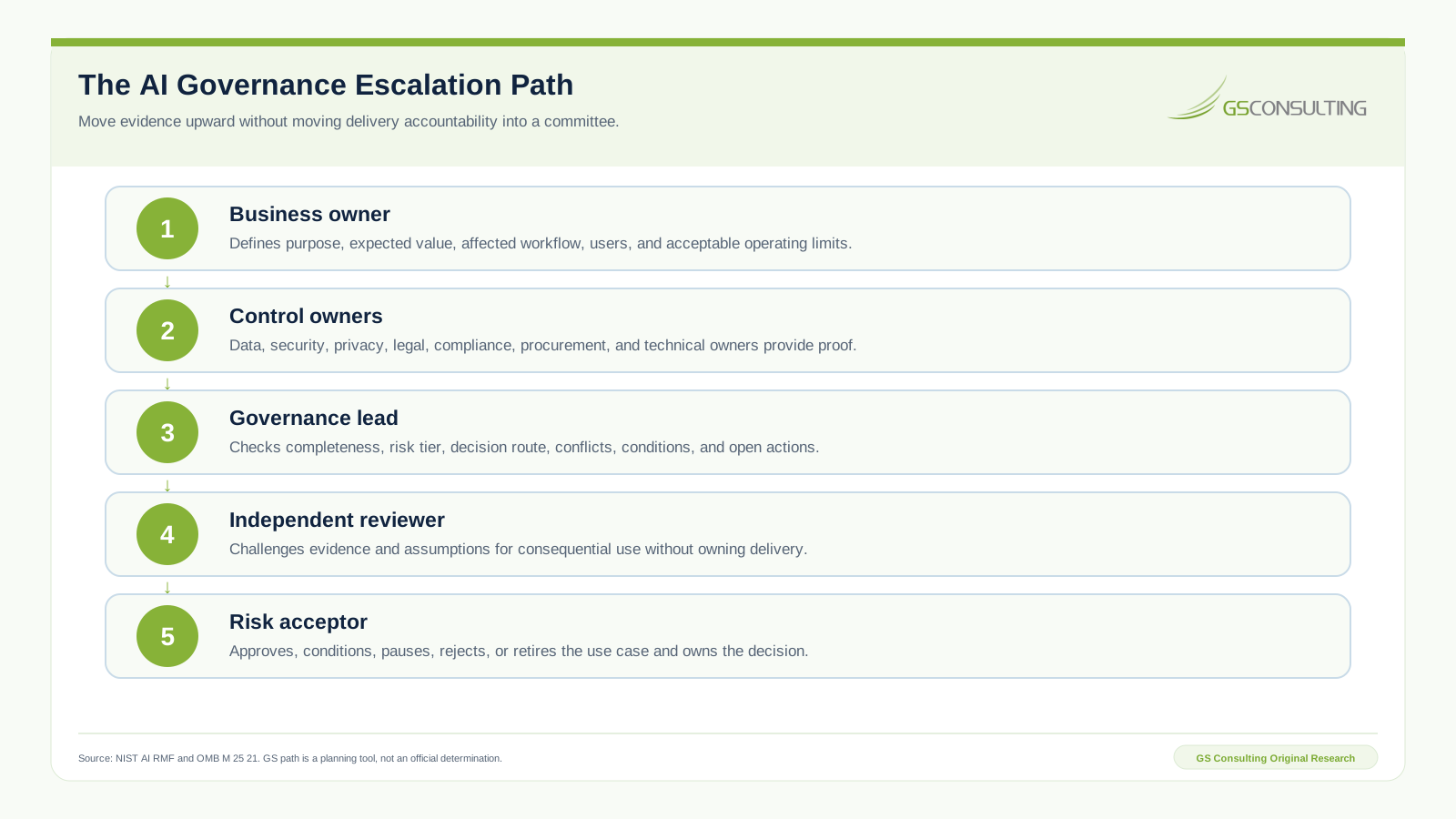
The business owner defines purpose, expected value, affected workflow, users, and acceptable limits. Control owners provide data, security, privacy, legal, compliance, procurement, and technical proof. The governance lead checks completeness, tier, route, conflicts, conditions, and open actions. The independent reviewer challenges evidence for consequential use. The risk acceptor approves, conditions, pauses, rejects, or retires the use and owns the final decision.
Escalation triggers should be objective where possible. Common triggers include:
- Sensitive data outside an approved purpose or an external decision that affects people.
- Production system writes, broad agent authority, or a path that cannot be reversed.
- Failed test thresholds, unresolved critical controls, or a material vendor change.
- An incident, policy exception, or disagreement that the delegated owner cannot resolve.
Urgent escalation needs a clock. Define who can pause immediately, who must be reached, what temporary restrictions apply, when the next decision occurs, and who may authorize resume. A governance process that works only during the monthly meeting is not an operating control.
Run Three Governance Cadences
- Operational review: weekly or as needed for intake, evidence gaps, owner actions, standard releases, changes, and overdue work.
- Risk and portfolio review: monthly for material decisions, exceptions, repeated control issues, incidents, risk concentration, investment, capacity, and policy questions.
- Executive review: quarterly or after a major event for risk direction, portfolio value, material exposure, governance performance, resources, and changes to delegated authority.
The cadence should follow the volume and consequence of actual use. High change programs may need more frequent decisions. Stable portfolios may need less. Do not confuse meeting frequency with control strength. Decision age, evidence quality, action closure, and owner response tell a better story.
Define Conflicts, Backups, and Vacancies
Write conflict rules before a difficult decision. A person should disclose when they sponsor the use, own the budget, selected the vendor, built the system, designed the test, or would be measured on the approval. A conflict does not always disqualify the person from providing evidence. It may require a separate reviewer or approver.
Every critical decision role needs a named backup with the same authority boundaries and access to the evidence. Set a deadline for filling vacancies. An approval should not continue forever because the original owner left.
Review authority after reorganizations, acquisitions, new contracts, major incidents, and changes in law or policy. A role matrix is stale when the people, systems, or governing conditions change.
The Minimum AI Governance Evidence Packet
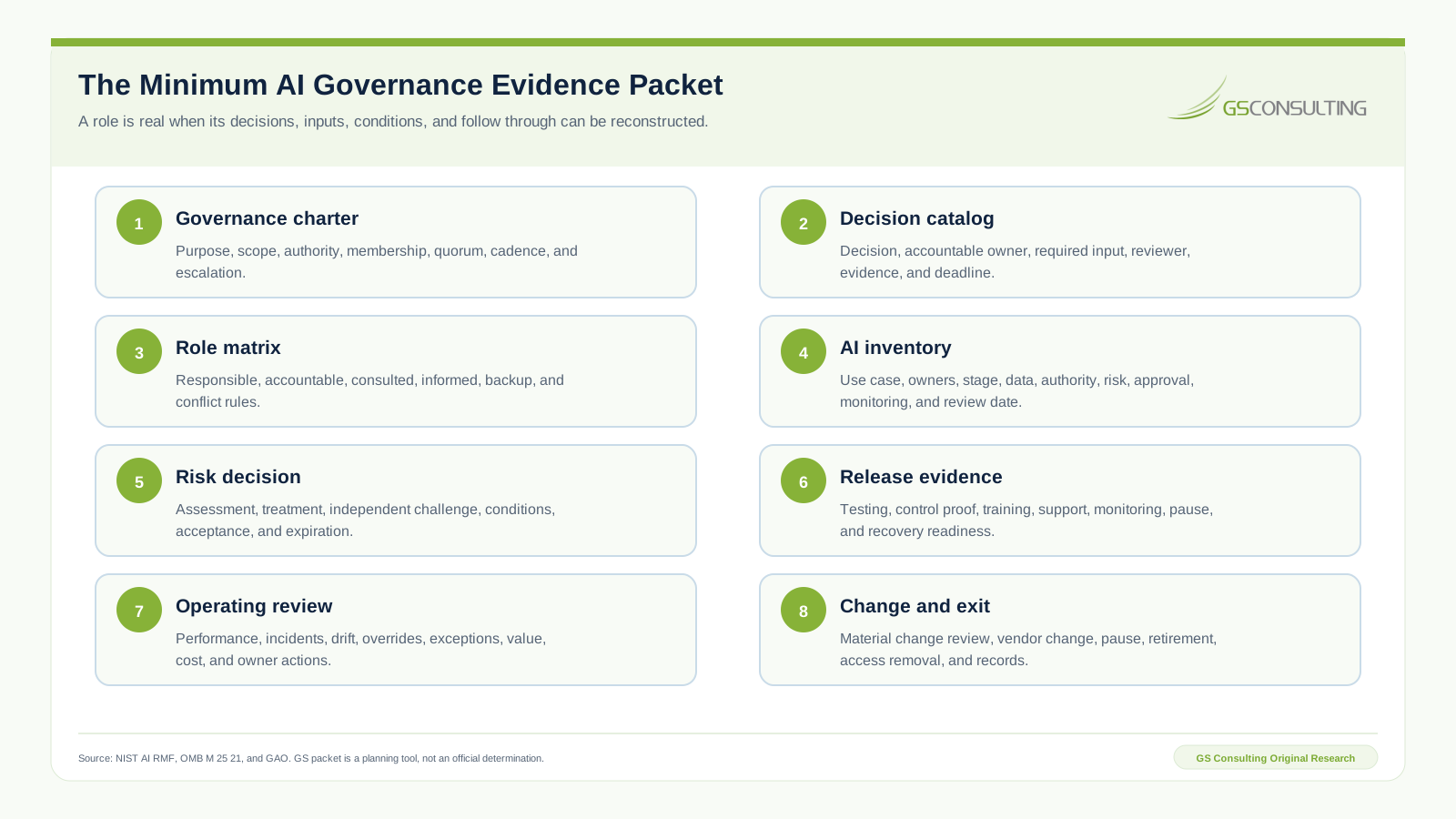
The packet includes a governance charter, decision catalog, role matrix, AI inventory, risk decision, release evidence, operating review, and change and exit record. Each artifact needs an owner, current status, effective date, review date, and stable link.
Test the packet with a reconstruction exercise. Select one use case. Ask who approved the data, accepted the test evidence, released production, and accepted residual risk. Then identify the conditions, material changes, and person who could stop the use. If the answer depends on personal memory, the operating model is not ready.
What to Do in the First 30 Days
In the first week, list the ten to 12 decisions that recur across AI intake, data, testing, release, risk, incidents, change, and exit. Assign a proposed accountable owner and identify any decision with no lawful or practical authority.
In the second week, define delegated limits and escalation triggers. Write the required inputs and evidence for each decision. Name backups and conflict rules.
In the third week, test the model against three live use cases: one bounded low risk use, one consequential production use, and one vendor feature already operating. Record where the model creates delay, ambiguity, conflict, or missing evidence.
In the fourth week, approve the charter, decision catalog, role matrix, operating cadence, and first metrics. Train the owners on their actual decisions. Then run one simulated incident and one material change review.
Sources and Method
The research package records these primary public sources:
- NIST AI RMF Core
- NIST AI RMF Appendix A
- NIST AI RMF Appendix C
- OMB Memorandum M-25-21
- GAO AI Accountability Framework
OMB M-25-21 applies to covered federal agencies under its terms. It does not impose one universal private sector or contractor organization chart. NIST AI RMF is voluntary. Actual board, officer, fiduciary, legal, regulatory, and contractual duties require context specific advice.
The GS model uses documented ordinal ratings and weights. Source observations, actor task mapping, inputs, formulas, scores, sensitivity results, role mapping, and figure data are preserved in the research package. The model supports planning. It does not confer authority.
AI Governance Roles FAQ
Who should chair the AI governance board?
Choose a leader with authority to resolve cross functional disputes, assign resources, and escalate material risk. The title matters less than actual authority, capacity, and executive access.
Who owns an AI use case?
The business owner should own purpose, value, affected workflow, operation, and retirement. Technical and control owners own their evidence. Residual risk beyond the business owner's delegated authority moves to the designated risk acceptor.
What should be documented for each role?
Document decisions, scope, required inputs, delegated limits, escalation triggers, evidence, backup, conflict rules, meeting duties, response time, and record location.
What is the operating standard?
No collective fog. One consequential AI decision, one named accountable owner, required evidence, an explicit limit, and a recorded outcome.
Make accountability visible before the next AI decision.
GS Consulting can map the decisions, assign owners, set delegated lanes, design escalation, and build evidence that proves the model operates.
Define the Decision Rights