AI Governance | | 24 min read
AI Governance Risk Classification System

Key Takeaways
Classification must change the operating path
Six use cases score critical
The GS model places six of twelve archetypes in the critical tier because authority, consequence, and recovery burden converge.
Mandatory triggers outrank the score
A rights, safety, sensitive data, autonomous change, or prohibited use trigger routes review even when a weighted score looks moderate.
Every tier has a control package
A useful tier changes who approves, what must be tested, which controls apply, and how the use is monitored.
AI risk classification is not a label. It is the routing decision that determines whether a use case may proceed, who can approve it, which controls it needs, and what evidence must exist.
Classify the actual use case, not the model name. The same model can draft public copy, summarize controlled records, recommend an employment decision, or change production access. Those uses do not share one risk tier. Purpose, data, authority, affected people, reach, reversibility, and operating exposure change the decision.
Use hard triggers before a weighted score. Then assign a tier, required control package, accountable approver, monitoring plan, and next review date. Preserve the facts and rationale. Reclassify when the system or its operating boundary changes.
The AI Governance hub connects classification to inventory, roles, policy, oversight, and evidence. Pair this guide with the AI Model Inventory, AI Governance Roles and Responsibilities, and AI Governance Exception Management. Use AI Governance Recertification to reopen the tier after material change and the AI Governance Metrics Dashboard to report unresolved exposure. GS Consulting turns the design into an operating model through AI Governance, Risk, and Oversight.
Make every AI use enter the right review lane.
GS Consulting helps teams define classification factors, hard triggers, control packages, decision rights, and evidence that work across intake, release, monitoring, and change.
Plan a Classification WorkshopAI Risk Classification: The Short Answer
Start with one bounded AI use case. Record its purpose, owner, users, affected parties, decisions, inputs, outputs, data classes, model and provider, tools, integrations, human role, scale, and lifecycle stage. Check mandatory triggers. Rate the remaining factors against written criteria. Apply the higher of the trigger result or weighted tier. Assign the control package and approval path attached to that tier.
A practical system uses four lanes. Baseline uses need normal inventory, acceptable use controls, basic testing, owner approval, and periodic review. Elevated uses add privacy, security, quality, and business review. High uses add independent challenge, documented thresholds, strong human authority, enhanced monitoring, and formal release approval. Critical uses require senior risk acceptance, specialized review, strict operating limits, independent evidence, tested stop and recovery capability, and continuous oversight.
The classification is an internal governance tool. It is not a legal conclusion. Laws, contracts, agency policy, customer terms, and sector obligations may define separate categories or mandatory controls. Legal, privacy, security, safety, procurement, and mission authorities retain their own decisions.
Classify the Use Case, Not the Technology
A model registry identifies technology. A risk classification evaluates one intended use in one operating context. Keep those records linked but separate. If a model serves five business processes, it may support five risk decisions. If one process uses several models, connectors, and tools, classify the complete workflow and its effects.
Write the unit of classification as a verb, object, user, and consequence. For example: an assistant summarizes controlled contract records for cleared analysts, or an agent proposes firewall changes for an administrator to approve. Avoid labels such as internal assistant or low risk bot. They hide data, authority, and impact.
Set explicit boundaries. Name allowed users, records, systems, actions, recipients, geography, volume, and operating hours. Define prohibited data, decisions, tools, and actions. Record where human judgment enters and whether that person has enough time, information, authority, and skill to reject the output.
Classification is not static. A drafting assistant becomes a different use when it receives sensitive records, reaches customers, recommends eligibility, or takes an action. Provider changes, model updates, new tools, expanded users, higher volume, and weaker review can also change the tier without changing the business label.
Hard Triggers Come Before Arithmetic
Weighted scoring helps compare uses. It should never dilute a condition that requires specialized review. Write hard triggers as clear questions with an owner and routing result. A yes answer sets a minimum tier or stops the use until a named authority decides.
Common triggers include a material effect on rights, safety, employment, finance, benefits, eligibility, legal status, physical access, cyber access, or mission delivery. Other triggers include controlled or highly sensitive data, public claims without review, autonomous production change, surveillance, biometric use, prohibited use, a vulnerable affected population, or an inability to detect and reverse harm.
A trigger should identify evidence, not invite optimism. Ask whether the system can change access, not whether the team expects it to behave responsibly. Ask whether an output enters a consequential decision, not whether a human is somewhere in the workflow. Ask whether recovery can make the affected party whole, not whether rollback exists in a test environment.
Allow a documented referral when the answer is uncertain. Uncertainty should increase review, not create a low default. The referral record names the question, owner, interim restriction, required evidence, deadline, and final authority.
Public Frameworks Support Context Based Risk Decisions
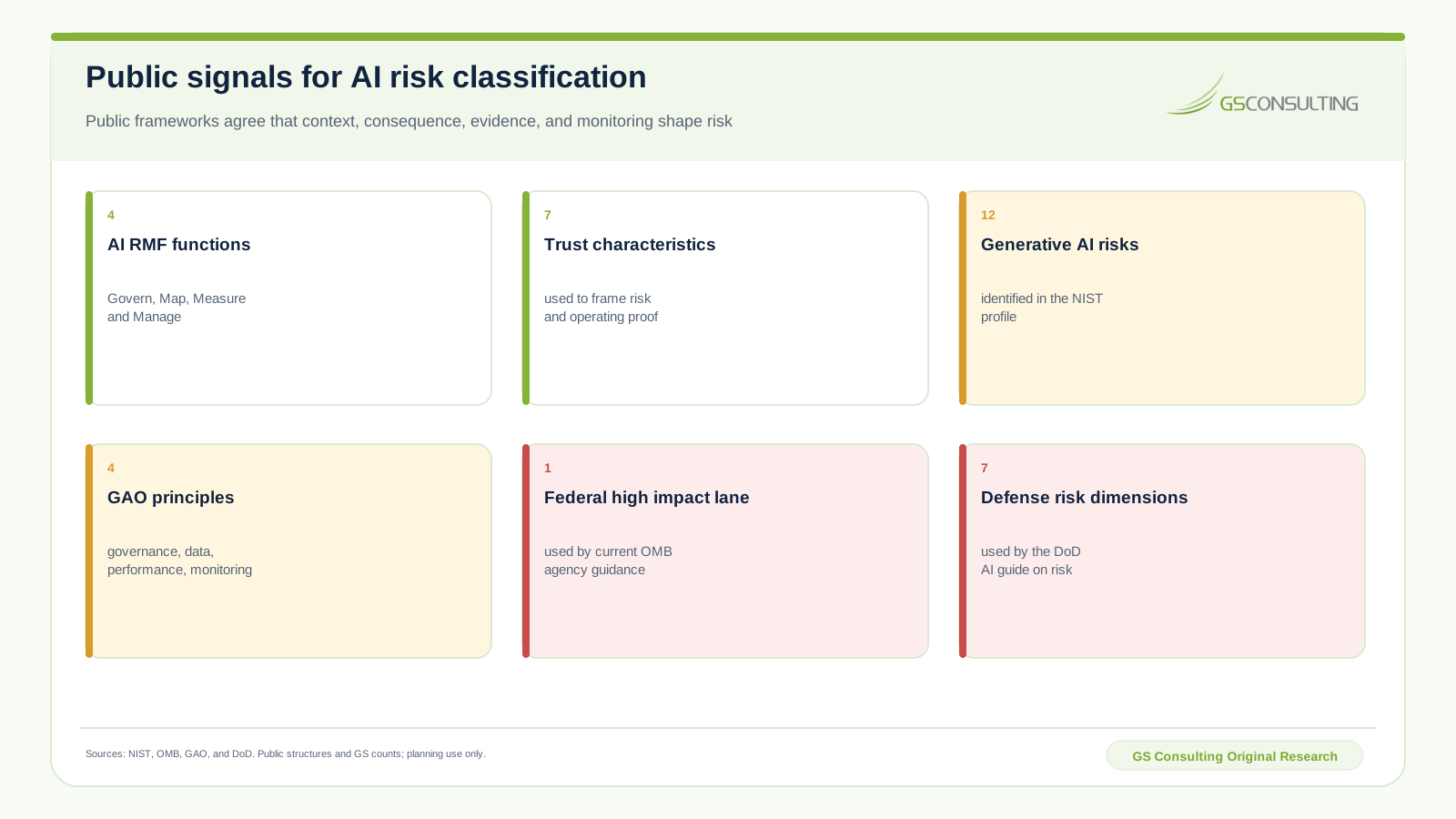
The NIST AI Risk Management Framework organizes work through Govern, Map, Measure, and Manage. It describes trustworthy AI characteristics including valid and reliable, safe, secure and resilient, accountable and transparent, explainable and interpretable, privacy enhanced, and fair with harmful bias managed. The framework is voluntary, and NIST states that AI RMF 1.0 is under revision. Treat it as a source for governance design, not as a certification.
NIST AI 600-1 adds twelve Generative AI risk categories. They are a useful challenge list for content, information integrity, privacy, security, bias, human interaction, and ecosystem effects. They do not assign a universal tier to a use case.
The GAO AI Accountability Framework groups accountability around governance, data, performance, and monitoring. The OMB M-25-21 memorandum establishes federal agency requirements for high impact AI. Those federal requirements do not automatically become an internal classification rule for every contractor use. Contract terms and agency direction still control applicability.
The Defense Department Responsible AI Toolkit includes risk framing across mission, technical, data, human, organizational, legal, and ethical dimensions. Together, these sources reinforce a central point: risk depends on the full context and consequence of use.
Original Research: GS AI Use Case Classification Pressure Index
Safety, rights, or mission decisions score 100. Autonomous access changes score 95. Autonomous production changes score 91. Employment screening recommendations score 89. Six of twelve archetypes land in the critical tier in the GS planning model.
We rated twelve illustrative use cases from one to five across consequence, decision authority, data sensitivity, affected reach, reversibility, and external exposure. Base weights are 25, 20, 20, 15, 10, and 10 percent. The result is normalized to a zero to 100 pressure score. Baseline covers zero through 49, elevated covers 50 through 64, high covers 65 through 79, and critical covers 80 through 100.
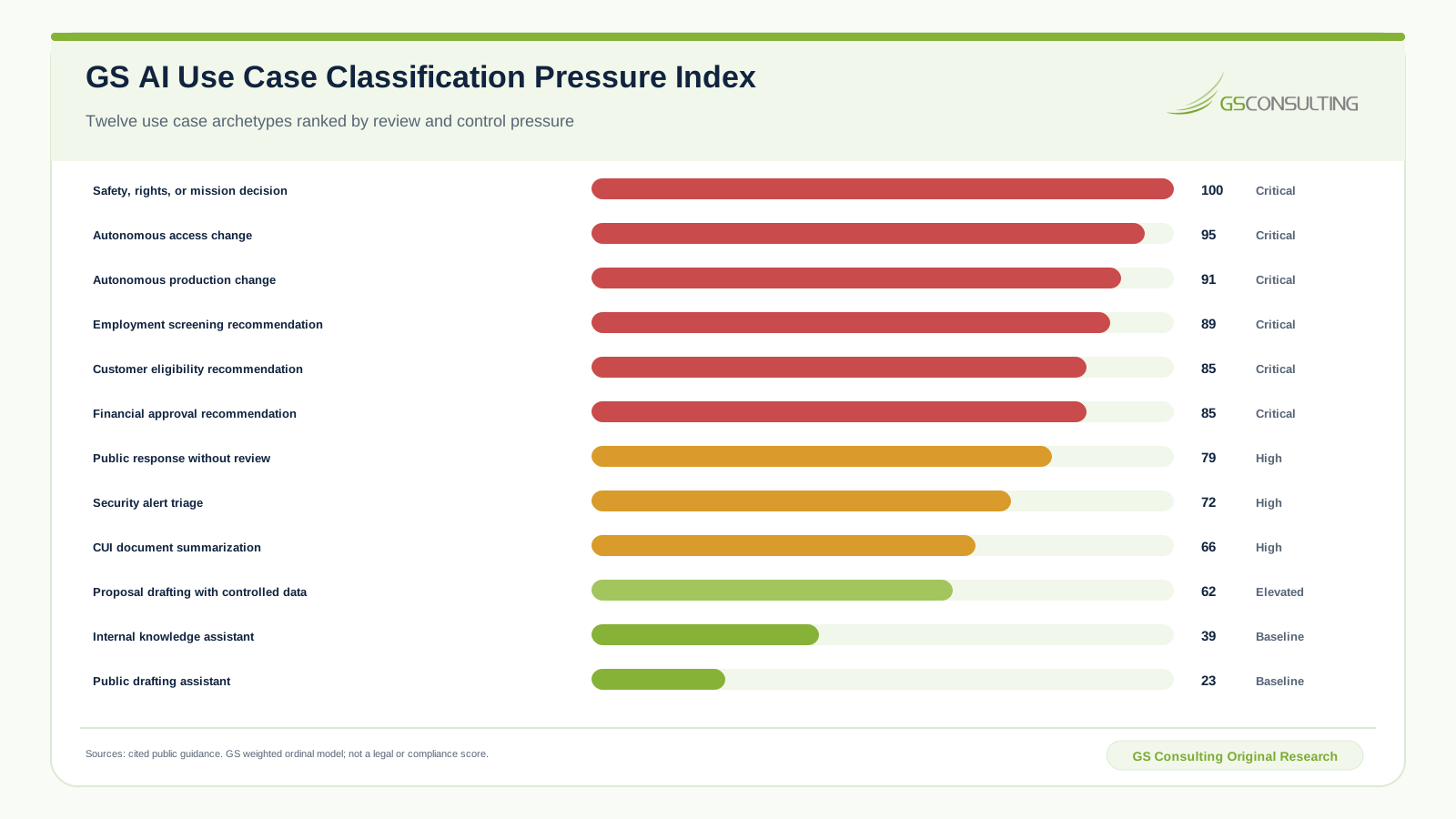
Customer eligibility and financial approval recommendations each score 85. Public response without review scores 79. Security alert triage scores 72. Controlled record summarization scores 66. Proposal drafting with controlled data scores 62. An internal knowledge assistant scores 39, and a public drafting assistant scores 23.
The sensitivity case shifts weight toward consequence and reversibility. No archetype moves more than one point, and no tier changes. That stability supports the relative ordering within this illustrative model. It does not validate the analyst ratings for a particular organization. Replace every rating with evidence from the actual use case and use hard triggers before the score.
Six Factors Make the Classification Explainable
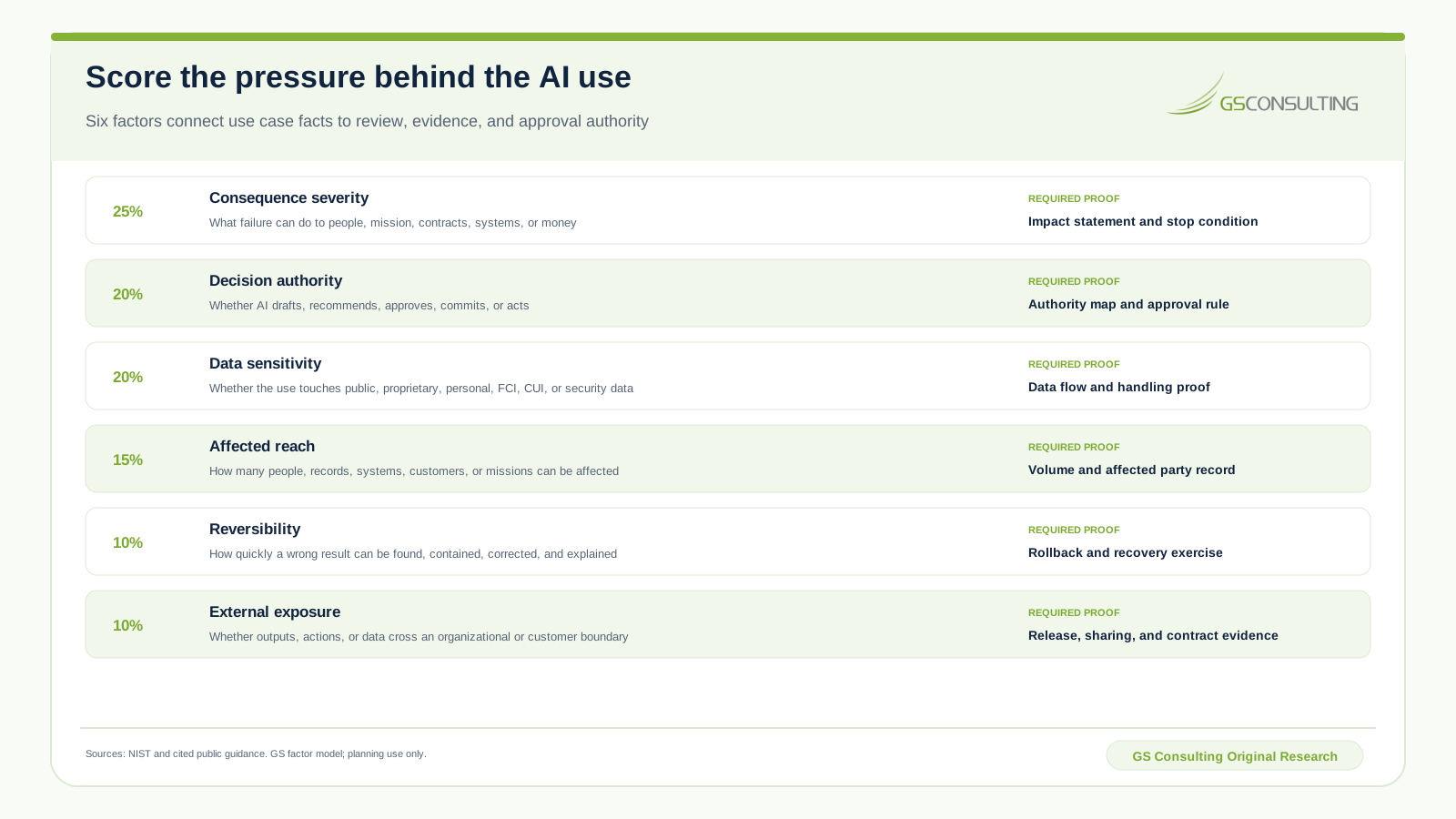
Consequence asks what material harm can result and who bears it. Rate credible impact, not the benefit case. Decision authority asks whether the system informs, recommends, approves, denies, or acts. A nominal human review does not lower the rating unless the reviewer can detect error and reject the result.
Data sensitivity covers confidentiality, privacy, legal restrictions, customer terms, intellectual property, controlled information, and derived data. Affected reach covers the number and vulnerability of people, systems, customers, or missions exposed to one error or repeated errors.
Reversibility asks how quickly harm can be detected, contained, corrected, and communicated. It includes downstream copies and decisions, not just a technical rollback. External exposure covers public interaction, third parties, connected tools, suppliers, and adversarial input.
Give every rating a one sentence rationale and evidence link. Record uncertainty separately. A factor can be low with high uncertainty, which should trigger targeted evidence work rather than a false midpoint.
Each Risk Tier Needs a Different Control Package
A tier has value only when it changes work. Define the minimum review, test, approval, monitoring, and evidence for each level. Teams may add controls for context, but they should not remove a minimum control without a governed exception.
Baseline uses receive inventory registration, acceptable use rules, source and output checks, owner approval, user guidance, and periodic review. Elevated uses add security and privacy review as applicable, data controls, representative quality tests, documented human review, vendor terms, monitoring measures, and a change trigger.
High uses add independent challenge, explicit acceptance thresholds, abuse and failure tests, segregation of duties, strong human decision authority, formal release approval, enhanced event records, incident integration, and frequent review. Critical uses add senior accountable approval, specialized legal, safety, security, privacy, or mission review, narrow operating limits, independent evidence, tested stop and recovery actions, continuous signals, and a fixed expiry or recertification date.
Define prohibited uses outside the tiers. A critical lane is not an invitation to approve anything with more paperwork. Some uses should stop because policy, law, contract, ethics, control feasibility, or risk appetite does not permit them.
Run Classification as a Decision Workflow
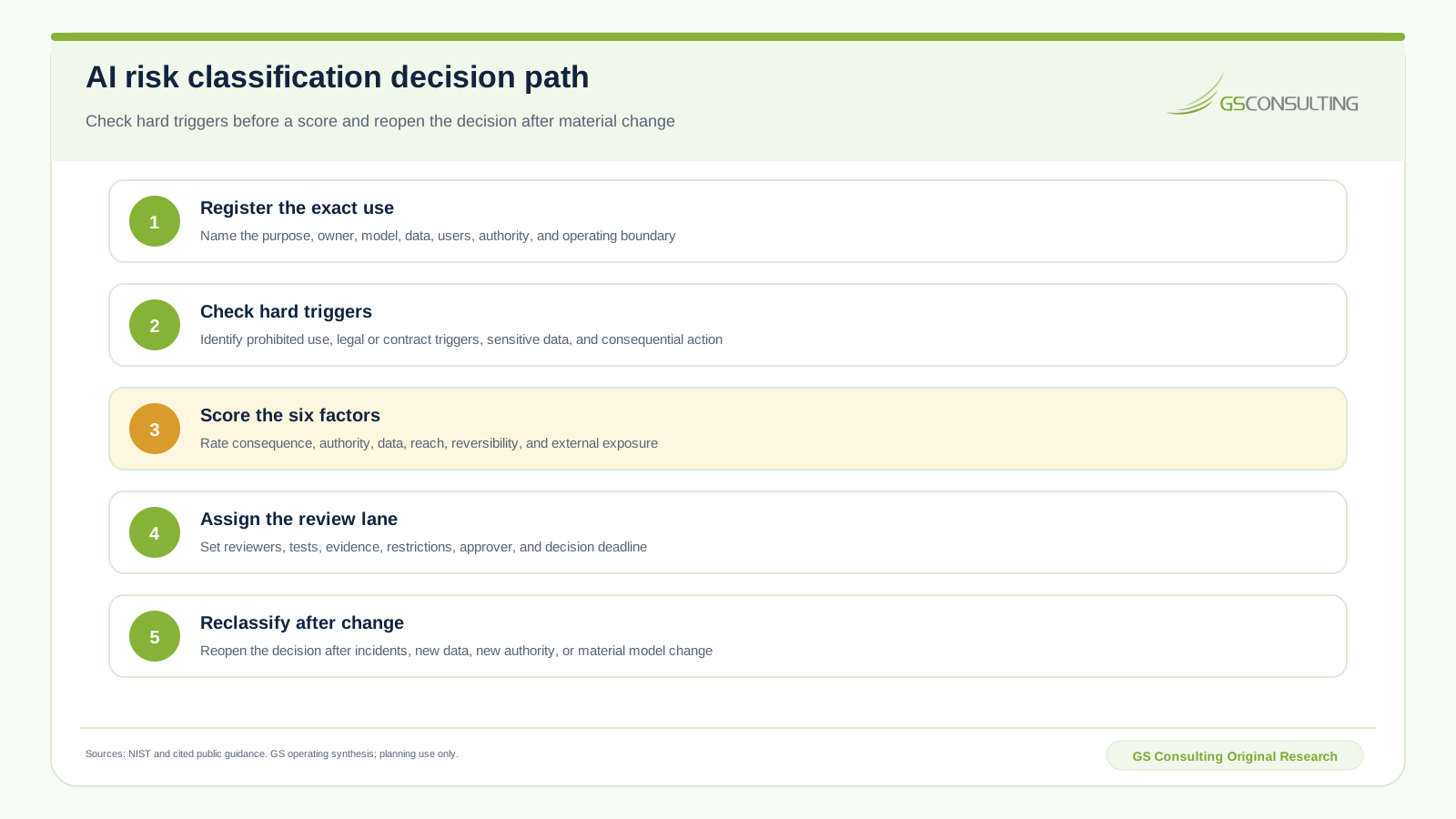
Intake starts with a named business owner and a bounded use statement. The inventory record supplies known system, data, vendor, and lifecycle facts. An intake coordinator checks completeness and routes any hard trigger to the relevant authority.
A trained assessor rates the six factors with evidence. The system calculates a proposed tier, but the reviewer can raise it with a documented reason. Lowering a trigger based tier should require the authority that owns the trigger, not the project sponsor.
The tier generates a control checklist, test plan, evidence requirements, approver list, monitoring measures, and review interval. Approval applies to the recorded version and boundary. Conditions become enforceable release requirements, not comments buried in meeting notes.
Monitoring watches the assumptions that supported classification. A change in data, purpose, provider, model, authority, users, tools, reach, or control performance opens reclassification. Incidents, threshold breaches, repeated overrides, and expired evidence also return the use to review.
Tie Controls to the Mechanism of Risk
Do not use tier as a substitute for control design. Start with the failure and exposure paths. If the risk comes from sensitive data, control collection, access, retention, transfer, output, and deletion. If it comes from consequential decisions, control evidence quality, human authority, notice, appeal, bias, consistency, and the ability to correct affected records.
If it comes from autonomous action, constrain identity, permissions, tools, targets, parameters, rate, spend, time, and sequence. Require approval where consequence crosses a threshold. Preserve the request, policy decision, action, result, and recovery record.
If it comes from external exposure, test malicious input, false authority, data extraction, unsafe content, and dependency failure. Limit trusted sources and outbound destinations. Make pause and containment independent of the model path that may be failing.
Map every required control to an owner, implementation location, test, result, exception path, monitoring signal, and evidence location. That mapping turns a tier into operating proof.
Build a Decision Packet That Can Be Replayed
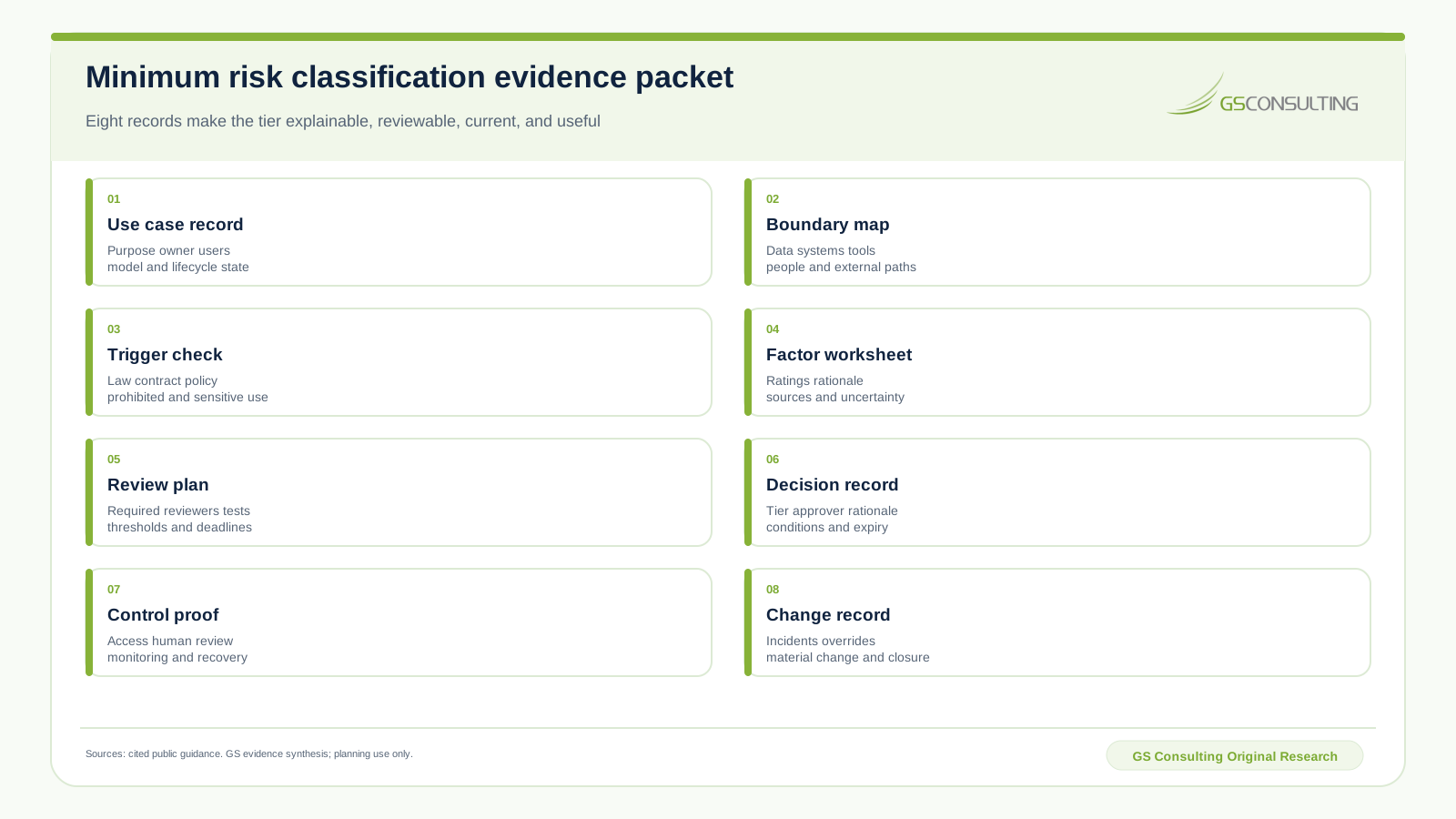
The packet begins with the use case boundary, business owner, system owner, affected parties, data and system map, model and provider, tool authority, and version. Add trigger answers, factor ratings, evidence, assumptions, uncertainty, calculated score, proposed tier, reviewer decision, and any dissent.
Attach the control package, implementation evidence, test plan, results, unresolved findings, risk treatment, approval conditions, operating limits, monitoring plan, incident connection, exception records, expiry, and reclassification triggers. Keep the approval identity, date, authority, and scope.
Evidence should let an independent reviewer reconstruct why the use was placed in the lane and whether the conditions still hold. A screenshot of a dashboard or a signed form alone is not enough. Preserve the underlying facts, method, decision history, and links to source records.
Five Failure Modes Break Classification Programs
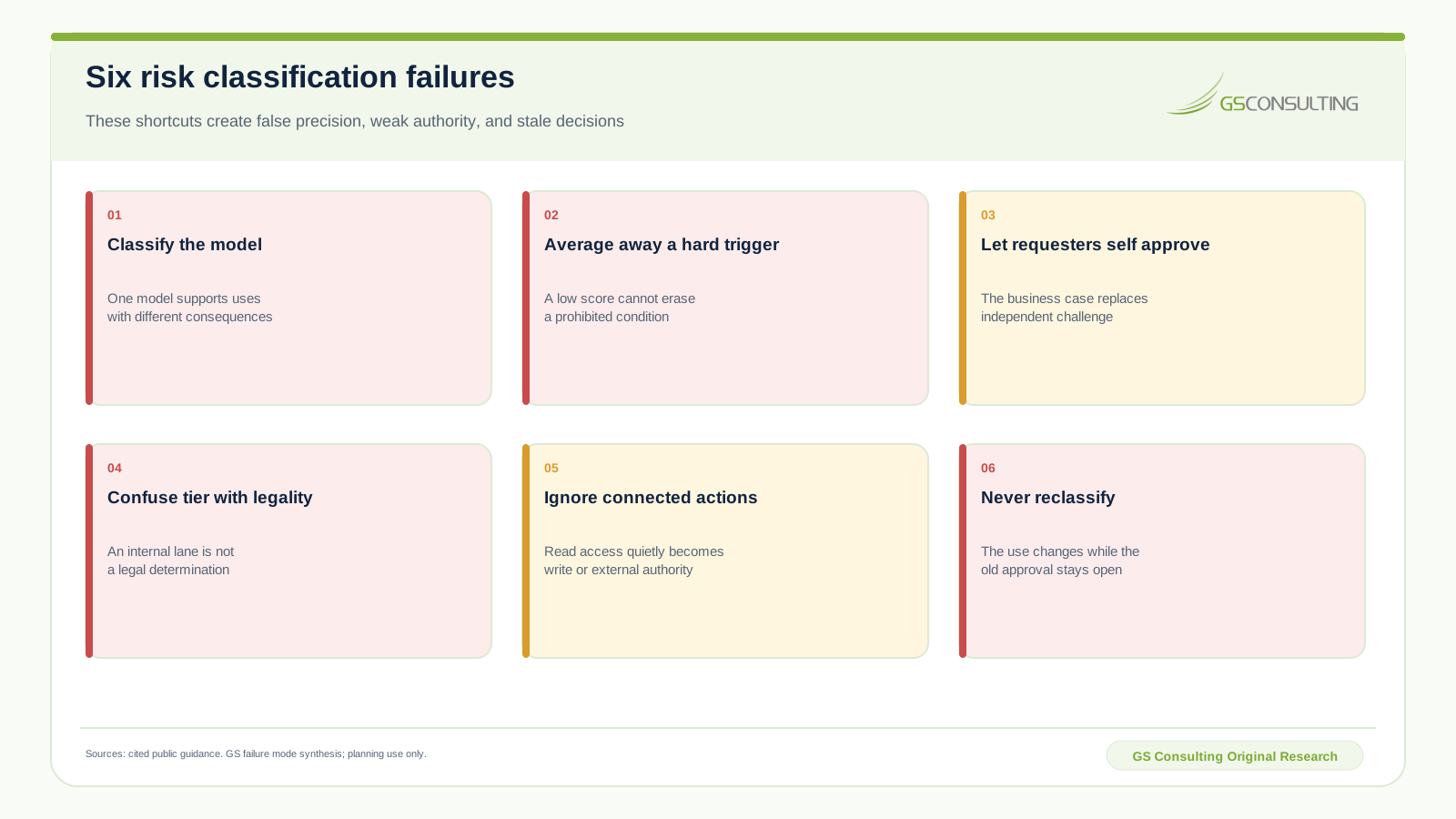
One tier per product. This hides different data, users, decisions, and authority. Classify each bounded use. A score without triggers. Averaging can bury a decisive condition. Apply mandatory routes first.
Ratings without anchors. Teams negotiate numbers instead of facts. Define each level and require evidence. A tier without consequences. If all tiers receive the same checklist and committee, classification is ceremony. Generate a distinct control and approval path.
No reclassification logic. The approved use drifts while the original record remains green. Connect change, monitoring, incidents, exceptions, and expiry to review. A classification program should make stale decisions visible.
A Ninety Day Implementation Plan
Days 1 through 30: define the unit of classification, prohibited uses, hard triggers, four tier descriptions, factor anchors, decision rights, and escalation. Test the language against ten real uses from the inventory. Record disagreements and revise ambiguous criteria.
Days 31 through 60: build the intake form, factor evidence fields, control packages, workflow, approval records, monitoring connection, exception path, and reclassification events. Pilot with one low consequence use, one sensitive data use, one consequential recommendation, and one autonomous workflow.
Days 61 through 90: calibrate reviewers, compare decisions, resolve tier drift, publish service levels, train owners, and migrate active uses. Measure intake completeness, trigger referral time, review time by tier, classification changes, missing evidence, overdue recertification, and incidents by tier.
Start simple enough to operate. Four clear tiers with hard triggers and real control packages beat a complex taxonomy that teams route around. The system can mature as evidence accumulates.
Sources and Method Note
Primary public sources include the NIST AI Risk Management Framework, NIST AI 600-1, the NIST AI RMF Playbook, the GAO AI Accountability Framework, OMB M-25-21, and the Defense Department Responsible AI Toolkit.
The GS index is an original planning model, not a law, standard, certification, probability estimate, or substitute for professional judgment. Factor ratings are illustrative. The workbook preserves sources, assumptions, formulas, ratings, sensitivity results, and figure data so readers can inspect the method and replace inputs.
Frequently Asked Questions
What is AI risk classification?
It is a repeatable governance decision that places a specific AI use case into a review tier based on consequence, authority, data, reach, reversibility, exposure, and mandatory triggers.
How many AI risk tiers should an organization use?
Four are usually enough: baseline, elevated, high, and critical. Each must change review authority, required controls, evidence, monitoring, and release conditions.
Can an AI risk score replace legal or security review?
No. It sequences work. Hard triggers route specialized review, and accountable authorities retain their own decisions.
What makes an AI use case high risk?
Material effects, sensitive data, broad reach, autonomous action, weak reversibility, or limited ability to detect and correct harm commonly raise the tier.
When should an AI risk classification be repeated?
Repeat it after material changes to purpose, people, data, model, provider, tools, authority, integrations, scale, controls, law, contract terms, or operating environment.
What evidence should support an AI risk tier?
Keep the bounded use, owner, system map, ratings, triggers, sources, controls, tests, approval, restrictions, monitoring, review date, and version history.
Continue Reading
- AI Governance Exception Management
- AI Model Inventory
- AI Governance Roles and Responsibilities
- NIST AI RMF Implementation Walkthrough
Turn classification into a working decision system.
GS Consulting helps teams connect intake, risk tiers, controls, approval, evidence, monitoring, exceptions, and change into one accountable operating model.
Start the Conversation