AI Governance | | 23 min read
AI Governance Recertification and Periodic Review

Key Takeaways
Recertification must test current facts, not repeat the old approval
Five triggers require review now
The GS model places harm, approval bypass, sensitive boundary expansion, new action authority, and changed legal or customer requirements in the immediate review lane.
The calendar is a backstop
A scheduled date catches evidence decay. A material change, incident, or threshold breach must reopen authority sooner.
Compare the approved and current boundary
A reviewer needs a clear delta across purpose, data, model, tools, users, controls, evidence, and operating context.
AI governance recertification is not an annual signature. It is a new authority decision based on current purpose, scope, data, and system behavior. Controls, monitoring, evidence, and operating context matter just as much.
An approval starts aging the moment the AI use changes. A provider releases a new model. The team adds a tool. Sensitive data enters the workflow. More people are affected. Human review becomes ceremonial. A contract changes. A threshold breaks. None of those events should wait for an anniversary.
Use both scheduled review and event driven triggers. Protect the approved boundary while evidence is gathered. Compare the prior decision with current facts. Retest the controls that could have become invalid. Then confirm, restrict, remediate, reapprove, escalate, or retire the use. Record the decision and the next trigger.
The AI Governance hub connects periodic review to inventory, classification, roles, exceptions, and evidence. Start with the AI Model Inventory, use the AI Governance Risk Classification System to set review intensity, and route adverse conditions through AI Governance Exception Management. Track the portfolio through the AI Governance Metrics Dashboard. GS Consulting implements the full operating model through AI Governance, Risk, and Oversight.
Replace stale approval with current proof.
GS Consulting helps teams define review cadence, material change triggers, evidence packets, control retests, decision rights, and closure rules for governed AI uses.
Plan a Recertification WorkshopAI Governance Recertification: The Short Answer
Every approved AI use needs a maximum review interval, named owner, evidence requirements, and material change triggers. Add incident triggers, monitoring limits, an expiry condition, and final authority. The interval is the latest acceptable review date. It is not permission to ignore change before that date.
At review, compare the approved and current state. Has the purpose changed? Are new users, affected people, data, models, or providers involved? Did prompts, tools, integrations, actions, recipients, scale, or geography change? Did a required control, threshold, reviewer, or evidence source change? Did law, contract terms, customer direction, or agency policy change?
Do not ask only whether the use still works. Ask whether the original decision remains valid. A technically reliable system can operate outside its approved purpose, data boundary, authority, or affected population.
Use Risk Based Cadence and Event Driven Review
Set review frequency from consequence, change rate, control dependence, evidence decay, reversibility, and the speed at which harm could spread. A low consequence drafting aid with fixed public data may support a longer interval. A high consequence service with changing data, external effects, action authority, or weak reversibility needs tighter review.
Use the calendar as a backstop. A material change trigger should reopen the decision when scope or proof changes. An incident trigger should reopen it when actual or suspected harm, compromise, prohibited action, or a critical control failure appears. A monitoring trigger should reopen it when quality, security, human, compliance, or impact measures cross their limit.
Different obligations can set different clocks. An internal governance review does not replace a contract update, incident notice, agency approval, records duty, privacy assessment, security authorization, or sector review. Map the clocks and authorities to one use record.
Public Guidance Supports Periodic and Change Driven Review
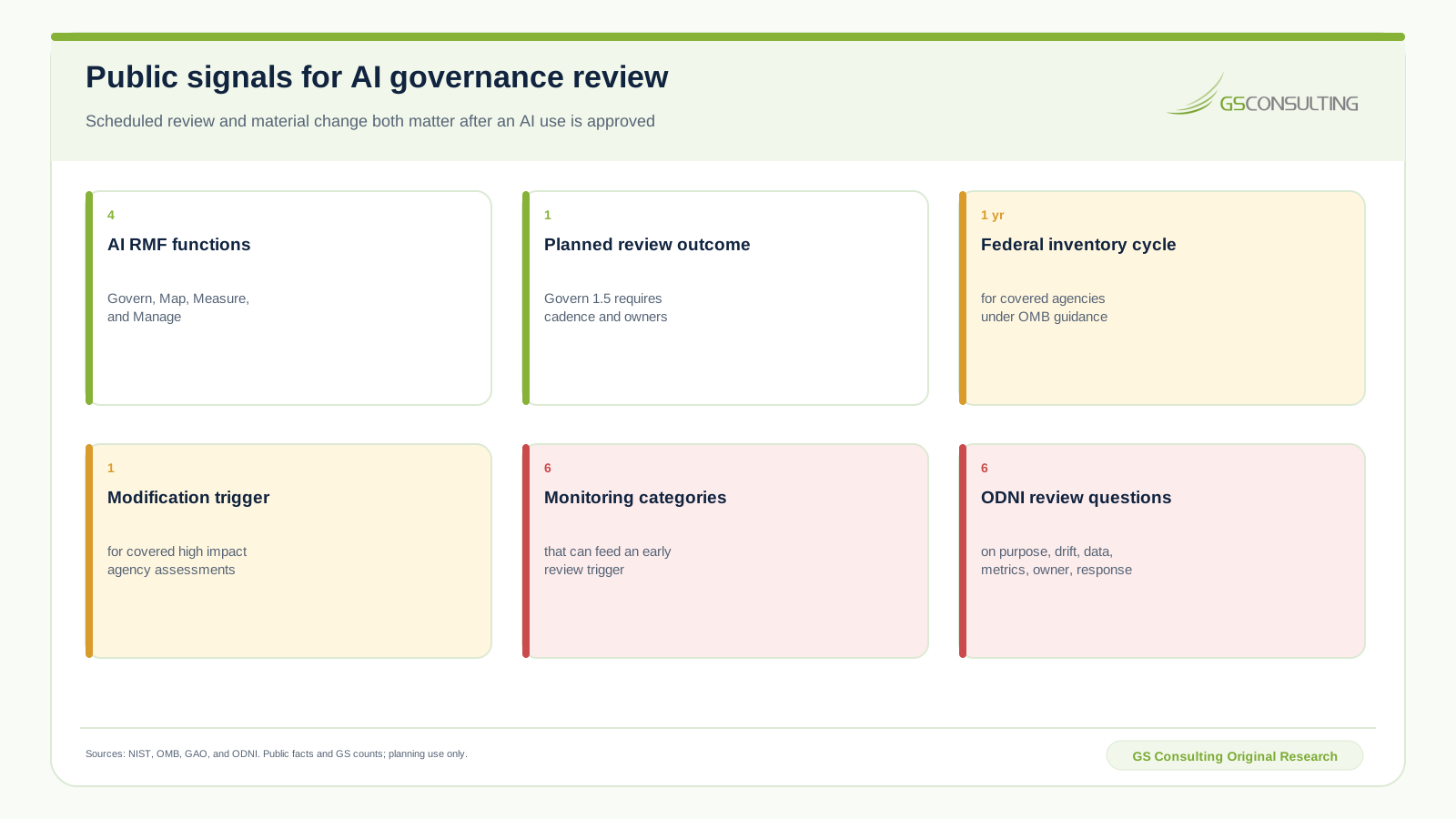
The NIST AI RMF Govern Playbook calls for planned ongoing monitoring and periodic review with defined responsibilities and an organization determined frequency. It also calls for current documentation and regular review of process effectiveness. The Measure and Manage functions connect review to drift, setting change, incidents, and impacts. They also connect review to monitoring, response, recovery, and deactivation.
OMB M-25-21 requires covered federal agencies to inventory uses at least annually. For covered high impact agency uses, it also calls for impact assessments to be updated periodically and after significant modification, plus ongoing monitoring for changes in the system, context, or data. Those terms apply to agencies under the memorandum. A contractor should not assume the memorandum automatically governs its internal use.
The ODNI AI Ethics Framework says AI should be checked at an appropriate documented interval. Its review questions cover purpose, engagement, data representation, performance, drift, ownership, and response. The GAO AI Accountability Framework adds monitoring frequency, traceability, version records, drift limits, and corrective action.
GS AI Governance Review Trigger Priority Index
GS Consulting built the Review Trigger Priority Index to answer one operating question: which changes or signals should reopen an AI governance decision before the normal review date?
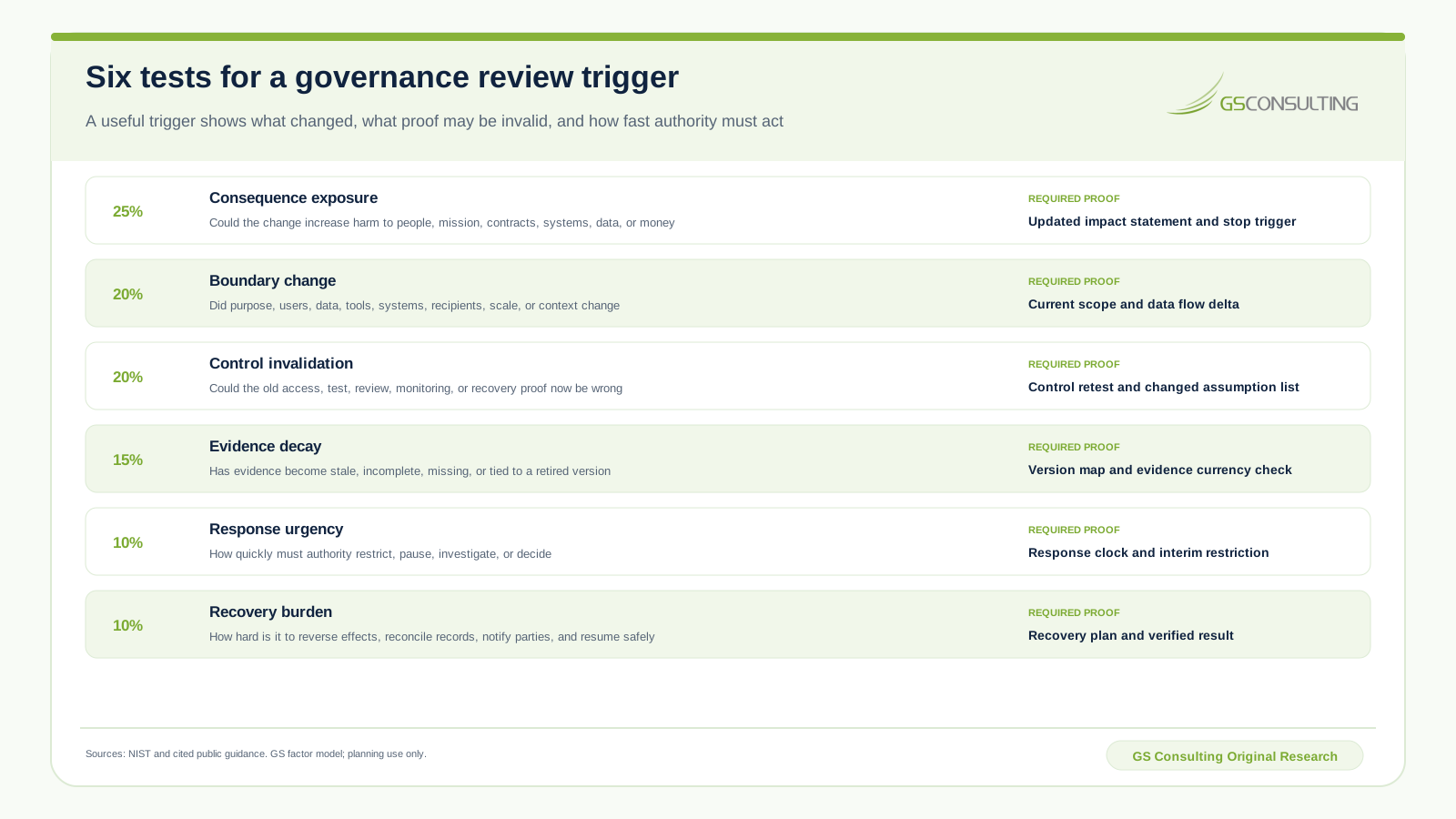
The model evaluates twelve representative triggers. Consequence exposure carries 25 percent. Boundary change and control invalidation carry 20 percent each. Evidence decay carries 15 percent. Response urgency and recovery burden carry 10 percent each. Every factor receives a GS ordinal rating from one to five, then the weighted result is scaled to 100.
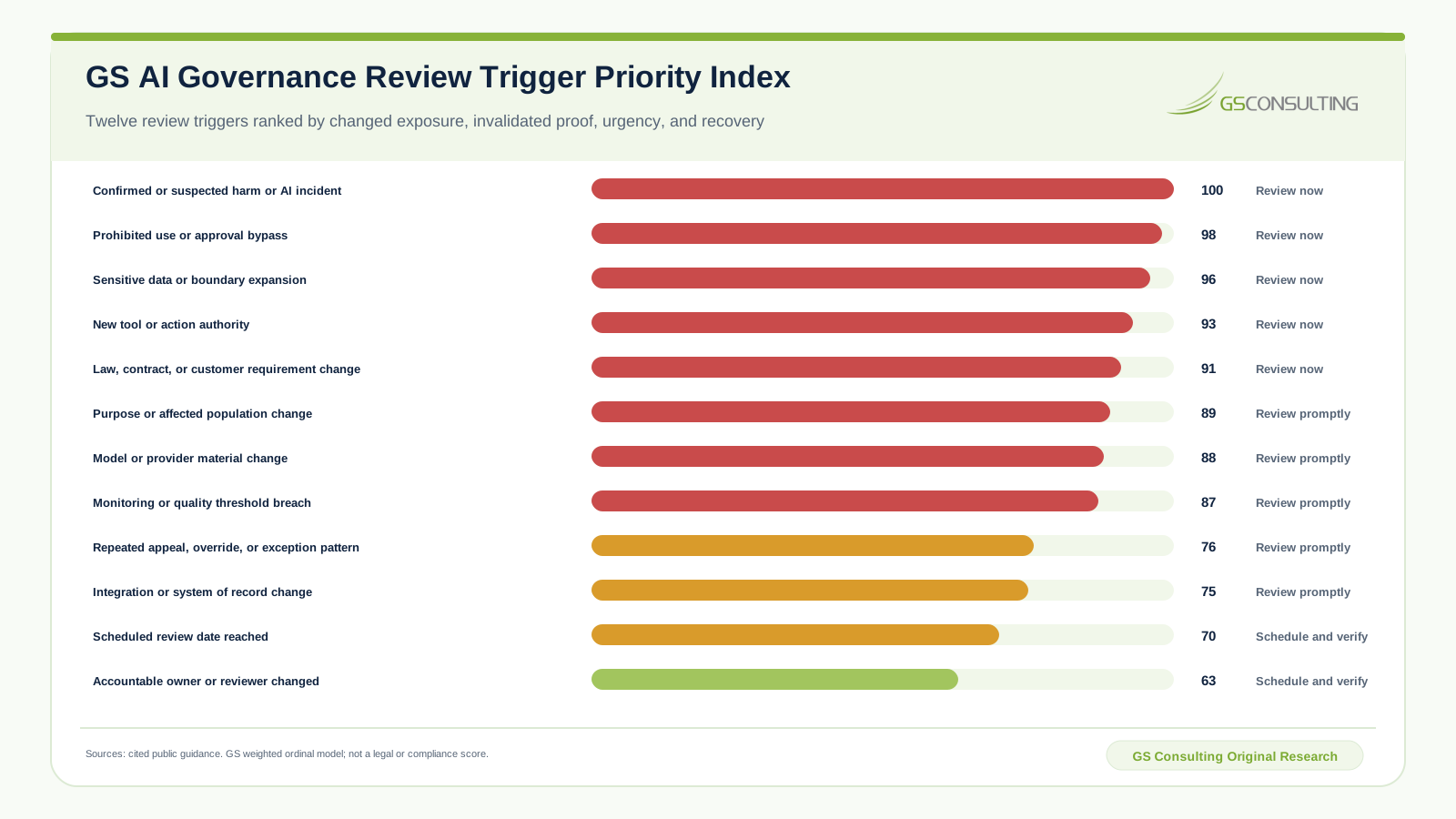
Confirmed or suspected harm scores 100. Prohibited use or approval bypass scores 98. Sensitive data or boundary expansion scores 96. New tool or action authority scores 93. A changed legal, contract, or customer requirement scores 91. All five enter the review now lane.
Purpose or affected population change scores 89. A material model or provider change scores 88. A monitoring or quality threshold breach scores 87. Repeated appeal, override, or exception patterns score 76. A major integration change scores 75. Those triggers require prompt review. A scheduled review date scores 70, and an owner or reviewer change scores 63. They enter the schedule and verify lane unless local facts raise the consequence.
The sensitivity case increases consequence weight by five points and reduces control invalidation by five points. No item moves more than one point. The priority lanes remain stable. The check supports the model ordering under one reasonable alternative. It does not validate the ratings for a real use.
Write Triggers as Testable Conditions
- Purpose and population. Reopen review when the decision, service, user, recipient, or affected group changes in a way the original record did not cover.
- Data and context. Trigger review when sensitive data, new sources, changed representation, a new geography, or a new operating setting enters the use.
- Model and provider. Define material changes for the provider, model, version, tuning, and prompt. Address retrieval, safety, hosting, and service changes too. Do not let the vendor alone decide governance materiality.
- Tools and authority. Reopen authority when the use can call a new tool, write to a system, communicate externally, spend money, change access, or take another consequential action.
- Controls and evidence. Trigger review when a required control fails, evidence expires, logging changes, human review weakens, a monitor disappears, or recovery has not been tested.
- External duties. Route review when law, regulation, contract terms, agency policy, customer direction, certification scope, or sector requirements change.
- Operating signals. Reopen review after harm, an incident, a threshold breach, or a repeated appeal. Overrides, exceptions, complaints, near events, and unexpected patterns can trigger review too.
Each trigger needs a source, owner, interim response, decision clock, required evidence, and authority. Write the condition so an operator can recognize it without a committee debate. If the facts are uncertain, route review and constrain the use while the evidence is assembled.
The AI Recertification Workflow
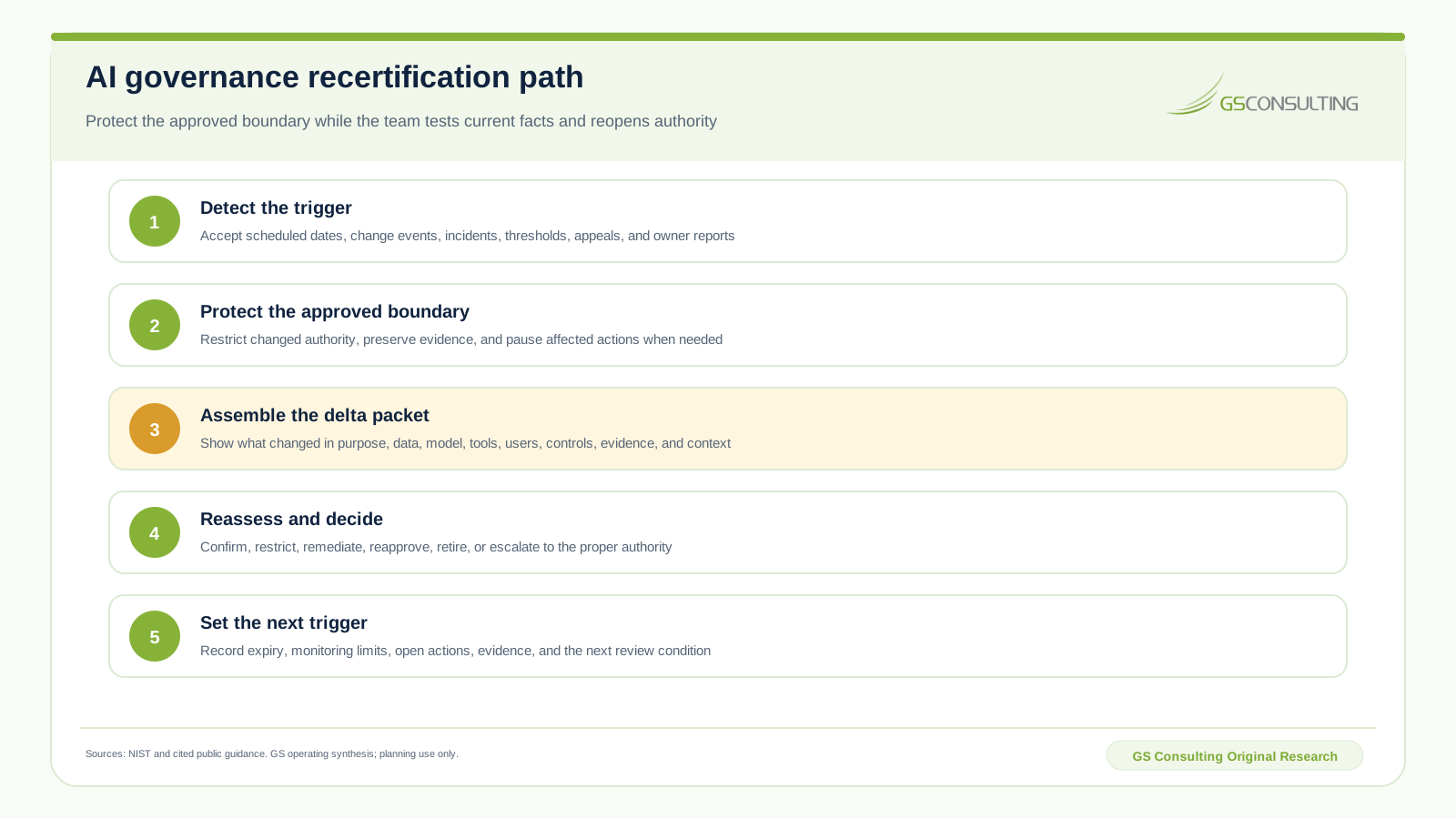
Detect and route. Accept scheduled dates, change records, provider notices, incidents, and monitoring alerts. Accept appeals, exceptions, owner reports, audit findings, and customer direction too. Link the trigger to the correct inventory record and current approval.
Protect the boundary. A material change may require temporary restriction, blocked action authority, preserved logs, a safe manual path, or a pause. The reviewer should not discover that the changed use operated without limits throughout the review.
Build the delta. Compare the approved and current purpose, users, affected parties, data, model, and provider. Then compare prompt, retrieval, tools, systems, actions, and recipients. Finish with scale, controls, monitoring, evidence, and context. Name what did not change too.
Reassess and decide. Revisit risk classification, required controls, test results, and monitoring limits. Review exceptions, incident history, value, owner capacity, and recovery. Route specialized authorities when the facts require them.
Set the next trigger. Record restrictions, open actions, evidence, expiry, maximum interval, and event triggers. Update the inventory, dashboard, control records, and operating procedures.
Recertification Needs Clear Decision Outcomes
Confirm when the approved boundary and evidence remain current. Restrict when the use can continue only within narrower users, data, tools, actions, volume, or monitoring. Remediate when a correctable gap has a named action, interim control, due date, and retest.
Reapprove when material change creates a new operating decision. Escalate when the current reviewer lacks authority or when law, contract, customer, safety, security, privacy, or mission consequences require specialized judgment. Retire when purpose ended, value failed, evidence is unavailable, risk is outside tolerance, or recovery cannot support continued use.
Never use pending as an indefinite outcome. A pending decision needs a reason, interim restriction, owner, evidence request, decision clock, and escalation rule. At expiry, the use returns to the approved boundary, receives a new decision, or stops.
The Minimum Recertification Evidence Packet
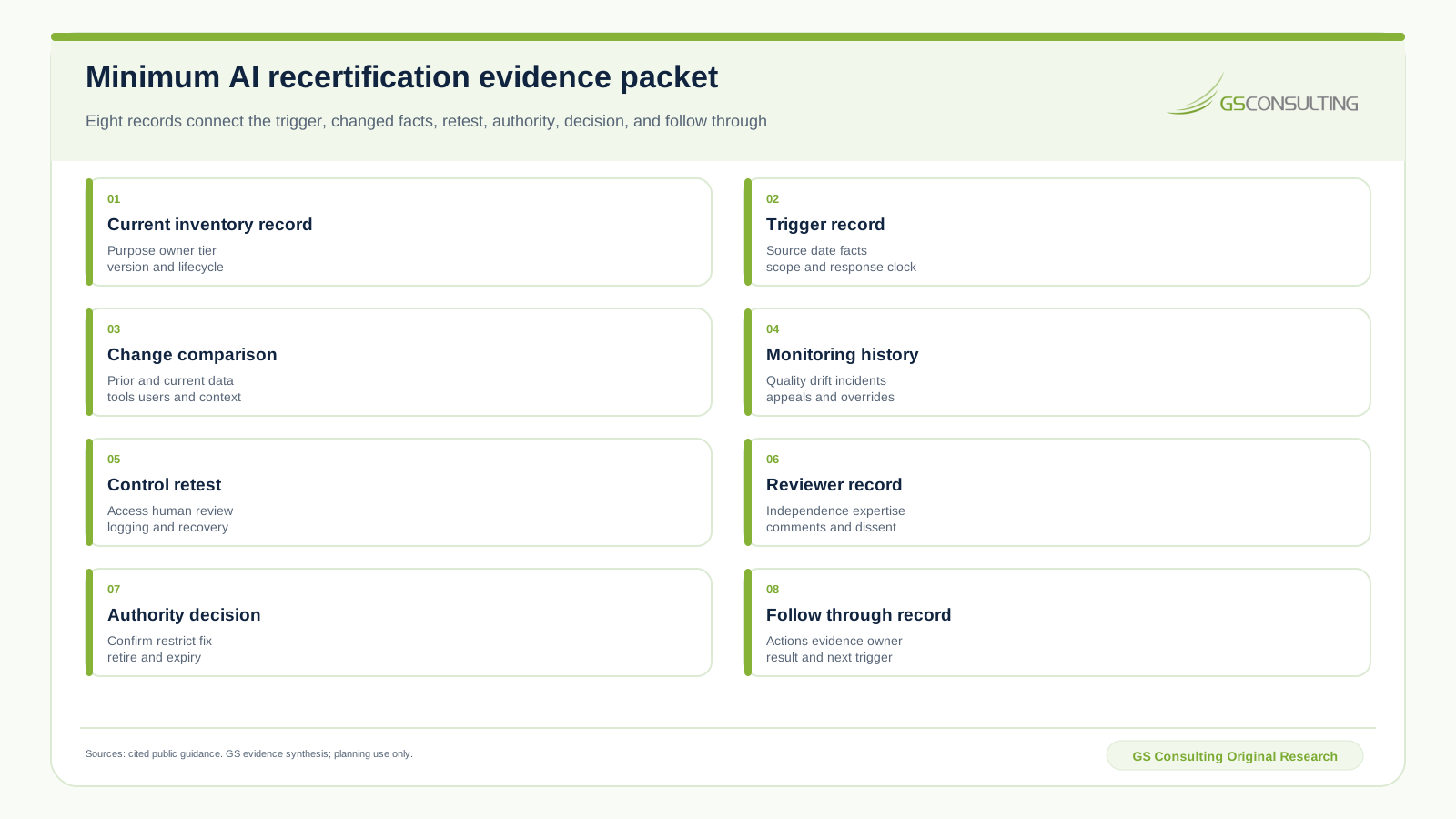
Keep the eight records shown above. Link the prior approval and every open exception, incident, corrective action, or customer commitment.
A reviewer should be able to answer what changed and which old assumptions may be wrong. The record should show which controls were retested and what evidence remains current. It should also show who challenged the result, who had authority, which conditions apply, and when the decision will reopen.
Preserve dissent. The business owner may see value while a control owner sees weak evidence. Record the disagreement, authority, rationale, interim limits, and escalation. A silent compromise produces a false clean record.
Six Recertification Failures
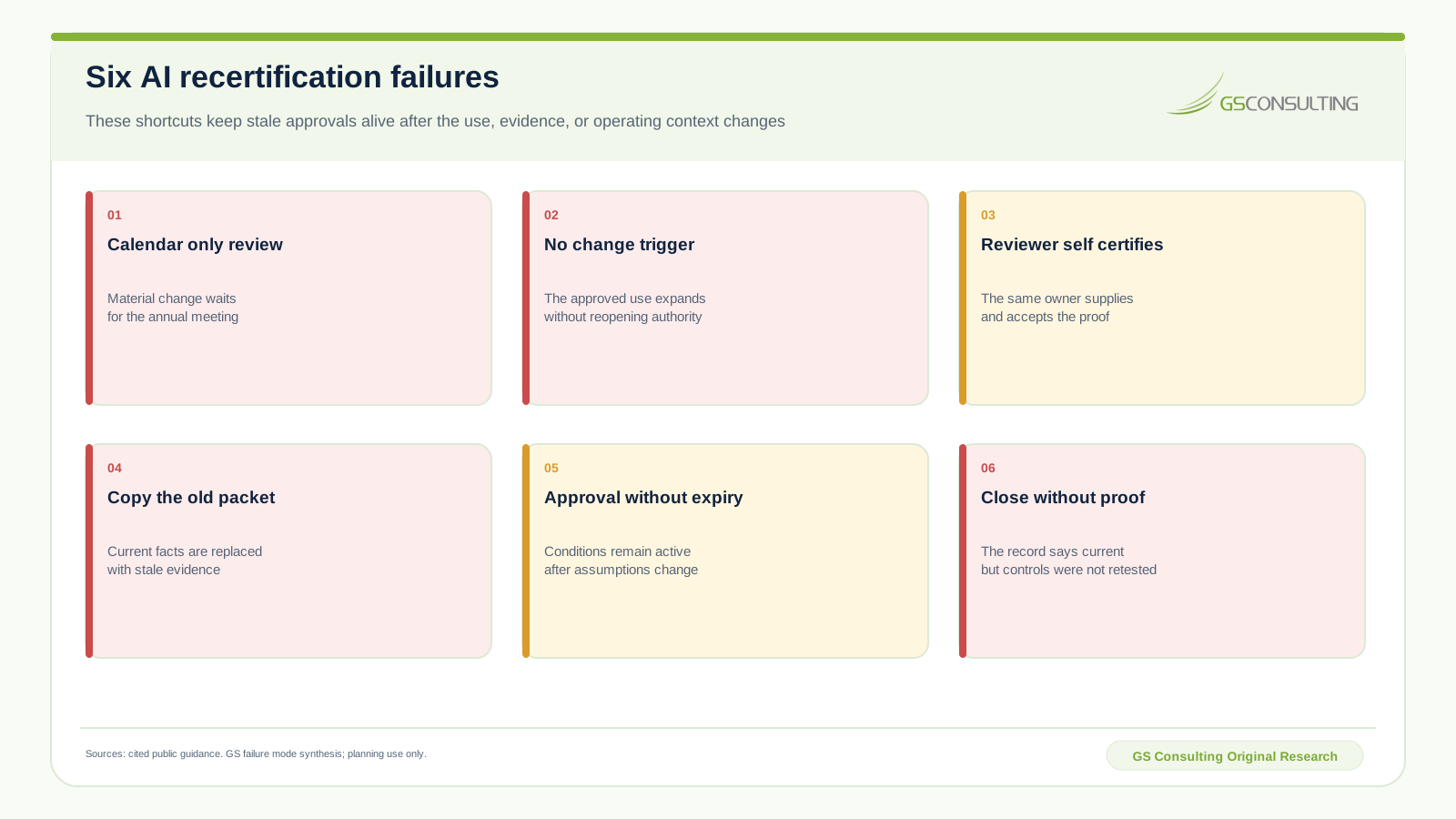
The calendar only program fails first. A material change can operate for months before the annual meeting. The copied packet fails next. Reviewers see last year's architecture, test result, and owner statement instead of current behavior.
Self certification creates a conflict when the delivery sponsor supplies and accepts its own proof. Use independent review where consequence, policy, or customer expectations require it. Independence does not mean a distant committee. It means the reviewer has the authority, skill, evidence access, and freedom to challenge the use.
Approval without expiry is quiet permanent risk. Every restriction, exception, evidence gap, and remediation plan needs an end condition. Closure requires proof that the decision was implemented and the operating record was updated.
A Ninety Day Implementation Plan
Days 1 through 30: inventory approved uses, owners, risk tiers, prior decisions, and review dates. Add material change rules, incidents, exceptions, monitoring limits, and evidence age. Identify uses operating without a current decision.
Days 31 through 60: define cadence by tier, event triggers, interim restrictions, the delta packet, and control retests. Set reviewer roles, decision outcomes, expiry, escalation, and dashboard measures. Test the process against recent real changes.
Days 61 through 90: run the first reviews, exercise one urgent trigger, reconcile inventory and evidence, close stale approvals, measure decision time and overdue review, challenge reviewer independence, and update triggers from what the exercise exposed.
Sources and Method Note
The research package separates public observations, GS assumptions, formula driven outputs, sensitivity results, and exact figure data. Sources were accessed September 2, 2026.
- NIST AI RMF Playbook Govern Function
- NIST AI RMF Playbook Measure Function
- NIST AI RMF Playbook Manage Function
- OMB M-25-21
- ODNI Artificial Intelligence Ethics Framework for the Intelligence Community
- NIST AI 800-4, Challenges to the Monitoring of Deployed AI Systems
- GAO Artificial Intelligence Accountability Framework
Planning caveat: The GS AI Governance Review Trigger Priority Index is a derived planning tool based on cited public sources and documented assumptions. It is not an official legal, audit, compliance, NIST, OMB, GAO, DoD, ODNI, security certification, or regulatory determination.
Frequently Asked Questions
What is AI governance recertification?
It is a documented decision that tests the current purpose, boundary, owner, and risk tier. It also tests controls, monitoring, evidence, and authority.
How often should an AI use be reviewed?
Set a maximum interval from consequence, change rate, evidence decay, and applicable duties. Review sooner after material change, an incident, or a monitoring breach.
What triggers an early review?
Harm, approval bypass, sensitive data expansion, new action authority, and changed duties are common triggers. So are material model changes, purpose changes, threshold breaches, repeated appeals, and major integration changes.
Who approves recertification?
One named authority owns the final decision. Business, system, data, security, and privacy owners review when their authority is affected. Legal, compliance, safety, records, procurement, or mission owners participate as needed.
What belongs in the evidence packet?
Keep the current inventory, trigger, change comparison, and monitoring history. Add the control retest, reviewer record, authority decision, and restrictions. Preserve actions, expiry, and the next trigger.
Does recertification prove compliance?
No. It is an internal governance decision. Applicable law, contract, agency policy, customer terms, and sector duties need their own analysis.
Continue Reading
- AI Governance Hub
- AI Governance Metrics and Executive Dashboard
- AI Governance Risk Classification System
- AI Governance Exception Management
- AI Model Inventory
Bottom Line
Recertification is where old permission meets current reality. If the facts changed, the authority decision must change or be renewed with current proof.
The operating standard is firm: no approval without an expiry, no material change without review, and no continued authority without current evidence.
Make every AI approval earn its renewal.
GS Consulting helps governance teams connect cadence, triggers, evidence, control retest, authority, and retirement in one operating process.
Start the Conversation