AI Governance | | 23 min read
AI Governance Exception Management

Key Takeaways
An exception is a response decision, not a waiver folder
Three conditions require immediate response
Security attack, sensitive data exposure, and prohibited use lead the GS response pressure model.
The control owner owns the exception
A delivery sponsor cannot accept a deviation from a risk decision that belongs to another authority.
Expiry never means silent approval
At expiry the use returns to the approved boundary, stops, or receives a new documented decision with fresh evidence.
AI governance exception management is the operating system for conditions that do not match the approved plan. It must decide what stops now, what can continue with limits, who owns the risk, and what evidence closes the issue.
Do not put every anomaly into a waiver queue. Separate planned policy deviations, control failures, performance breaches, material changes, and incidents. Triage consequence, spread, uncertainty, recovery burden, and evidence duty. Route the condition to an immediate, urgent, controlled, or routine lane.
Every exception needs an affected use and version, accountable owner, decision authority, containment, required evidence, next action, expiry, retest, and closure basis. Temporary acceptance never becomes permanent through neglect.
Retention holds and deletion delays are also exceptions when they depart from the approved schedule. Use the AI Governance Data Retention and Deletion guide to define the record scope, authority, review date, release condition, disposition action, and closure proof.
The AI Governance hub connects exception work to inventory, classification, roles, policy, monitoring, and evidence. Use the AI Governance Risk Classification System to establish the normal lane, the AI Governance Roles and Responsibilities guide to assign authority, and the AI Model Inventory to identify the affected version. Feed open, expired, and repeated conditions into the AI Governance Metrics Dashboard, then use AI Governance Recertification to determine whether the original approval still holds. GS Consulting operationalizes the complete process through AI Governance, Risk, and Oversight.
Give every AI exception an owner, clock, and exit.
GS Consulting helps teams build intake, triage, response lanes, authority, temporary acceptance, incident connections, evidence, and recurrence review.
Design the Exception WorkflowAI Governance Exception Management: The Short Answer
Capture the condition where it occurs. Identify the affected use, system, model, data, policy, control, decision, and operating version. Determine whether there is active harm, attack, sensitive data exposure, prohibited use, or loss of a critical control. If yes, invoke incident or emergency response and contain first.
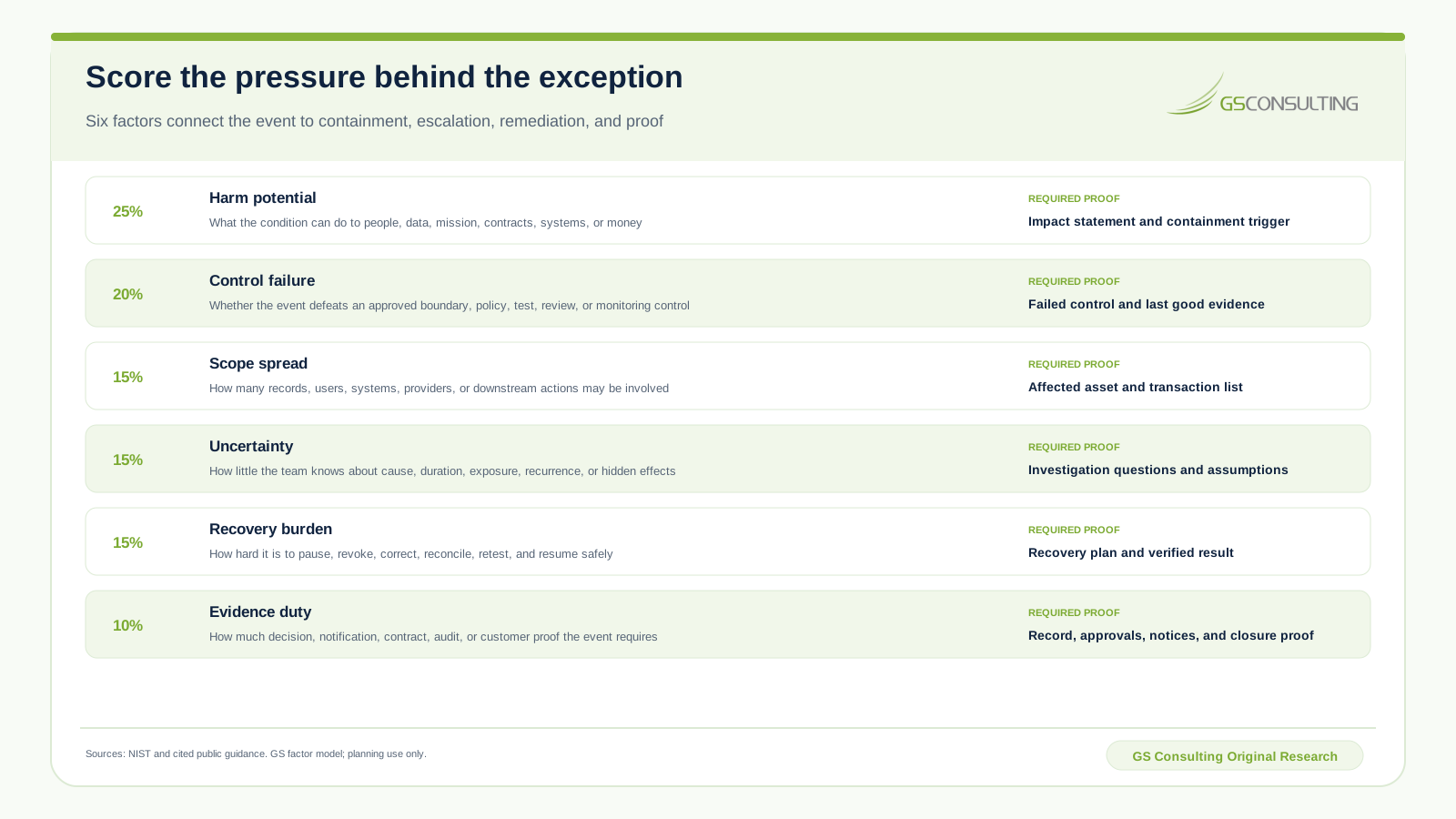
For the remaining conditions, rate consequence, control failure, scope spread, uncertainty, recovery burden, and evidence duty. Assign a response lane and service level. Name the risk authority, action owner, interim limits, compensating controls, evidence, retest, expiry, and closure rule. Link the decision to the inventory and risk classification.
Use four response options: avoid by stopping the use, mitigate by repairing or adding controls, transfer or share where a valid contractual or operational mechanism exists, or accept a bounded residual risk through the authorized owner. Acceptance should be explicit, limited, reviewable, and revocable.
Separate Six Conditions That Teams Often Call Exceptions
A planned deviation asks for temporary permission to operate outside a policy or control before the action occurs. An observed deviation shows that the approved use already moved outside its boundary. The first can be assessed before exposure. The second needs containment and fact finding.
A threshold breach occurs when quality, safety, security, cost, latency, override, drift, or other monitored performance crosses a defined limit. A control failure means a safeguard is missing, bypassed, unavailable, or ineffective. A threshold may warn before failure; a control failure can require immediate action even when no harm is known.
A material change alters purpose, data, model, provider, tools, authority, users, scale, integration, or environment beyond the approved record. It often belongs in change review and reclassification. An incident involves actual or suspected harm, compromise, prohibited action, sensitive exposure, or an active threat. It belongs in incident response, with the exception register linked as supporting governance evidence.
Do not force all six into one approval state. Use one intake surface if that helps operators, then route to the correct record, authority, clock, and response procedure.
Public Frameworks Emphasize Treatment, Monitoring, and Response
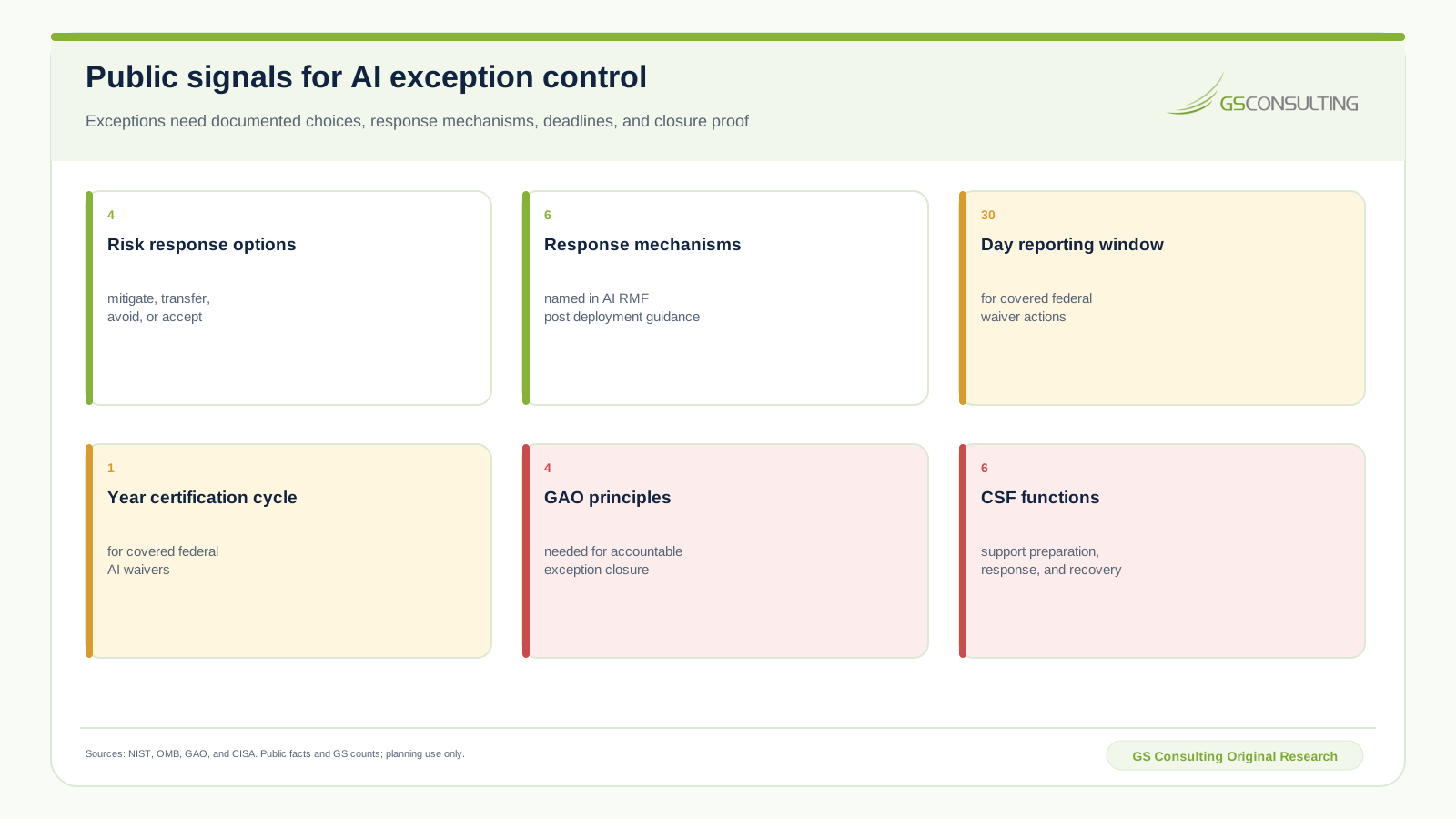
The NIST AI RMF Playbook describes risk response options and post deployment monitoring mechanisms under Manage. It supports avoiding, mitigating, transferring, or accepting risk based on organizational context. It does not prescribe one universal exception form or approval period.
The GAO AI Accountability Framework organizes oversight around governance, data, performance, and monitoring. Those principles reinforce the need to connect an exception to the complete decision record rather than treating it as a separate administrative ticket.
NIST SP 800-61 Revision 3 integrates incident response with the six Cybersecurity Framework functions: Govern, Identify, Protect, Detect, Respond, and Recover. The CISA JCDC AI Cybersecurity Collaboration Playbook also supports coordinated response for AI related cybersecurity events. These sources help define the incident boundary; they do not make every governance deviation a cyber incident.
The OMB M-25-21 memorandum includes federal agency waiver reporting and annual recertification requirements for high impact AI. Those provisions apply to covered agency activity. They do not automatically set contractor exception periods outside the applicable contract or agency direction.
Original Research: GS AI Governance Exception Response Pressure Index
Security attack or AI incident scores 100. Sensitive data in an unapproved AI system scores 94. Prohibited or out of scope use scores 91. Human approval bypass scores 88. These conditions lead because containment delay can expand harm, evidence loss, and recovery burden.
We rated twelve illustrative exception conditions from one to five across harm consequence, control failure, scope spread, uncertainty, recovery burden, and evidence duty. Base weights are 25, 20, 15, 15, 15, and 10 percent. Scores are normalized to a zero to 100 response pressure scale. Immediate covers 85 through 100, urgent covers 65 through 84, controlled covers 45 through 64, and routine covers zero through 44.
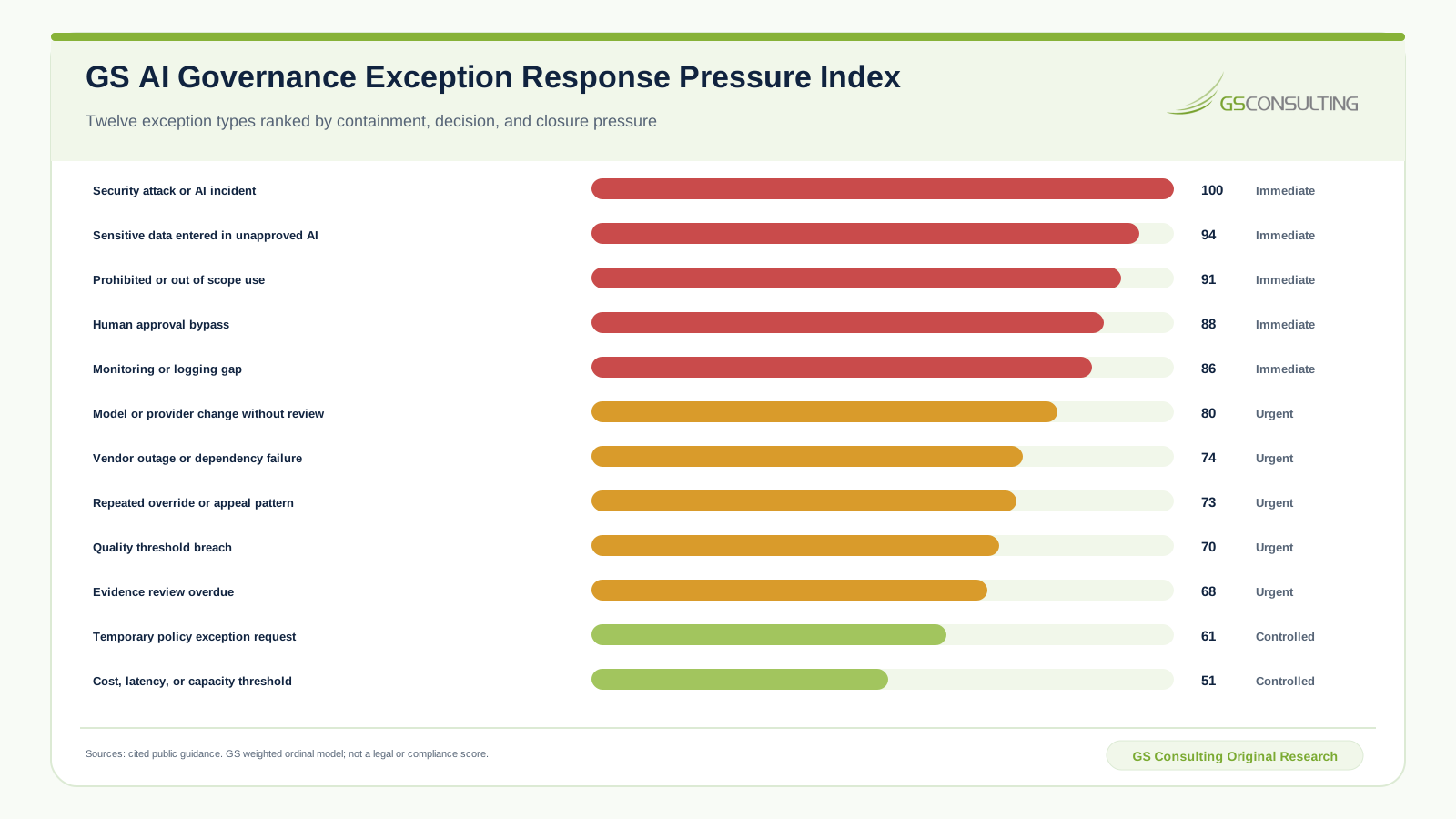
Monitoring or logging gaps score 86. A model or provider change without review scores 80. Vendor outage or dependency failure scores 74. Repeated override or appeal scores 73. Quality threshold breach scores 70. Overdue evidence review scores 68. A temporary policy exception scores 61, while a cost, latency, or capacity condition scores 51.
The sensitivity case increases consequence weight and reduces scope weight. No condition moves more than two points, and the response lanes remain stable. The result supports the ordering within this illustrative model. It does not validate the factor ratings for a real event. Actual harm, legal duty, threat evidence, customer direction, and incident criteria override the planning score.
Capture Enough Facts to Route the Condition
Operators need one clear reporting path. Intake should accept a monitoring alert, user report, test failure, audit finding, policy request, vendor notice, security event, or change record. Preserve the original signal, reporter, time, affected use, version, data, systems, actions, people, and known scope.
Ask what happened, what should have happened, whether the condition is active, what may be affected, which controls are unavailable, and what is not yet known. Do not require a perfect cause analysis before containment. Let the intake owner flag legal, privacy, security, safety, ethics, procurement, customer, and mission review.
Deduplicate related reports without losing their provenance. One event may create an incident, change, risk exception, customer notice, and corrective action. Link the records under one correlation identifier rather than forcing every team into one system.
Protect the report from unauthorized editing. Sensitive exception records may contain system weakness, personal data, contract information, model behavior, or active threat details. Access, retention, and disclosure should follow the content and applicable duties.
Use Four Response Lanes With Explicit Clocks
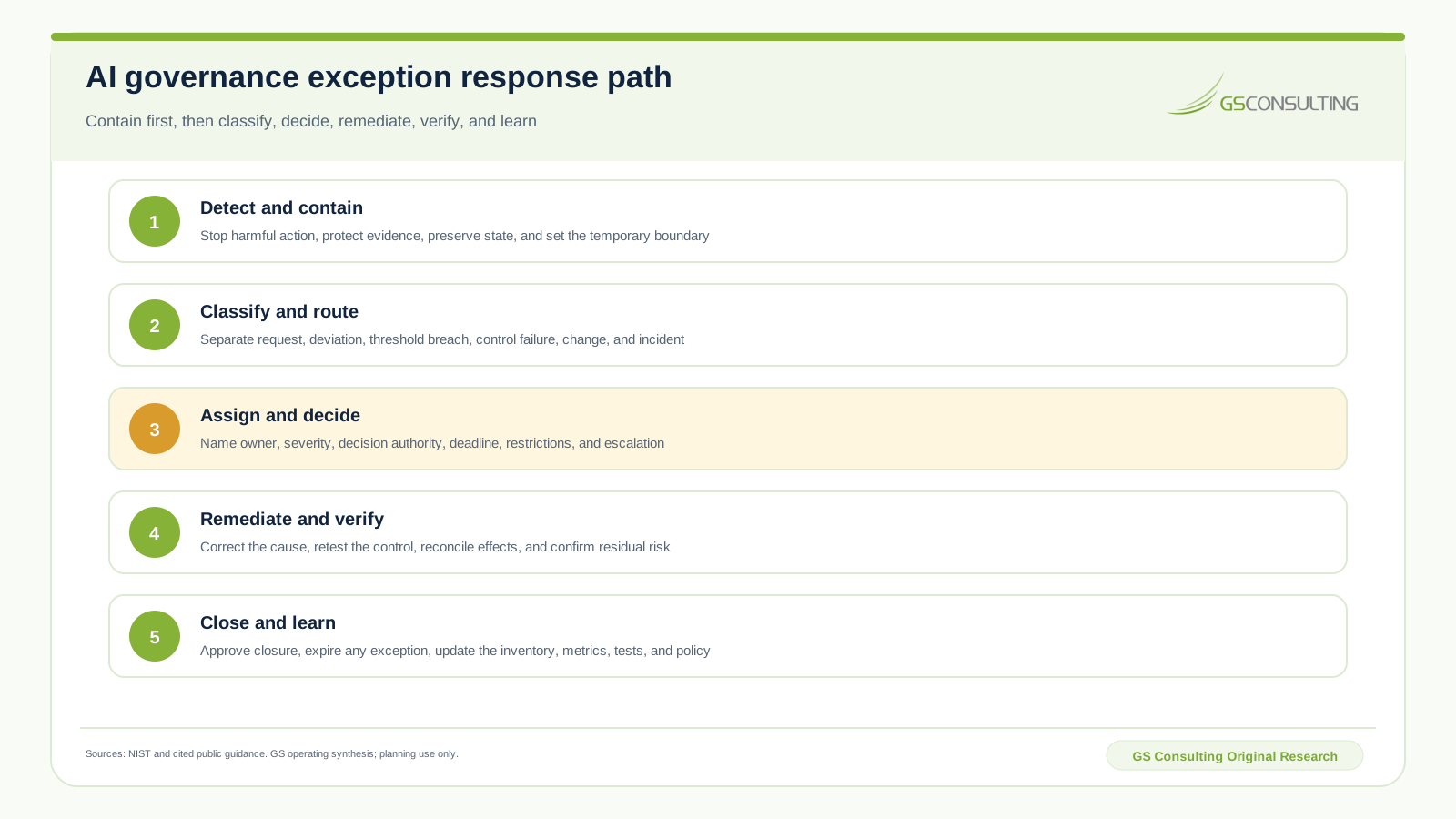
Immediate conditions trigger containment now, incident assessment, preservation of evidence, senior notification, and a short decision clock measured in hours. Urgent conditions require prompt restriction, owner response, targeted review, and a decision measured in days.
Controlled conditions may continue within written limits while an authority evaluates a temporary exception, remediation plan, and expiry. Routine conditions enter normal change, service, or evidence work with a defined due date. Routine never means unowned.
Service levels should distinguish acknowledgement, triage, containment, authority decision, correction, retest, and closure. A ticket can be acknowledged quickly while remaining exposed for weeks. Measure each state.
Pause the service clock when waiting for an outside dependency only if the risk is contained and the pause has an owner. Do not pause expiry. At expiry the use returns to the approved condition, stops, or receives a new authorized decision.
The Risk Owner Must Match the Affected Control
The business owner explains need and consequence. The system owner controls the implementation. The control owner decides whether a deviation from that control can be tolerated. Security, privacy, legal, safety, compliance, data, procurement, human resources, and mission authorities retain decisions within their remit.
Create an authority matrix by exception type and tier. Name the primary and backup approver, delegated limit, required concurrence, emergency authority, escalation path, and conflicts rule. A committee can advise, but one named person should own the final decision.
Prevent self approval. A project sponsor cannot approve its own escape from an independent control. A vendor cannot accept customer risk. An operator can take emergency containment action within delegated authority, but continued operation needs the proper risk decision.
Record dissent and conditions. If an approver accepts a temporary deviation against a control owner's recommendation, the record should identify the authority and rationale. Hidden disagreement creates false confidence and weak accountability.
Temporary Acceptance Needs Boundaries and an Exit
A valid temporary exception states the exact policy, control, threshold, or boundary that is not met. It names the affected use, version, users, data, systems, duration, and business need. It explains credible consequence and why avoidance or immediate correction is not feasible.
Compensating controls should reduce the same risk mechanism. Extra training does not replace a missing access control. Manual review does not compensate for dangerous action authority unless the reviewer sees the right evidence before the action and can stop it.
Define operating restrictions, monitoring, alert thresholds, incident triggers, corrective actions, evidence, retest, and expiry. The risk owner signs the residual risk, not merely the schedule. Material change revokes the decision unless the record explicitly covers it.
Renewal is a new decision. Require current evidence, progress against correction, exception history, incidents, monitoring results, and a reason the condition still cannot close. Escalate repeated renewal. A permanent exception is a policy or architecture decision and should be treated as such.
Keep the Incident Boundary Clear
Not every exception is an incident, but the incident route must be easy to invoke. Use it for actual or suspected harm, attack, compromise, sensitive data exposure, prohibited external action, unauthorized access, material integrity loss, safety event, or critical control failure with active exposure.
Containment authority should not depend on a governance meeting. Operators need tested ways to pause an AI use, revoke credentials, block tools, isolate data paths, preserve records, notify response teams, and shift to a safe manual process.
The incident record manages detection, analysis, containment, eradication, recovery, communication, and lessons. The exception record tracks the governance deviation, authority decision, interim restrictions, recertification, and linkage to the approved use. Connect them without duplicating facts.
After recovery, reclassify the use if consequence, controls, or assumptions changed. Repeated near events, overrides, or threshold breaches can justify a higher tier even when each event closed without confirmed harm.
Build an Exception Packet That Proves Closure
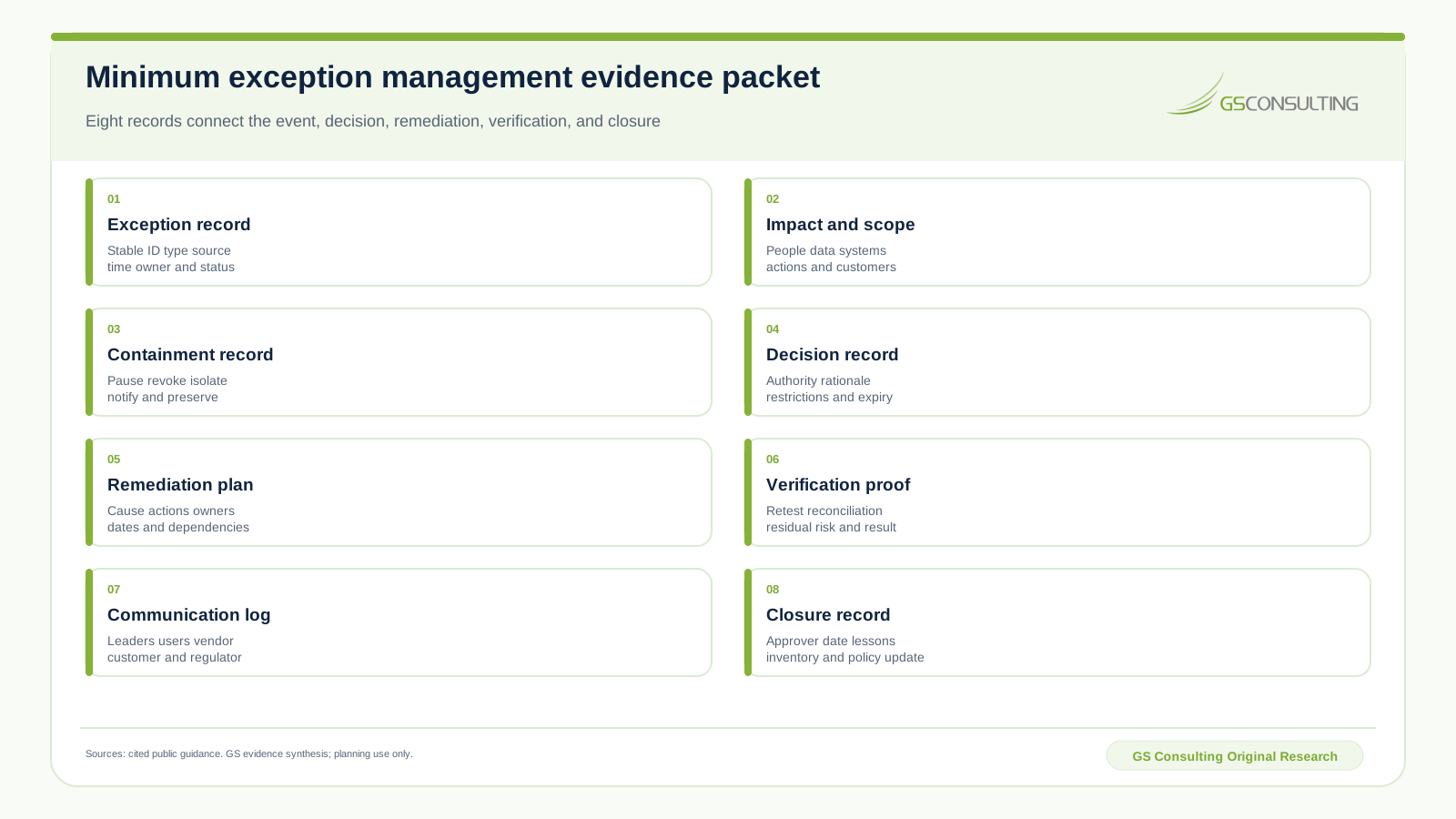
Preserve the intake signal, affected inventory record, approved classification, system and model version, timeline, known and possible scope, factor ratings, incident decision, containment, source evidence, and uncertainty. Identify every linked ticket, alert, change, investigation, and communication.
Record the response lane, risk owner, action owner, decision, rationale, rejected options, restrictions, compensating controls, measures, service levels, expiry, and required retest. A temporary approval should show exactly what is accepted and what remains prohibited.
Closure evidence includes correction, implementation proof, independent review where required, retest results, restored monitoring, notices, updated inventory and classification, residual findings, lessons, and approval to close. A closed ticket without retest or authority is an administrative state, not proof.
Measure Exposure, Not Ticket Volume
Track time to acknowledge, triage, contain, assign authority, decide, correct, retest, and close by response lane. Count open exceptions by tier, age, owner, affected use, control family, provider, and cause. Report expired decisions, overdue evidence, repeated renewals, and exceptions operating without required monitoring.
Measure recurrence after closure, incidents linked to exceptions, tier increases, approval bypass, unplanned scope expansion, and control performance during the exception period. Track how many requests were avoided, mitigated, transferred, accepted, denied, or converted into permanent policy and architecture work.
Do not reward closure speed alone. A team can close tickets by accepting weak evidence or renaming the condition. Pair time measures with retest quality, recurrence, consequence, and independent review.
Five Failure Modes Turn Exceptions Into Permanent Risk
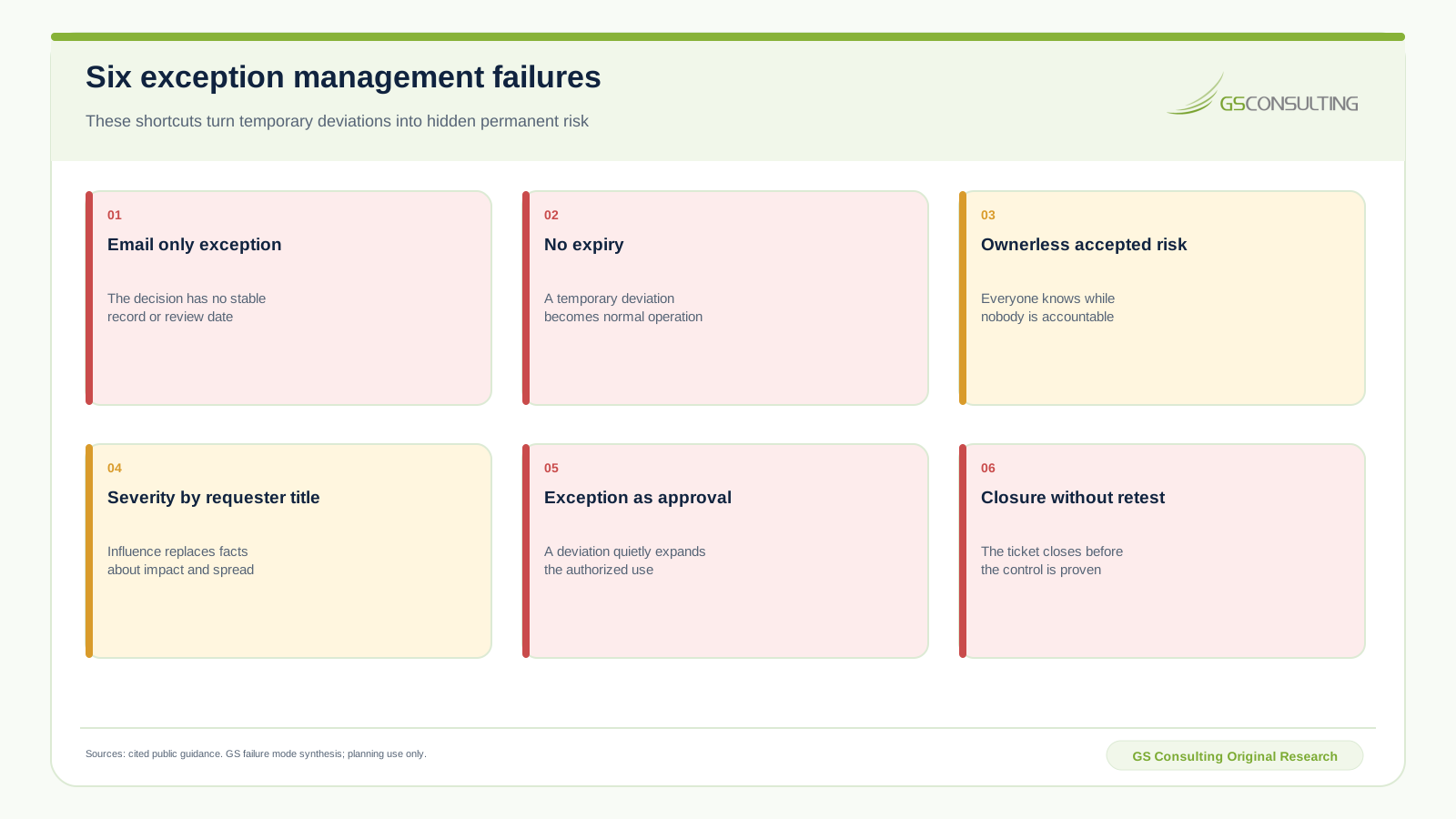
One queue for every condition. Incidents wait behind policy requests. Use triage and separate response lanes. Sponsor self approval. The team seeking delivery accepts a control it does not own. Route to the correct risk authority.
Vague compensating controls. Extra attention is listed without a testable mechanism. Map each control to the risk, owner, test, signal, and evidence. Passive expiry. The date passes while production continues. Automate notice, escalation, stop, or renewal action.
Closure by assertion. The owner marks complete without retest or restored evidence. Require closure criteria, independent confirmation where appropriate, and approval from the authority that accepted the condition.
A Ninety Day Implementation Plan
Days 1 through 30: define exception types, incident triggers, four response lanes, service levels, decision rights, emergency authority, minimum record fields, expiry rules, and closure evidence. Review recent events and policy requests to test the categories.
Days 31 through 60: configure intake, triage, correlation identifiers, authority routing, notices, escalation, inventory links, classification links, incident links, temporary approval, expiry, retest, and dashboards. Exercise one incident, one control failure, one material change, and one planned deviation.
Days 61 through 90: train operators and approvers, run a response exercise, review stale exceptions, test emergency stop capability, calibrate factor ratings, and report the first exposure measures. Convert repeated exceptions into policy, architecture, supplier, or investment decisions.
The goal is not zero exceptions. Mature programs surface unexpected conditions quickly, contain credible harm, make bounded decisions, preserve evidence, and learn before the same weakness spreads.
Sources and Method Note
Primary public sources include the NIST AI RMF Playbook, the GAO AI Accountability Framework, NIST SP 800-61 Revision 3, the CISA JCDC AI Cybersecurity Collaboration Playbook, and OMB M-25-21.
The GS index is an original response planning model, not a law, standard, certification, incident declaration, probability estimate, or substitute for professional judgment. Ratings are illustrative. The workbook preserves sources, assumptions, formulas, ratings, sensitivity results, and figure data so readers can inspect the method and replace inputs.
Frequently Asked Questions
What is an AI governance exception?
It is a recorded condition in which an approved use, control, threshold, policy, evidence requirement, or operating boundary is not met and needs an authorized response.
Is every AI governance exception an incident?
No. Planned deviations may remain in exception review. Actual or suspected harm, compromise, prohibited action, sensitive exposure, or active threat belongs in incident response.
Who can approve an AI policy exception?
The authority that owns the affected policy and risk. A project sponsor should not accept a deviation from a control owned by another function.
How long should an AI exception remain open?
Duration should match consequence and recovery burden, with a fixed owner, next action, evidence, review date, and expiry.
What belongs in an AI exception register?
Keep the affected use, condition, source, scope, owners, lane, containment, controls, evidence, decision, dates, expiry, retest, recurrence, and closure basis.
When should an approved AI exception be revoked?
Revoke it when scope expands, assumptions fail, controls do not work, the use changes, a related incident occurs, or expiry arrives without a new decision.
Continue Reading
- AI Governance Risk Classification System
- AI Governance Roles and Responsibilities
- AI Model Inventory
- AI Audit Trails and Activity Logging
Turn every exception into a bounded decision.
GS Consulting helps teams connect intake, triage, response, authority, incident handling, temporary acceptance, evidence, expiry, and learning.
Start the Conversation