AI Governance | | 27 min read
AI Governance Data Retention and Deletion: Build a Defensible Lifecycle

Key Takeaways
Retention is a record decision across every copy
Four surfaces score 93 or higher
Logs, training data, recovery copies, and downstream copies lead the proof priority index.
The prompt is only one record
Indexes, traces, provider records, backups, messages, exports, and review notes also need a rule.
A delete action is not proof
Close the work only after object results, copies, exceptions, residual limits, and restore paths reconcile.
AI governance data retention is not a storage setting. It is a decision about what the organization must preserve, what it is allowed to keep, what it should delete, and how it will prove the result.
A prompt does not stay one record. It can become conversation state or a trace. It can also appear in an embedding, support record, evaluation case, backup, or message in another system. Deleting the visible conversation may leave every important derivative untouched. Keeping everything for safety creates a different problem: more sensitive content, more discovery burden, more stale evidence, and more copies with no active purpose.
The operating answer is a connected lifecycle. Inventory every original and derivative. Classify its authority and purpose. Set a trigger, period, action, exception, and owner. Execute the action across active, provider, recovery, and downstream stores. Then preserve enough evidence to prove what was kept, deleted, restricted, or released without recreating the content that was meant to disappear.
Use this guide with the AI Governance hub, AI Model Inventory, AI Governance Exception Management, AI Audit Trails and Activity Logging, and AI Governance Recertification. GS Consulting connects these controls through AI Governance and Risk Oversight.
Map the complete AI record surface before setting a period.
GS Consulting helps teams classify AI records, set decision authority, connect provider behavior, execute disposition, and build defensible closure evidence.
Request an AI Retention ReviewAI Governance Data Retention: The Short Answer
Start with one deployed use case and one record map. Name its purpose, owner, users, model, provider, region, and tools. Then map source records and prompts. Add outputs, decisions, retrieval stores, training data, logs, and human review. Finish with support channels, backups, exports, and downstream systems. Do not start with one universal period. Different records can have different authority, risk, and technical behavior even when they come from the same AI workflow.
For each record class, answer eight questions. Why does it exist? What authority permits or requires retention? What event starts the clock? How long does the period run? What action occurs at expiry? Which hold or exception can pause the action? Who can approve and release that exception? What evidence closes the work?
Separate content from proof. The team may need to delete a prompt while preserving the fact that a deletion job ran, which objects were in scope, which method was used, which copies were reconciled, what residual limits remained, and who approved closure. That distinction prevents the evidence system from becoming a hidden archive of the content it was meant to remove.
The AI Retention Surface Is Larger Than Prompts
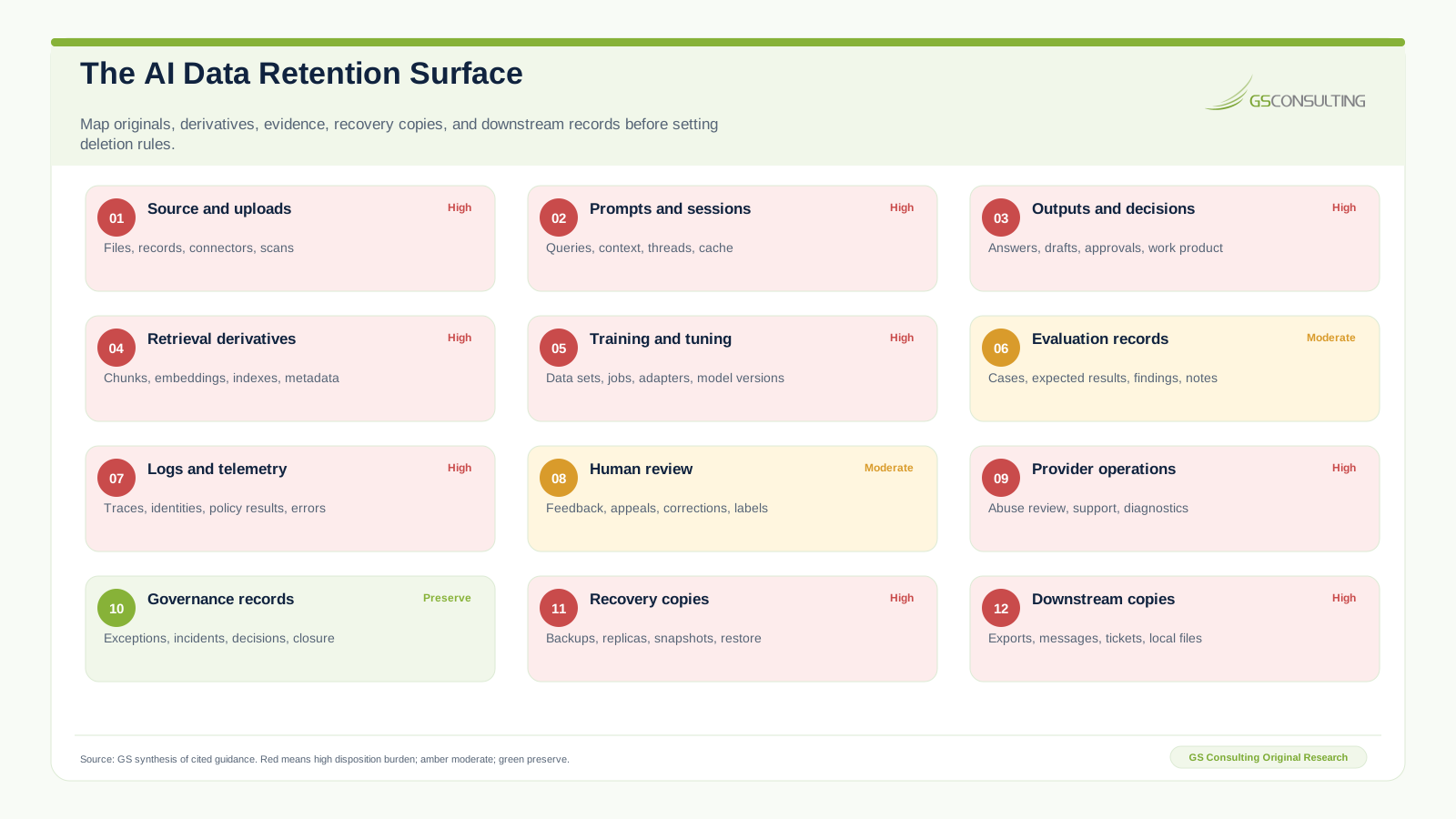
Sources and uploads. Files, scans, connectors, and source records often exist before the AI use. The source system may already have an approved schedule. Copying a file into an AI workspace should not quietly create a longer period.
Prompts, sessions, and outputs. User requests and system context serve one purpose. Conversation state and generated answers serve another. Drafts, approvals, and decision records may need a third rule. A final approved decision may require preservation while temporary prompt context does not. Record the relationship instead of applying the same rule to both.
Retrieval and training derivatives. Chunks, embeddings, indexes, and metadata can preserve source facts after deletion. The same is true of tuning sets, adapters, model versions, evaluation cases, and red team findings. The team needs a rebuild or removal method. It also needs a list of affected derivatives and a test that retired information no longer appears through the approved access path.
Operational evidence. Traces, identities, policy decisions, errors, and feedback help prove control. Appeals, corrections, exception records, incident evidence, and approvals do too. These records can contain the same sensitive content the team intended to minimize. Design evidence fields deliberately. A hash, object identifier, rule version, result code, and safe summary may prove the action without copying the prompt or output.
Provider, recovery, and downstream records. Abuse review data, support cases, diagnostics, caches, and backups may sit outside the main application. So may replicas, snapshots, messages, tickets, exports, and local files. Each needs an owner, expected behavior, and reconciliation step. A deletion request is incomplete while an uncontrolled copy can restore or redistribute the object.
What Public Guidance Actually Supports
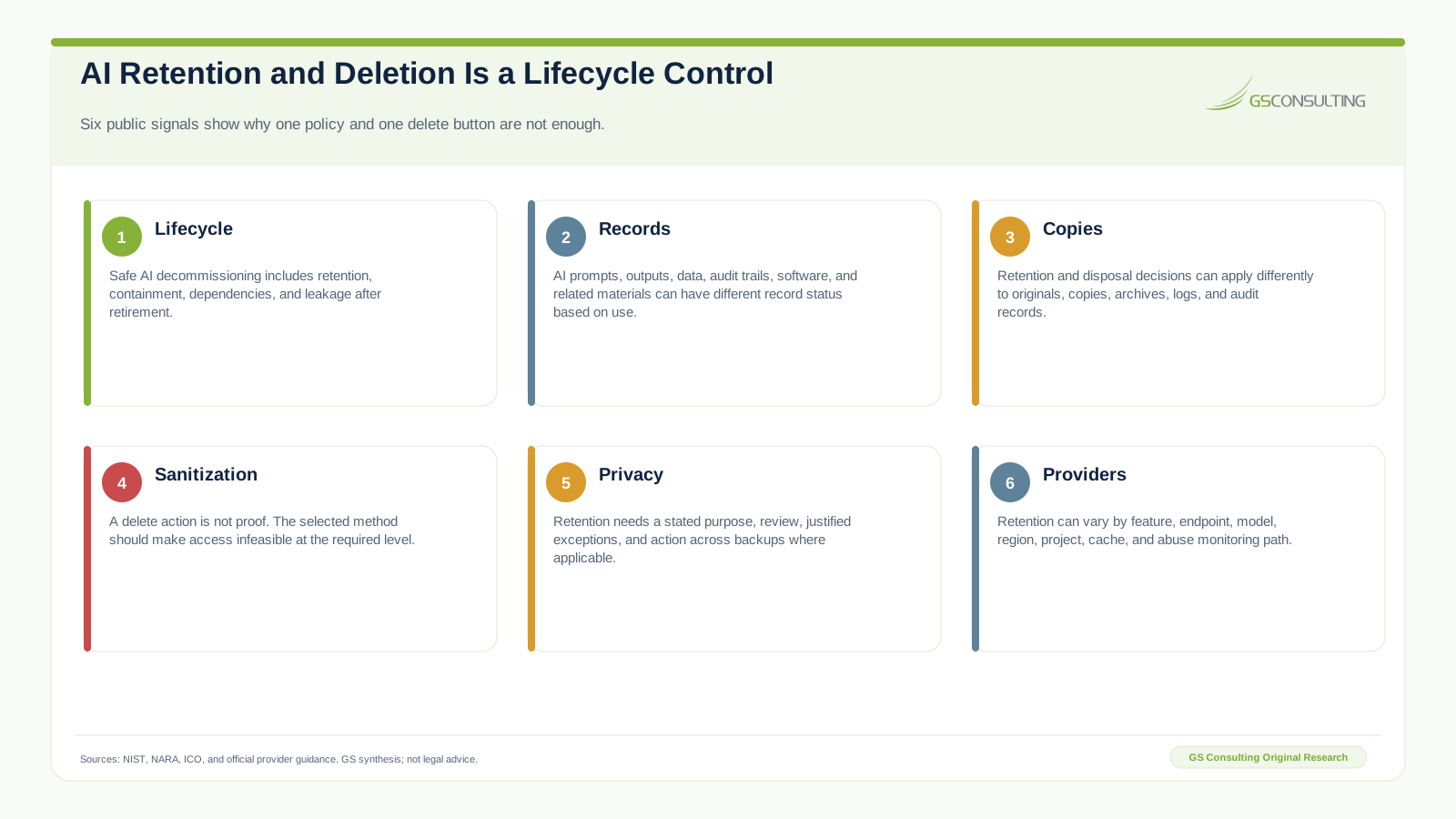
The NIST AI Risk Management Framework Core places safe decommissioning in the Govern function. The NIST Generative AI Profile makes the issue more concrete: teams should consider retention, containment, dependencies, and leakage after decommissioning. Retention is therefore tied to system change and retirement, not only to a timer in a database.
NIST SP 800-53 Release 5.2.0 separates retention, disposal, audit record retention, media sanitization, and testable protection decisions. NIST SP 800-88 Revision 2 defines sanitization around making access to target data infeasible for a given level of effort. Neither document supplies one period for every AI record. They support named controls, selected methods, and verification appropriate to the actual media and system.
NARA guidance on federal records and AI materials identifies inputs, outputs, data, audit trails, software, and related materials as possible records depending on use and context. Federal agencies need approved disposition authority before destroying federal records. That agency obligation does not automatically define a contractor's duties. Contract terms, agency instructions, system boundaries, and the role of each copy still need to be read carefully.
The EU General Data Protection Regulation includes storage limitation and a right to erasure with stated conditions and exceptions. The ICO storage limitation guide emphasizes justified periods, review, deletion or anonymization, and appropriate treatment of backups. Legal applicability and exceptions require fact specific review.
Provider documentation shows why labels are not enough. Microsoft Foundry distinguishes prompts and outputs from uploaded data, stateful features, training data, and abuse monitoring. Amazon Bedrock documents retention modes and feature requirements. Google Cloud documents feature behavior for zero data retention, grounding, cache, and monitoring. OpenAI documents abuse monitoring, approval based controls, endpoint behavior, and application state. Product terms and features change. Verify the deployed endpoint, model, region, account, and setting.
GS AI Retention and Deletion Proof Priority Index
GS Consulting built a derived planning model to answer one operating question: which AI record surfaces need earlier mapping, authority, controls, and disposition proof? Twelve surfaces receive one to five analyst ratings for content consequence, derivative spread, disposal complexity, evidence tension, and provider opacity. The base weights are 25, 20, 20, 20, and 15 percent. The weighted result is reported on a zero to 100 planning scale.
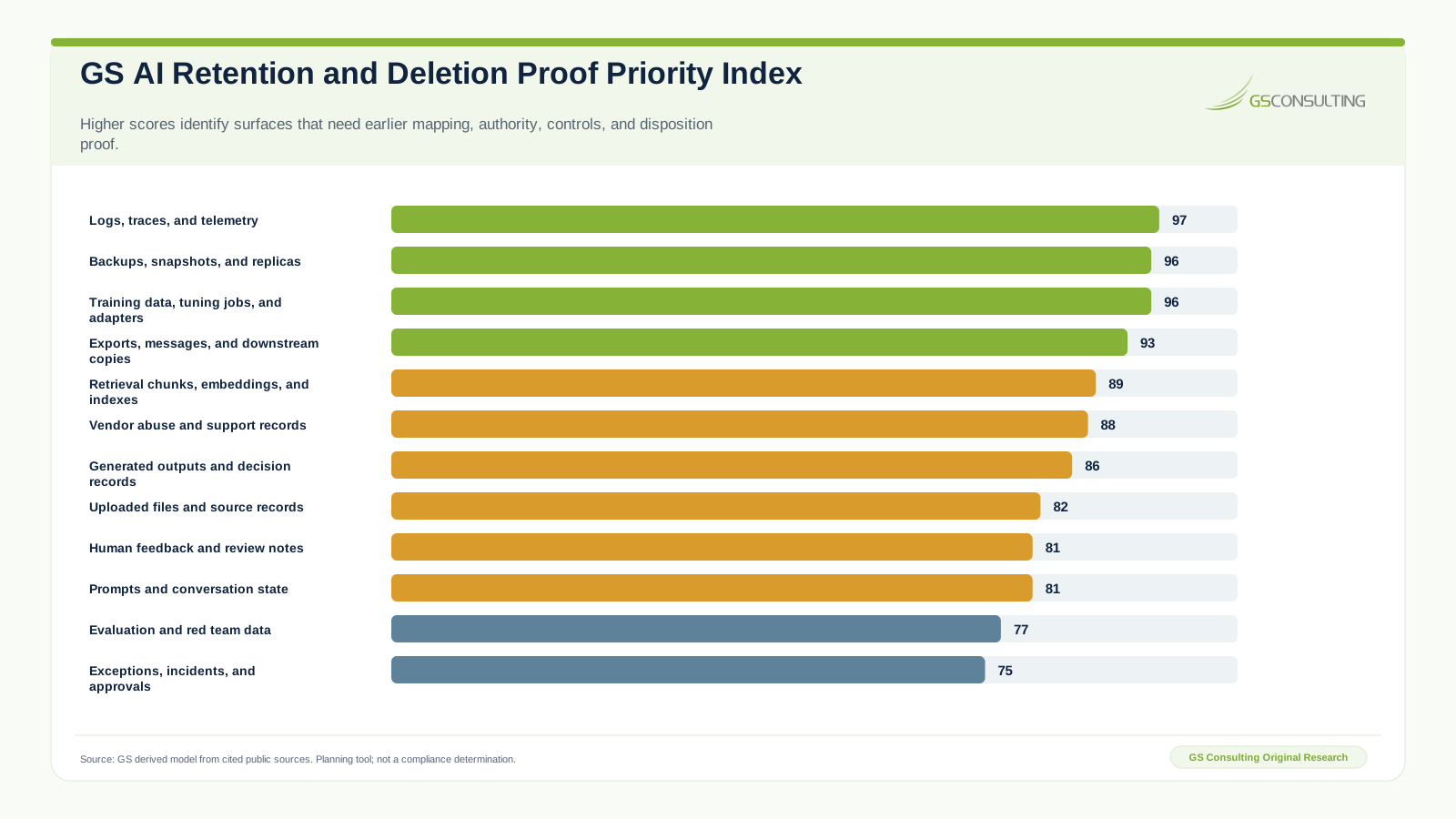
Logs, traces, and telemetry score 97. Training data, tuning jobs, and adapters score 96. Backups, snapshots, and replicas also score 96. Exports, messages, and downstream copies score 93. These surfaces combine broad content, multiple derivatives, difficult disposal, evidence needs, or external control boundaries. They deserve the earliest proof effort because a simple delete action rarely settles the full result.
Retrieval chunks, embeddings, and indexes score 89. Vendor abuse and support records score 88. Generated outputs and decision records score 86. Uploaded files and source records score 82. Prompts and conversation state score 81. Human feedback and review notes also score 81. Evaluation and red team data score 77. Exceptions, incidents, and approvals score 75.
The last two surfaces are not low value. Their evidence purpose can justify preservation even when related content should expire. The model rewards early proof pressure, not deletion speed. A legal hold, approved schedule, security incident, customer obligation, or decision record can override the planning sequence.
The sensitivity test shifts five weight points from evidence tension to content consequence. No score moves by more than two points, and every surface remains in its planning lane. That result supports the sequence under one tested assumption change. It does not validate the ratings for another organization.
Write Retention Rules That Can Execute
A useful rule is specific enough for an engineer, records lead, privacy lead, security lead, product owner, and reviewer to reach the same result. Name the record class and exact stores. State the business purpose and authority. Define the trigger that starts the clock. Examples include session close, case resolution, model retirement, employee departure, contract end, or exception closure. State the period and the action at expiry.
The action may be delete, anonymize, archive, sanitize, restrict, or transfer. Use those words carefully. Deletion removes an object from its active location. Anonymization should leave no reasonably usable path back to a person under the applicable standard. Archiving preserves a record with reduced access. Sanitization addresses the media and recovery level. Restriction blocks use while a decision, dispute, or hold remains open.
List exceptions beside the rule, not in a separate policy nobody checks. Legal holds and investigations are common triggers. Security incidents, contract disputes, public records duties, regulatory requirements, customer instructions, and documented operational needs can also change the normal rule. State who can approve the exception, which copies it covers, when it expires, and who releases it.
Finally, define proof. Keep the record compact but complete:
- Object scope, expected count, approved action, and method.
- Job or ticket, start and end time, result, errors, and excluded objects.
- Backup and downstream treatment, verification, reviewer, and closure decision.
Do not store deleted content in a screenshot to show that it once existed.
Different Stores Need Different Proof
Live application state. Use an object inventory, rule version, execution result, and sample verification. Confirm that indexes, search results, caches, and user interfaces no longer expose the object.
Prompt and output history. Preserve session scope, expiry, exception status, and result. If a decision output must remain, separate it from transient context. If the provider holds application state, use the documented endpoint or feature control and capture the response safely.
Logs and evidence. Minimize content while retaining identifiers, policy decisions, result codes, and the chain needed for review. Protect evidence from ordinary users and define its own period. Evidence should prove a control without becoming a second content repository.
Retrieval and training derivatives. Link chunks, embeddings, indexes, and data sets back to source lineage. Do the same for tuning jobs, adapters, and model versions. At disposition, delete or rebuild the derivative, verify expected counts, and test whether approved retrieval or model access can still surface the retired fact.
Backups and recovery. Record the backup set, rotation rule, restore restriction, expiry date, and recovery test. If immediate deletion from immutable backup media is not practical, document the controlled expiry path and prevent the object from returning to active use after restore.
Providers and downstream systems. Keep current contract terms, product documentation, and account settings. Record the region, endpoint, model, support response, deletion request, and result. Reconcile messages, tickets, exports, and local files. Then check data lakes, analytics stores, and recipients. The application owner cannot close work that another owner has not completed.
Run One Decision Path From Inventory to Closure
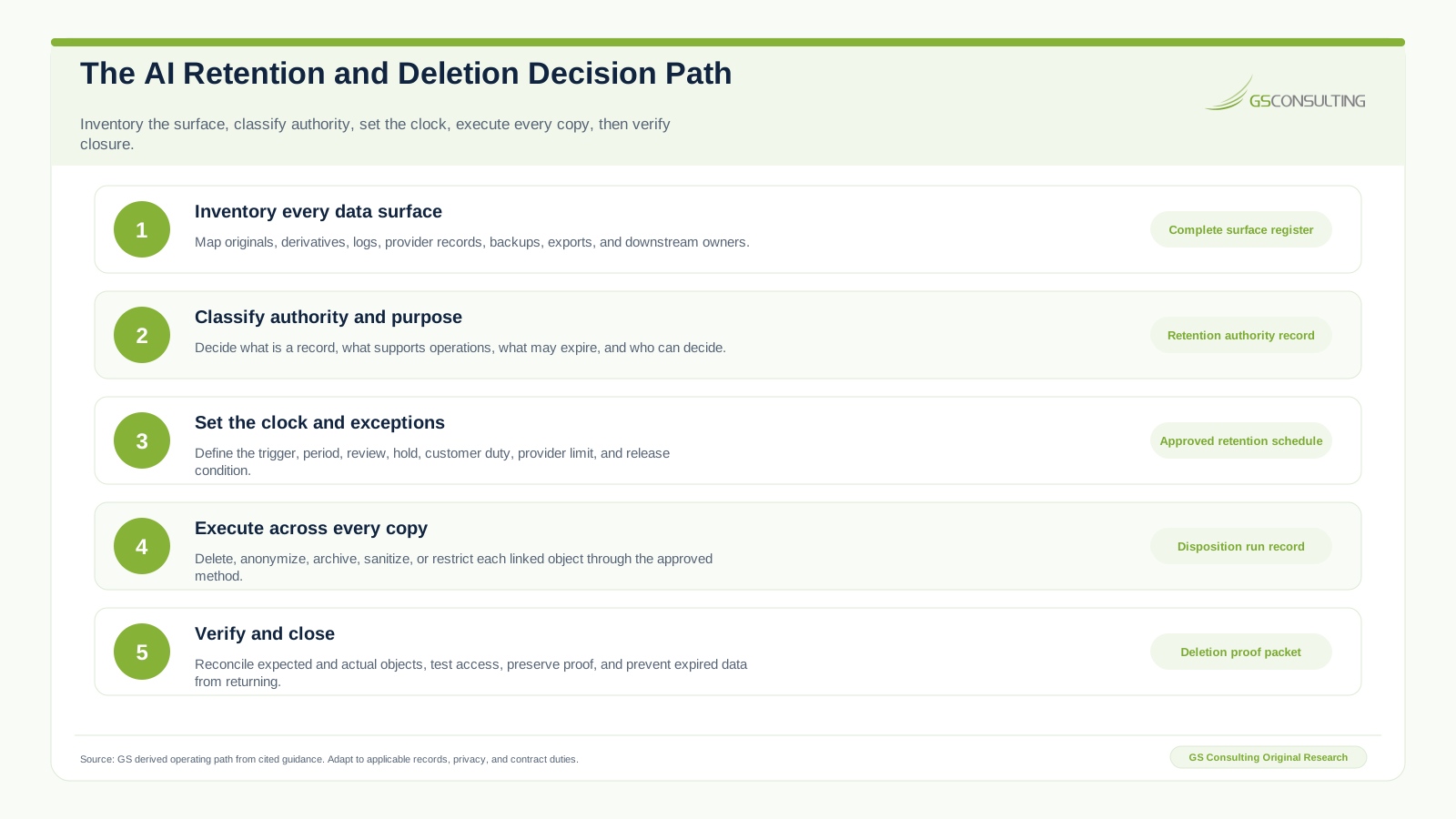
Inventory every surface. Map originals, derivatives, logs, and provider records. Add backups, exports, and downstream owners. Classify authority and purpose. Decide what is a record and what supports operations. State what may expire, what must be preserved, and who can decide.
Set the clock and exceptions. Define the trigger, period, review, and hold. Add any customer duty, provider limit, and release condition. Execute across every copy. Delete, anonymize, archive, sanitize, or restrict each linked object through the approved method.
Verify and close. Reconcile expected and actual objects, test access, preserve proof, prevent expired data from returning, and record who accepted any residual limit. A closed ticket without copy reconciliation is an administrative result, not a lifecycle result.
Make Deletion Work in the Actual Architecture
Assign a stable record identifier at ingestion. Carry it through sessions, output records, retrieval chunks, and traces. Keep the same connection through feedback, provider calls, and exports. Record lineage in a way that survives system changes. If the team cannot tell which derivatives came from a source, it cannot execute a reliable source deletion request.
Build disposition jobs to be repeatable and observable. A job should accept a bounded object set, apply the approved action, record success and failure by store, retry safely, and stop when an exception appears. Keep deleted content out of error messages. Use object identifiers and result codes. Require review when the actual object count differs from the expected count.
Test provider behavior by feature. Create a controlled record. Exercise the exact endpoint, model, account, and region. Include the cache, retrieval feature, support path, and monitoring setting. Then request disposition and test access. Repeat after material product changes. Marketing language about training or retention does not prove how every feature behaves.
Test recovery. Restore a representative backup into an isolated environment. Confirm that an expired object is blocked, removed, or queued for the approved action before normal use resumes. Verify replicas and search indexes after failover. A deletion control that reverses during recovery is incomplete.
Control Holds and Exceptions as Records
A hold changes the normal rule for a stated reason. Identify the authority, affected record classes, systems, objects, and owners. Add the start date and restricted uses. Then state the review date, expiry, and release condition. Keep the hold record separate from the preserved content. That makes it possible to review authority without opening sensitive material.
Route temporary deviations through the AI governance exception process. An exception should not create silent permanent retention. Require an accountable owner, compensating controls, a review date, and a closure path. When the hold or exception ends, resume the normal disposition process and preserve the release decision.
Changes should trigger AI governance recertification. Recheck the record surface after a new provider, model, endpoint, region, or tool. Do the same after changes to retrieval, logging, backups, contracts, or downstream integration. The written schedule may stay the same while the places that must execute it multiply.
Six Retention Designs That Fail in Practice
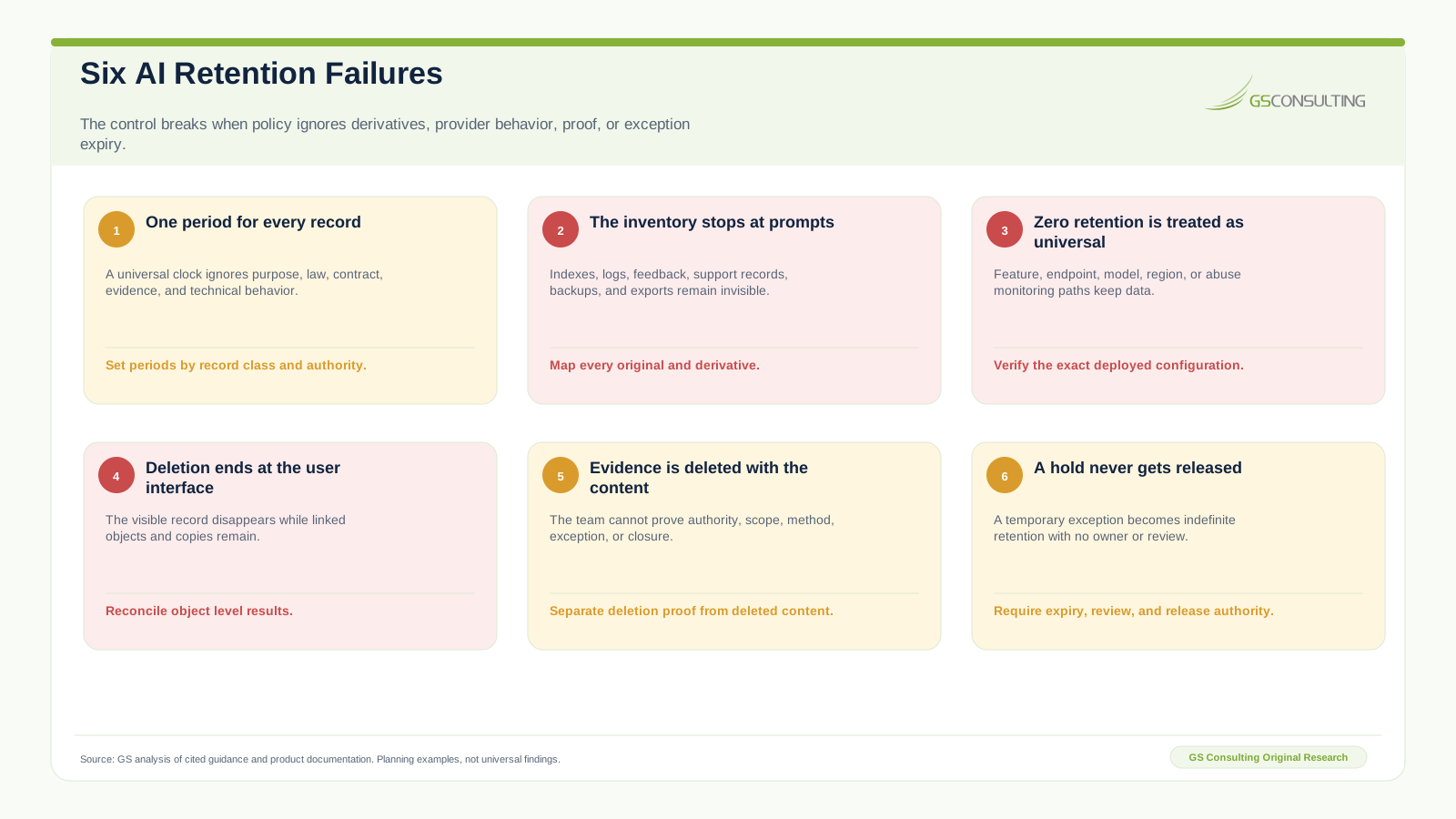
One period for every record. A universal clock ignores purpose, law, contract, evidence, and technical behavior. Set periods by record class and authority.
The inventory stops at prompts. Indexes, logs, feedback, support records, backups, and exports remain invisible. Map every original and derivative.
Zero retention is treated as universal. Feature, endpoint, model, region, cache, and monitoring paths can differ. Verify the exact deployed configuration.
Deletion ends at the user interface. The visible record disappears while linked objects and copies remain. Reconcile object level results.
Evidence is deleted with the content. The team cannot prove authority, scope, method, exception, or closure. Separate deletion proof from deleted content.
A hold never gets released. A temporary exception becomes indefinite retention with no owner or review. Require expiry, review, and release authority.
A 60 Day Implementation Plan
Days 1 through 15: map one use case
Choose one material workflow. Name the owner, purpose, users, model, provider, data, and tools. Map source systems, regions, outputs, decisions, logs, and retrieval stores. Add training or evaluation data, support paths, backups, exports, and downstream copies. Capture current periods, delete methods, provider settings, and unknowns. Do not design the enterprise policy before the team can trace one real object.
Days 16 through 30: set rules and authority
Classify record status and purpose with the records, privacy, legal, and security leads. Include product, data, and contract owners. Define the trigger, period, action, exception, decision authority, and proof for each class. Document provider and backup limitations. Resolve conflicts explicitly rather than hiding them in one long period.
Days 31 through 45: execute and test
Build or configure disposition jobs, lineage, exception checks, provider actions, backup treatment, and downstream tasks. Run controlled records through expiry, deletion, hold, and release. Then test failure, retry, restore, and verification. Compare expected and actual object counts. Keep sensitive content out of proof records.
Days 46 through 60: operate and review
Approve the schedule, register residual limits, assign metrics, train owners, and place the use case into recurring review. Track overdue disposition, unknown copies, unreleased holds, job errors, restore exceptions, provider drift, and object count variance. Expand only after the first use case produces a complete evidence packet.
Build One Connected Evidence Packet
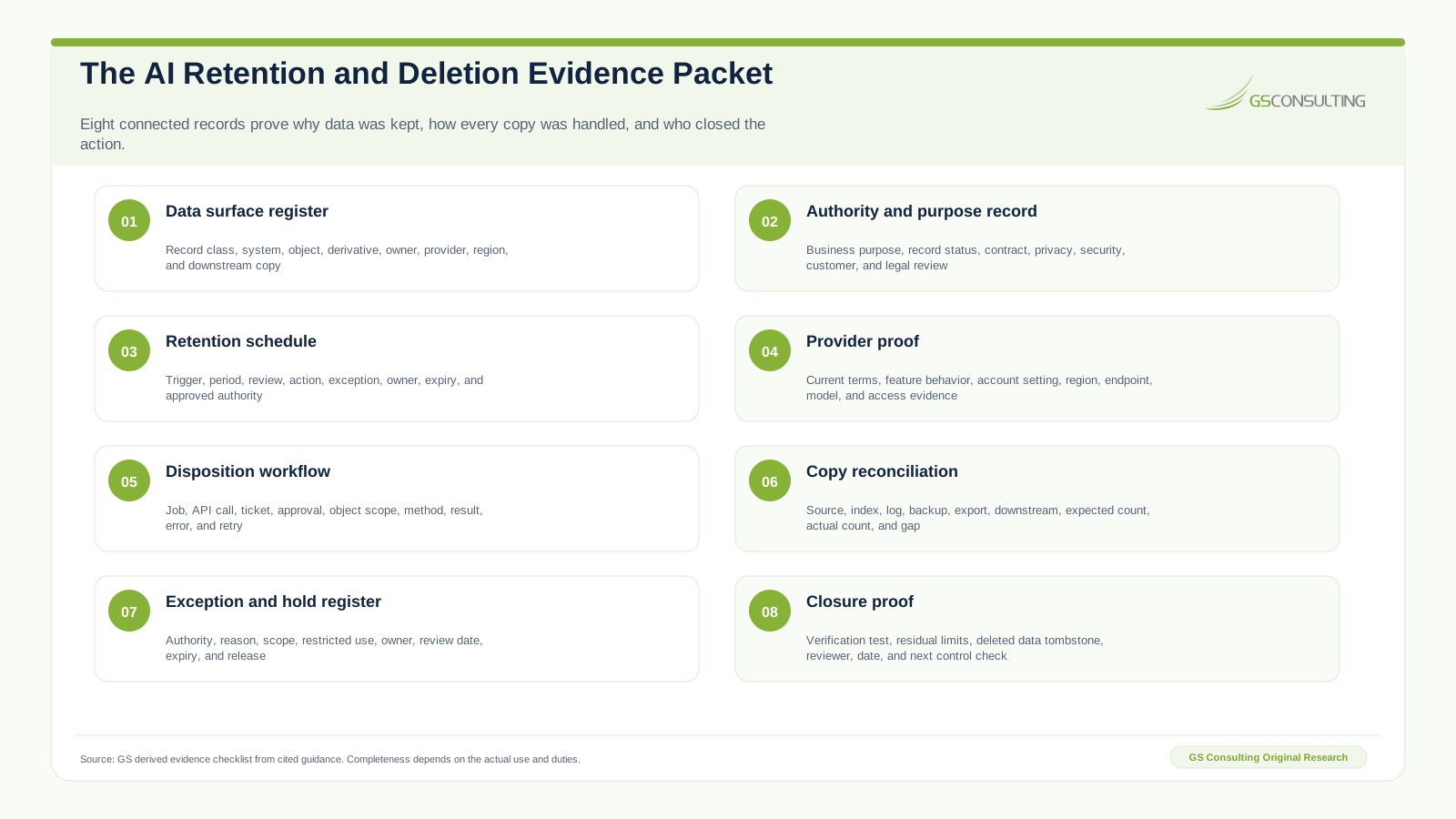
The packet starts with a data surface register and an authority and purpose record. It adds the approved retention schedule and current provider proof. The disposition workflow records the job, ticket, approval, scope, method, result, errors, and retry. Copy reconciliation compares source, index, log, backup, export, and downstream counts.
The exception and hold register shows authority, reason, scope, restricted use, review date, expiry, and release. Closure proof adds the verification test, residual limits, deleted object tombstone, reviewer, date, and next control check. Connect all eight records with stable identifiers. The AI audit trail should show the decision chain without preserving the deleted content.
Sources and Research Package
The research package contains the source register, methodology, data dictionary, model weights, and inputs. It also includes a formula driven workbook, derived scores, sensitivity analysis, six editable SVG figures, matching browser rendered PNG files, and previews.
Public sources include four NIST publications: the AI Risk Management Framework, AI 600-1, SP 800-53 Release 5.2.0, and SP 800-88 Revision 2. The register also covers NARA AC 11.2026, the EU General Data Protection Regulation, ICO guidance, and the NIST Privacy Framework. Current product documentation comes from Microsoft, Amazon, Google, and OpenAI.
Source access date is September 30, 2026. Product documentation can change. Confirm current terms and behavior for the deployed service. Legal and records obligations depend on facts, jurisdiction, contracts, and authority.
Frequently Asked Questions
What should an AI data retention policy cover?
It should cover sources and uploads; prompts, state, outputs, and decisions; retrieval, training, and evaluation data; logs and review notes; provider and exception records; plus backups, exports, and downstream copies. For each class, state the purpose and authority. Add the trigger, period, action, exception, owner, and proof.
How long should AI prompts and outputs be retained?
There is no universal period. Start with the business purpose and record status. Then consider privacy, contract, security, customer, and dispute needs along with the technical behavior of the deployed service. Keep prompts and outputs only as long as the approved authority requires, then execute and verify the planned action.
Does zero retention mean no AI data is stored?
Not automatically. Product behavior can vary by feature, endpoint, model, and region. Account settings, caches, abuse monitoring, and stored application state can also differ. Verify the exact deployed configuration and preserve current provider evidence rather than relying on the label alone.
What is proof of AI data deletion?
Proof of AI data deletion starts with the approved authority and object scope. It connects the method, job or ticket, execution result, copy reconciliation, exceptions, and residual limits. Independent verification, reviewer, date, and closure decision complete the record. The proof shows what happened without preserving the deleted content itself.
How should backups affect AI deletion?
Backups need a documented treatment. The plan should state whether a record is deleted in place, expires through backup rotation, is blocked from restore, or is deleted after recovery. Test restore behavior and prevent a deleted object from silently returning to active systems.
When should an AI retention exception expire?
Every temporary exception or hold should name its authority, reason, scope, restricted use, and owner. It also needs a review date, expiry, and release condition. A hold should not become permanent retention because nobody owns the decision to release it.
Continue Reading
- AI Governance Hub
- AI Model Inventory
- AI Governance Exception Management
- AI Audit Trails and Activity Logging
- AI Governance Recertification
Keep only what has an approved reason to exist.
Map every copy. State the authority. Execute the rule. Reconcile the result. Preserve proof without preserving the deleted content.
Start the Conversation