Enterprise AI Strategy | | 23 min read
AI Agents vs RPA vs Traditional Automation

Key Takeaways
The architecture choice
Prefer an API
When rules and interfaces are stable, traditional integration is the cleanest and most testable choice.
RPA still has a job
Use RPA for stable rules when a portal or desktop interface blocks direct integration.
Add authority last
Use an agent only when path or tool choice must vary and you can limit, observe, and reverse its actions.
RPA is not dead. AI agents do not replace every automation. Stable work should stay deterministic until the work itself proves that it needs judgment, variable path selection, or tool choice.
The phrase RPA AI often collapses four different architectures into one purchasing conversation: traditional integration, robotic process automation, AI assist, and AI agents. That confusion is expensive. Teams add fragile screen bots where an API would work, add probabilistic models where fixed rules are enough, or give agents broad authority because a demonstration looked smooth.
The architecture should follow the workflow shape. Choose the least variable pattern that can complete the job. Then add controls in proportion to the authority, consequence, and recovery difficulty.
Use the Agentic AI resource hub for the broader control series and GS Consulting's secure AI automation work when the architecture needs to move from comparison to implementation.
Choose the architecture before the product.
GS Consulting helps teams map the real workflow, compare automation patterns, constrain authority, and build the test and evidence model before production.
Request an Automation Architecture ReviewThe Short Answer
- Use traditional integration when rules, data, and interfaces are stable.
- Use RPA when rules are stable but the work must pass through a legacy portal or desktop interface.
- Use AI assist when language or evidence is variable but a person should decide or approve.
- Use a gated agent when software must choose among paths or tools and its authority can be limited, observed, and reversed.
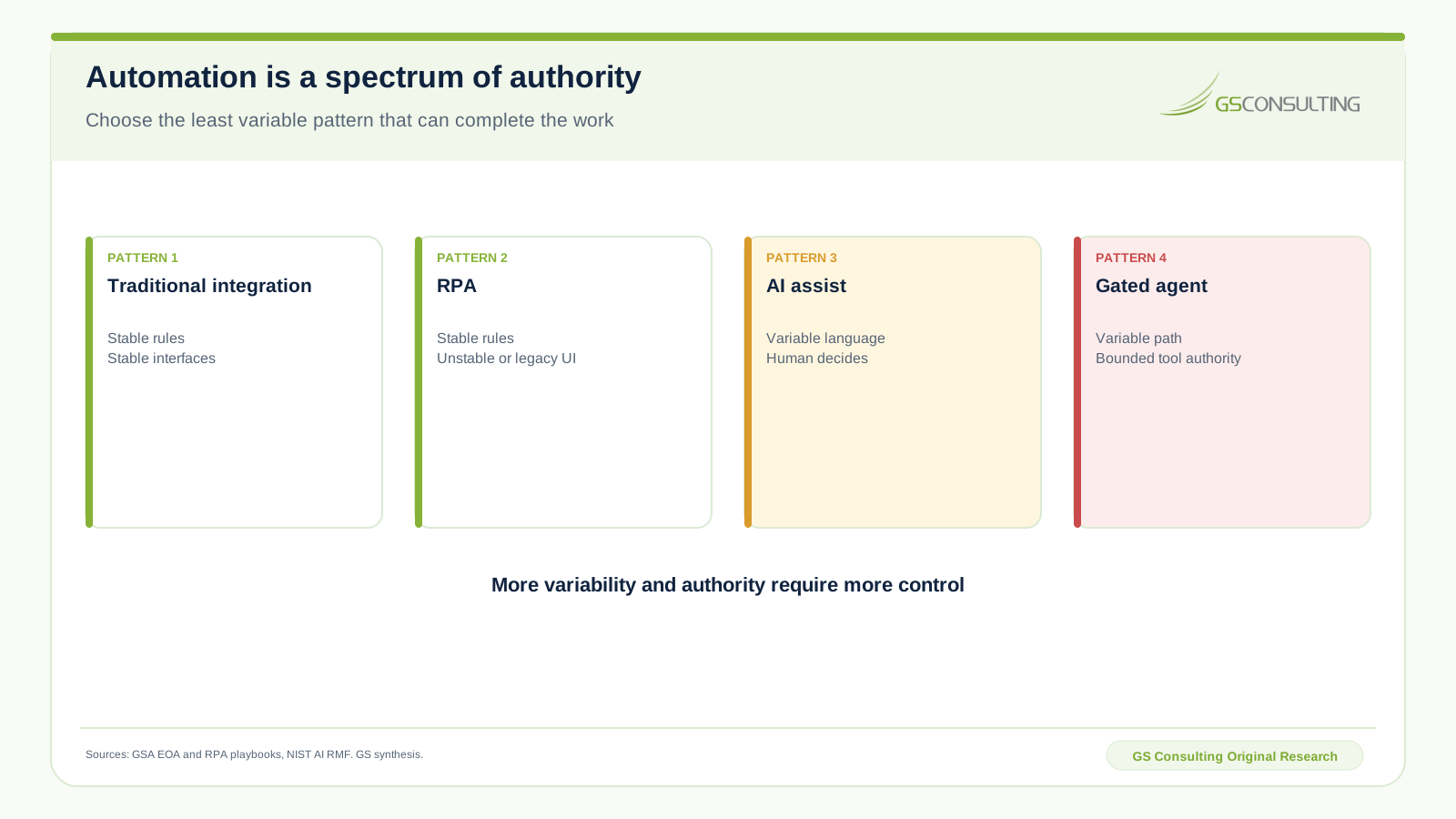
Four Automation Patterns, Four Different Jobs
Traditional integration
A traditional automation uses explicit rules and stable interfaces such as APIs, events, queues, database operations, or a workflow engine. Its strength is predictability. Given the same validated input and version, it should follow the same path.
Use it for scheduled report delivery, system synchronization, fixed approvals, calculations, notifications, and repeatable data movement. It is normally the easiest pattern to test, scale, monitor, and recover.
Robotic process automation
RPA follows defined rules through a user interface. It can read fields, click controls, enter values, copy records, and move files. The Federal RPA Playbook describes it as a fit for repetitive rules based work and treats security, credentials, privacy, operations, and scale as core program concerns.
RPA earns its keep when the business rule is stable but the interface is the constraint. A legacy portal has no practical API. A desktop application must be operated in a fixed order. A partner site permits only user interface access. Those are real conditions, and an AI agent does not make them disappear.
AI assist
AI assist handles variable language or evidence while a person keeps decision authority. It can classify a ticket, extract contract clauses, summarize an investigation, draft a response, or recommend a routing choice. The model output becomes an input to a controlled workflow.
This pattern is often overlooked because it sounds less ambitious than an agent. In practice it captures much of the value while keeping consequential approval with the operator.
Gated AI agent
A gated agent can interpret a bounded goal, gather approved context, choose among permitted tools or paths, take action, observe the result, and continue until a stop condition. The gate matters. Tools, data, actions, spend, duration, identity, approval, and recovery should all be constrained.
An agent is justified when path choice truly varies. If the only variation is a brittle screen coordinate, use RPA. If the only variation is free text that a person can review, use AI assist. If the task follows fixed logic through a stable interface, use traditional automation.
GS Automation Architecture Fit Matrix
GS Consulting built a derived fit model across ten common workflow shapes and four architecture profiles. Each workflow is rated from 1 to 5 on rule stability, structured data, interface stability, language variability, path variability, required reasoning, and autonomy need.
The weights are 20, 16, 12, 17, 14, 13, and 8 percent. Fit equals 100 minus the weighted absolute distance between the workflow ratings and each architecture profile. A high score means the workflow resembles the profile. It does not predict savings, accuracy, or production success.
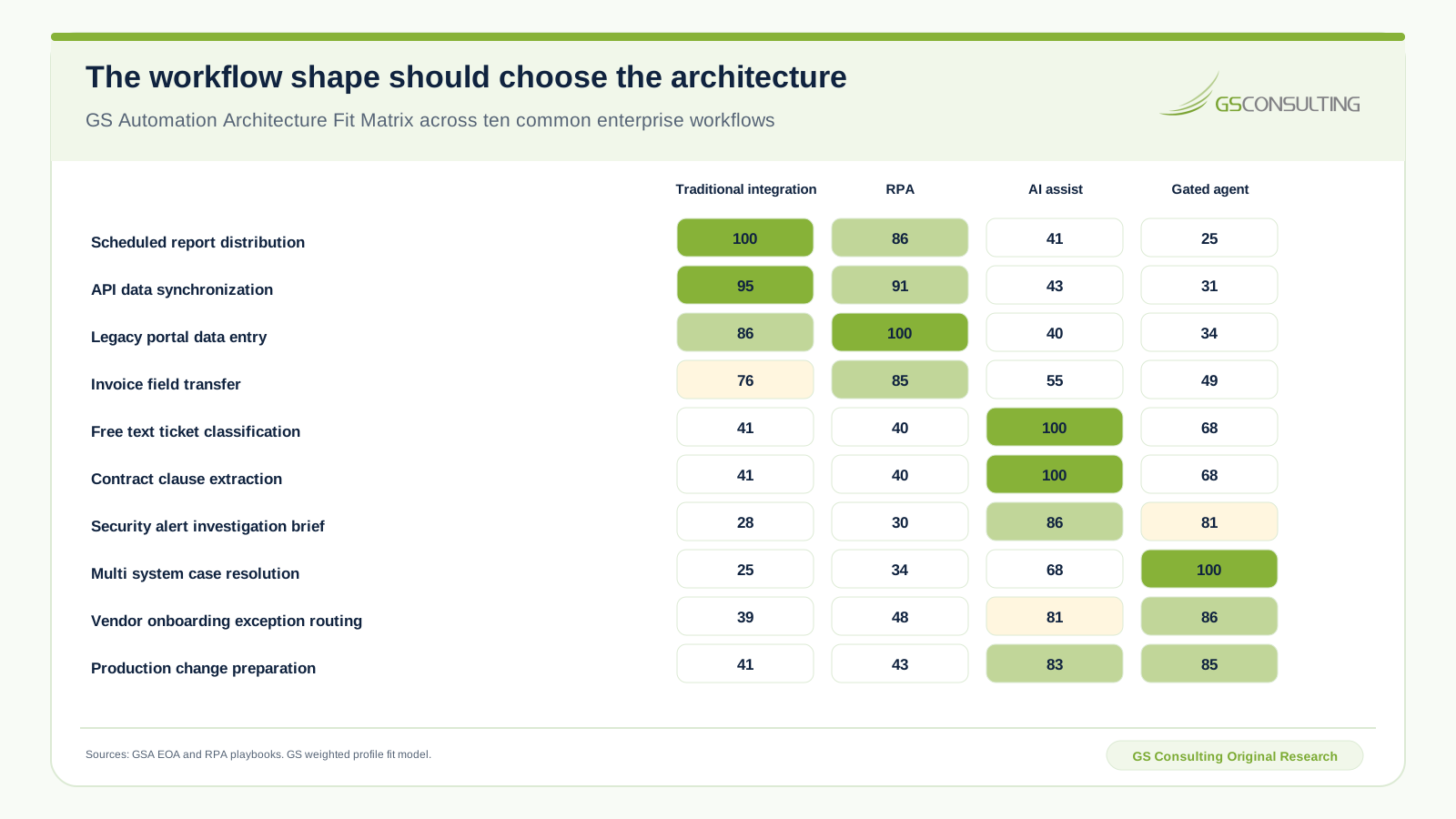
The model returns an exact fit only when a workflow matches the planning profile. Scheduled report distribution fits traditional integration at 100. Legacy portal data entry fits RPA at 100. Free text ticket classification and contract clause extraction fit AI assist at 100. Multi system case resolution fits a gated agent at 100.
The close calls are more valuable. A security alert investigation brief scores 86.3 for AI assist and 81.3 for a gated agent. Production change preparation scores 84.5 for a gated agent and 83.0 for AI assist. In those cases, authority should break the tie. If a person can review the brief or approve the change, begin with AI assist. Do not grant tool authority merely to gain 1.5 model points.
What Each Pattern Looks Like in Practice
Traditional integration: API data synchronization
A finance system emits an approved invoice event. A service validates the schema, maps fields, writes the record to the enterprise resource planning system, records the result, and retries known failures. There is no reason for an AI model to decide what to do. The rule is the product.
RPA: legacy portal data entry
A customer portal accepts fixed fields but offers no supported interface. A bot signs in with a dedicated identity, enters validated records, captures the confirmation, and routes exceptions. The screen remains fragile, so the team monitors field and layout changes. RPA is a bridge, not a permanent excuse to avoid integration.
AI assist: contract clause extraction
A model finds candidate clauses, returns exact locations, normalizes the language, and drafts an obligation list. A contract professional reviews the source text and decides what applies. The model handles language variability. The person retains interpretation and commitment authority.
Gated agent: multi system case resolution
A case can require gathering records from approved systems, choosing a diagnostic path, preparing a corrective action, updating a ticket, and requesting an operator approval before making a change. Paths differ. The agent receives limited tools, a case specific identity, a time bound session, explicit stop conditions, and a complete event trail.
For the broader architecture, see the agentic workflows guide. For lifecycle controls after the architecture choice, use the AI agent lifecycle management model.
The Control Burden Is Not Equal
The architecture with the most flexibility also creates the most control work. GS rates the control burden of traditional integration at 36, AI assist at 48, RPA at 52, and a gated agent at 86. The model considers action authority, path variability, consequence, reversal difficulty, observability, identity, and evidence.
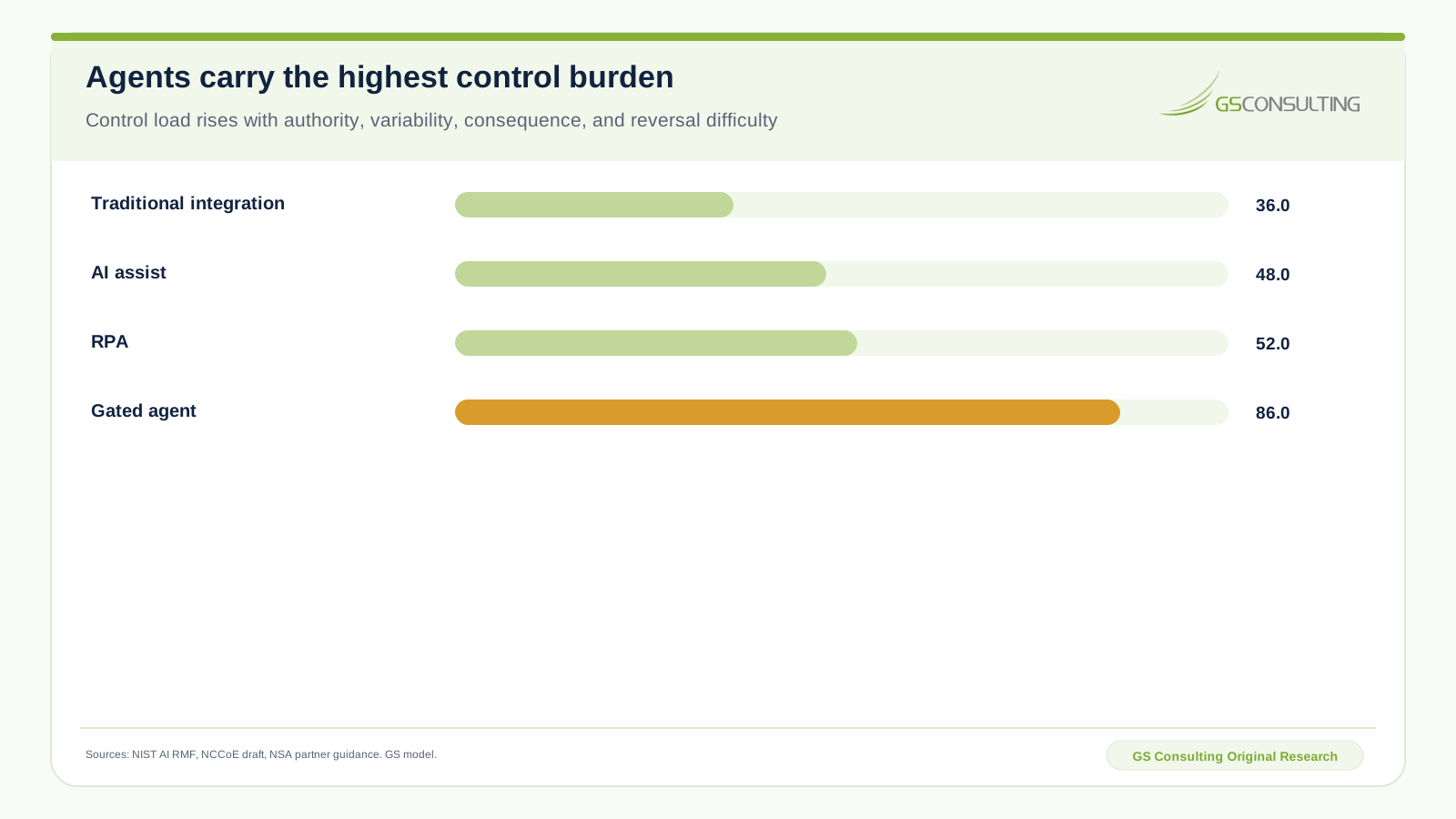
RPA scores above AI assist because it normally acts directly through a user interface and often holds credentials. AI assist can still expose sensitive data or produce harmful recommendations, but a well designed human decision gate limits direct action.
NIST work on agent identity and authorization is still developing, and the February 2026 NCCoE concept paper is preliminary. The control direction is already clear: agents need distinct identities, explicit authorization, attribution, monitoring, and accountability. NSA and international partners also recommend incremental adoption, human oversight, and careful limits on agent action.
Use This Automation Decision Path
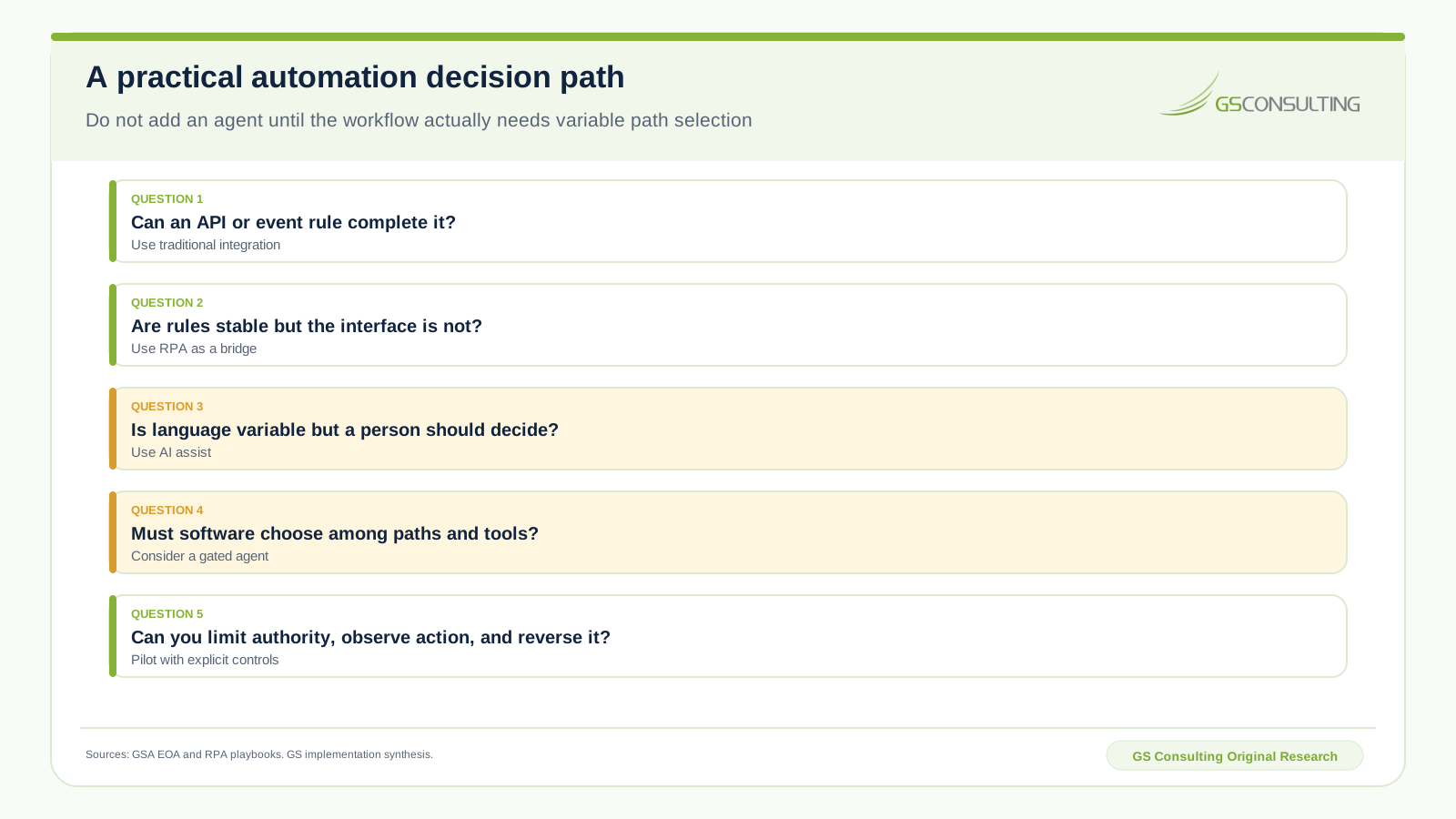
- Can an API, event, or fixed rule complete the work? Use traditional integration.
- Are rules stable but the interface is not? Use RPA as a controlled bridge.
- Is language variable but a person should decide? Use AI assist.
- Must software choose among paths and tools? Consider a gated agent.
- Can authority be limited, observed, and reversed? If not, keep the person in control and redesign the workflow.
Six Architecture Mistakes
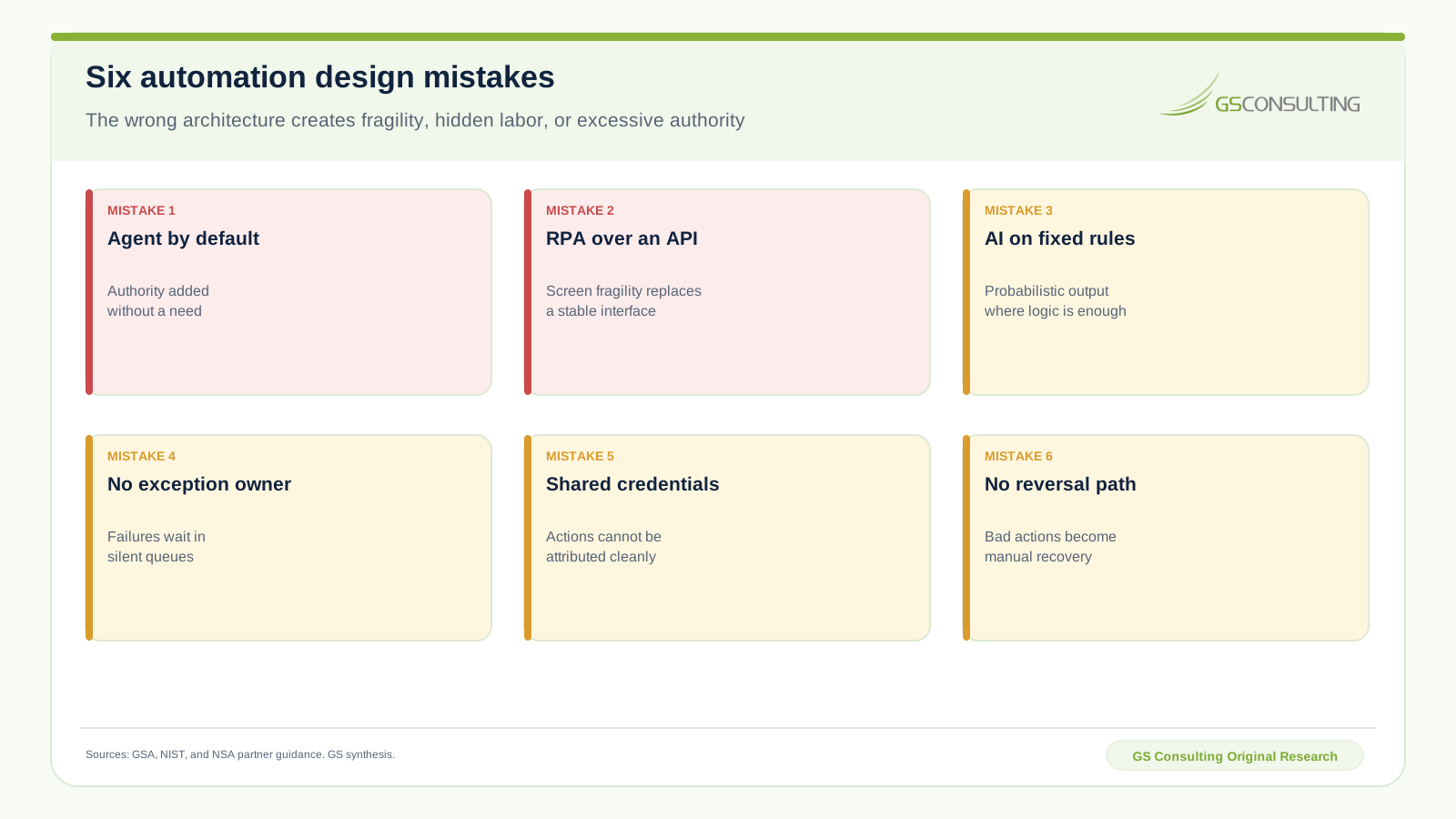
Agent by default adds authority without a workflow need. RPA over an API trades a stable interface for screen fragility. AI on fixed rules adds output variability where explicit logic would be better. No exception owner leaves failed work in silent queues. Shared credentials destroy attribution. No reversal path turns every bad action into manual recovery.
A 30 Day Architecture Selection Sprint
Week 1: observe the actual work
Record triggers, inputs, decisions, systems, interfaces, volumes, exceptions, owners, and consequences. Separate what operators actually do from what the procedure says.
Week 2: score the workflow shape
Rate rule stability, data structure, interface stability, language variability, path variability, reasoning, and autonomy need. Capture evidence for each rating. Do not let a vendor demonstration set the score.
Week 3: choose and constrain
Select the least variable pattern that can complete the work. Define the service identity, allowed data, approved tools, action boundary, approval points, exception route, event trail, and recovery path.
Week 4: test the ugly cases
Test missing data, changed screens, conflicting instructions, unavailable tools, stale context, denied access, repeated action, partial completion, operator rejection, and emergency stop. Measure exception labor as carefully as happy path speed.
The Minimum Automation Evidence Packet
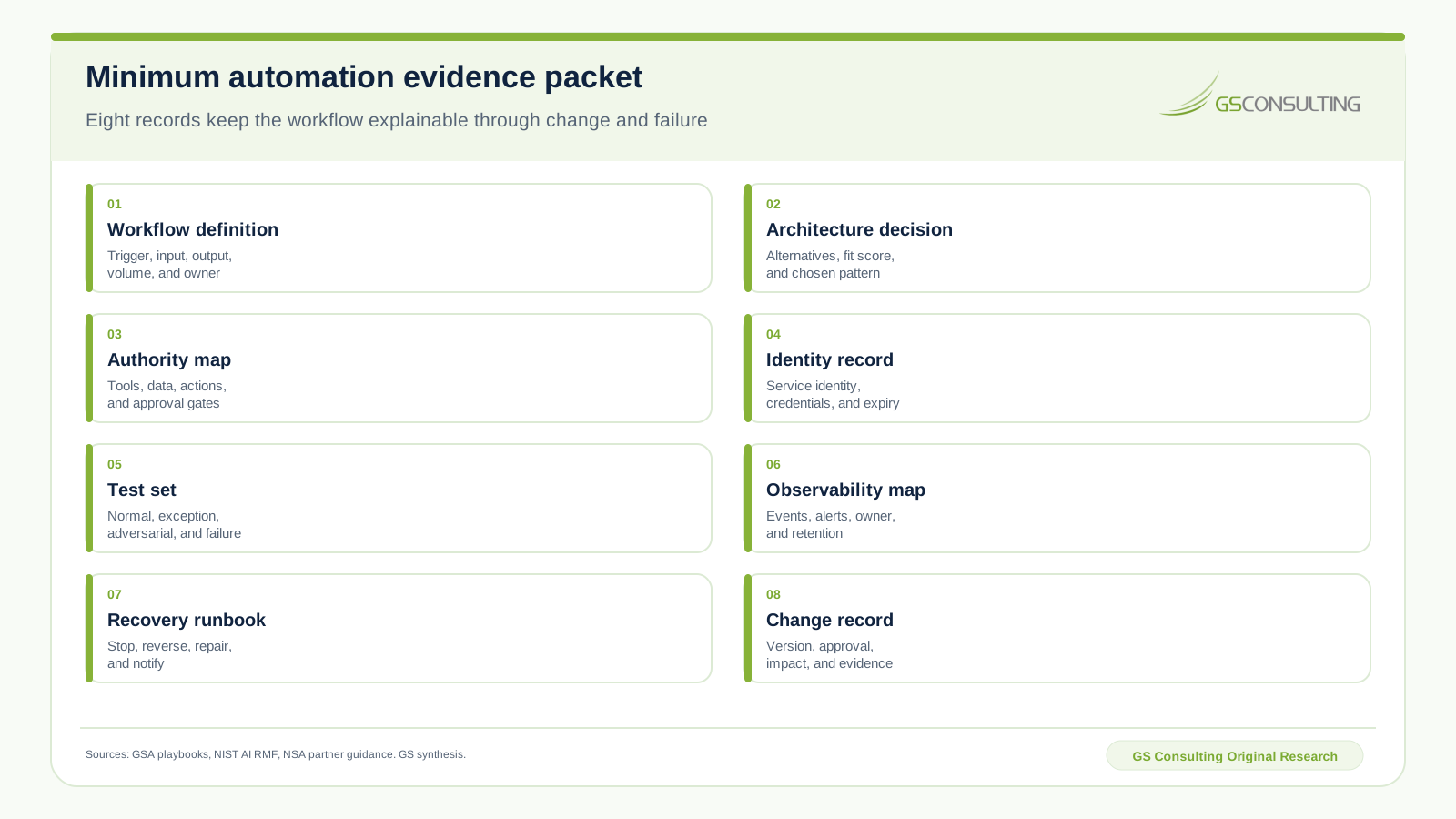
Preserve the workflow definition, architecture decision, authority map, identity record, test set, observability map, recovery runbook, and change record. Tie them to one workflow identifier. Review them when rules, data, interfaces, models, prompts, tools, permissions, owners, or consequences change.
Research Sources and Caveats
The GS Automation Architecture Fit Matrix and control burden scores are GS Consulting derived planning tools. They combine public source concepts with documented analyst profiles, ratings, and weights. They are not empirical performance benchmarks, security certifications, product ratings, or official GSA, NIST, NSA, or regulatory determinations.
- GSA Federal Enterprise Operations Automation Playbook
- Federal RPA Playbook Version 1.1
- Digital.gov State of Federal RPA
- NIST AI Risk Management Framework 1.0
- NIST NCCoE Agent Identity and Authorization Concept
- NSA and Partner Guidance on Agentic AI
- NIST Lessons on Tool Use in Agent Systems
Frequently Asked Questions About AI Agents, RPA, and Automation
What is the difference between RPA and AI agents?
RPA follows a defined sequence of rules through a user interface. An AI agent can interpret variable context, choose among permitted paths or tools, act, observe the result, and continue toward a bounded goal.
Will AI agents replace RPA?
No. RPA remains useful when rules are stable and a legacy or partner user interface is the practical constraint. Agents belong where path or tool choice genuinely varies.
When should a team use traditional automation instead of RPA?
Use it when stable rules can run through an API, event, queue, database operation, or workflow engine. It is normally more predictable and maintainable than screen or model based automation.
When is AI assist better than an AI agent?
Use AI assist when language or evidence varies but a person should retain consequential decision or action authority.
How should an organization choose an automation architecture?
Score the workflow on rule stability, data structure, interface stability, language variability, path variability, reasoning, and autonomy need. Choose the least variable pattern that can complete the work.
Related Reading
- Agentic AI Resource Hub
- What Are Agentic Workflows?
- AI Agent Lifecycle Management
- Human in the Loop Workflow Architecture
- Secure AI Automation
Use the least variable architecture that works.
GS Consulting helps teams map the workflow, select the right automation pattern, limit authority, test failure, and build the evidence before production.
Request an Automation Architecture Review