Agentic AI | | 24 min read
AI Agent Risk Assessment: Authority, Data, and Recovery

Key Takeaways
AI agent risk is authority plus consequence
Cascading failure scores 89
The highest planning priority combines broad consequence, control gaps, hard detection, and difficult recovery across connected agents.
Every target model was attacked successfully
NIST reported at least one successful attack against all 13 target models in a competition with more than 250000 attempts.
No recovery proof, no expanded authority
An agent should not receive high consequence permissions until pause, revocation, rollback, repair, and safe resume have been exercised.
An AI agent risk assessment is not a model inventory. It is an authority and recovery decision.
A useful assessment asks what the agent can see, what it can change, who can influence it, how a bad action will be detected, and whether the organization can recover before damage spreads. A list of models and vendors answers none of those questions.
The unit of analysis is one bounded use case. Name the goal, owner, users, agent identities, data, memory, tools, permissions, external inputs, actions, stop conditions, and recovery path. Then test plausible failures against the controls that are supposed to stop, detect, contain, and reverse them.
The Agentic AI hub connects this assessment to lifecycle, access, monitoring, and evidence guidance. Use AI Agent Identity and Access Management to bind identity and delegated authority, AI Agent Testing and Evaluation to prove the complete action loop, and Multi Agent AI Security when a workflow delegates work across agents. GS Consulting brings these decisions into a broader secure enterprise AI strategy.
Assess the action, not the product label.
GS Consulting helps teams map agent authority, build testable risk scenarios, set control evidence, and prove recovery before production authority expands.
Plan an Agent Risk ReviewAI Agent Risk Assessment: The Short Answer
Run an AI agent risk assessment in five moves. First, bound the use case and name the owner. Second, map every identity, data source, permission, delegated credential, tool, external input, and downstream action. Third, write task specific threat and failure scenarios, then test them through repeated attempts and realistic operating conditions. Fourth, score each scenario across threat exposure, authority consequence, data impact, control gap, detection difficulty, and recovery burden. Fifth, document treatment, residual risk, approval, monitoring, stop rights, and recovery evidence.
Do not score the phrase “AI agent” once and reuse it across a portfolio. A read only research agent over public material has a different risk shape from an agent that can change access, update financial records, deploy code, send messages, or direct other agents. The use case and its authority determine the assessment.
A score is a planning aid, not the decision itself. The decision should resolve to named controls, test results, evidence gaps, treatment owners, an accountable approver, and an expiration or review date. If the evidence cannot support the rating, change the rating or close the gap.
Define the decision boundaries before you compare tools.
Use the two-page GS AI Decision Boundary Checklist to frame one workflow across data, approval, and recovery, then capture the owner and evidence behind the decision.
Download the ChecklistStart with the Assessment Boundary
Most weak assessments start too late. They begin at the model endpoint and ignore the application, prompt, retrieved content, memory, agent framework, tools, credentials, approval interface, message bus, observability stack, human operators, and downstream systems. The risk often enters through those surrounding parts and becomes material when a tool acts.
Draw the complete path from goal to effect. Include the user or service that starts the job, the agent identity, every context source, any other agent, each tool call, the identity used for the call, the target system, the returned result, every persistent copy, and the person who can approve or stop the flow. Mark trust boundaries and tenant boundaries. Mark which components can introduce untrusted content.
Separate intended behavior from possible behavior. The intended task may be to draft an account change. The possible behavior may include reading broad directories, writing the final entitlement, sending a notification, or retrying after denial. Assessment scope follows possible authority, not the happy path in a demo.
NIST SP 800-30 Rev 1 provides the durable risk logic: understand threats, vulnerabilities, likelihood, and impact well enough to choose a response. NIST AI RMF 1.0 adds governance, context mapping, measurement, and continuous management. Neither source supplies a universal agent score. The organization still has to define and defend its own system boundary.
Public Research Says Static Testing Is Not Enough
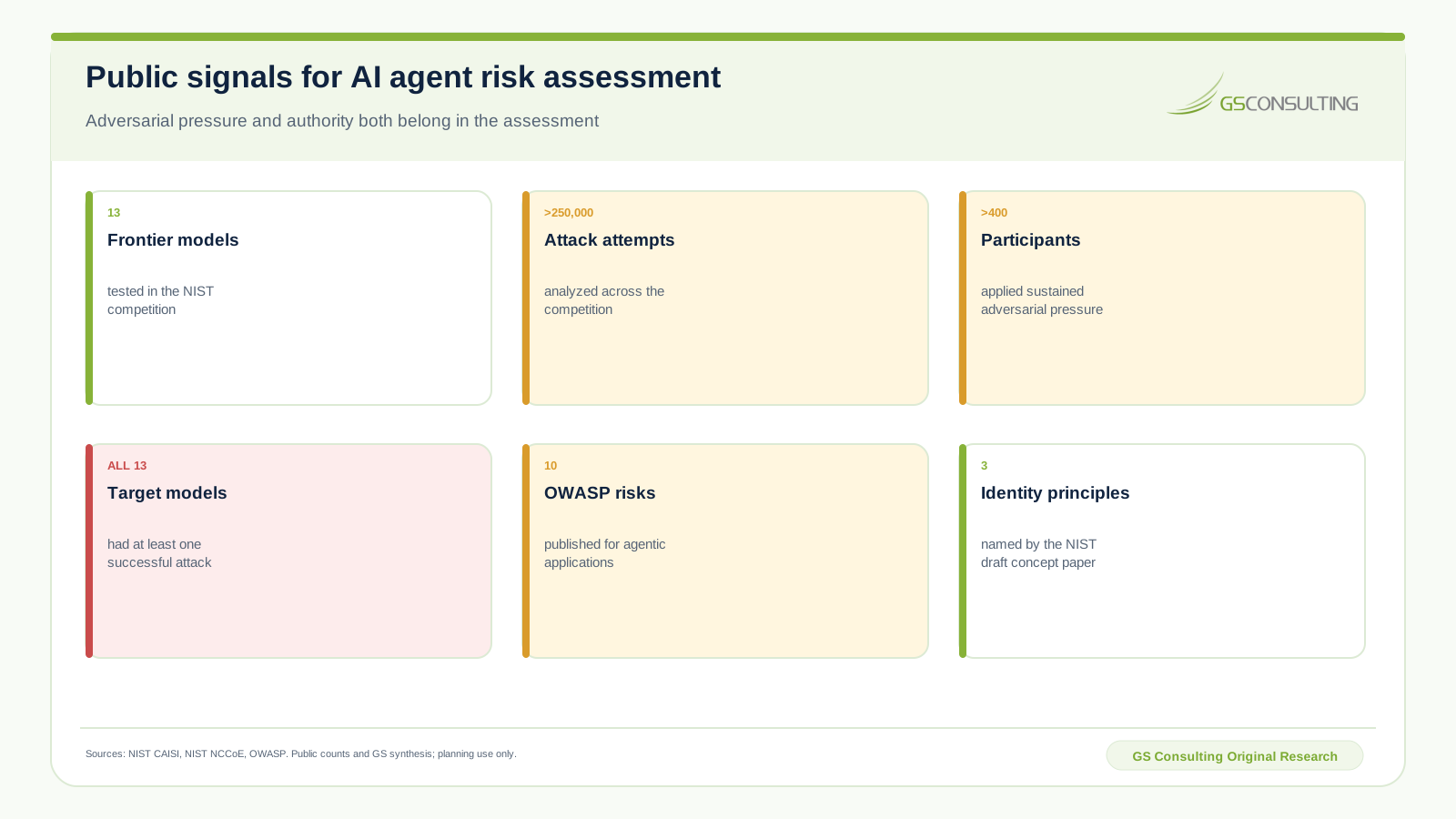
In March 2026, NIST CAISI reported on a public agent security competition that covered 13 frontier models, more than 250,000 attack attempts, and more than 400 participants. At least one successful attack was found against every target model. NIST also warned that the results do not provide one simple answer about model safety: models differed, attacks transferred in uneven ways, and evaluation has to keep adapting.
An earlier NIST analysis of agent hijacking evaluations made two points that matter in practice. Aggregate success rates can hide the consequence of a specific task, and repeated attempts can produce a different risk picture from one attempt. An agent allowed to retry should be tested that way.
The NIST AI 800-5 response summary says commenters widely agreed that agents present novel security threats and that familiar cyber practices need adaptation. The OWASP Top 10 for Agentic Applications provides a community taxonomy that includes goal hijack, tool misuse, identity and privilege abuse, memory poisoning, insecure communication, and cascading failure. These are inputs to a local assessment, not evidence that every system faces equal risk.
Original Research: The GS Agent Risk Assessment Priority Index
GS Consulting's derived model puts cascading failure, delegated authority abuse, supply chain compromise, and recovery failure at the top of the assessment queue.
We built the GS Agent Risk Assessment Priority Index from ten plausible risk scenarios. Each scenario receives an ordinal rating from one to five across six factors: threat exposure at 20 percent, authority consequence at 20 percent, data impact at 15 percent, control gap at 15 percent, detection difficulty at 15 percent, and recovery burden at 15 percent. The weighted result is reported on a zero to 100 planning scale.
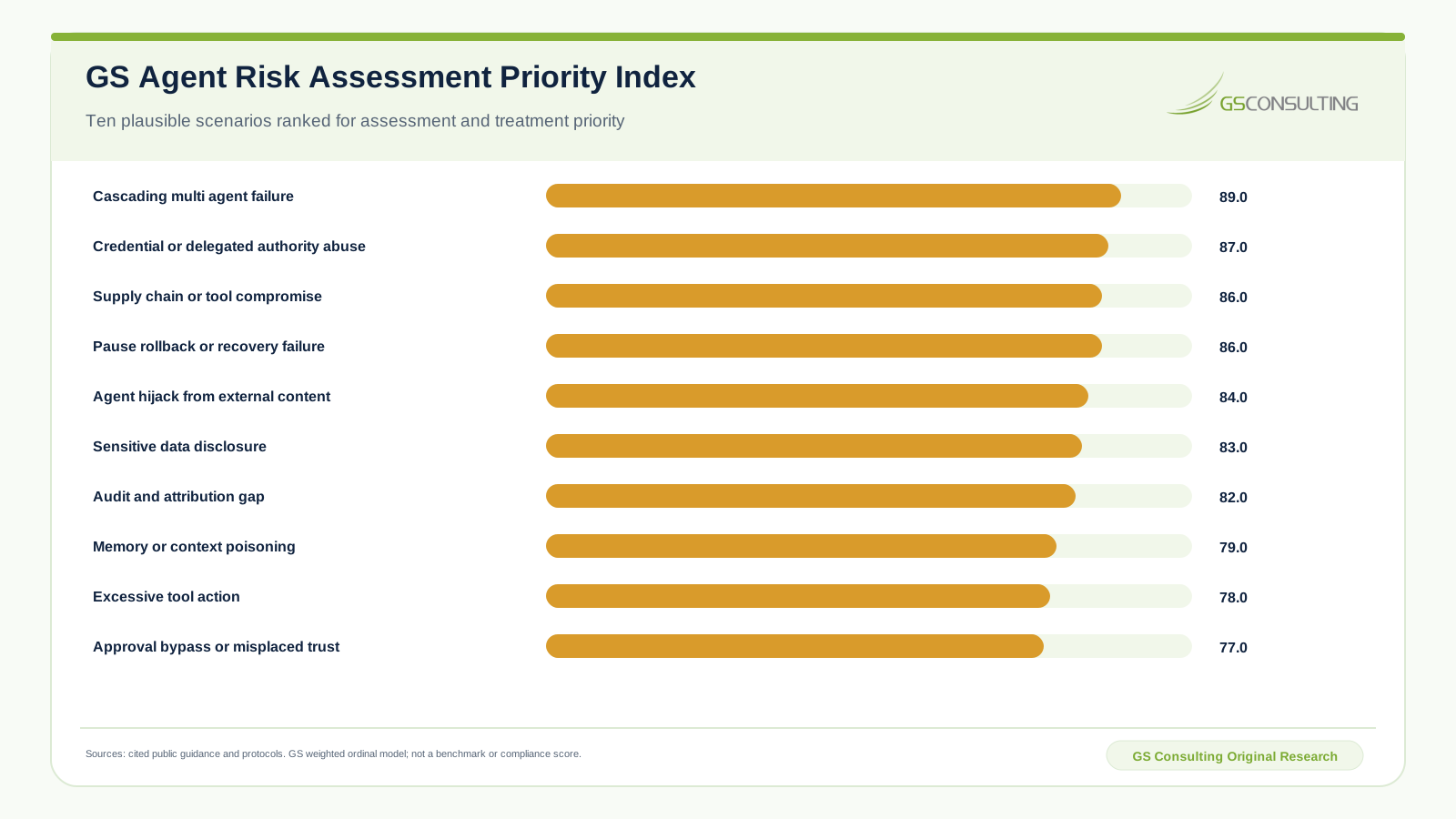
Cascading multi agent failure scores 89. Credential or delegated authority abuse scores 87. Supply chain or tool compromise and pause, rollback, or recovery failure each score 86. Agent hijack from external content scores 84. Sensitive data disclosure scores 83. Audit and attribution gap scores 82. Memory or context poisoning scores 79. Excessive tool action scores 78. Approval bypass or misplaced trust scores 77.
The result is intentionally scenario based. A high score does not mean the scenario will occur. It means the combination of exposure, authority, data, gaps, detection, and recovery deserves earlier treatment and stronger evidence. Replace the GS ratings with facts from the actual system, control tests, incident history, architecture, and risk owners.
The sensitivity test shifts weight toward authority, data, and recovery. Every scenario moves by no more than two points, and the highest priorities remain high. That stability supports the sequence. It does not make the chosen weights universal.
The GS Agent Risk Assessment Priority Index is a derived planning tool. It is not an official NIST, NSA, OWASP, legal, audit, compliance, certification, or regulatory determination. The public sources do not provide a representative benchmark for these modeled scenarios.
Score Six Factors and Require Proof for Every Rating
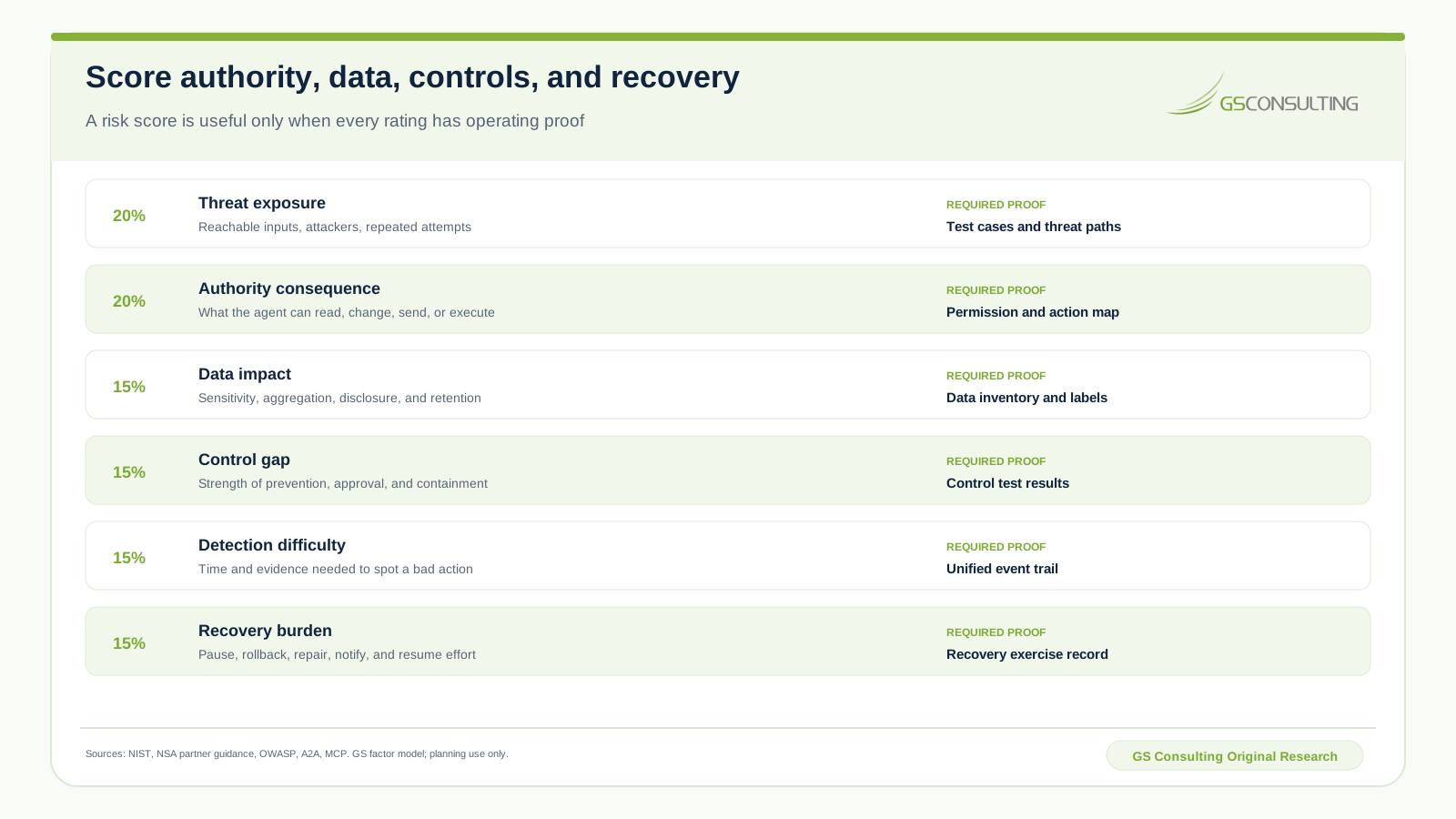
Threat exposure. Identify who can influence the agent and how often. Include direct users, external email, websites, documents, code repositories, retrieved content, other agents, tool responses, poisoned memory, compromised suppliers, and repeated attempts. Evidence should show the threat path and the test case, not simply name prompt injection.
Authority consequence. Record what the agent can read, create, change, send, approve, execute, purchase, grant, revoke, disable, or delete. Include delegated permissions and credentials acquired during a task. Rate possible authority, then show how controls narrow it in operation.
Data impact. Map source data, combined context, derived outputs, messages, traces, memory, artifacts, logs, backups, and support records. A collection of individually routine records can become sensitive when the agent joins them. The assessment should consider the derived answer, not only source labels.
Control gap. Evaluate the controls that prevent unsafe input, enforce identity and permissions, constrain tools, gate consequential action, isolate memory, validate messages, rate limit propagation, and stop the system. A designed control receives less credit than a tested control with current evidence.
Detection difficulty. Ask whether an operator can reconstruct the goal, context, identity, policy decision, plan, tool call, target, parameters, action, result, peer messages, approval, and exception. If each component records a different identifier, detection and investigation become guesswork.
Recovery burden. Estimate the work needed to pause the job, revoke identities and credentials, contain affected agents and tools, roll back actions, repair data, notify owners, reconcile state, retest, and resume safely. Recovery difficulty belongs in the initial risk score because autonomy can make reversal harder than prevention.
A Five Step AI Agent Risk Assessment Process
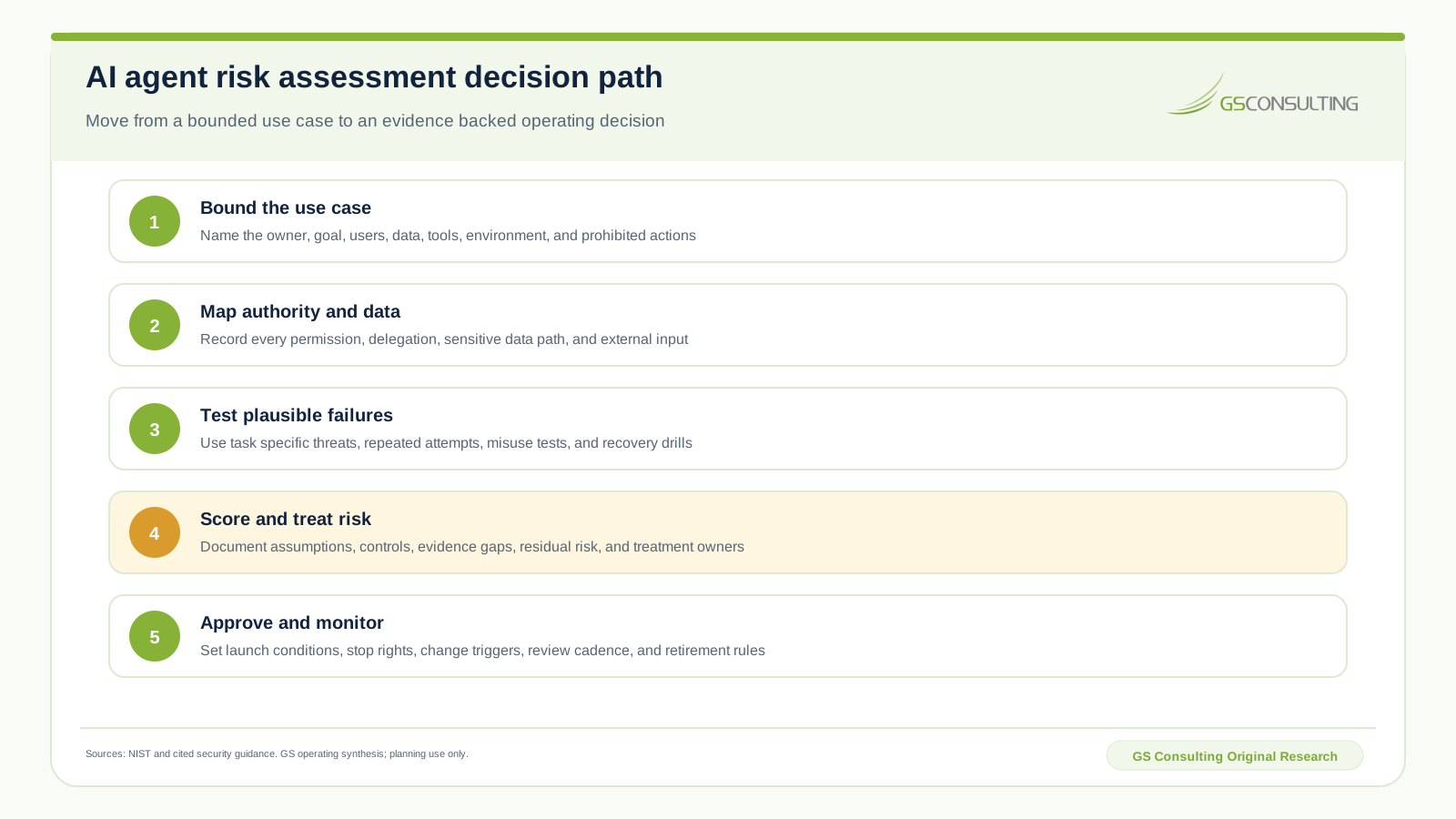
1. Bound the use case. State the business outcome in testable terms. Name the owner, users, affected people, system boundary, data, tools, environments, allowed actions, prohibited actions, success measures, and stop conditions. Record why an agent is needed instead of a simpler rules based workflow.
2. Map authority and data. Create an identity and permission map for each agent, service, user, tool, and target. Show delegation, audience, scope, duration, revocation, and the identity visible in the downstream record. Create a parallel data map from input through memory, action, logs, artifacts, backups, and deletion.
3. Test plausible failures. Convert threats into tasks the system can actually face. Test malicious external content, ambiguous goals, unauthorized tool requests, stale credentials, excessive retries, crafted peer messages, poisoned memory, wrong tenant context, approval rejection, provider failure, monitoring gaps, and recovery under load.
4. Score and treat risk. Rate each scenario with a written basis. Link current controls and test evidence. Name missing controls, treatment owners, due dates, and accepted residual risk. Do not average away one high consequence path because several low consequence paths work well.
5. Approve and monitor. The accountable owner approves, limits, defers, or rejects the use case. The record should set launch conditions, monitoring thresholds, stop rights, exception handling, change triggers, review cadence, and retirement criteria. Approval expires when material assumptions change.
Authority and Data Drive the Real Risk
The cleanest assessment artifact is an action table. For each action, record the initiating user or service, agent identity, delegated authority, tool, target resource, allowed parameters, data classes, approval rule, rate limit, evidence, revocation method, rollback method, and owner. This table exposes broad credentials and hidden external effects quickly.
Use separate identities where separation improves attribution and revocation. A shared service credential can make ten agents look like one actor. It also makes selective revocation harder during an incident. The February 2026 NIST NCCoE concept paper is still preliminary, but it asks the right implementation questions: how an agent proves authority, conveys intent, receives delegated authority, binds to human approval, and records actions in a verifiable way.
Do not assume the user may see every source the agent can reach. Retrieval, tools, memory, and downstream services can each widen access. Recheck current authority when data is retrieved and when an action occurs. Bind tokens to the intended resource and task where the architecture permits. Expire them quickly enough that a completed job does not leave a standing path.
Human approval does not erase excessive authority. The reviewer needs the actual goal, source, affected resource, proposed change, consequence, uncertainty, and safer alternative. The approval must bind to the exact action. If the agent can alter the target or parameters after approval, the gate is decorative.
Test the Agent as an Adversary and an Operator Would
Start with useful behavior. Prove the agent completes the intended task, cites or records the right sources, uses the correct identity, respects data and tenant boundaries, requests approval at the right point, verifies the result, and stops cleanly. Security testing without a reliable normal path produces noise.
Then test denied behavior. Ask the agent to use an unauthorized tool, access the wrong tenant, exceed the permitted amount, act after expiry, retry a denied request, follow instructions hidden in external content, accept a false peer message, persist prohibited data in memory, and bypass the approval path. Verify that the downstream system denies the action even if the model proposes it.
Repeat probabilistic tests. One safe result is weak evidence when the task can run thousands of times. Define attempt counts, varied wording, context changes, model temperature where relevant, and acceptable thresholds. Keep the exact prompts, inputs, environment, model and framework versions, controls, outputs, actions, and results.
Test control failure too. Disable a policy service. Delay identity revocation. Remove a log source. Return malformed tool data. Fill a queue. Break a callback. Simulate a provider outage. The assessment should say whether the system fails closed, pauses, degrades to a safe mode, or continues with reduced visibility.
Continuous monitoring for AI agents extends these cases into production thresholds. AI audit trails and activity logging shows how to preserve the event chain needed for investigation and review.
No Recovery Proof, No Expanded Authority
The joint NSA and international partner guidance on careful agent adoption recommends incremental deployment, continuous assessment, containment, rollback, rigorous monitoring, and human oversight. That is a strong operating standard even when the guidance does not create a specific legal obligation for a given organization.
A recovery exercise starts by declaring the failure. Identify the affected goal, task, agents, credentials, tools, data, actions, users, and time window. Pause new work. Revoke or narrow affected authority. Preserve relevant evidence without copying sensitive content unnecessarily. Contain peers and downstream jobs that received the same message, state, or artifact.
Rollback is not always possible. A sent email, exposed record, purchased item, disabled account, published code change, or external decision may require compensation rather than reversal. The assessment should distinguish reversible actions, compensating actions, and irreversible effects. High consequence irreversible actions deserve strict gates.
Resume only after the team understands the cause, repairs the control, reconciles state, reruns defined tests, checks connected agents and tools, and records who approved return. The system should not quietly retry a failed task with the same context and authority.
Six Ways AI Agent Risk Assessments Fail
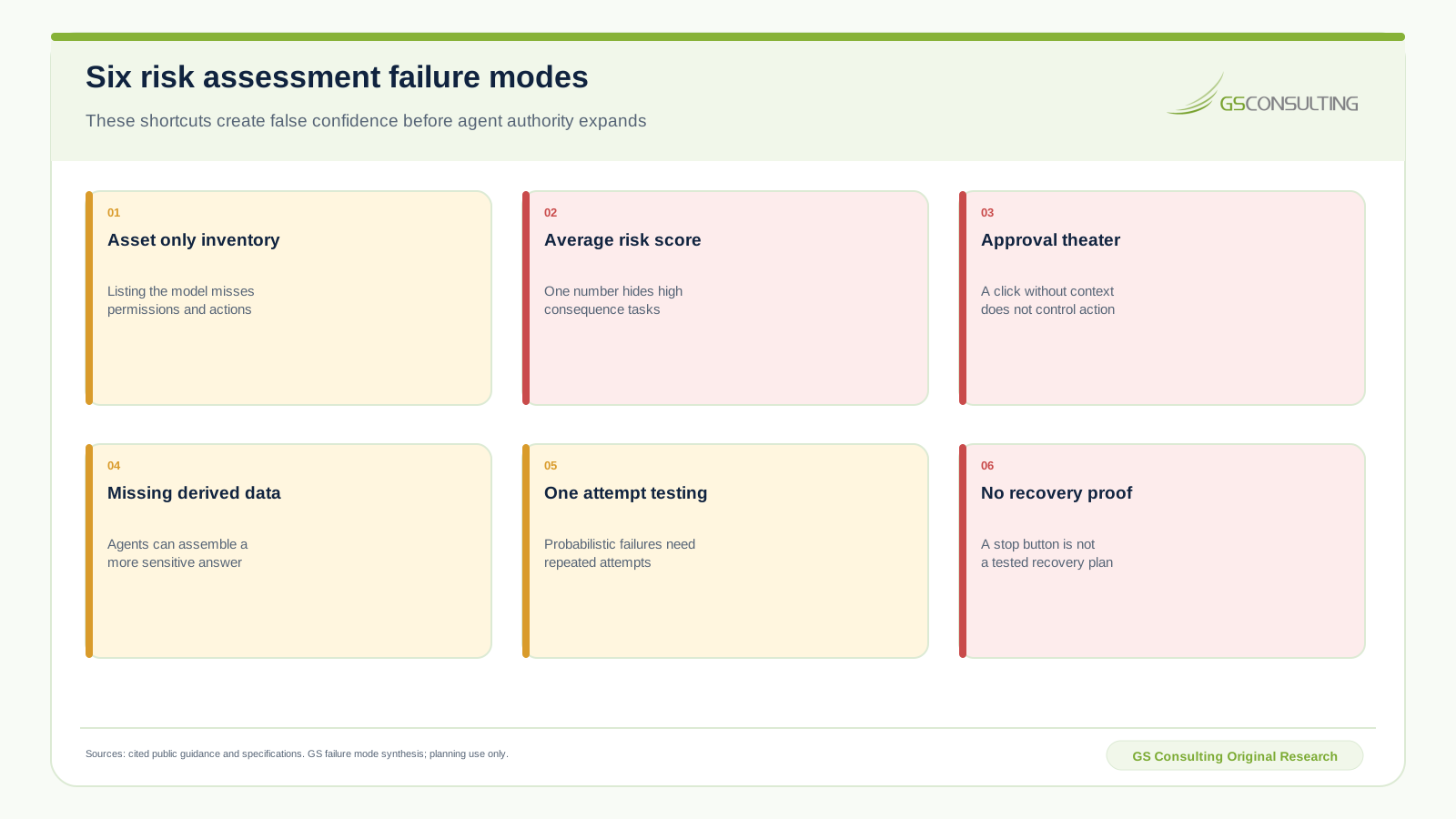
Asset only inventory. A model name, vendor, owner, and data label do not describe credentials, tool authority, peer agents, approvals, external effects, monitoring, or recovery.
Average risk score. A portfolio average can hide one rare but severe task. Assess scenarios at the action level, especially when consequences differ.
Approval theater. A human click is not meaningful if the person lacks context, time, authority, or a safe way to reject and correct the action.
Missing derived data. The agent may combine routine facts into a sensitive inference or a more complete record. Assess the assembled output and every persistent copy.
One attempt testing. Agents are probabilistic and attackers can retry. Use repeated attempts and varied contexts for paths that can recur.
No recovery proof. A documented stop button does not prove credentials revoke, actions reconcile, peer jobs halt, data restores, or safe operation can resume.
Build a Minimum AI Agent Risk Evidence Packet
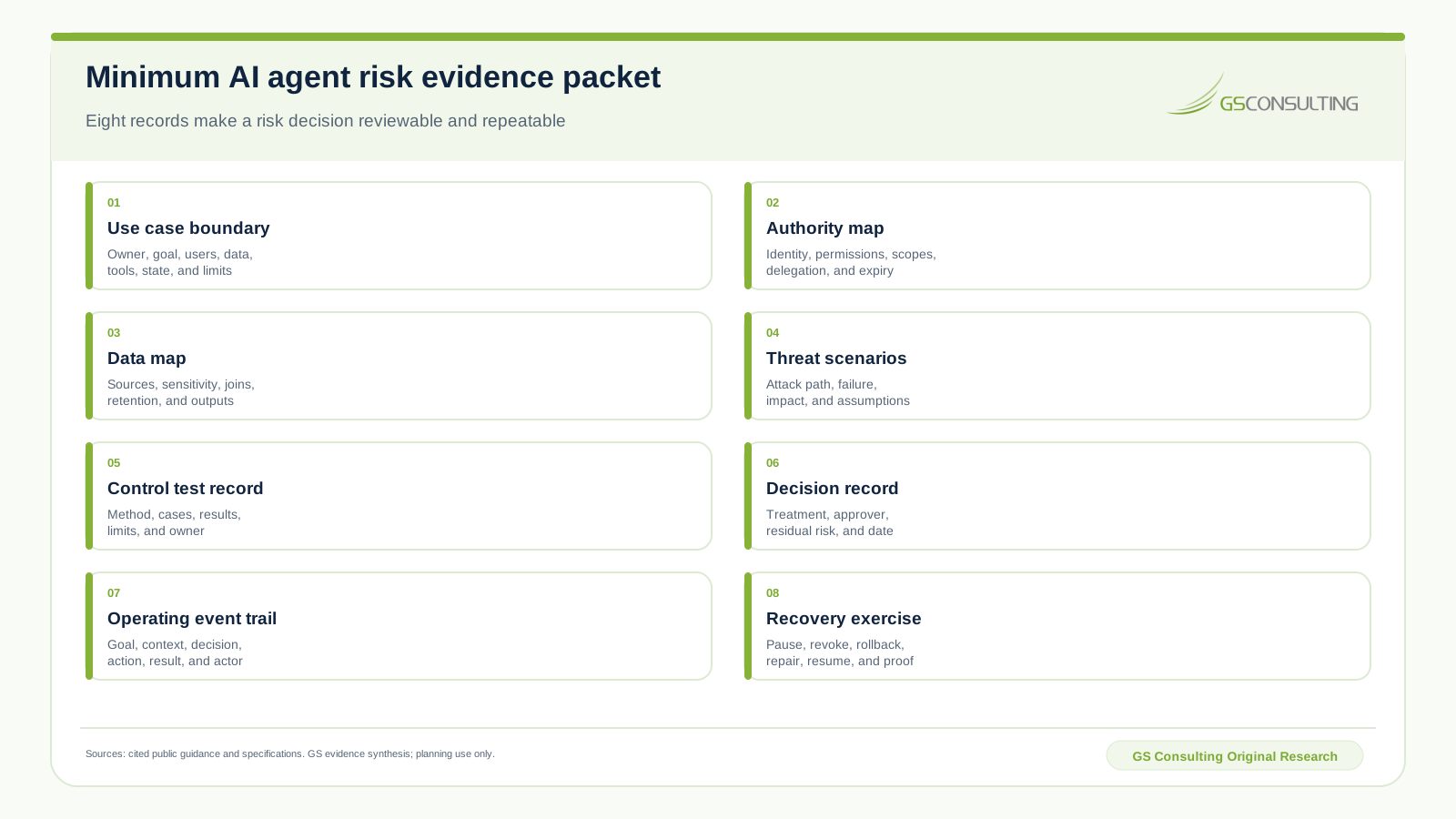
The use case boundary establishes what was assessed. The authority map shows identities, permissions, scopes, delegation, audience, expiry, and revocation. The data map covers source records, sensitivity, joins, outputs, memory, logs, retention, and deletion. Threat scenarios connect plausible paths to consequences and assumptions.
Control test records preserve methods, cases, versions, results, thresholds, limits, and owners. The decision record names treatment, accepted residual risk, approver, date, and review trigger. The operating event trail connects goal, context, policy, action, result, actor, and exception. The recovery exercise proves pause, revoke, rollback, repair, reconcile, and resume.
Store evidence where the operating owners can update it and reviewers can trace it. A slide deck may explain the decision, but it should link to current technical and operating records. Screenshots can support a point. They should not replace machine records, tested configuration, interviews, or repeatable procedures.
AI agent lifecycle management places this packet inside ownership, review, change, and retirement. Human in the loop workflow architecture shows how to design consequential review as a real decision point.
Set the Decision Standard Before the Pilot Starts
Define the evidence needed for approval while the workflow is still being designed. Set the maximum authority, data boundary, required tests, monitoring coverage, acceptable residual risk, recovery objective, and approving role before schedule pressure turns a pilot into production.
Use a simple release rule. Low consequence read only work may move with narrow access, strong source controls, evaluation, observation, and an easy stop path. Any agent that can change records, grant access, execute code, move money, communicate externally, direct peers, or affect regulated data should face stronger identity, approval, isolation, testing, evidence, and recovery requirements.
The final standard is blunt: if the team cannot show who authorized the agent, what data and tools it could reach, why the action was allowed, what happened, and how the system recovers, the agent is not ready for more authority.
Research Sources and Method
The model uses public material from NIST, NIST CAISI, NIST NCCoE, the joint NSA partner guidance, and OWASP. Public facts remain separate from GS scenario definitions, ratings, weights, and derived scores. The complete source register, data dictionary, model inputs, formulas, sensitivity analysis, figure data, and workbook are retained in the article research package.
- NIST SP 800-30 Rev 1: Guide for Conducting Risk Assessments
- NIST AI Risk Management Framework 1.0
- NIST Generative Artificial Intelligence Profile
- NIST CAISI agent hijacking evaluation research
- NIST CAISI agent security competition analysis
- NIST AI 800-5 security considerations response summary
- NIST NCCoE agent identity and authorization concept paper
- NSA and international partner agent adoption guidance
- OWASP Top 10 for Agentic Applications for 2026
AI Agent Risk Assessment FAQ
What is an AI agent risk assessment?
An AI agent risk assessment is a structured review of one bounded agent use case. It maps the goal, identities, data, tools, permissions, external inputs, plausible failures, controls, detection, recovery, evidence, and residual risk before an owner approves operation or expanded authority.
How is AI agent risk different from ordinary AI risk?
An agent can pursue a goal through multiple steps, call tools, retain state, delegate work, and create external effects. The assessment therefore examines action authority, delegated credentials, repeated attempts, state, propagation, revocation, rollback, and accountability in addition to model quality and output risk.
What should an AI agent risk assessment include?
Include the use case boundary, owner, users, agent identities, data map, permission and delegation map, threat scenarios, control tests, human decisions, event records, residual risk decision, monitoring thresholds, stop rights, and a tested recovery path.
How should AI agent risk be scored?
Score scenarios with documented ratings for threat exposure, authority consequence, data impact, control gap, detection difficulty, and recovery burden. Keep assumptions visible, test alternate weights, and do not treat the result as a universal benchmark or compliance grade.
Does human approval make an AI agent low risk?
No. Approval helps only when the reviewer sees the goal, source, proposed action, target, consequence, uncertainty, and safe alternatives and can reject or correct the action. A routine click after the decision is framed can create approval theater.
How often should an AI agent risk assessment be updated?
Update it after changes to the goal, model, prompt, tools, permissions, data, memory, provider, protocol, approval flow, monitoring, recovery design, or operating environment. Also review it after incidents, near misses, new threat findings, and on a recurring cadence based on consequence.
Related Reading
- Agentic AI Resource Hub
- Multi Agent AI Security
- Securing AI Agents
- AI Agent Lifecycle Management
- Continuous Monitoring for AI Agents
- AI Audit Trails and Activity Logging
- Secure Enterprise AI Strategy
Do not expand authority on assumptions.
Bound the use case. Test the failure paths. Prove the controls. Exercise recovery. Then make an owned risk decision.
Request an Agent Risk Assessment