Agentic AI | | 27 min read
AI Agent Network Egress Security: Control Every Outbound Path

Key Takeaways
Treat every outbound request as an authorization decision
Three controls score 98 or higher
Destination registry, tool binding, and fail closed gateway enforcement lead the priority index.
Private ingress does not settle egress
The final destination, action, payload, route, and identity still need explicit policy.
Network logs need decision context
Link each request to the agent, tool, policy, data result, destination, response, and stop path.
AI agent network security is not a firewall rule. It is control over every place the agent can send data or cause an external action.
An agent can read a document, call a tool, follow a redirect, resolve a new address, post a payload, trigger a transaction, and try again before a person sees the first request. A broad outbound rule turns that sequence into assumed trust. The destination may be familiar while the action, data, identity, or final route is not.
The operating goal is direct: every outbound request reaches a policy point that knows which agent is asking, which person or service it represents, which tool and action it chose, which destination will receive the request, which data may leave, and what happened next. Requests outside that boundary are denied and recorded. Operators can stop the next request without waiting for the model.
Use this guide with the Agentic AI hub, Securing AI Agents, AI Agent Identity and Access Management, Continuous Monitoring for AI Agents, and AI Agent Incident Response. GS Consulting integrates the controls through Secure Enterprise AI Strategy.
Map the outbound path before an agent reaches production.
GS Consulting helps teams define approved destinations, bind tool actions to policy, inspect sensitive payloads, connect telemetry, and test containment.
Request an Agent Egress ReviewAI Agent Network Security: The Short Answer
Start with one bounded use case. Name the agent runtime, owner, represented users or services, tools, permitted actions, data classes, destinations, protocols, expected request volume, and prohibited effects. Do not begin with every possible agent or a generic enterprise allowlist. A usable policy needs enough context to deny the wrong action without blocking the approved one.
Route the complete outbound path through enforceable controls. The path includes the model runtime, tool gateway, workload identity, authorization service, DNS, redirects, proxies, private endpoints, service meshes, internet gateways, destination APIs, webhooks, telemetry exporters, update channels, and any code execution environment. An agent can bypass a beautifully designed gateway if one library, tool, or runtime still has a direct route.
Use default deny for the bounded production path where the architecture supports it. Approve specific destinations, protocols, tool actions, identities, data classes, rates, and time windows. Resolve and evaluate the final destination after redirects. Inspect or transform payloads where sensitive data can leave. Record both allowed and denied decisions.
Then test the system, not the diagram. Try an unapproved hostname, literal IP, redirect, alternate protocol, oversized transfer, sensitive payload, stale credential, changed tool parameter, gateway outage, and emergency block. The design is ready when the team can explain the result and stop the next request.
The Egress Boundary Is Larger Than the Agent Runtime
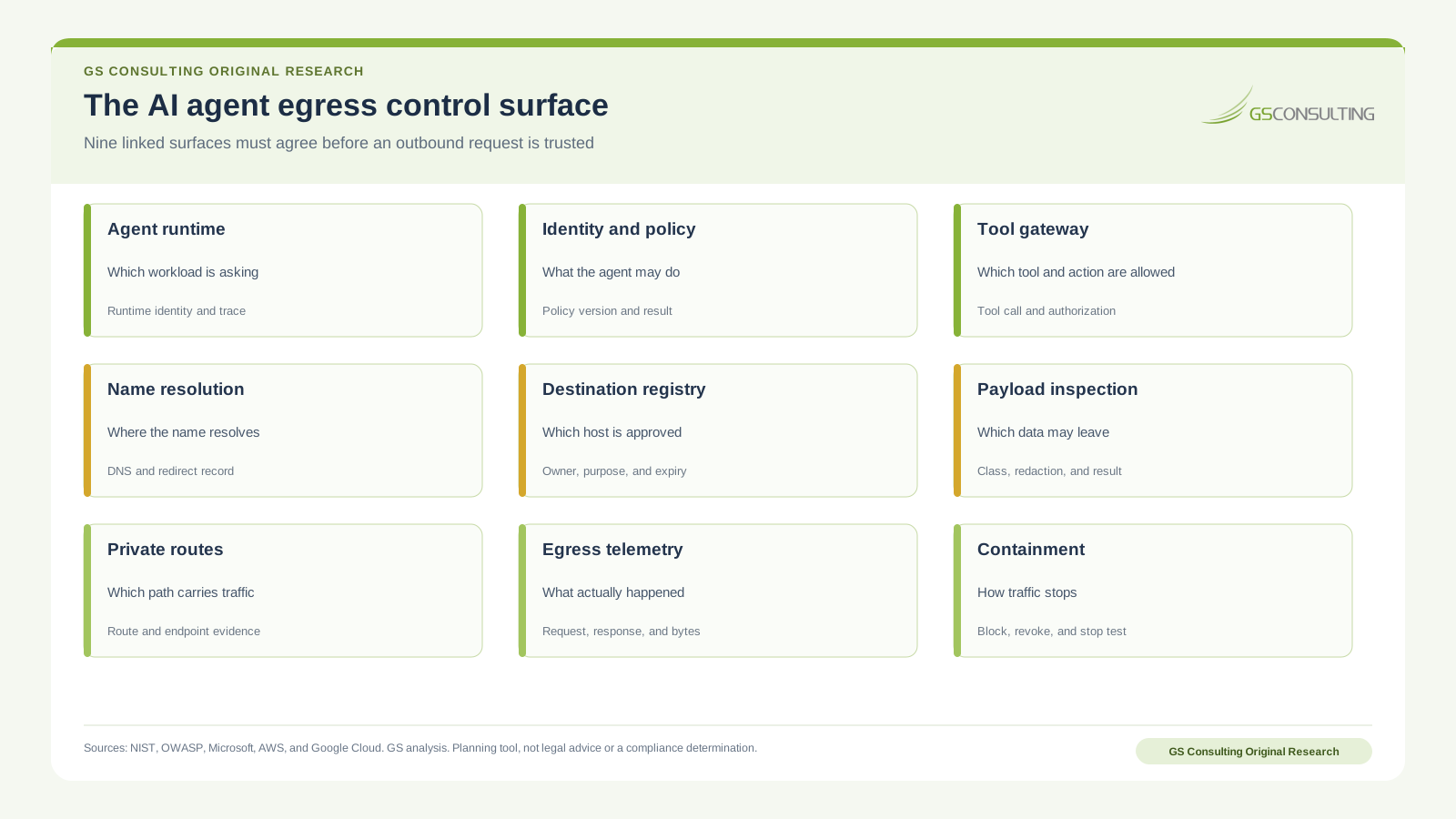
The runtime is only the first surface. It should have a distinct workload identity and a known software, model, prompt, tool, and policy version. If several agents share one runtime identity, the network control cannot reliably tell which actor requested the connection. If the runtime can create arbitrary code or install packages, its possible egress is wider than the declared tools.
The tool gateway translates intent into an external action. “Use the ticket tool” is too broad. The policy needs the exact operation, target tenant, resource, fields, attachments, recipient, and data class. A read method and an export method should not inherit the same permission. A tool description is guidance for the model. It is not network enforcement.
Name resolution and redirects decide the final destination. A policy that checks only the original hostname can miss a redirect to another host, a changed DNS answer, a literal IP, or an alternate protocol. Approved hostnames need owners, purposes, data classes, allowed actions, expected regions, and expiry dates. Wildcards should be rare and explained.
The payload is its own control surface. An approved destination may still receive data the use case does not permit. Inspect data class, record count, file type, attachment content, prompt fields, tool arguments, and response data where consequence justifies it. Redact, tokenize, reduce, or deny before transmission. Keep the original sensitive value out of the model context when the task can use a reference.
Containment is part of architecture. The team needs a fast way to block one destination, disable one tool action, revoke one credential, pause one agent, cancel queued work, and isolate a route. A security control without a tested stop path is observation, not containment.
What Public Guidance Supports
NIST AI 800-5 reports broad agreement that agent security brings novel threats while established security practices remain relevant and need adaptation. That is the right frame for network design. Agent egress does not replace identity, least privilege, boundary protection, information flow enforcement, audit, or monitoring. It makes their decisions more dynamic and more connected.
NIST SP 800-207 rejects implicit trust based on network location or asset ownership and focuses policy on resources. NIST SP 800-207A extends that idea to cloud native applications through application and service identities, gateways, sidecars, and granular policy. For an agent, being inside a private network is not enough. The outbound action still needs identity and authorization.
The OWASP Top 10 for Agentic Applications 2026 describes tool misuse scenarios that include external messages and data exfiltration. Its mitigations include tool specific profiles, rate limits, outbound allowlists, isolated execution, and denial of unapproved destinations. The value is not the label. It is the direct connection between tool authority and the network path that carries the effect.
Cloud vendors now expose useful patterns, with important limits. Microsoft hosted agent guardrail guidance describes ordered host rules, default deny, and fail closed behavior, but the feature is documented as preview and scoped to hosted agents. AWS agent security guidance describes private endpoints, flow logs, tool authorization, and gateway control. Google Cloud Agent Gateway guidance describes agent identity checks, a destination registry, payload inspection, and default deny when no policy matches. These are vendor examples, not universal standards or proof that a product configuration fits a particular system.
GS Agent Egress Control Priority Index
GS Consulting built a derived planning model to answer one question: which egress controls should an operator implement and prove first for one bounded AI agent use case? Twelve control domains receive one to five analyst ratings for data loss consequence, external action consequence, circumvention ease, visibility gap, and recovery pressure. The base weights are 30, 25, 20, 15, and 10 percent. The weighted result is reported on a zero to 100 planning scale.
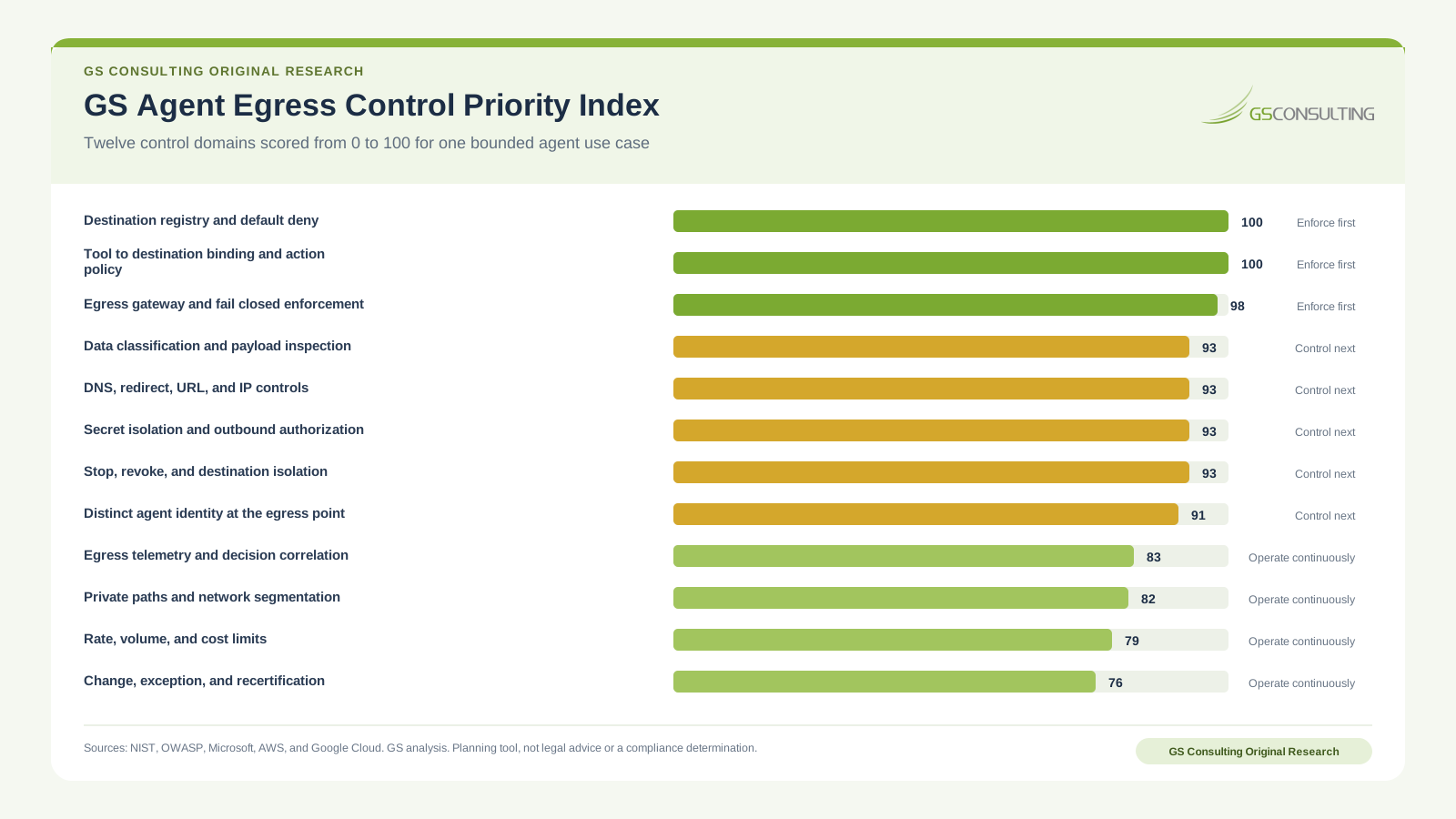
Destination registry and default deny scores 100. Tool to destination binding and action policy also scores 100. Egress gateway and fail closed enforcement scores 98. Data classification and payload inspection, DNS and redirect controls, secret isolation and outbound authorization, and stop and isolation controls each score 93. Distinct agent identity at the egress point scores 91.
Egress telemetry and decision correlation scores 83. Private paths and network segmentation scores 82. Rate, volume, and cost limits score 79. Change, exception, and recertification scores 76. The lower scores do not make those controls optional. They place them after the boundary that decides where traffic may go and what action it may carry.
The alternate weighting moves five points from data loss and circumvention toward external action consequence and recovery. No score changes by more than two points. The three leading controls remain in the first tier. That stability supports the sequence under the tested change. It does not validate the inputs for another organization.
Control Claims Need Decision Evidence
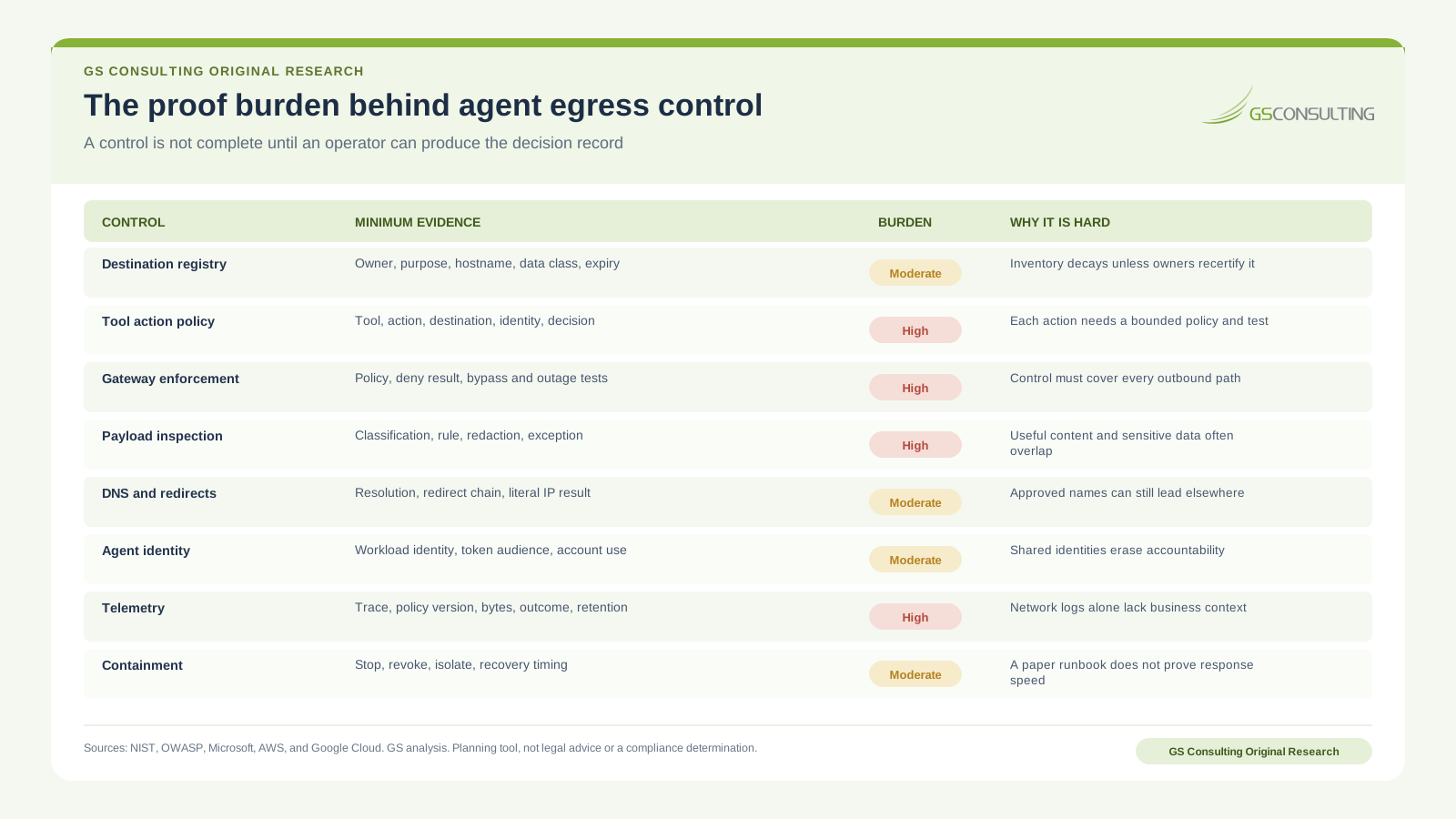
A destination registry needs more than a list of hostnames. Record the owner, business purpose, tools, actions, protocols, data classes, expected region, review date, and expiry. Capture wildcards, content delivery networks, update services, webhooks, telemetry collectors, and vendor support endpoints. A destination that nobody owns should not remain approved indefinitely.
A gateway claim needs coverage proof. Show that the agent runtime, tools, code execution environment, package manager, service mesh, and side processes cannot use an unobserved route. Exercise direct internet access, literal IP, alternate port, redirect, and gateway outage. Fail closed where the use case requires it. If business continuity requires a bypass, name the authority, scope, monitoring, expiry, and recovery condition.
Payload inspection carries a high burden because useful context and sensitive data often overlap. The team needs classification rules, redaction logic, false result review, exception handling, and tests based on real document and record shapes. Do not log the protected payload merely to prove it was blocked. Preserve the decision and a safe reference.
Telemetry also carries a high burden. A proxy log can show a connection but not the user request, selected tool, model plan, policy version, payload decision, or external effect. Correlate the network record with the agent trace, authorization decision, destination registry entry, tool result, and containment action.
Build Six Connected Control Layers
1. Identity at the enforcement point
The gateway must recognize the agent workload, not only the subnet or shared service account. Preserve the represented user or service when the action is delegated. Bind the runtime identity to the approved environment and agent version. Separate development, test, and production identities. Short duration credentials and narrow token audiences reduce the value of a stolen credential.
2. Destination registry and default deny
Approve destinations by purpose, not familiarity. A cloud domain or software vendor can host many services. Prefer exact hostnames and service endpoints when practical. Define allowed protocols and ports. Resolve the final destination and evaluate redirects. Set an expiry and require owner review after provider, tool, or use case changes.
3. Tool action policy
Bind the agent, represented subject, tool, operation, resource, destination, data class, parameters, rate, and consequence. A mail tool should distinguish draft, internal send, external send, attachment, and bulk action. A code tool should distinguish read, proposed patch, merge, package download, and execution. The downstream system should still enforce its own authorization.
4. Payload and information flow control
Classify content before it leaves. Reduce payloads to the fields the task needs. Redact or tokenize sensitive values. Block unsupported file types and unexpected volume. Apply rules to prompts, tool arguments, attachments, retrieved content, generated files, telemetry exports, and error reports. Test encoded, compressed, chunked, and repeated transfer patterns where the threat model justifies it.
5. Network paths and isolation
Private endpoints, service controls, network segments, and controlled proxies can reduce exposure and make routes easier to reason about. They do not replace destination and action policy. Keep sensitive agent workloads separate from general browsing and unrestricted code execution. Record which component owns DNS, proxy policy, certificates, route tables, firewall policy, and destination approval.
6. Telemetry and containment
Collect allowed and denied decisions with stable identifiers. Watch new destinations, changed DNS answers, redirects, unusual byte volume, repeated denials, inspection overrides, new tools, stale registry entries, and requests after pause or revoke. The response path should block the destination, disable the action, revoke the credential, pause the agent, preserve evidence, and reconcile external effects.
Authorize Every Outbound Request in Five Stages
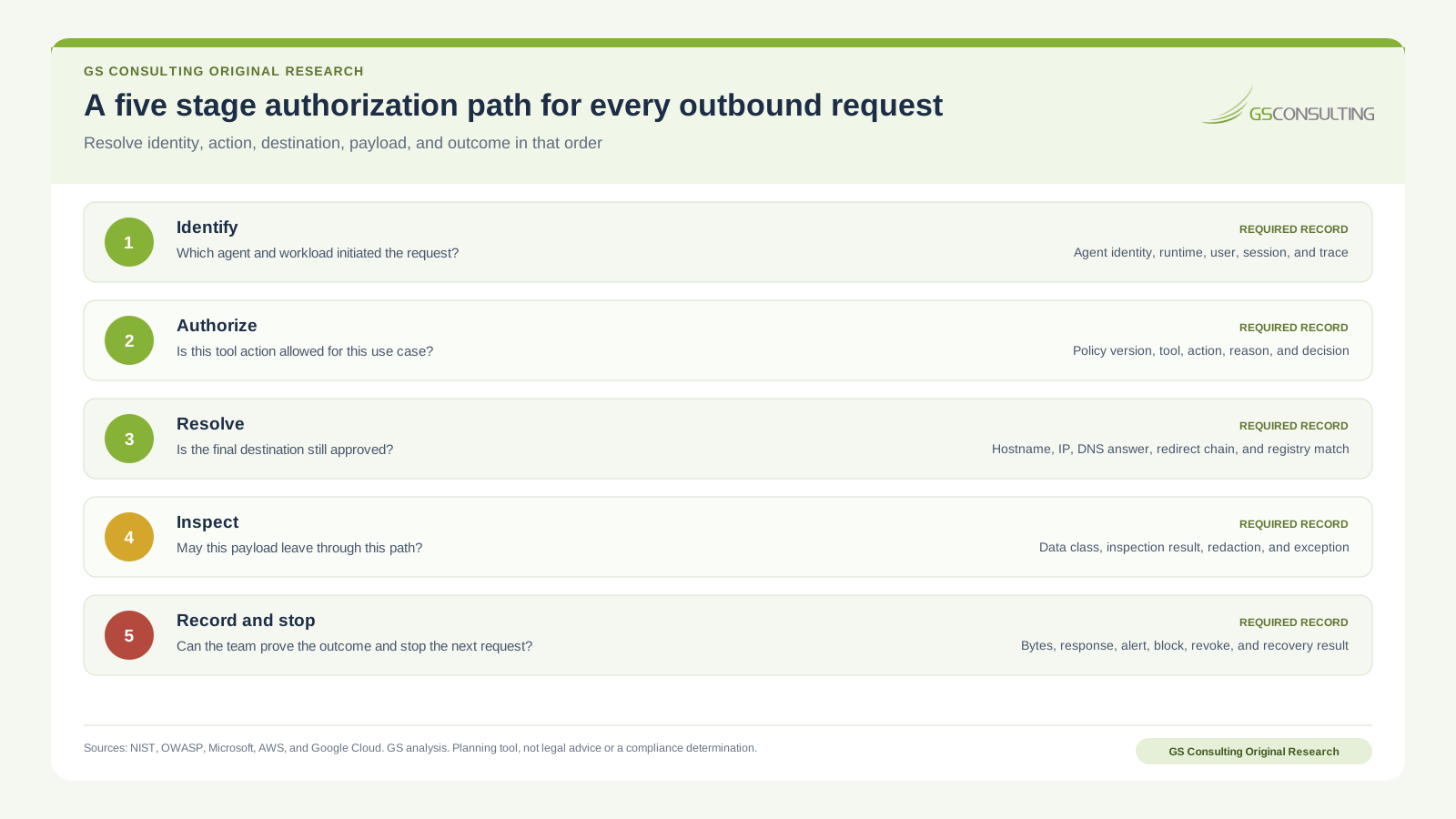
Identify. Resolve the agent, runtime, environment, represented subject, task, session, and trace. Deny unknown or retired workloads. Authorize. Evaluate the exact tool action, resource, purpose, parameters, consequence, rate, and policy version. Do not let possession of a tool credential settle the decision.
Resolve. Check the requested hostname, DNS result, final IP, protocol, port, redirect chain, and registry record. Reevaluate if the destination changes. Inspect. Apply the approved data class and payload rules. Reduce, redact, transform, require approval, or deny. Record and stop. Capture the request, decision, bytes, response, external result, and any exception. Make the same identifiers usable for an immediate block or revoke action.
The path should remain deterministic when the model retries, changes wording, or chooses another tool. Policy belongs in the control plane. A prompt reminder can improve behavior, but it cannot substitute for enforcement.
Monitor Decisions, Not Just Connections
Begin with coverage. List every runtime, sidecar, tool host, code runner, browser, package manager, connector, queue worker, webhook, telemetry exporter, and update process that can create outbound traffic for the use case. Map each one to the egress point and logging source. Generate known allowed and denied events on every material path.
Then monitor changes in meaning. A new hostname can be obvious. A new action against an existing destination is harder. A change from read to export, one record to ten thousand, internal recipient to external recipient, or plain text to attachment may use the same connection. Join network telemetry with tool arguments and policy decisions so the alert reflects the actual consequence.
Set triggers that an operator can act on: first use of a destination, registry mismatch, redirect outside policy, literal IP request, unusual protocol, failed payload inspection, override use, rapid volume increase, repeated denied actions, credential use after revoke, traffic after pause, missing policy version, missing trace, or loss of the gateway log source.
Containment should be narrow when possible. Block one destination, action, agent, credential, tenant, or task before disabling the whole service. Keep a broader emergency stop for uncertain or spreading conditions. Run exercises that measure time to detect, decide, block, revoke, reconcile, and recover.
Six Egress Failures to Test Before Release
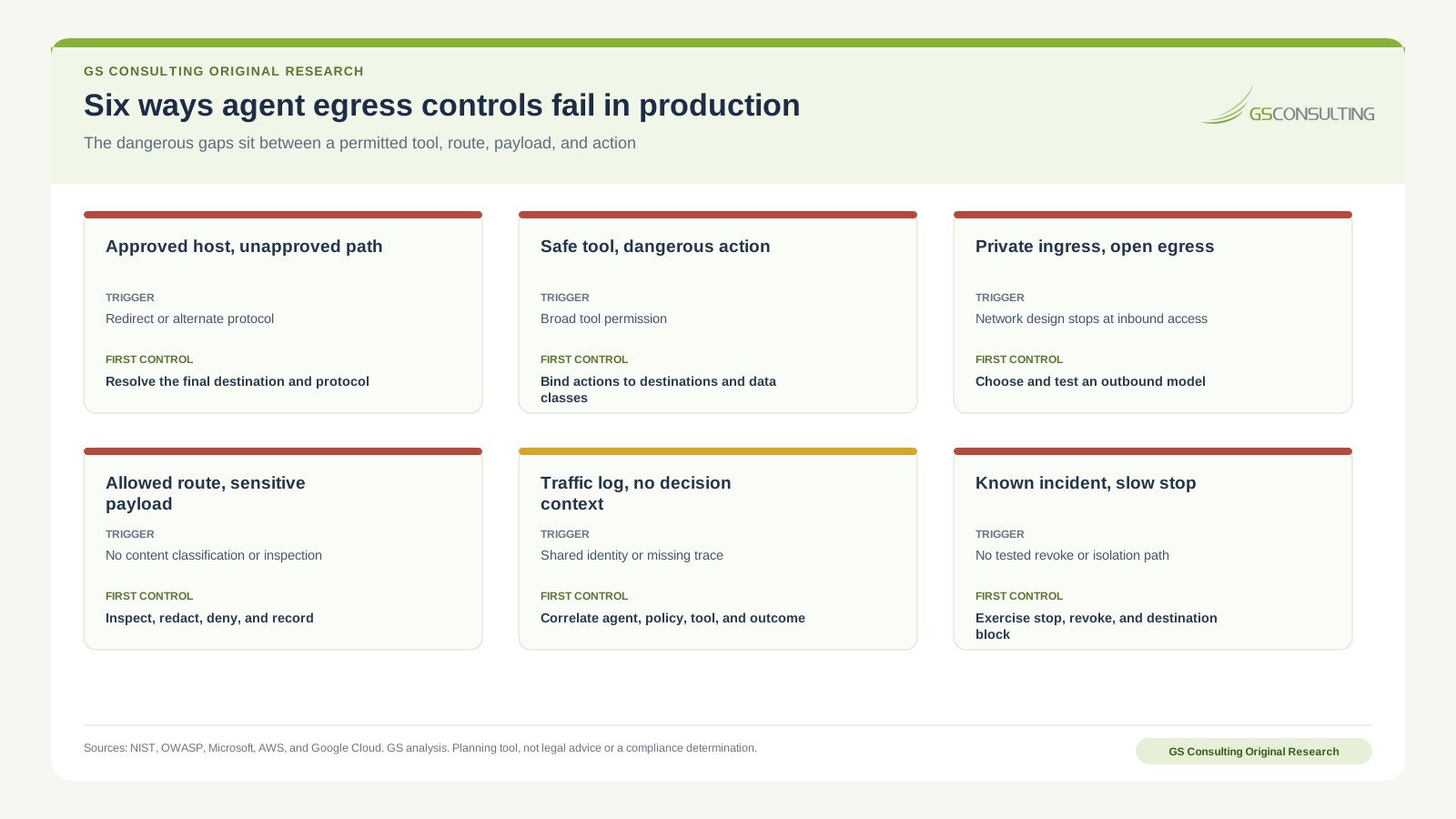
Approved host, unapproved path. A redirect, changed DNS answer, alternate port, or literal IP leaves the approved route. Resolve and enforce the final destination and protocol. Safe tool, dangerous action. The connector is approved, but a broad operation exports data or triggers an external effect. Bind tool actions to destinations, data classes, and parameters.
Private ingress, open egress. The agent endpoint is private while the runtime can reach the internet directly. Choose the outbound model explicitly and test direct routes. Allowed route, sensitive payload. Network policy approves the destination but does not see that the request carries protected content. Inspect, reduce, redact, deny, and record.
Traffic log, no decision context. A shared identity or missing trace prevents the team from connecting the request to the agent, user, tool, and policy. Preserve stable identifiers through every layer. Known incident, slow stop. The team detects the issue but cannot revoke the credential, block the destination, cancel queued work, or confirm the next request fails. Exercise containment before release.
A 60 Day Implementation Plan
| Window | Work | Exit evidence |
|---|---|---|
| Days 1 through 10 | Bound one use case. Inventory runtimes, tools, actions, data, destinations, protocols, identities, routes, and owners. | Use case boundary and outbound path map |
| Days 11 through 20 | Build the destination registry and tool action policy. Define default deny, exceptions, expiry, and review authority. | Approved registry and policy set |
| Days 21 through 30 | Route all material traffic through the enforcement point. Bind workload identity and close direct paths. | Coverage map, route tests, and denied bypass |
| Days 31 through 40 | Add payload rules, DNS and redirect evaluation, rate limits, decision telemetry, and alert ownership. | Inspection tests and correlated traces |
| Days 41 through 50 | Exercise unapproved hosts, IPs, redirects, protocols, actions, payloads, volume, stale credentials, and gateway failure. | Test register, findings, and corrections |
| Days 51 through 60 | Run stop, revoke, isolate, reconcile, and recovery exercises. Issue the evidence packet and set change triggers. | Containment result and operating approval |
Do not scale the policy to every agent before one path works end to end. A small enforceable boundary teaches more than a large registry that the network cannot apply. Reuse the pattern only after the identity, tool, destination, payload, telemetry, and containment records stay connected under realistic failure.
Keep One Egress Evidence Packet
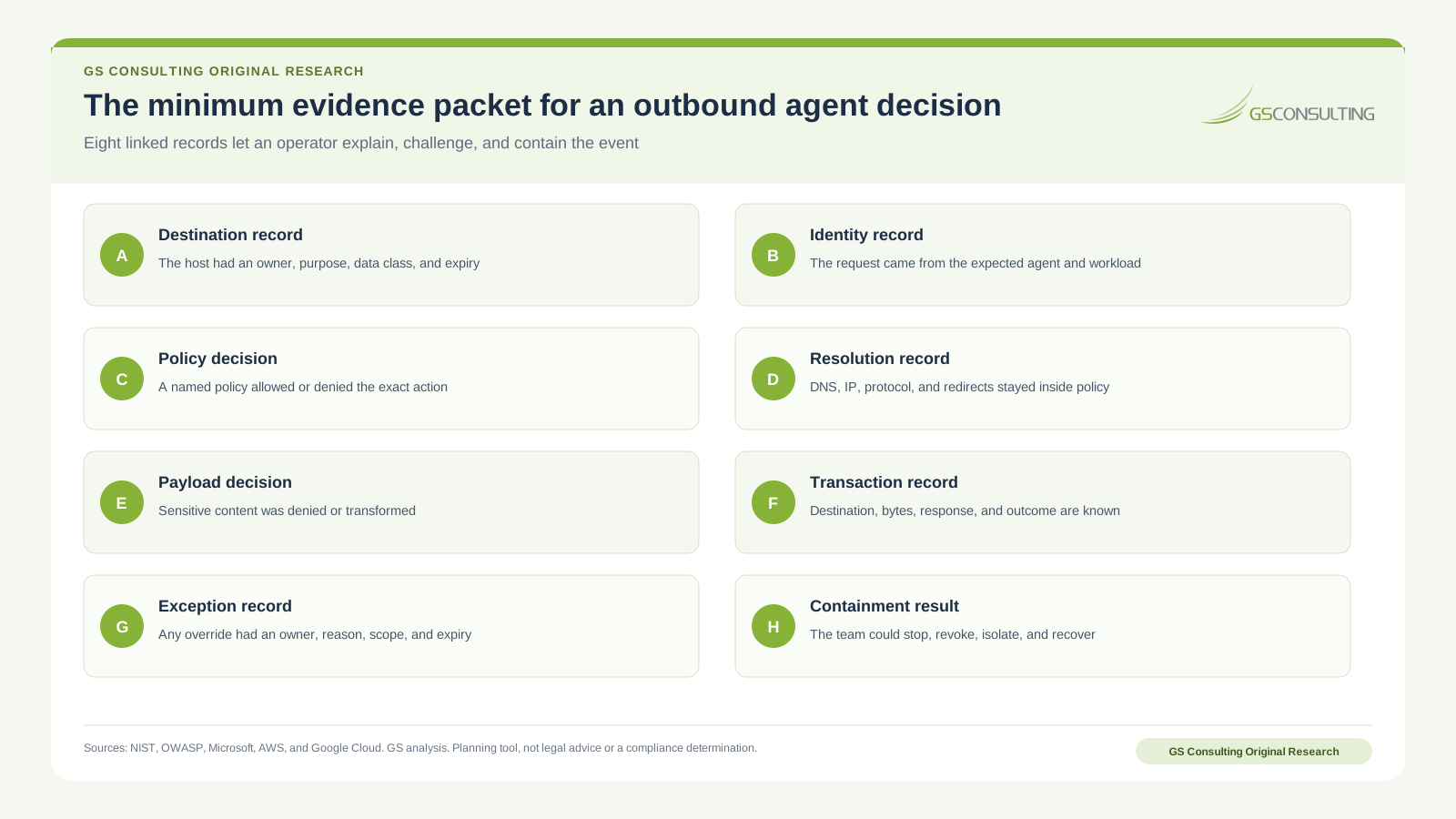
Keep the destination record, identity record, policy decision, resolution record, payload decision, transaction record, exception record, and containment result. Link them with stable agent, task, trace, policy, destination, and time identifiers. Preserve enough context to reproduce the decision without copying protected payloads into every log.
The packet should include failures. A denied hostname, blocked payload, expired exception, failed redirect, revoked credential, and successful stop test provide stronger operating evidence than screenshots of an allowlist. Retain the correction and retest when a control fails.
Refresh the packet after a material change to the agent, model, prompt, tool, action, identity, destination, data class, DNS behavior, protocol, route, gateway, payload rule, logging source, provider, or response process. A past approval covers the version that was tested, not an undefined future path.
Sources and Research Notes
- NIST AI 800-5 agent security response analysis for the public agent security context.
- NIST SP 800-207 Zero Trust Architecture for resource focused authorization and the rejection of implicit network trust.
- NIST SP 800-207A for application identity, gateways, sidecars, and granular cloud native policy.
- NIST SP 800-53 Release 5.2.0 for information flow, boundary, audit, and monitoring control context.
- OWASP Top 10 for Agentic Applications 2026 for tool misuse scenarios and outbound mitigation examples.
- Microsoft hosted agent guardrail guidance for preview host rules, default disposition, and fail closed examples.
- Microsoft agent networking options for the distinction between private access and outbound design.
- AWS generative AI agent security guidance for private connectivity, flow records, tool authorization, and gateway patterns.
- Google Cloud multi agent private networking patterns for explicit allow rules, general deny, and destination objects.
- Google Cloud Agent Gateway overview for identity, destination, payload, and policy checks.
The full research package includes the public source register, coded signals, model inputs, formula driven workbook, sensitivity analysis, figure data, editable SVGs, browser rendered PNGs, and preview renders. Publication and access dates are recorded in the package.
Frequently Asked Questions About AI Agent Network Security
What is AI agent network security?
AI agent network security is the identity, authorization, destination, payload, routing, monitoring, and containment control around an agent's network activity. It decides which outbound request may leave, where it may go, which data it may carry, and how operators can prove or stop the result.
Should AI agent egress use default deny?
For a bounded production use case, default deny is the strongest starting point. Approve named destinations, protocols, tools, actions, identities, data classes, and time limits. Where default deny is not yet practical, document the gap, route traffic through a controlled gateway, monitor the exception, and set an accountable closure date.
Is a destination allowlist enough for AI agent egress?
No. An approved hostname can still receive an unapproved action or sensitive payload, and redirects or alternate protocols can change the final destination. Bind the tool action, agent identity, data class, final destination, protocol, payload decision, and policy result in one control chain.
What should an AI agent egress log contain?
Record the agent and workload identity, represented user or service, task and trace, tool and action, policy version and decision, hostname, final IP, DNS answer, redirect chain, protocol, payload classification result, bytes, response, exception, and containment action. Protect sensitive log content and apply approved retention.
How do private endpoints affect AI agent egress security?
Private endpoints can reduce public network exposure and create clearer routes, but they do not by themselves approve the destination, tool action, payload, or downstream effect. A design can have private ingress and still permit open outbound traffic. Test the complete request path and its enforcement points.
What evidence proves AI agent network egress controls work?
Keep the destination registry, identity record, tool action policy, DNS and redirect result, payload inspection decision, transaction record, exception approval, denial tests, bypass and outage tests, monitoring trace, and containment exercise. Connect every record to the same agent, task, policy version, and time window.
Make every outbound path explicit, enforceable, and stoppable.
GS Consulting helps teams connect agent identity, tool authority, destination policy, data controls, telemetry, response, and evidence into one operating boundary.
Build the Agent Egress Control Chain