Agentic AI | | 25 min read
AI Agent Memory Security: Control Persistent Context Before It Acts

Key Takeaways
Persistent memory needs controls at write, recall, and action
Shared memory poisoning scores 100
The scenario leads the GS planning model because corrupted state can persist, cross boundaries, drive action, and resist complete recovery.
Every record needs provenance and current authority
A memory record should retain its source, data class, purpose, owner, version, confidence, expiry, and allowed recipients.
Quarantine and purge must reach every copy
Deletion is not complete until replicas, indexes, summaries, caches, exports, and recoverable backups are addressed by policy.
AI agent memory is executable context. If an agent can retain a fact, instruction, preference, credential, or conclusion and use it later, that state needs the same discipline as identity, data, and code.
The danger is not limited to a wrong answer in one conversation. A poisoned record can survive a restart, cross a user or tenant boundary, reach another agent, or influence a tool call days later. A stale instruction can remain effective after policy changes. A deletion request can miss an index, summary, replica, cache, or backup.
This guide connects the Agentic AI research hub to AI Agent Identity and Access Management, Multi Agent AI Security, and AI Agent Incident Response. GS Consulting implements the operating model through Secure Enterprise AI Strategy.
Can you prove what your agents remember and why?
GS Consulting helps teams map persistent state, set write and recall policy, bind memory to action controls, and test recovery across the full agent architecture.
Review Your Memory ControlsAI Agent Memory Security: The Short Answer
Secure agent memory as a governed data and decision service. Classify every source before a write. Preserve provenance on every record. Recheck identity, purpose, program, tenant, data class, and object authority before recall. Treat recalled content as data, not an instruction. Require a fresh policy decision before it can drive a tool or external effect. Log the full life of the record and maintain a tested path to quarantine, correct, expire, and purge it.
Do not rely on a prompt that tells the agent to be careful. The control plane should sit outside the model where possible. It should make writes, recalls, actions, retention, and recovery observable and enforceable even when the model behaves unexpectedly.
Define the Memory Boundary Before Choosing Controls
Teams often use the word memory for several different stores. Each creates a different control problem:
- Working context holds the current task, recent messages, tool results, and intermediate state.
- Persistent user or task state carries preferences, goals, decisions, and unfinished work across sessions.
- Semantic or vector memory stores indexed content, summaries, embeddings, and retrieved associations.
- Procedural and configuration state preserves plans, routes, policies, skills, tool choices, and operating hints.
- Shared peer memory distributes state among agents, teams, queues, or orchestration services.
Map the writer, reader, owner, physical store, logical index, replicas, summaries, caches, exports, backup path, tenant boundary, retention period, deletion method, and systems that can act on recalled content. If a team cannot name those components, it cannot make a credible isolation or deletion claim.
Public Evidence Says Memory Is a Distinct Attack Surface
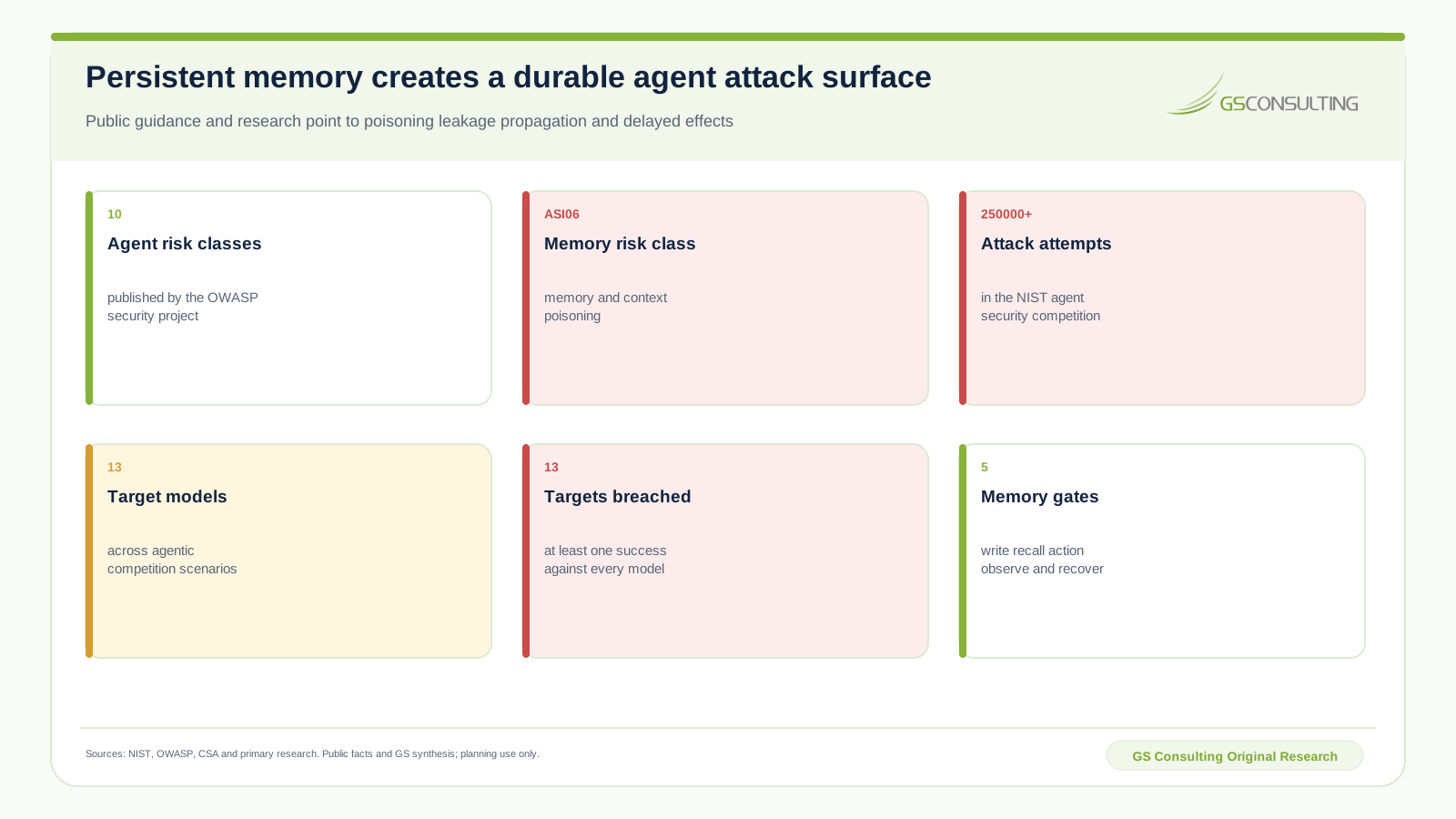
The OWASP Top 10 for Agentic Applications 2026 identifies memory and context poisoning as a separate risk class. OWASP describes short and long term stores that can retain corrupted content and later present it to the agent as trusted context.
NIST CAISI reported more than 250,000 attempts by over 400 participants against 13 target models in a large agent security competition. At least one successful attack reached every target. The competition did not measure production memory incident rates, but it is strong evidence that current agent defenses remain imperfect under sustained adversarial pressure.
A July 2026 research preprint, When Claws Remember but Do Not Tell, evaluated stealthy memory injection through 108 cases. Across 56 held out cases, the authors reported an 87.5 percent end to end success rate for one OpenClaw and GPT 5.4 configuration and 71.4 percent for one Claude Code SDK and Sonnet 4.6 configuration. These are architecture specific experimental results, not a market benchmark or incident prevalence estimate.
Original Research: GS Agent Memory Control Priority Index
GS Consulting built a directional planning model to answer one question: which memory scenarios demand the strongest write, recall, action, observation, and recovery controls?
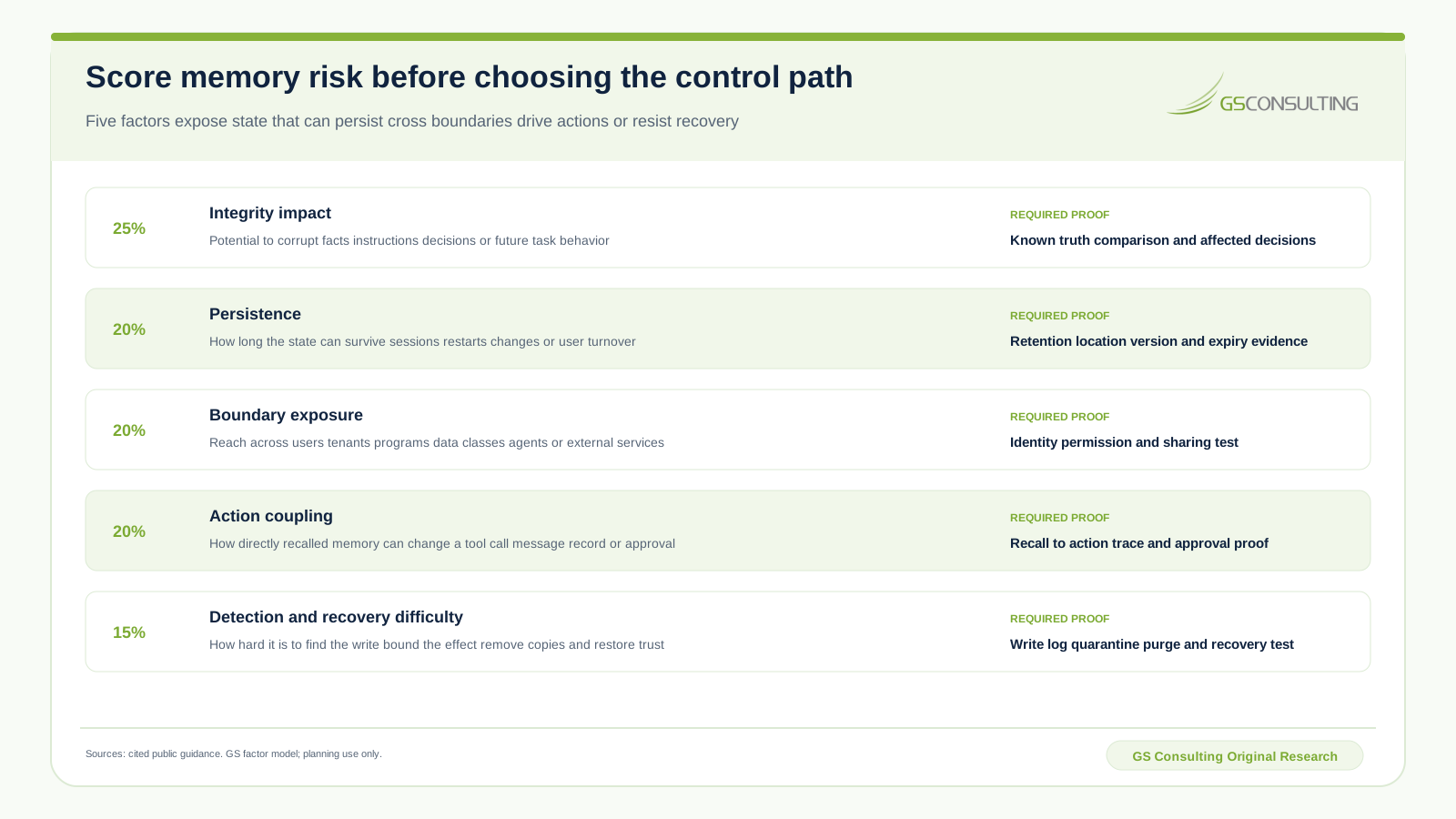
Twelve representative scenarios receive ordinal ratings from one to five across integrity impact, persistence, boundary exposure, action coupling, and detection and recovery difficulty. The base weights are 25, 20, 20, 20, and 15 percent. Each rating is divided by five, multiplied by its weight, and summed to a score from zero to 100.
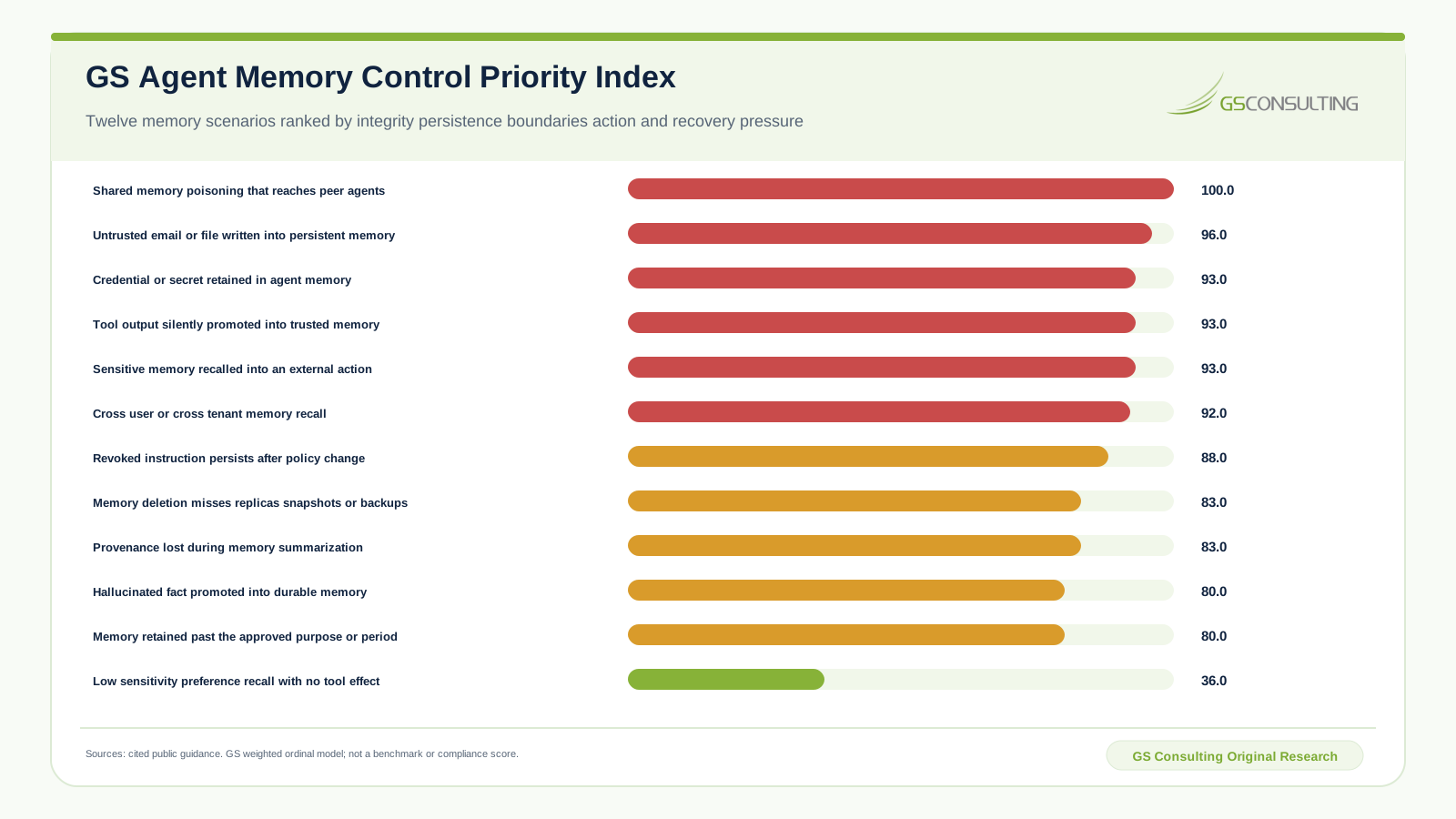
Shared memory poisoning that reaches peer agents scores 100. An untrusted email or file written into persistent memory scores 96. Credential retention, silent promotion of tool output, and sensitive recall into an external action each score 93. Cross user or cross tenant recall scores 92. A revoked instruction that persists after a policy change scores 88.
Missed copies during deletion and lost provenance during summarization each score 83. A hallucinated durable fact and memory retained past its approved purpose each score 80. A low sensitivity preference with no tool effect scores 36. The gap matters: not every memory record deserves the same control burden.
The alternate case moves five weight points from persistence and action coupling to boundary exposure and detection and recovery difficulty. No scenario moves by more than two points, and no planning tier changes. This is a GS ordinal planning model based on cited public sources and documented assumptions. It is not a breach forecast, official benchmark, audit result, compliance score, or security certification. Replace every rating with architecture facts, test evidence, incident history, and approved risk decisions.
Use One Control Path Across the Memory Life Cycle
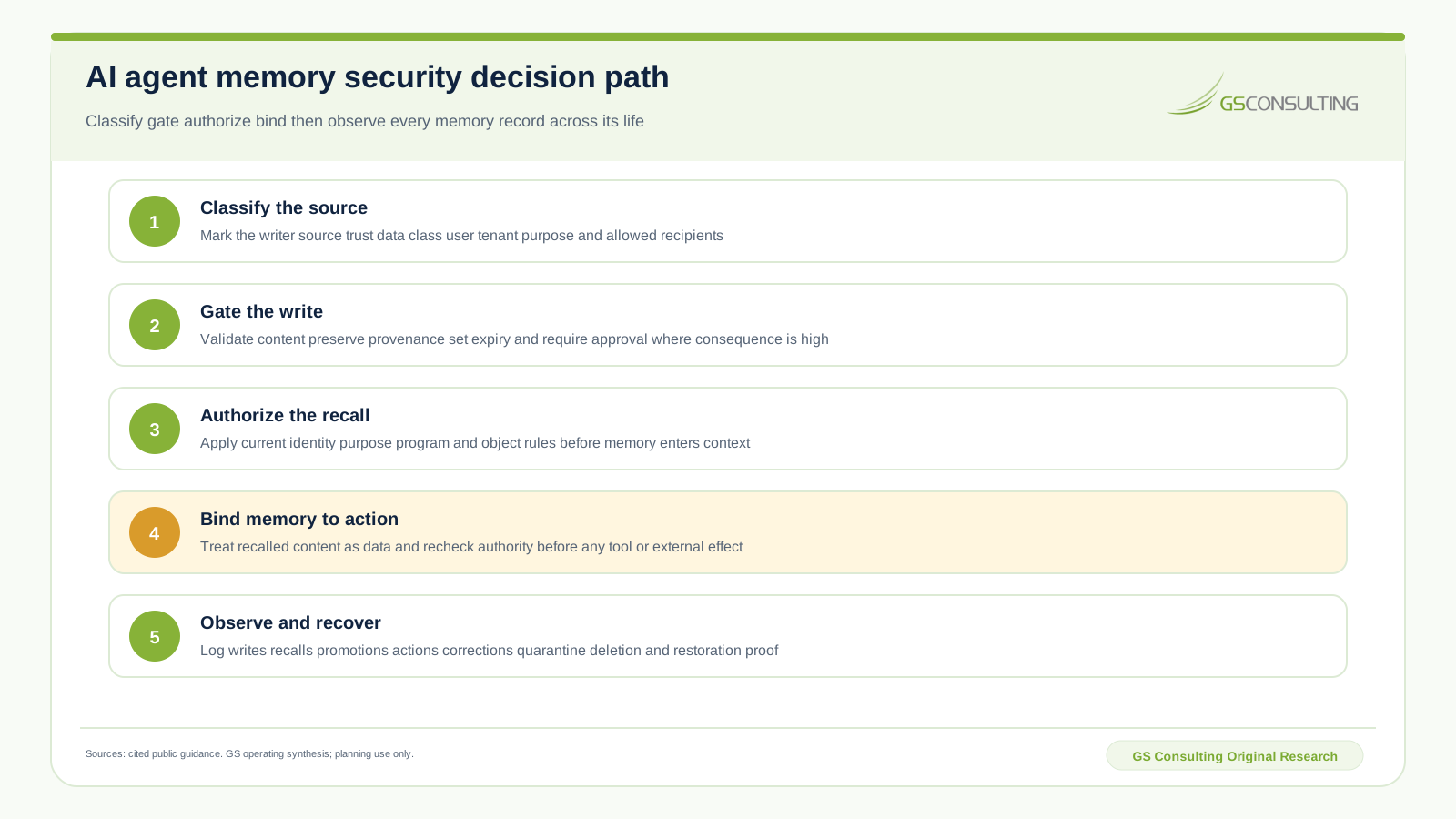
Classify the source. Record the writer, trust class, identity, tenant, data class, purpose, allowed recipients, and source version. External email, web content, uploaded files, peer messages, model output, tool output, and approved human input should not arrive with the same trust.
Gate the write. Validate structure and content. Separate observation from instruction. Require approval when sensitivity, scope, or consequence is high. Attach provenance, confidence, purpose, expiry, owner, and policy version to the record.
Authorize the recall. Recheck the current user, delegated subject, program, tenant, purpose, data class, and object. A record that was authorized when written may no longer be authorized after a role, contract, case, or policy change.
Bind memory to action. Treat recalled state as untrusted data until a current action policy evaluates it. Require tool authority, target authority, parameter limits, and approval based on present conditions.
Observe and recover. Log writes, reads, recalls, promotions, edits, summaries, exports, corrections, quarantines, deletions, and restorations. Maintain a way to find every affected record and every action that depended on it.
Gate Memory Writes at the Point of Persistence
A write policy should decide whether the content may persist at all. Evaluate source trust, injection risk, sensitivity, purpose, tenant, subject, object, expected lifetime, confidence, duplication, and the consequence of later use. Strip executable instructions from ordinary data fields. Reject secrets, credentials, regulated data, or unsafe content when the use case does not justify storage.
Preserve the raw source reference and the transformation chain. If the agent summarizes a document, merges several memories, or promotes a tool result, the new record should point to its parents, method, model, prompt, policy, time, and confidence. A summary without lineage can turn a correctable source error into an unexplained durable claim.
Use separate namespaces and encryption boundaries for users, tenants, programs, data classes, and environments. Do not make a broad shared store the default simply because retrieval is convenient. Shared state should have a named owner, a narrow audience, and tests that prove isolation.
Reauthorize Every Recall
Retrieval relevance is not authorization. A vector similarity result can identify content that is useful and still be forbidden. Apply current identity, purpose, program, tenant, role, data class, object, consent, retention, and legal hold rules after retrieval and before the record enters model context.
Give the agent provenance with the content. The model should be able to distinguish a verified policy from an external observation, a user preference from an instruction, a recent record from an expired one, and direct evidence from a generated summary. When confidence or provenance is weak, the system should narrow use, ask for review, or omit the record.
Test authorization changes over time. Remove a user from a program, revoke a role, close a case, change a tenant, expire consent, update a policy, and confirm that old memory no longer appears. This is where identity controls and memory controls meet.
Do Not Let Recalled Memory Become Authority
A memory can inform a decision without authorizing an action. Before any tool call or external effect, recheck the agent identity, delegated subject, operation, target, parameters, amount, destination, data class, time, and required approval. The action policy should receive the provenance and trust class of the memory that shaped the request.
High consequence tools should use strict schemas, narrow scopes, target restrictions, transaction limits, preview, approval, and confirmation from the destination. The tool should not accept free text memory as an instruction channel. This principle complements AI Agent Testing and Evaluation: test the complete path from poisoned or stale state to policy decision, tool call, target response, and evidence.
Monitor State Changes and Rehearse Recovery
Monitor unusual write volume, new writers, cross boundary reads, sensitive recalls, low provenance content, sudden confidence changes, repeated summaries, old records driving new actions, deletion failures, policy denials, quarantine events, and peer propagation. Correlate memory identifiers with the agent, identity, task, tool call, target, and resulting change.
Recovery begins with quarantine, not immediate deletion. Preserve the evidence needed to understand who wrote the record, what transformed it, where it propagated, who recalled it, and which actions it influenced. Then correct or purge the bad state, rebuild indexes and summaries, reconcile external effects, and replay focused tests before service resumes.
Deletion must follow the storage architecture. Address the primary store, vector index, derived summaries, caches, replicas, exports, logs, snapshots, and backups according to approved retention and recovery rules. If a backup cannot be selectively edited, document how the deleted state remains inaccessible and how it will be handled if the backup is restored.
Six Memory Security Failures to Eliminate
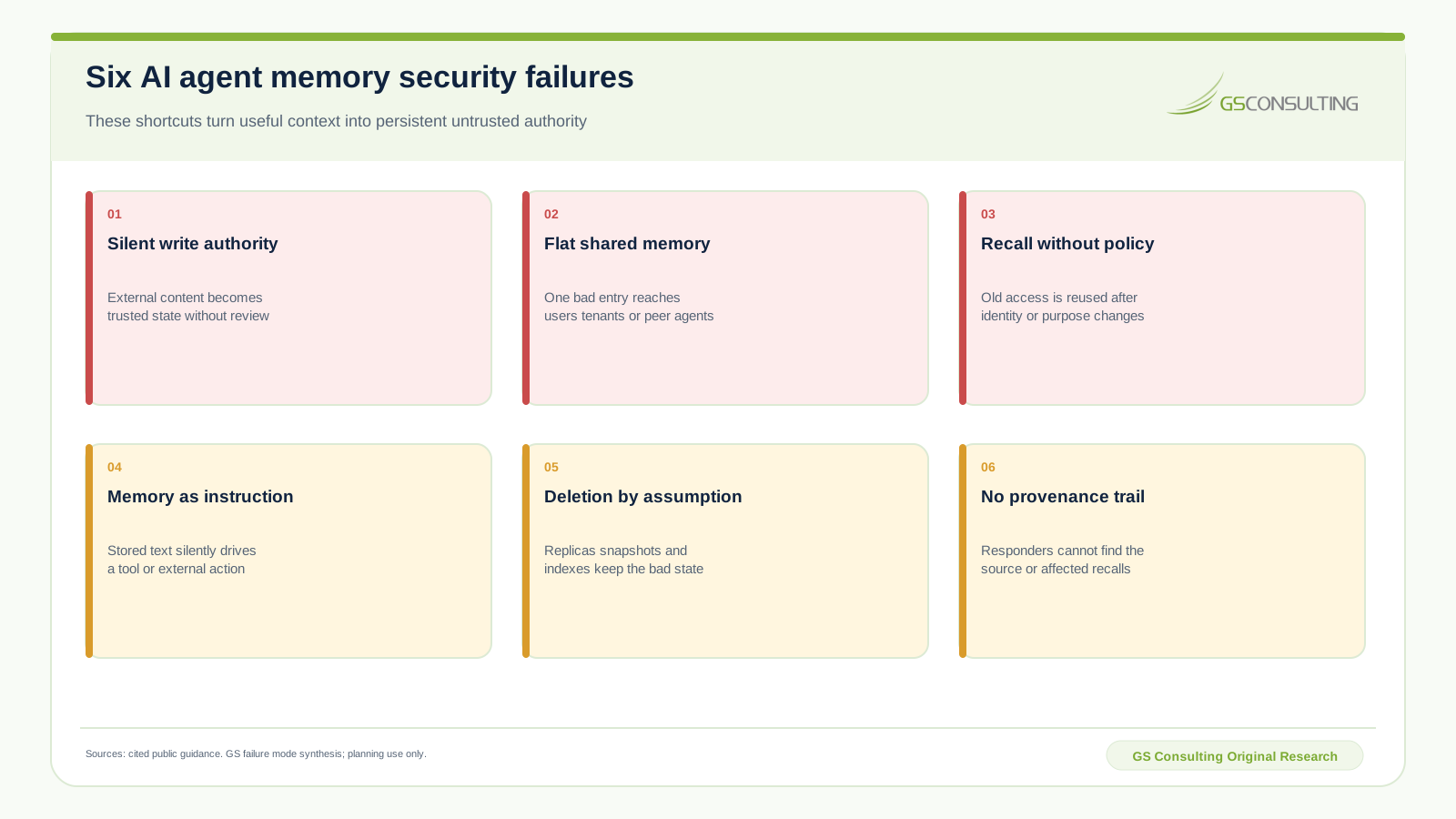
- Silent write authority. External content becomes trusted state without review.
- Flat shared memory. One bad entry reaches users, tenants, or peer agents.
- Recall without policy. Old access is reused after identity or purpose changes.
- Memory as instruction. Stored text silently drives a tool or external action.
- Deletion by assumption. Replicas, snapshots, indexes, and backups keep the bad state.
- No provenance trail. Responders cannot find the source or affected recalls.
The Minimum AI Agent Memory Evidence Packet
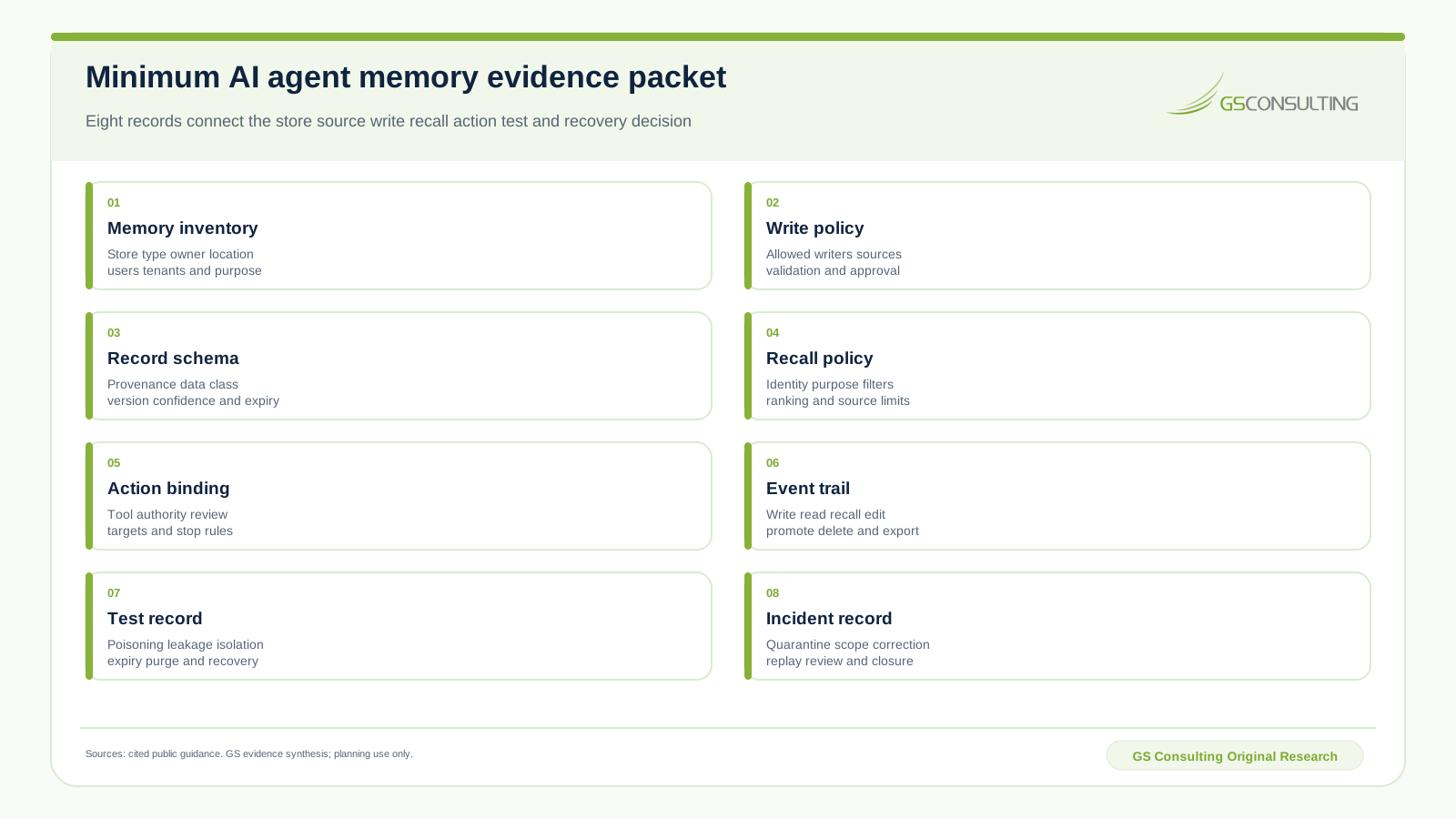
Keep eight linked records: memory inventory; write policy; record schema; recall policy; action binding rules; event trail; test record; and incident record. Use stable identifiers for the memory record, parent source, transformation, agent, release, identity, task, policy decision, tool action, external target, quarantine, correction, and deletion event.
The packet should answer where memory lives, who may write it, what validation ran, which provenance was retained, who may recall it now, whether it influenced an action, what copies exist, how long each copy remains, what tests passed, what incident affected it, and who accepted the remaining risk.
A Practical Implementation Plan
- Inventory every memory surface. Include context, databases, vector indexes, summaries, caches, peer state, exports, replicas, and backups.
- Classify sources and records. Define trust, identity, tenant, data class, purpose, owner, confidence, expiry, and allowed use.
- Enforce write and recall policy. Move critical decisions outside the model and preserve the reason for every allow or deny result.
- Separate memory from action authority. Recheck the current subject, operation, target, parameters, limits, and approval before each external effect.
- Test hostile and stale state. Cover poisoning, isolation, policy change, propagation, retention, deletion, quarantine, replay, and recovery.
- Operate the evidence loop. Review memory events, exceptions, incidents, false positives, expired records, unowned stores, and incomplete purges on a defined cadence.
Primary Sources
- NIST AI 100-2e2025, Adversarial Machine Learning Taxonomy and Terminology
- NIST CAISI, Insights into AI Agent Security from a Large Scale Red Teaming Competition
- OWASP Top 10 for Agentic Applications 2026
- OWASP, Memory Is a Feature. It Is Also an Attack Surface
- When Claws Remember but Do Not Tell: Stealthy Memory Injection in Persistent Personal Agents
- Cloud Security Alliance, MemGhost Research Note
- NSA and International Partners, Careful Adoption of Agentic AI Services
- NIST Artificial Intelligence Risk Management Framework 1.0
- NIST SP 800-53 Revision 5
Suggested Future Reading
- AI Agent Identity and Access Management
- AI Audit Trails and Activity Logging
- Continuous Monitoring for AI Agents
- AI Agent Incident Response
Frequently Asked Questions
What is AI agent memory security?
AI agent memory security is the control system that governs what an agent may store, how each record is labeled and protected, when it may be recalled, whether recalled content may influence an action, how activity is observed, and how bad state is quarantined, corrected, deleted, and tested.
Why is AI agent memory different from a conversation history?
Conversation history is only one possible input. Agent memory can persist across sessions, users, tasks, programs, models, and tool calls. It can be summarized, indexed, replicated, shared with peers, or used to drive an external action long after the original source disappeared.
What is memory poisoning in an AI agent?
Memory poisoning occurs when false, malicious, stale, or unauthorized content enters agent memory and later influences reasoning, disclosure, routing, or tool action. The harmful effect may be delayed, repeated, or propagated to another agent.
Should an AI agent be allowed to write memory automatically?
Only within a defined policy. Automatic writes should be limited by source trust, data class, user and tenant boundary, purpose, expiry, validation, confidence, and consequence. High impact or sensitive memory may require approval or may be prohibited from persistent storage.
How do you test AI agent memory security?
Test untrusted writes, cross user and cross tenant isolation, recall after access changes, poisoned summaries, stale instructions, shared memory propagation, action use, retention, deletion across replicas and backups, quarantine, replay, and recovery. Verify both denied and permitted paths with evidence from the store, policy engine, agent, tool, and target.
What evidence proves that AI agent memory is controlled?
A useful evidence packet includes the memory inventory, write policy, record schema, recall policy, action binding rules, event trail, test record, and incident record. Each item should connect to the agent, identity, source, purpose, data class, version, timestamps, decision, and affected copies.
Bottom Line
Memory turns one interaction into durable state. That can make an agent more useful, but it also lets error, manipulation, excessive access, and stale authority survive longer than the event that created them.
The standard is firm: no silent write, no recall without current authority, no action from unverified memory, no deletion claim without purge proof, and no return to service without tested recovery.
Turn persistent context into controlled evidence.
GS Consulting helps organizations design memory boundaries, policies, tests, monitoring, evidence, and recovery for production AI agents.
Start the Conversation