Agentic AI | | 25 min read
AI Agent Identity and Access Management: A Control Guide

Key Takeaways
Agent identity must survive the action
Bounded delegation scores 97
Purpose, audience, task, and expiry form the highest proof priority in the GS planning model.
Preserve subject and actor
A reviewer should see both the represented human or service and the agent that actually performed the action.
No selective revoke, no production authority
If one agent cannot be paused without disabling unrelated work, the identity boundary is too broad.
AI agent identity and access management is not service account cleanup. It is action control.
An agent can plan, call tools, acquire context, retry, and act while representing a person or service. That makes identity more than a login event. The organization must know which agent acted, whose authority it used, which policy allowed the request, what resource received it, and whether that grant can be revoked before the next action.
Start with one bounded use case. Give each production agent a distinct workload identity. Preserve the human or service subject when authority is delegated. Issue access for the specific resource, operation, purpose, and time. Enforce policy at the target. Record the full chain. Test selective revocation.
The Agentic AI hub connects identity to agent risk, testing, monitoring, and lifecycle controls. Use Securing AI Agents for the broader security architecture, AI Agent Risk Assessment to set the consequence boundary, and AI Agent Network Egress Security to bind identity and tool authority to the outbound destination, payload, and stop path. Use Multi Agent AI Security when authority moves across agents. Treat a permission revision as a release through AI Agent Change Management and Release Controls, and make revocation executable through AI Agent Incident Response. GS Consulting brings these choices into a secure enterprise AI strategy.
Make every agent action attributable and revocable.
GS Consulting helps teams map agent identity, delegation, permissions, credentials, policy, approval, monitoring, and revocation into one reviewable control chain.
Plan an Agent IAM ReviewAI Agent Identity and Access Management: The Short Answer
AI agent identity and access management binds every action to five facts: the agent actor, the represented subject, the granted authority, the policy decision, and the resulting effect. A secure design also controls credential issue, token audience, permission scope, approval, monitoring, revocation, review, and retirement.
The agent actor is not interchangeable with the human subject. A person may request the task, an agent may plan it, a tool service may execute it, and a target system may record it. Preserve those roles. If every event only shows the human account, the organization cannot distinguish a deliberate human choice from an agent action. If every event only shows the agent, it loses the business authority behind the request.
Authentication establishes an identity. Authorization decides whether the specific action is allowed. Delegation explains why the actor may use another subject's authority. Approval decides whether a person must authorize the exact consequence. Logging proves what happened. Revocation stops future use. An IAM design is incomplete when any one of those links is missing.
Define the Identity Boundary Before Choosing Controls
Map every identity that participates from request to effect. Include the initiating person or service, the agent runtime, any planner or worker agent, the model endpoint, the tool gateway, the target resource, the approval service, the policy engine, the secrets service, the event pipeline, and the operator who can stop the workflow.
For each hop, record the principal, authentication method, credential issuer, intended audience, allowed resource, operations, data class, tenant, purpose, duration, rate limit, approval requirement, and revoke path. Then record which identity the downstream system actually sees. A diagram that ends at the tool gateway can conceal a broad credential reused behind it.
Separate four concepts that often collapse into one label:
- Human or service subject. The person, team, or service whose business authority starts the work.
- Agent actor. The distinct software principal that interprets the goal and requests actions.
- Tool executor. The service that converts a structured request into an operation against a target.
- Target resource. The system that makes the final authorization decision and records the effect.
One component may play more than one role, but the evidence must still show the distinctions. Shared credentials erase them. Network location does not restore them.
Public Guidance Converges on Distinct Identity and Narrow Authority
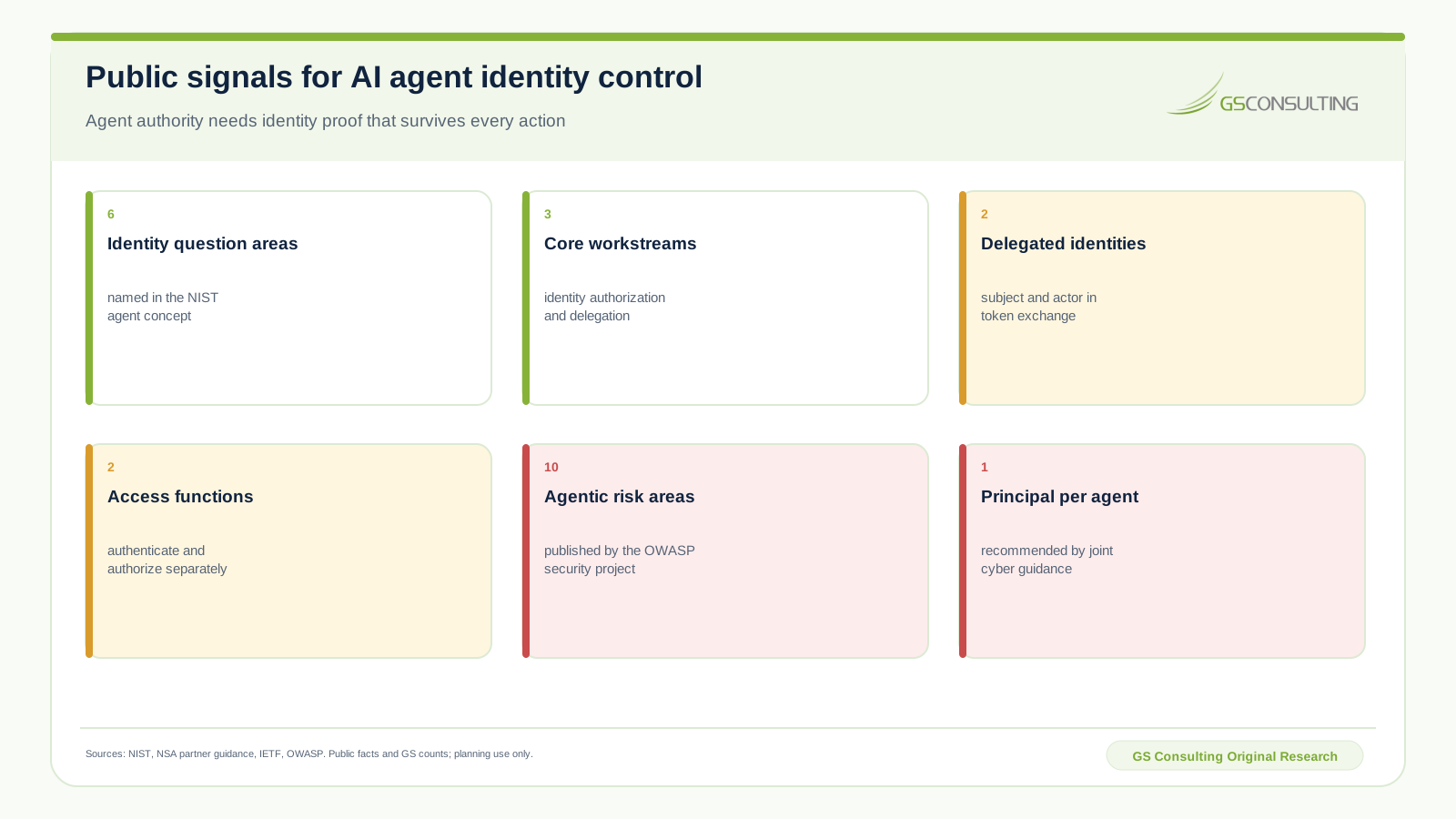
A February 2026 NIST NCCoE concept paper frames agent identification, authentication, authorization, delegation, auditing, nonrepudiation, and prompt injection as open adoption problems. It is a preliminary concept, not final implementation guidance.
NIST SP 800-207 removes implicit trust based on network location or ownership. NIST SP 800-207A extends that logic to cloud applications through user, service, and application identities plus granular policy enforcement. Neither publication defines a complete agent architecture, but both reject the idea that an internal agent should inherit trust merely because it runs inside an approved environment.
April 2026 joint guidance from NSA and international partners recommends distinct cryptographically anchored agent principals, trusted registries, minimum permissions, monitoring, and revocation. That guidance requires local tailoring for the system, contract, law, mission, and risk decision.
Protocol standards add useful mechanics. IETF RFC 8693 describes token exchange that can preserve a primary subject and an acting party. The Model Context Protocol authorization specification requires a client to identify the intended resource and the server to validate that token audience. The A2A specification leaves the receiving server responsible for its own authorization policy. Protocol support does not choose business permissions, approval thresholds, or retention rules for the operator.
Original Research: GS Agent IAM Proof Priority Index
The GS model puts bounded delegation at 97, action time policy at 94, selective revocation at 93, and secret isolation at 92. Those controls lead because an agent can cross resources, reuse credentials, and act repeatedly. A static account record cannot prove that the precise action was authorized.
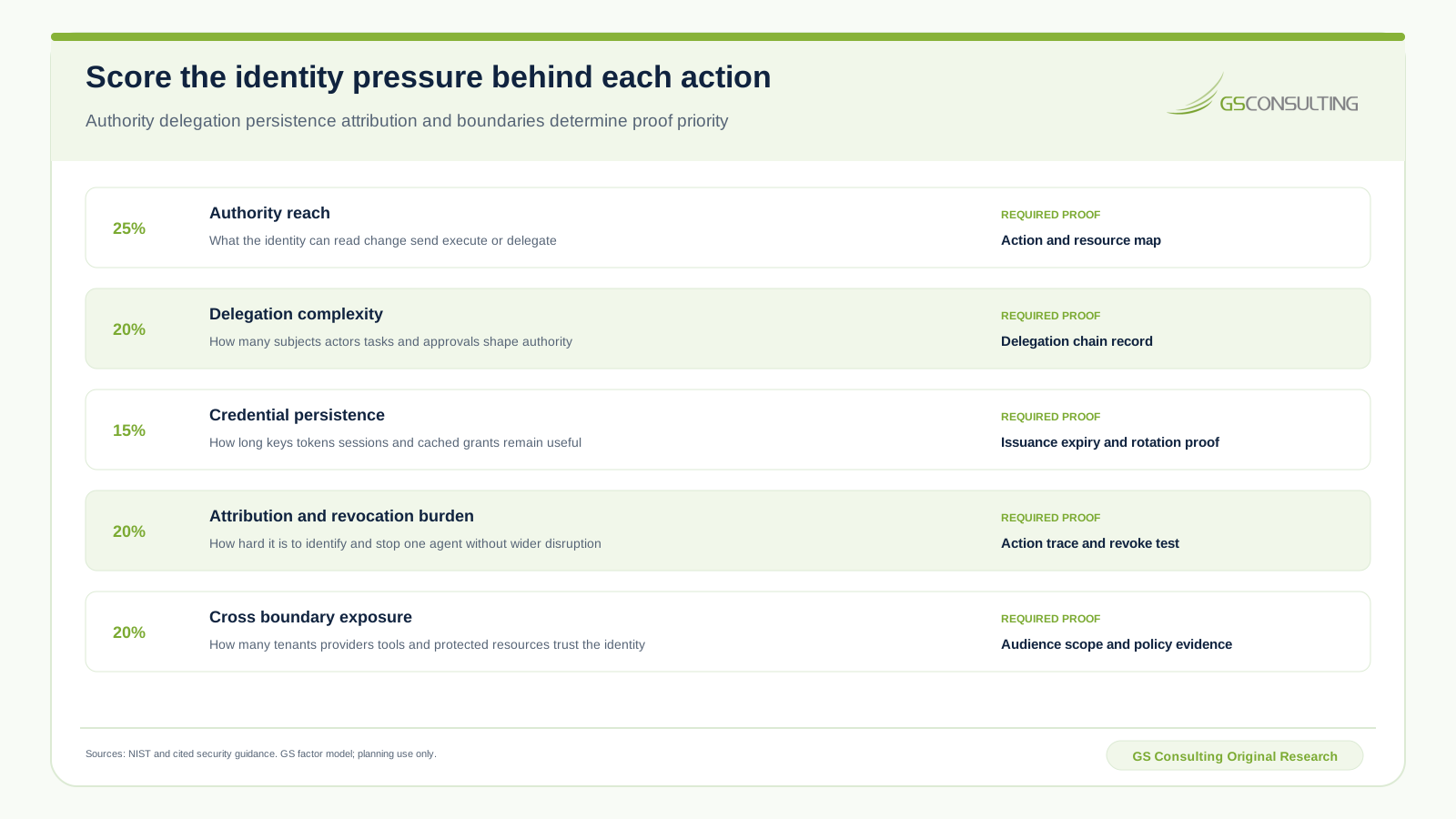
We rated twelve proof domains from one to five across authority reach, delegation complexity, credential persistence, attribution and revocation burden, and cross boundary exposure. Base weights are 25, 20, 15, 20, and 20 percent. Each weighted result is reported on a zero to 100 planning scale.
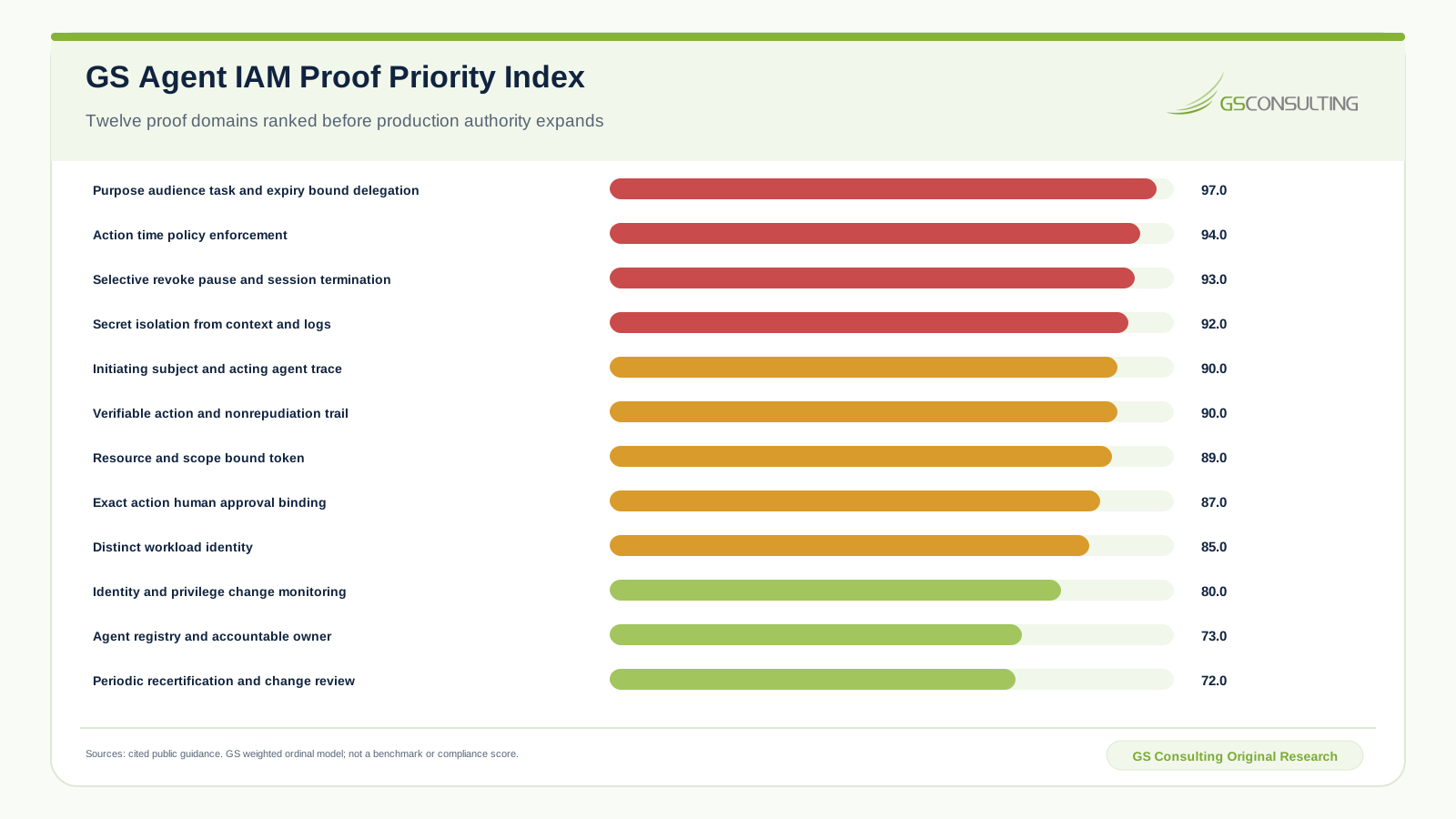
Purpose, audience, task, and expiry bound delegation scores 97. Action time policy scores 94. Selective revoke, pause, and session termination score 93. Secret isolation scores 92. Subject and actor trace and action accountability each score 90. Resource and scope bound tokens score 89. Exact action human approval scores 87. Distinct workload identity scores 85. Identity and privilege monitoring scores 80. Agent registry ownership scores 73. Recertification and change review score 72.
The order is not a maturity grade. Registry and review remain required. Their lower modeled scores mean that, in this use case comparison, they carry less immediate authority reach and cross boundary exposure than a live delegated grant. A complete program still needs every domain.
The sensitivity case shifts weight toward delegation and attribution. No item moves more than two points, and the four leading domains remain leading priorities. This supports the sequence under one modest alternate assumption. It does not validate the ratings or create a universal benchmark.
Use a Four Layer Agent Identity Model
Layer one: registry and ownership. Assign a stable agent identifier, business owner, technical owner, purpose, environment, approved tools, data classes, risk tier, lifecycle state, review date, and retirement record. The registry tells operators what should exist. Discovery and telemetry show what actually exists.
Layer two: workload identity. Bind the agent runtime to a distinct principal using a platform appropriate cryptographic mechanism. Do not embed static secrets in prompts, code, images, memory, or tool definitions. Rotate credentials and separate development, test, and production identities.
Layer three: delegation and authorization. Preserve the represented subject and the agent actor. Narrow grants by audience, resource, operation, tenant, purpose, task, time, rate, and consequence. Make the target or trusted policy point enforce the final decision.
Layer four: accountability and lifecycle. Connect policy, approval, credential, action, result, exception, monitoring, review, revocation, and retirement records. Stable identifiers should let an investigator trace one external effect back to the exact agent version, subject, grant, policy decision, and task.
Delegation Must Describe the Task, Not Just the User
Broad user impersonation is attractive because existing applications already understand human roles. It is also dangerous. The agent may operate faster, retry more often, combine more context, and reach more tools than the person would use during the same task. A copied user token can turn the user's maximum entitlement into the agent's routine operating boundary.
A delegation record should name the subject, agent actor, issuer, audience, resource, operation, purpose, task identifier, requested data, start, expiry, approval basis, and revoke handle. If another agent receives work, create another explicit handoff. Do not let authority silently expand through a message.
Keep the delegation short enough to expire if the workflow stalls. Bind it to the intended resource so a token issued for one service cannot be replayed at another. Require a fresh decision when the target, operation, amount, recipient, data class, or consequence changes. Cache performance cannot outrank authorization integrity.
For multi agent work, preserve the chain without trusting each message as authority. The receiving agent authenticates the sender, validates message integrity and freshness, then makes its own policy decision. The sender's confidence score is not permission.
Enforce Policy and Approval at the Moment of Action
Prompts can explain allowed behavior. They cannot enforce access in a protected system. Put authorization at a trusted control point close to the resource. Evaluate the actor, subject, resource, operation, data, tenant, purpose, task state, risk signal, rate, and required approval when the tool call occurs.
Human approval should cover the exact proposed effect. Show the reviewer the source, subject, agent, target, operation, important parameters, consequence, uncertainty, and safe alternatives. Record approve, reject, modify, or escalate. Bind approval to the immutable action digest or equivalent stable request record. If the agent can change material parameters after approval, the approval is theater.
Do not require a person to approve every harmless step. Set approval thresholds around consequence, novelty, sensitive data, external communication, irreversible action, financial value, access change, legal commitment, and low confidence. Overloaded reviewers become a weak control. A smaller number of clear, consequential decisions is usually stronger.
Design Credential Issue and Revocation Together
A credential architecture is only as good as its stop path. Prefer short duration credentials issued for a task and resource. Keep secrets out of model context. Use a broker, vault, workload identity platform, or tool gateway that can issue access without revealing the secret to the model.
Test at least four revocation levels: one task, one agent session, one agent identity, and one tool or resource grant. Confirm the target denies the next request. Confirm queued jobs do not continue with cached access. Confirm peer agents do not retain delegated authority. Confirm the event reaches monitoring and incident records.
Revocation without state handling can leave half completed work. Define whether the workflow rolls back, reconciles, holds for review, or resumes through a new grant. The IAM team, workflow owner, security team, and system owner need the same answer before production.
Six AI Agent IAM Failures
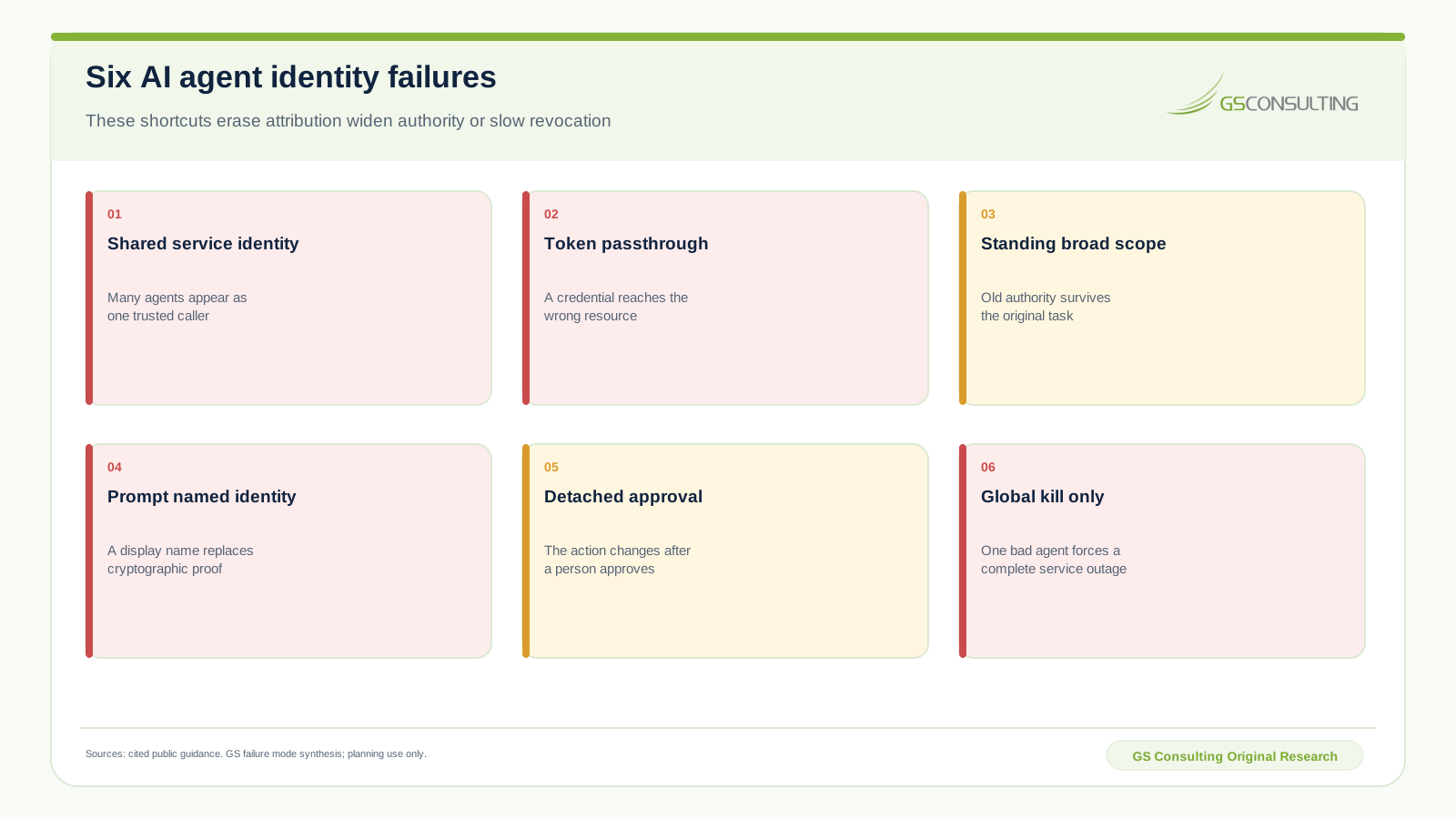
One service account represents every agent. The organization cannot isolate permissions or revoke one actor. The agent reuses a human token. The target sees entitlement but not the automated actor. The prompt is the policy. The tool accepts a request the resource should deny.
The model sees the secret. Untrusted context can influence credential use or disclosure. Revocation stops new logins only. Cached tokens, queued jobs, and delegated peers keep acting. Logs stop at the gateway. The final system record cannot connect the effect to the subject, agent, policy, and approval.
Each failure deserves a test. Architecture diagrams and configuration screenshots show intent. Denied requests, revoke exercises, linked events, and permission snapshots show operation.
Build One AI Agent IAM Evidence Packet
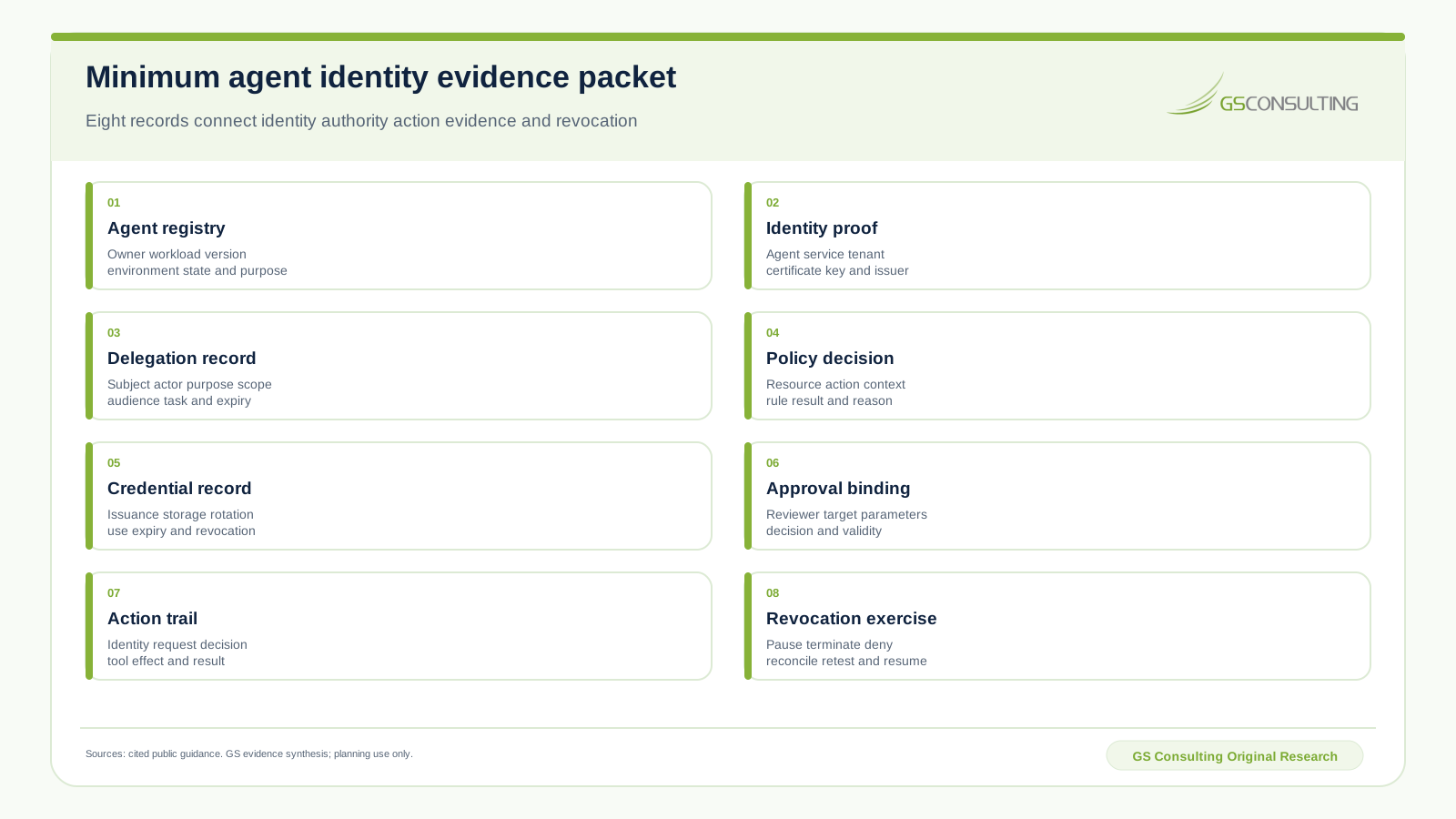
The packet needs eight connected records: agent registry, identity binding, delegation record, effective permission view, policy decision record, credential and revocation record, monitoring and review record, and action accountability trail.
The effective permission view matters because configured roles do not always equal usable authority. Resolve inherited groups, conditional policy, tool translation, target permissions, cached grants, and delegation. Show both allowed and prohibited actions. Test the prohibited set.
The action trail should connect task identifier, subject, agent actor, agent version, credential or token identifier, policy version, resource, operation, parameters, approval, result, exception, and downstream record. Protect sensitive values while preserving enough detail to investigate. Evidence design should follow applicable privacy, security, contract, and retention requirements.
A Practical Agent IAM Implementation Plan
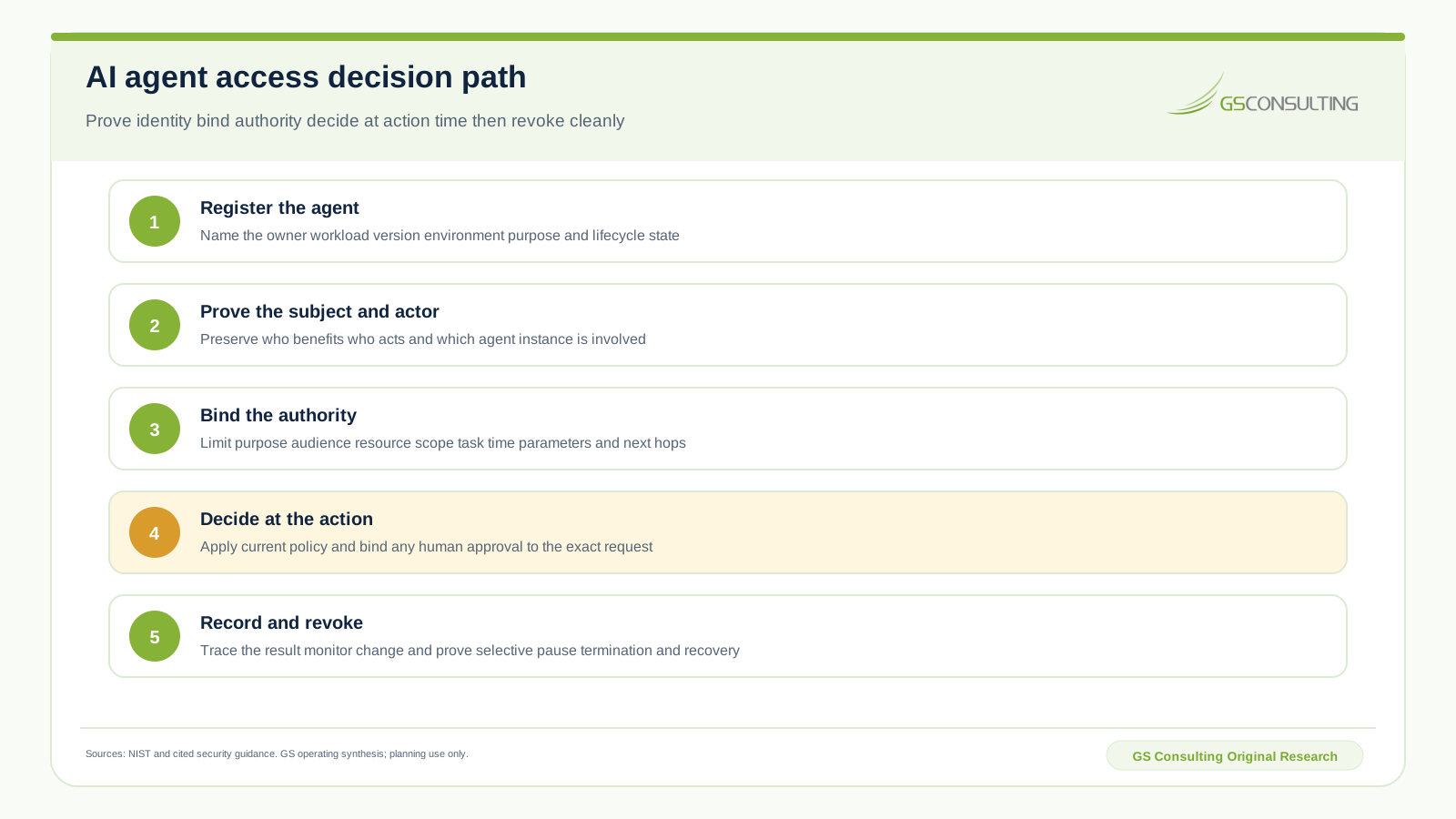
- Bound the use case. Name the owner, goal, subjects, agents, data, tools, targets, allowed effects, prohibited effects, and stop conditions.
- Assign distinct identities. Register each production agent and bind it to a platform identity separated by environment and responsibility.
- Design delegation. Preserve subject and actor, then constrain purpose, audience, task, resource, scope, duration, rate, and revoke handle.
- Enforce action policy. Put the final decision at a trusted control point and bind consequential approval to the exact proposed action.
- Isolate credentials. Keep secrets outside model context, issue short duration access, rotate it, and inventory every credential path.
- Test denials and revocation. Exercise prohibited operations, wrong resources, stale tokens, changed tasks, cached sessions, queued jobs, and peer delegation.
- Connect evidence. Correlate registry, identity, delegation, policy, approval, tool, target, action, monitoring, and review records.
- Review every material change. Reassess access after changes to the agent, model, prompt, tools, resources, data, policy, provider, protocol, owner, or workflow consequence.
The decisive operating standard is simple: no production agent action unless the organization can name the actor, preserve the subject, prove the bounded grant, show the action time policy decision, and revoke the authority before the next request.
Sources and Research Notes
- NIST NCCoE Software and AI Agent Identity and Authorization Concept Paper
- NIST SP 800-207 Zero Trust Architecture
- NIST SP 800-207A Cloud Application Access Control
- NIST SP 800-63-4 Digital Identity Guidelines
- IETF RFC 8693 OAuth 2.0 Token Exchange
- NSA and International Partners Careful Adoption of Agentic AI Services
- OWASP Top 10 for Agentic Applications for 2026
- A2A Protocol Specification
- Model Context Protocol Authorization Specification
- CISA Identity and Access Management Recommended Best Practices
Frequently Asked Questions About AI Agent Identity and Access Management
What is AI agent identity and access management?
AI agent identity and access management is the set of identity, authentication, authorization, delegation, credential, monitoring, revocation, and accountability controls that governs what an agent can do and proves who or what caused each action.
Should every AI agent have its own identity?
A production agent that acts against protected resources should normally have a distinct workload identity. Shared service accounts weaken attribution, selective revocation, permission review, and incident containment. The exact mechanism depends on the platform and system boundary.
Can an AI agent use a human user's token?
An agent may act on behalf of a human through a controlled delegation pattern, but copying or broadly reusing the human token hides the acting party and often grants more access than the task needs. Preserve the human subject and the agent actor, then bind scope, resource, purpose, duration, and revocation.
How does least privilege work for AI agents?
Least privilege for an AI agent means narrowing authority by resource, operation, data class, task, tenant, purpose, time, rate, and consequence. The downstream system should enforce the decision when the action occurs rather than trusting the agent to remember a prompt rule.
What evidence should an AI agent IAM review require?
Require an agent registry, identity binding, delegation record, effective permission view, policy decision record, credential inventory, revocation test, monitoring thresholds, access review, and an action record that connects the human or service subject, agent actor, tool, target, parameters, result, and approval.
Do NIST identity guidelines define a complete AI agent IAM architecture?
No. NIST publications provide useful zero trust, workload identity, and digital identity principles, while a 2026 NCCoE concept paper frames open agent identity and authorization questions. Organizations still need a system specific design, tests, legal review, contract review, and accountable approval.
Do not let an agent borrow invisible authority.
GS Consulting helps teams build distinct agent identity, bounded delegation, action policy, revocation tests, and evidence that survives operational review.
Build the Agent IAM Control Chain