Agentic AI | | 27 min read
AI Agent Change Management and Release Controls

Key Takeaways
Approve the whole agent release, not one edited file
Tool and action schema changes score 97
They lead the GS release impact model because one schema edit can change authority, data access, external effects, behavior, and recovery burden at once.
The approved object is a manifest
The decision must bind model, prompt, policy, tools, identity, memory, retrieval, orchestration, runtime, monitoring, tests, rollout, and rollback.
Rollback includes state and external effects
Restoring code does not remove a poisoned memory, queued retry, changed permission, sent message, or modified downstream record.
AI agent change management must govern the full decision system. A safe release is not a new prompt or model in production. It is an approved version set with bounded authority, representative test proof, a controlled rollout, a real rollback path, and evidence that the system behaved as expected.
Agents combine parts that can change independently: models, prompts, policies, identities, permissions, tools, schemas, targets, memory, retrieval, orchestration, runtimes, monitoring, and operator interfaces. Any one of them can change behavior. Several can change without a code commit. A mature release process treats the combined configuration as the release object.
The Agentic AI hub connects change control to the broader operating system. Use AI Agent Testing and Evaluation for Production to build release proof, AI Agent Identity and Access Management to bound authority, AI Agent Memory Security to govern persistent state changes, and AI Agent Incident Response to manage a failed release. GS Consulting implements this control system through Secure Enterprise AI Strategy.
Turn agent releases into accountable decisions.
GS Consulting helps teams define change classes, release manifests, test gates, approval records, rollout controls, rollback proof, and production observation.
Plan a Release Control WorkshopAI Agent Change Management: The Short Answer
Register every production agent and its approved version set. Route a proposed change through impact review based on authority, external effect, data exposure, behavior, evidence, and recovery. Test the exact release candidate in representative conditions. Require an accountable approval. Release in bounded stages. Observe the defined signals. Roll back or stop when a threshold breaks. Preserve the complete decision record.
Not every edit needs the same ceremony. A corrected label and a new tool permission do not carry the same consequence. Yet low effort does not equal low risk. A one line policy or schema change can expose a new target. Classification should follow changed authority and effect, not file size.
Define the Complete Change Boundary
A release manifest is the best control boundary. It should identify the model and provider configuration, system instruction, task prompts, action policy, identity, delegated subject, permissions, credentials, tool and connector versions, schemas, targets, retrieval indexes and filters, memory configuration, orchestration and peer routing, runtime, infrastructure, monitoring, evaluator, operator interface, tests, approvers, rollout, and rollback target.
Use immutable versions or hashes wherever practical. If a provider uses a moving alias, record the alias and observed underlying version. If a retrieval index is rebuilt, record the source set, filtering rule, build time, and validation. If permissions come from several systems, retain the effective permission view at approval and release.
Change detection should not depend only on the application repository. Watch identity systems, policy stores, secret systems, providers, connector catalogs, retrieval pipelines, memory configuration, runtime images, infrastructure, monitoring rules, and target APIs. An undocumented change is still a change.
Public Guidance Supports Lifecycle Change Control
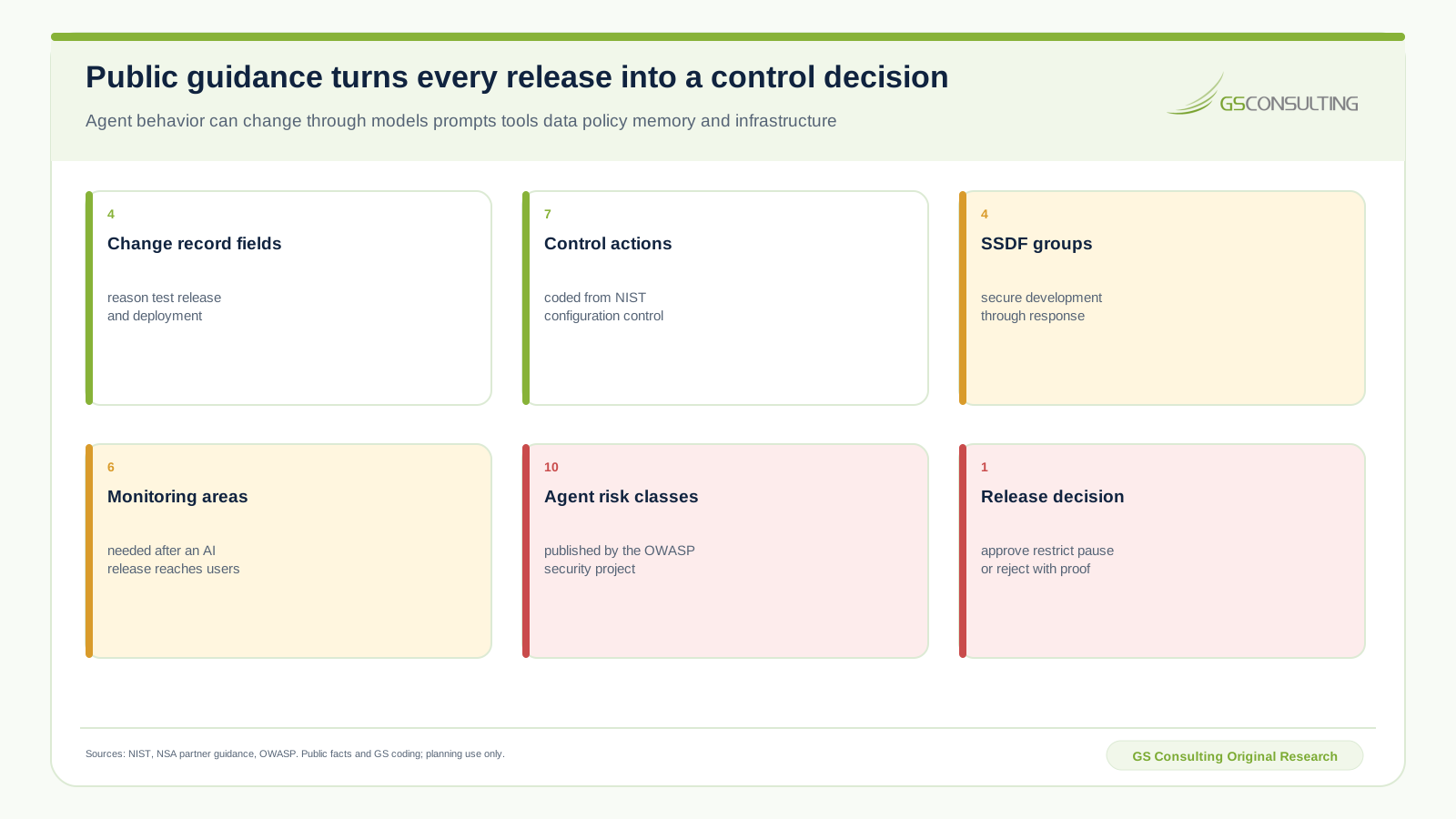
The NIST AI RMF Manage function includes response, recovery, communication, incident response, decommissioning, and change management. The NIST Secure Software Development Framework organizes secure development around preparing the organization, protecting software, producing well secured software, and responding to vulnerabilities. NIST SP 800-218A adds practices for generative AI and foundation models.
NIST SP 800-53 Revision 5 provides control families for configuration, change, access, audit, assessment, incident response, system integrity, and supply chain risk. These publications support disciplined lifecycle control, but they do not prescribe one universal agent release threshold. Each organization must map its architecture, impact, contract terms, and risk decisions.
Original Research: GS Agent Change Release Impact Index
GS Consulting built a directional planning model to answer one question: which agent change domains should receive the strongest review before release?
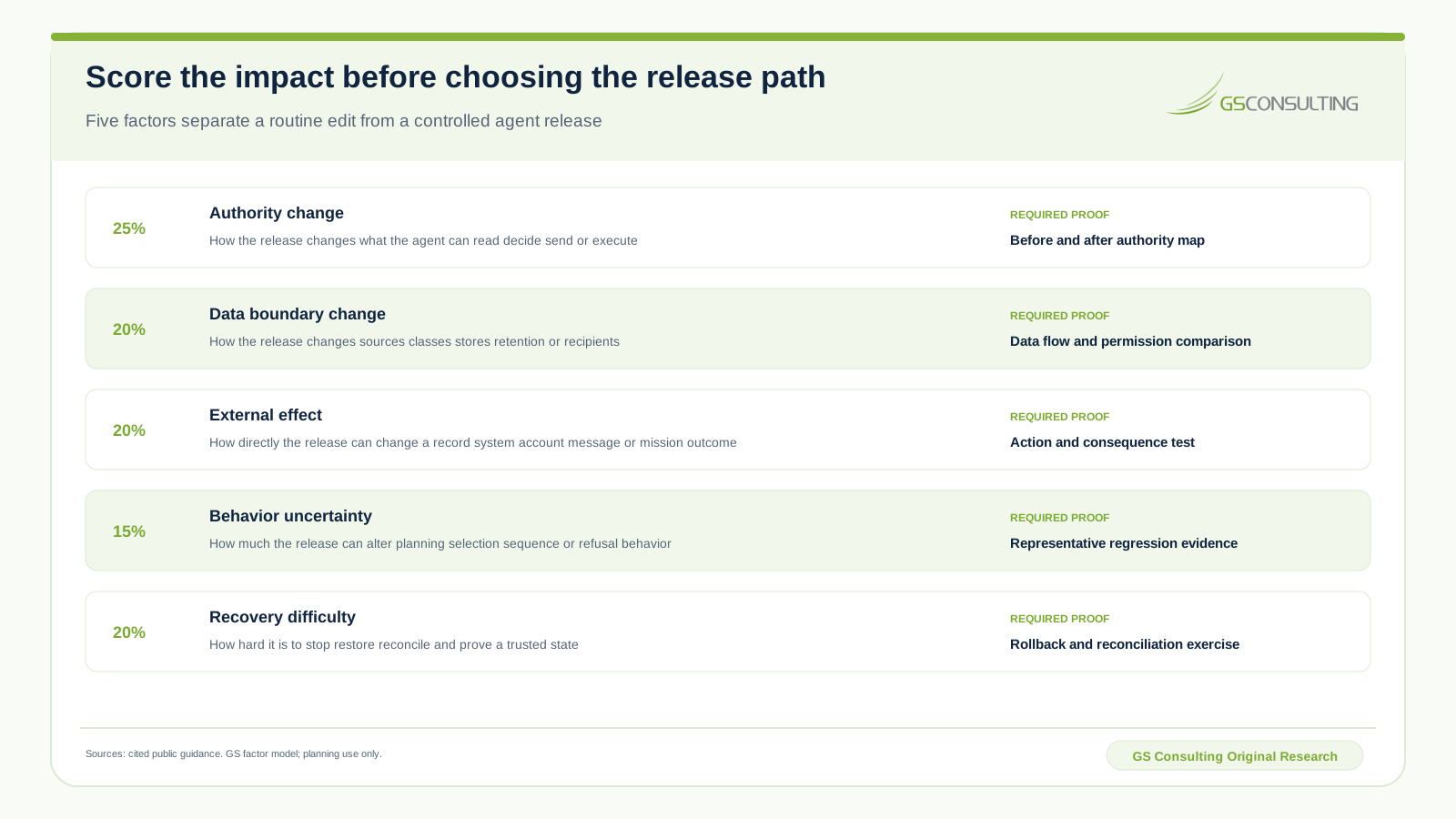
Twelve representative change classes receive GS ratings from one to five across authority change, data boundary change, external effect, behavior uncertainty, and recovery difficulty. The base case weights these factors at 25, 20, 20, 15, and 20 percent. The weighted result is scaled to 100.
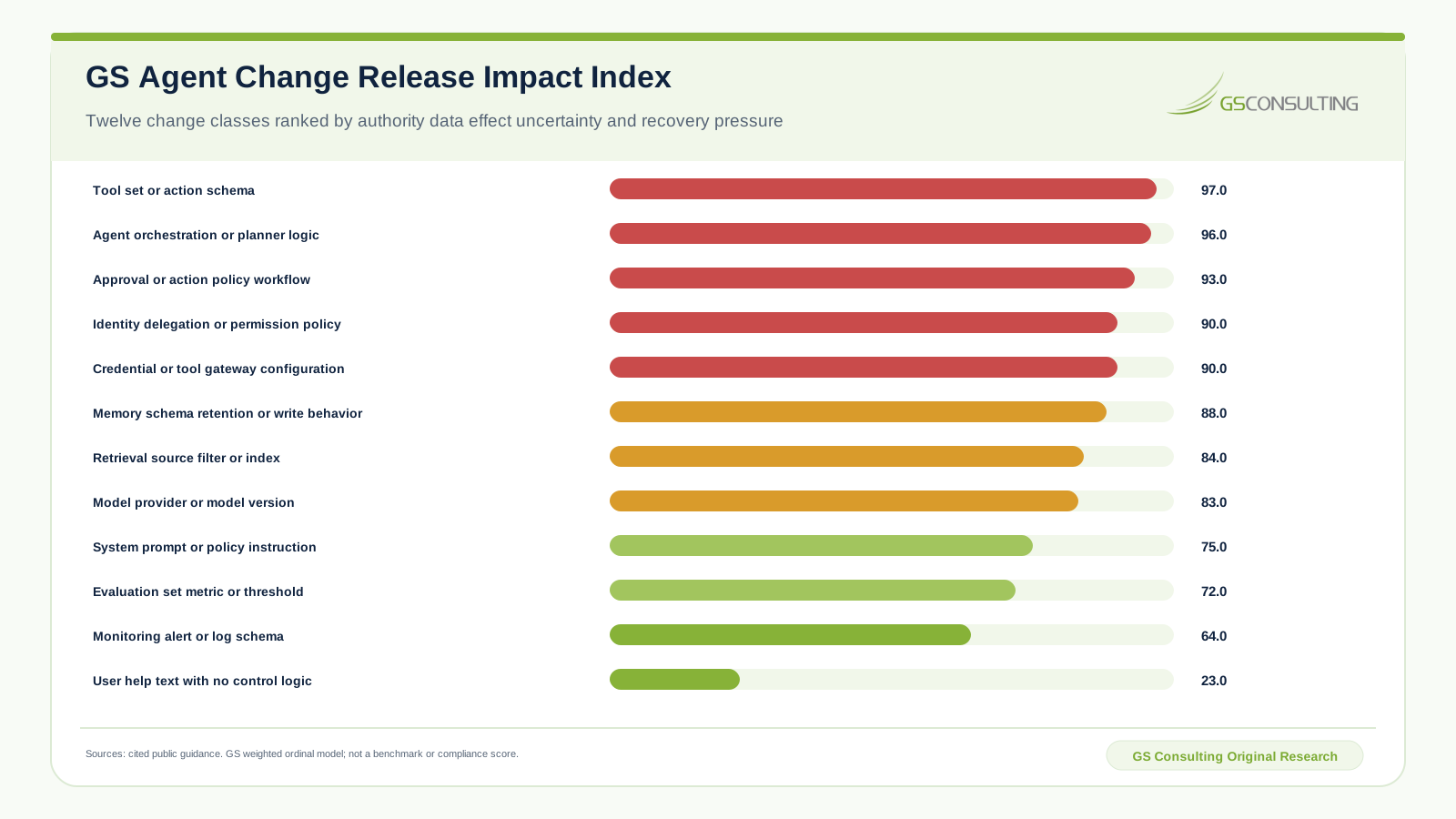
Tool set or action schema changes score 97. Agent orchestration or planner logic scores 96. Approval or action policy workflow scores 93. Identity delegation and credential gateway changes each score 90. Memory changes score 88. Retrieval changes score 84. Model or provider changes score 83. System instruction changes score 75. Evaluation changes score 72. Monitoring changes score 64. User help text with no control logic scores 23.
The alternate case moves five points toward behavior uncertainty and recovery difficulty and reduces authority and external effect weights. No score moves by more than two points. The leaders remain stable. That is a directional stability check, not external validation. The ratings, weights, classes, and thresholds are GS assumptions and should be replaced with local architecture, incident data, release history, and approved risk criteria.
Classify Change by Authority and Effect
Routine changes remain inside the approved purpose, authority, data classes, targets, model behavior boundary, and recovery design. They still need versioning, automated tests, an owner, and a retained release record. Examples may include a tested label correction or an observation rule that cannot change action authority.
Material changes can alter task behavior, data use, tool parameters, target selection, routing, memory, retrieval, evidence, monitoring, or recovery. They require documented impact review, representative evaluation, security tests, approval, rollout limits, and observation.
Authority changes add or broaden identities, permissions, tools, targets, write capability, data access, delegation, peer propagation, rate, duration, or automatic approval. Treat them as the strongest release class unless a more demanding local rule applies. A small configuration diff can create a large authority change.
Emergency changes address an active incident or urgent exposure. Speed can change the sequence, but not the need for ownership, scope, testing, approval, monitoring, rollback, and later review. Record why the emergency path was used and when the normal evidence will be completed.
Run a Traceable Impact Review
Describe the current and proposed state. Identify every affected version and dependency. Then ask whether the change alters purpose, users, data classes, regions, identity, permission, tools, targets, external effect, peer behavior, memory, retrieval, monitoring, human approval, evidence, cost, performance, provider dependency, incident response, or recovery.
Trace the change in both directions. A new tool can require new permissions, logs, tests, alerts, approvals, and incident steps. A new model can alter tool selection, refusal, output shape, cost, latency, and evaluation validity. A new retrieval filter can change source coverage and which protected data enters the task.
State what does not change and how that claim was verified. Reviewers should be able to distinguish evidence from assumption. If the team cannot determine the effective authority or exact production version, the change is not ready for approval.
Test the Exact Release Candidate
Use the production version set, representative identities, permissions, tools, target schemas, retrieval sources, memory, retry policy, peer routing, monitoring, and approval paths. A model benchmark cannot approve the whole release. A unit test cannot prove an external effect is safe.
Run expected tasks, edge cases, prohibited requests, permission boundaries, prompt injection, unsafe content, sensitive data handling, malformed tool input, target rejection, duplicate and retry behavior, peer propagation, monitoring, stop controls, rollback, and recovery. Use multiple attempts where model variation matters. Preserve the conditions, sample size, failures, exclusions, and decision rule.
Define blocking failures before the run. Unauthorized action, approval bypass, sensitive disclosure, unsafe duplicate effect, broken containment, untraceable activity, or failed recovery should normally stop a release when those outcomes violate the approved operating boundary. Averages must not hide a single material failure.
Approve, Release, and Preserve Rollback
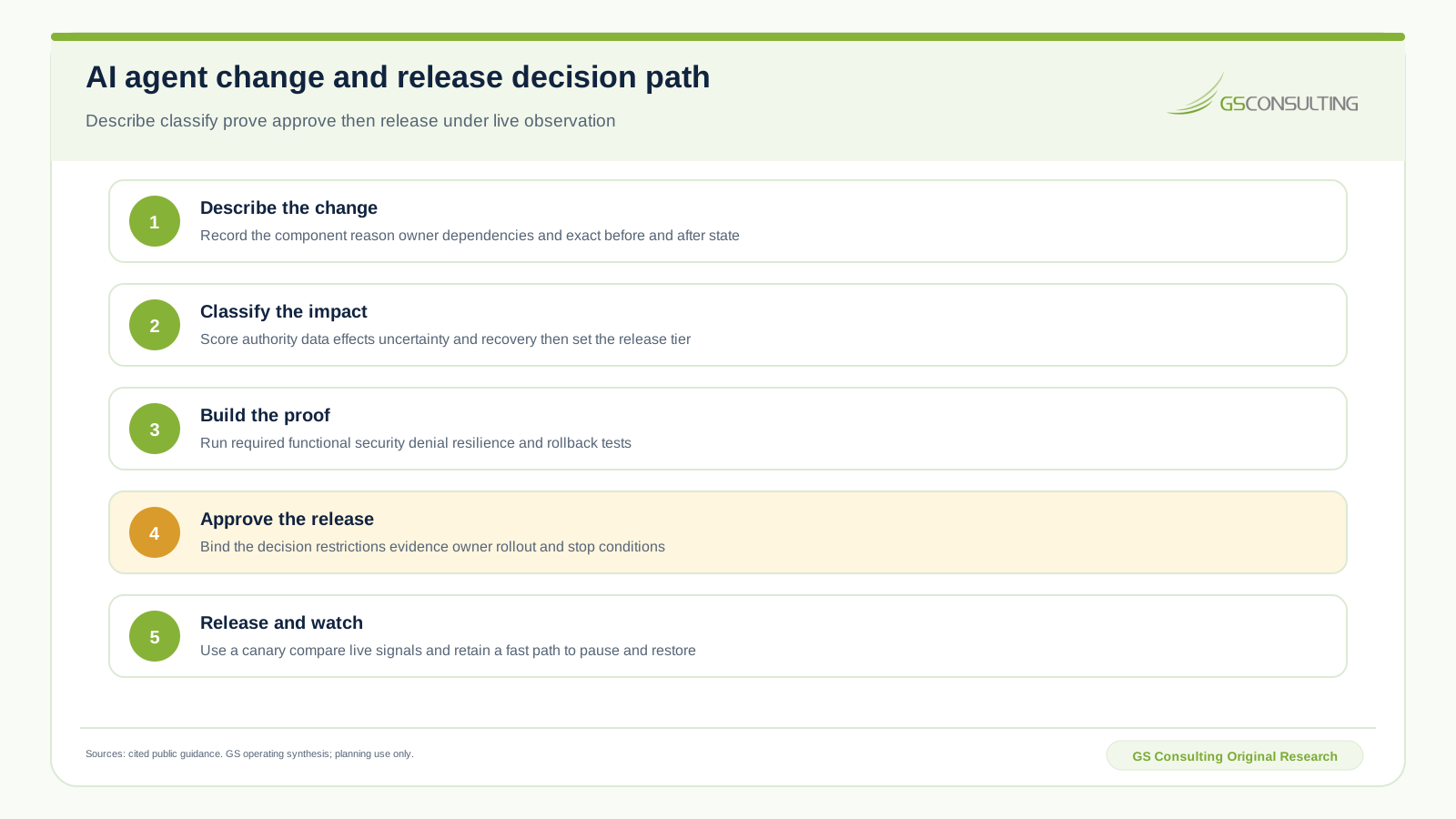
The approval should name the exact manifest, permitted purpose, users, identities, data, tools, targets, operating limits, exceptions, test evidence, residual risk, rollout stage, observation window, rollback target, expiration, and accountable approver. Approval of a project name is not approval of a release.
Use staged exposure when consequence warrants it. Limit users, tasks, targets, transaction value, rate, geography, or duration. Keep the previous approved version available and verify the switching path. Pause when the observed system differs from the approved manifest.
Rollback is a business state operation. Restore code and configuration, then address credentials, memory, queues, retries, peer tasks, external records, messages, transactions, and permissions created by the changed release. Some effects can be reversed. Some need compensation. Some can only be contained and documented. Decide that before release.
Observe the Production Release
Define observation signals during impact review, not after deployment. Monitor task success, denied actions, permission changes, tool selection, target errors, retries, duplicate effects, sensitive data signals, human overrides, latency, cost, peer propagation, memory writes, drift, containment, and rollback readiness as relevant.
Every threshold needs an owner and response. Distinguish warning, restriction, pause, rollback, incident declaration, and retirement. Preserve the decision, not only the alert. A release is not complete when deployment succeeds. It is complete when the observation window closes with current evidence and accountable acceptance.
Six Change Control Failures to Eliminate
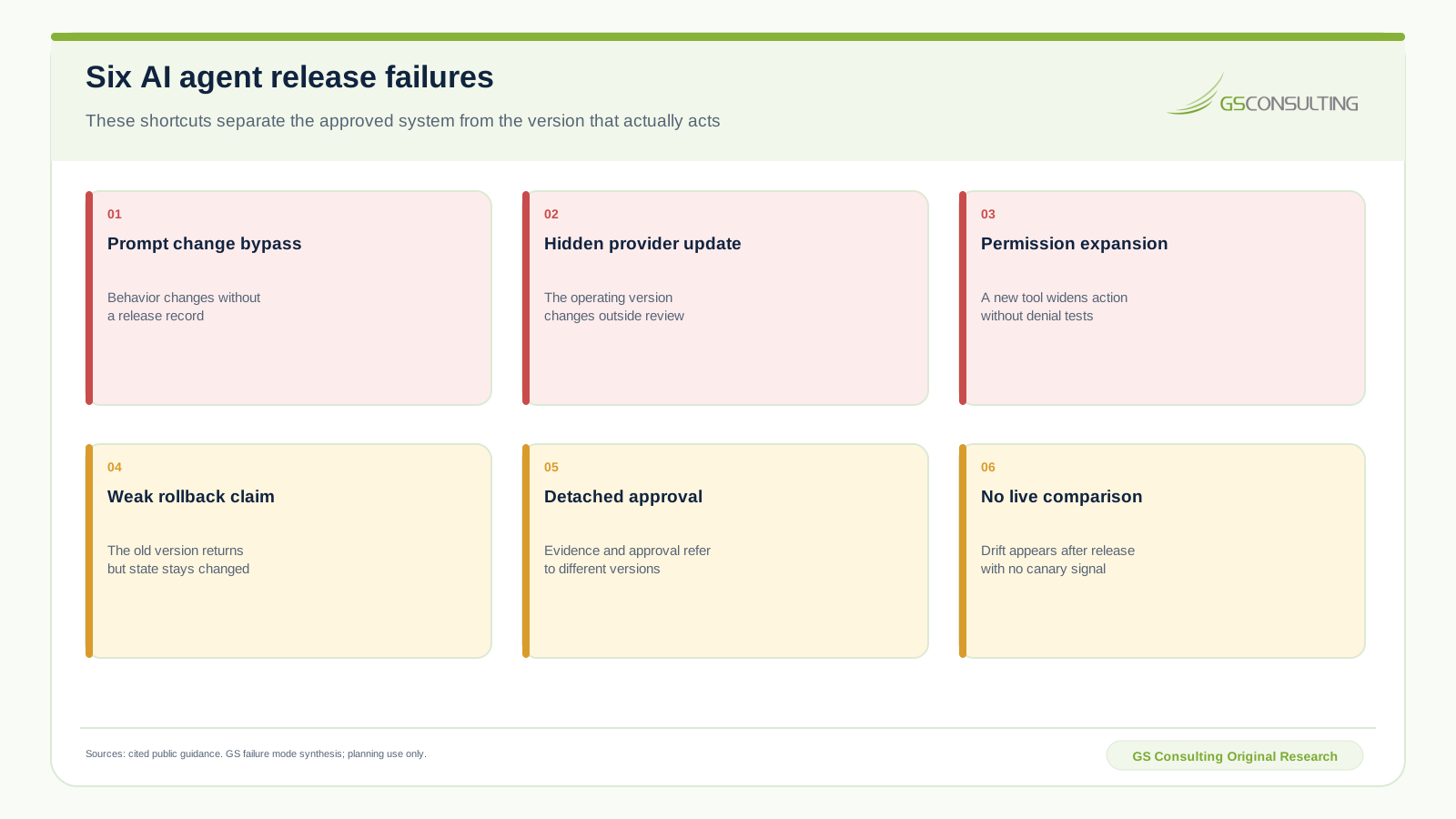
- Approving only the prompt or model. Identity, tools, policy, memory, retrieval, and runtime remain outside the decision.
- Classifying by engineering effort. A one line permission change receives weak review despite major authority impact.
- Testing a simplified environment. Production identities, targets, retries, and state create untested behavior.
- Losing the version set. The team cannot reconstruct what was approved or operated.
- Calling code restoration rollback. External actions and persistent state survive the release.
- Monitoring without response. Alerts appear, but no threshold changes authority.
The Minimum AI Agent Release Evidence Packet
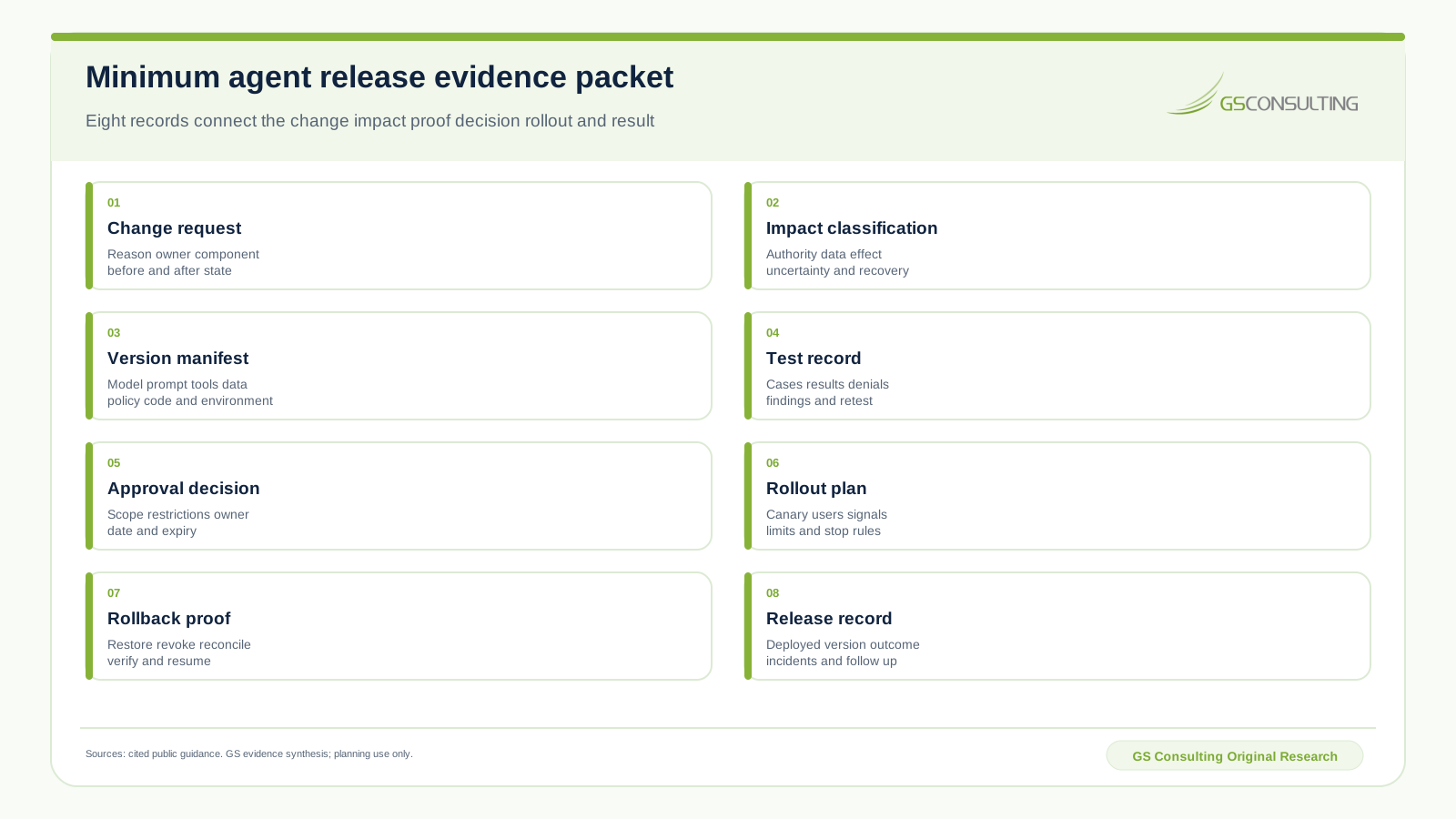
Keep eight linked records: change request; release manifest; impact assessment; test and evaluation record; approval decision; deployment receipt; observation record; and rollback, closure, or supersession record. Use stable identifiers for the agent, change, release, test run, approval, deployment, incident, and corrective action.
The packet should prove what changed, why, who owned it, which authority and data boundary applied, what was tested, what failed, who approved, exactly what reached production, how exposure was limited, what monitoring showed, whether rollback remained viable, and when the release was closed or replaced.
A Practical Implementation Plan
- Inventory the current release. Create a manifest for each production agent and assign business, technical, security, data, and operating owners.
- Define change classes. Write routine, material, authority, and emergency criteria with required evidence and approvers.
- Build test and release gates. Bind automated and human decisions to the exact manifest, blocking failures, rollout limits, and rollback target.
- Connect production observation. Give every threshold an owner, clock, and action. Link alerts, incidents, corrections, and release records.
- Exercise rollback and recovery. Include memory, queues, credentials, permissions, peer work, and external effects, not only the application package.
Primary Sources
- NIST AI Risk Management Framework 1.0
- NIST AI RMF Core, Manage
- NIST AI 600-1
- NIST SP 800-218
- NIST SP 800-218A
- NIST SP 800-53 Revision 5
- OWASP Top 10 for Agentic Applications 2026
- NSA, Careful Adoption of Agentic AI Services
- NIST, Insights from an AI Agent Security Competition
Suggested Future Reading
- AI Agent Testing and Evaluation for Production
- AI Agent Identity and Access Management
- AI Agent Lifecycle Management and Oversight
- Human in the Loop Workflow Architecture
Frequently Asked Questions
What is AI agent change management?
AI agent change management is the controlled process for identifying a proposed change, determining its impact, testing the exact version set, approving its authority and operating limits, releasing it safely, monitoring the result, preserving rollback, and retaining evidence.
Which AI agent changes require review?
Review changes to identity, permissions, action policy, tools, targets, schemas, orchestration, peer routing, memory, retrieval, model, provider, prompts, monitoring, runtime, infrastructure, and operator experience when they can alter behavior, authority, evidence, exposure, or recovery.
Can a prompt change use the normal software release process?
It can use the same workflow, but the evidence must match the change. A prompt can change task interpretation, tool selection, data handling, escalation, or refusal behavior. Version it, assess impact, run representative task and security tests, approve the exact version, and monitor the release.
What should an AI agent release manifest contain?
Record the approved versions and hashes for model, provider configuration, prompts, policies, tools, schemas, identities, permissions, memory, retrieval sources, orchestration, runtime, monitoring, tests, approvers, rollout limits, rollback target, and observation plan.
How do you roll back an AI agent safely?
Restore the approved code and configuration, but also reconcile memory, queues, retries, credentials, external records, tool results, and data changes. Test the rollback path before release and define which effects can be reversed, compensated, or only documented.
Does a vendor model update count as an AI agent change?
Yes when it can change system behavior or evidence. Record the provider event, affected versions and regions, evaluation result, operating decision, and contingency. A version alias should not silently move a production agent across an unreviewed behavior boundary.
Bottom Line
Agent change control is where engineering proof becomes operating authority. The release record must cover everything that can change the decision or its evidence.
The standard is firm: no material change without impact review, no production authority without proof of the exact release, and no release without tested observation, rollback, and recovery.
Make every agent release reconstructable.
GS Consulting helps teams build change classification, release evidence, approval gates, rollout controls, monitoring, rollback, and recovery for production AI agents.
Start the Conversation