Enterprise AI Strategy | | 24 min read
What Are Agentic Workflows? A Practical Guide

Key Takeaways
The useful question is not whether an agent can act. It is how much authority the workflow should grant.
Action closes the loop
A model becomes part of an agentic workflow when it can plan, use tools, observe results, and continue toward a bounded goal.
Authority sets the burden
Sensitive data, powerful tools, broad autonomy, hard to reverse actions, and weak observability compound risk.
Earn autonomy in stages
Begin with read only work, prove the evidence trail, then add one permission and one failure test at a time.
Agentic workflows are not chatbots with longer prompts.
They are action systems.
A chatbot usually answers and stops. An agentic workflow can gather new context, choose a tool, change a record, inspect the result, and decide what happens next. That loop is the point. It is also where the risk begins.
The practical definition is simple: an agentic workflow gives an AI system a bounded goal, approved context, permissioned tools, memory or state, a way to verify results, and a stop condition. If any of those pieces is vague, the workflow is not ready for meaningful authority.
This guide explains what agentic workflows are, where they make sense, how to control them, and how to move from supervised work to useful autonomy without pretending the model is an employee. It also connects to the broader Agentic AI insights hub and GS Consulting's secure enterprise AI strategy work. Before authority expands, use the AI Agent Risk Assessment to connect threats to action, data, evidence, and recovery. For workflows that delegate across agents, use Multi Agent AI Security to control each handoff.
What Are Agentic Workflows?
An agentic workflow is a software process in which an AI system can pursue a goal across more than one step. It receives an objective, gathers allowed context, forms or updates a plan, calls approved tools, observes what happened, and either continues, pauses, escalates, or stops.
That definition separates an agent from three things that are often mislabeled. A prompt chain passes one model output into another but may have no independent choice. A rules engine follows fixed branches but does not interpret an open task. A chatbot creates language but normally cannot change the world outside its response. Agentic workflows can include all three patterns, but they add a controlled decision and action loop.
The word controlled matters. An agent does not need unrestricted access to be useful. In fact, the strongest designs are deliberately narrow. A contract review agent may read an approved document set, extract obligations, compare clauses, draft a risk note, and stop for counsel. It does not need permission to sign the contract, email the customer, or alter the source record.
Public guidance is converging around this operating reality. The NIST AI Risk Management Framework Core calls for documented roles, ongoing monitoring, inventories, retirement criteria, and clear human oversight. A 2026 NIST NCCoE concept paper, which remains preliminary, focuses on agent identity, authorization, delegation, approval, logging, and provenance. Joint NSA and partner guidance emphasizes incremental deployment, accountability, monitoring, and human oversight. These sources do not prescribe one universal architecture. They do point to the same management problem: action authority has to be named, bounded, observed, and revocable.
The Anatomy of an Agentic Workflow
Every useful agentic workflow has five operating parts.
Goal. The workflow needs an outcome narrow enough to test. “Help with operations” is not a goal. “Classify each incoming support case, attach the cited reason, and route it to one of six approved queues” is.
Context. The agent needs approved facts, current state, and a known memory policy. Context can come from documents, databases, APIs, prior steps, or a human. The workflow should know which sources are authoritative and what data it must never retrieve.
Plan. The agent chooses or updates a sequence of steps. Plans should be visible enough to inspect and constrained enough to test. A hidden plan with unlimited retries is an incident waiting to happen.
Action. Tools let the agent search, calculate, update, send, deploy, disable, purchase, or otherwise affect a real system. Tool permission is the sharp edge. The identity used for each action should have the least authority needed for that task.
Verification. The workflow checks whether the action produced the expected state. It records what happened, catches exceptions, and follows a stop, retry, or escalation rule. Without verification, automation can repeat a bad action with impressive consistency.
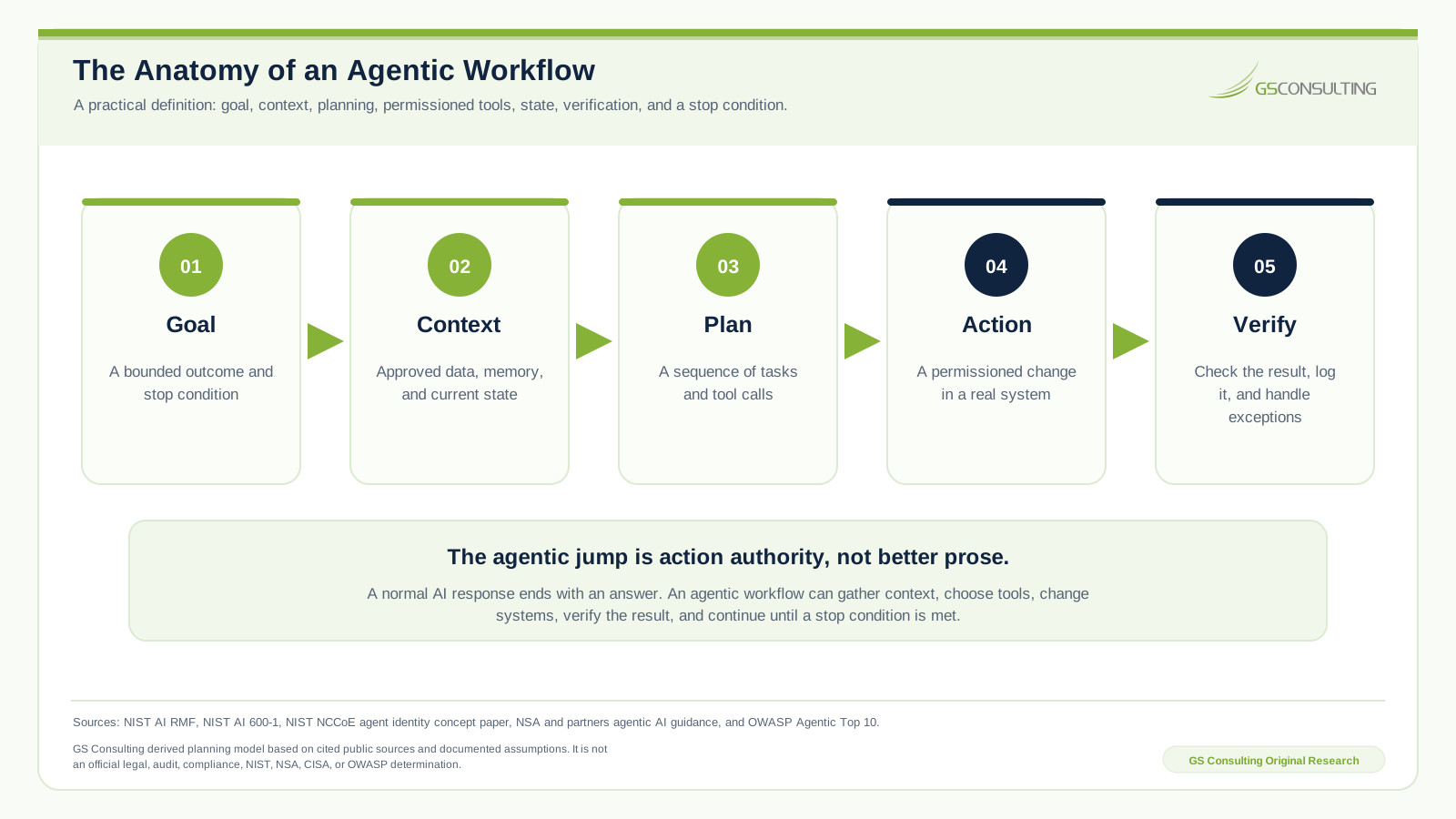
State and memory sit across the loop. State records the current case, task, or system condition. Memory carries selected information forward. Teams often treat memory as a convenience feature. It is a data store and should have scope, retention, access, and deletion rules like any other one.
Practical Agentic Workflow Examples
The best first use cases are repetitive enough to measure, variable enough to benefit from reasoning, and bounded enough to recover when the agent is wrong.
Research and briefing. An agent searches approved repositories, compares sources, creates a cited brief, flags conflicts, and stops for analyst review. It can be valuable with read only access.
Case triage. An agent reads an intake, classifies urgency and topic, requests missing fields, routes the case, and records its rationale. A person handles ambiguous or high impact cases.
Document operations. An agent extracts fields, checks completeness, compares clauses to an approved library, and prepares a structured record. If Controlled Unclassified Information is involved, the data path and destination must already be approved.
Engineering support. An agent reviews a change, runs approved tests, drafts a remediation, and opens a proposed change. Production promotion remains a separate decision. The related guide on continuous monitoring for AI agents explains how behavior and access should be observed after launch.
Incident support. An agent collects evidence, correlates alerts, recommends containment, and prepares a command. Disabling an account or isolating a system is a high consequence action. The workflow should require strict approval unless a narrowly defined emergency playbook has already authorized it.
Notice the pattern. The agent does not replace the operating model. It moves work through it. Ownership, approval, source authority, and exception handling still belong to named people.
Original Research: The GS Agentic Workflow Control Load Index
GS Consulting's derived research shows a wide control gap between drafting and action.
We reviewed five public source groups: the NIST AI Risk Management Framework, the final NIST Generative AI Profile, the preliminary NIST NCCoE agent identity concept paper, joint NSA and partner agentic AI guidance, and the community developed OWASP Top 10 for Agentic Applications. We coded their recurring control signals, then scored eight common workflow patterns across autonomy, data reach, tool authority, reversal difficulty, and observability need.
The result is the GS Agentic Workflow Control Load Index. It is a derived planning tool, not an official NIST, NSA, CISA, OWASP, legal, audit, or compliance determination. Ratings represent documented GS analyst assumptions. The public sources are not statistical benchmarks.
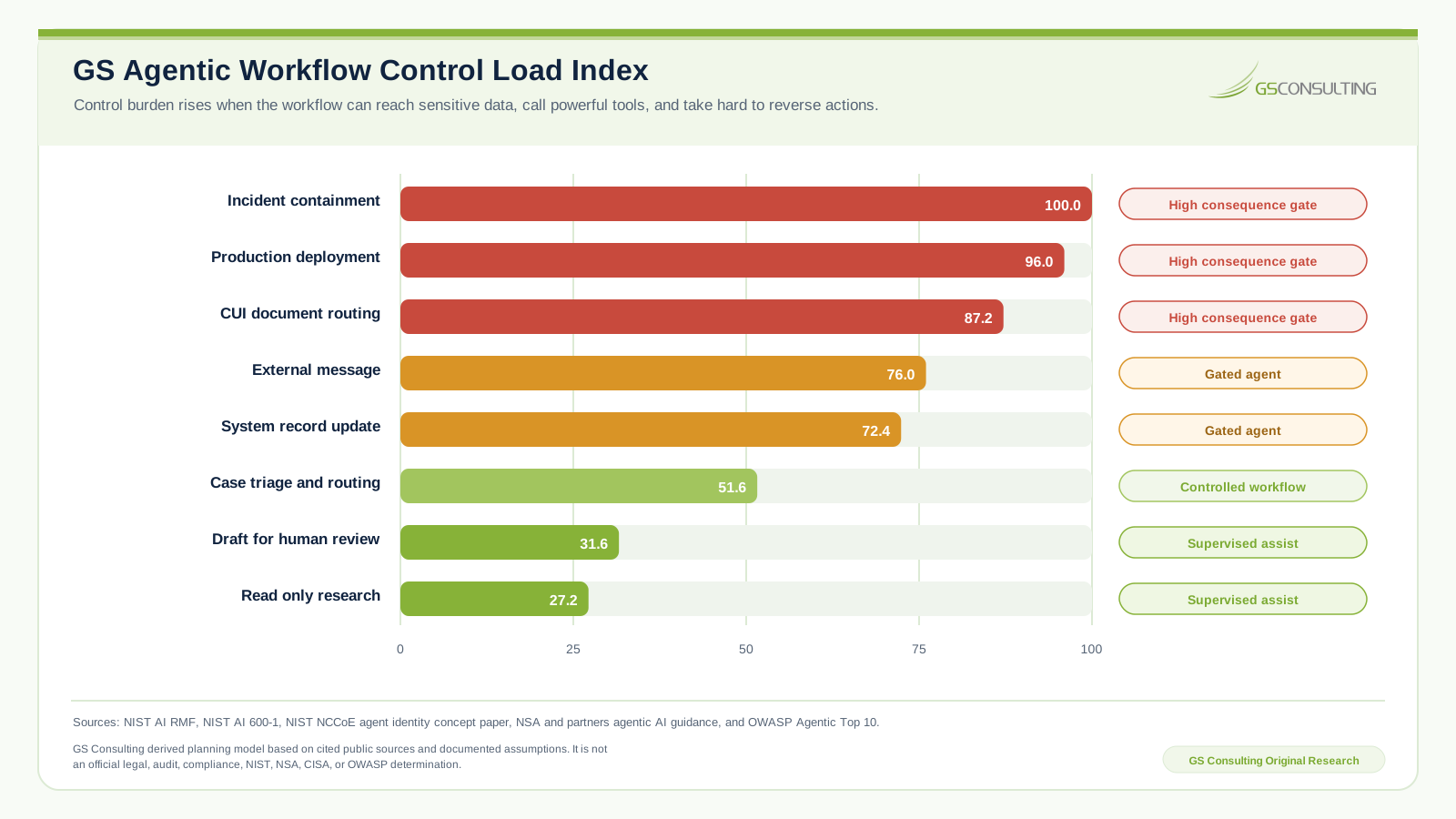
Read only research scored 27.2 and drafting for human review scored 31.6. Those are supervised assist patterns. Case triage scored 51.6, a controlled workflow. Updating a system record scored 72.4 and sending an external message scored 76.0, which moves both into a gated agent tier. Routing a CUI document scored 87.2. Production deployment scored 96.0. Incident containment scored 100.
The model does not say that a high score forbids automation. It says the workflow needs a harder gate, stronger evidence, tested recovery, and less assumed trust.
How the Control Load Model Works
The base score uses five weighted factors. Tool authority carries 24 percent, autonomy 22 percent, data reach 20 percent, reversal difficulty 18 percent, and observability need 16 percent. Each factor is rated from one to five. The score is the sum of each rating divided by five, multiplied by its weight, then multiplied by 100.
These weights make a practical claim: authority matters most, but it never acts alone. A modest tool that touches sensitive data can still create a serious problem. A powerful tool with clear rollback and excellent evidence may be safer than a weaker tool whose effects cannot be reconstructed.
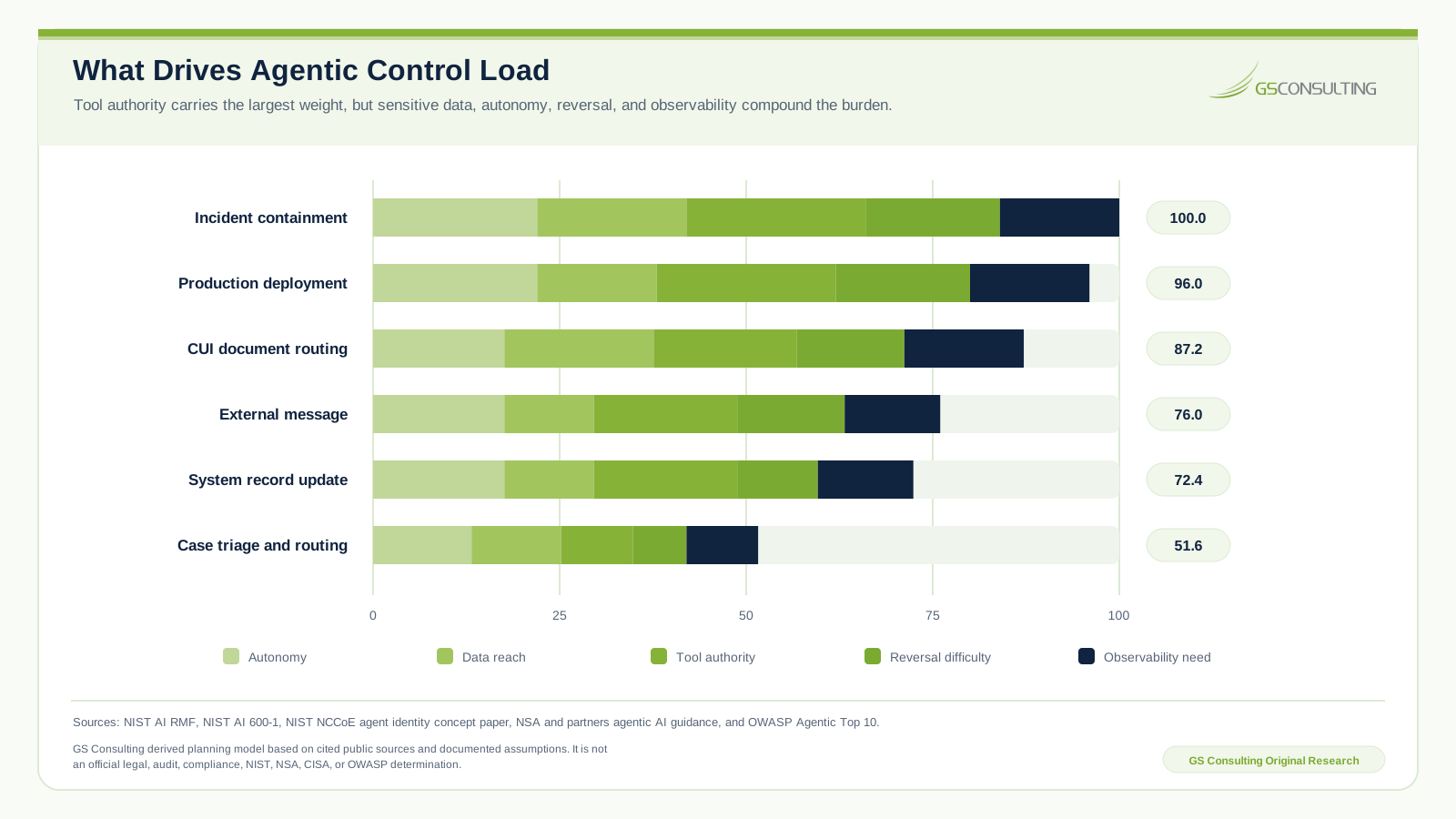
We reran the model with alternate weights that increased tool authority and reversal emphasis. No pattern changed tiers. The largest absolute score change was 1.2 points. That does not validate the model as a prediction. It shows that the planning conclusion is stable under one reasonable alternative: drafting and research belong low, while deployment and containment belong behind hard gates.
The complete source register, assumptions, ratings, formulas, scores, sensitivity results, data dictionary, and figure data are retained in the repository research package for reproducibility.
A Practical Agentic Workflow Architecture
Start with identity. The workflow should know the human requester, the agent identity, the service identity used by each tool, and the owner accountable for the result. Shared credentials erase accountability and make revocation clumsy.
Then separate reasoning from authority. A model can propose a plan without receiving permission to execute every step. A policy layer should evaluate identity, data class, requested action, destination, limits, and current state before a tool call is allowed.
Keep tool interfaces narrow. “Run any database command” is not a sensible tool. “Update the reviewed status field for this case identifier” is. The safest tool exposes the business action, validates inputs, enforces limits, and returns structured evidence.
Make verification independent where the consequence warrants it. An agent should not be the only judge of whether its own action worked. System state, policy checks, deterministic tests, or a human reviewer should confirm the result.
Finally, make pause and revocation real. Operators need to stop new actions, revoke credentials, quarantine a workflow, preserve evidence, and resume only after review. The AI agent lifecycle management guide covers ownership from registration through retirement.
Put Control Gates on the Action Path
Governance that lives in a policy document but not in the action path will lose to the workflow. Put the control where the decision happens.
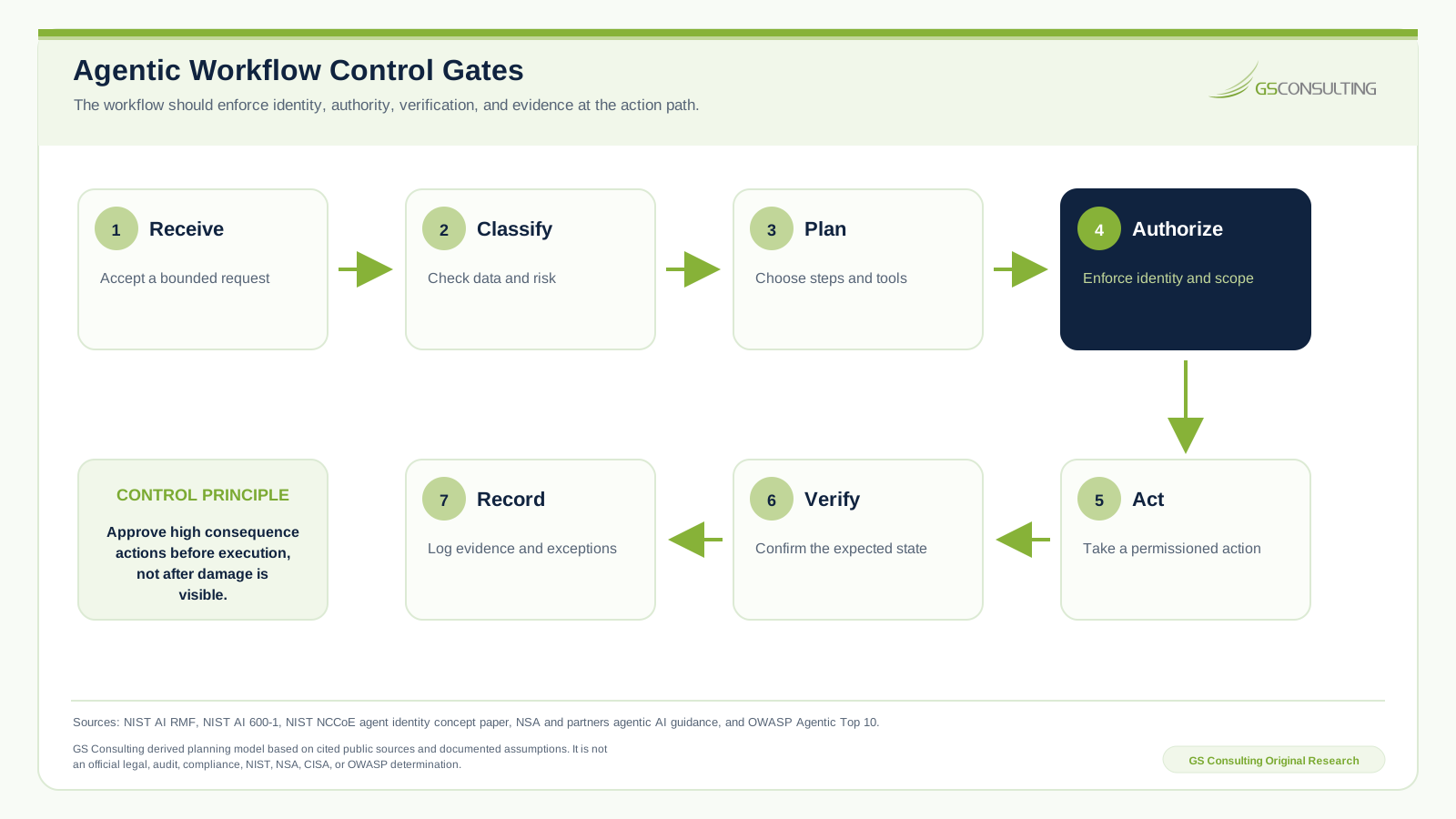
The receive gate checks that the request is bounded. The classify gate establishes data and consequence. The plan gate checks that proposed steps use approved tools. The authorize gate enforces identity, scope, limits, and any human approval. The action gate performs only the permitted change. Verification confirms expected state. Recording binds the input, plan, tool call, result, exception, and approver into one trace.
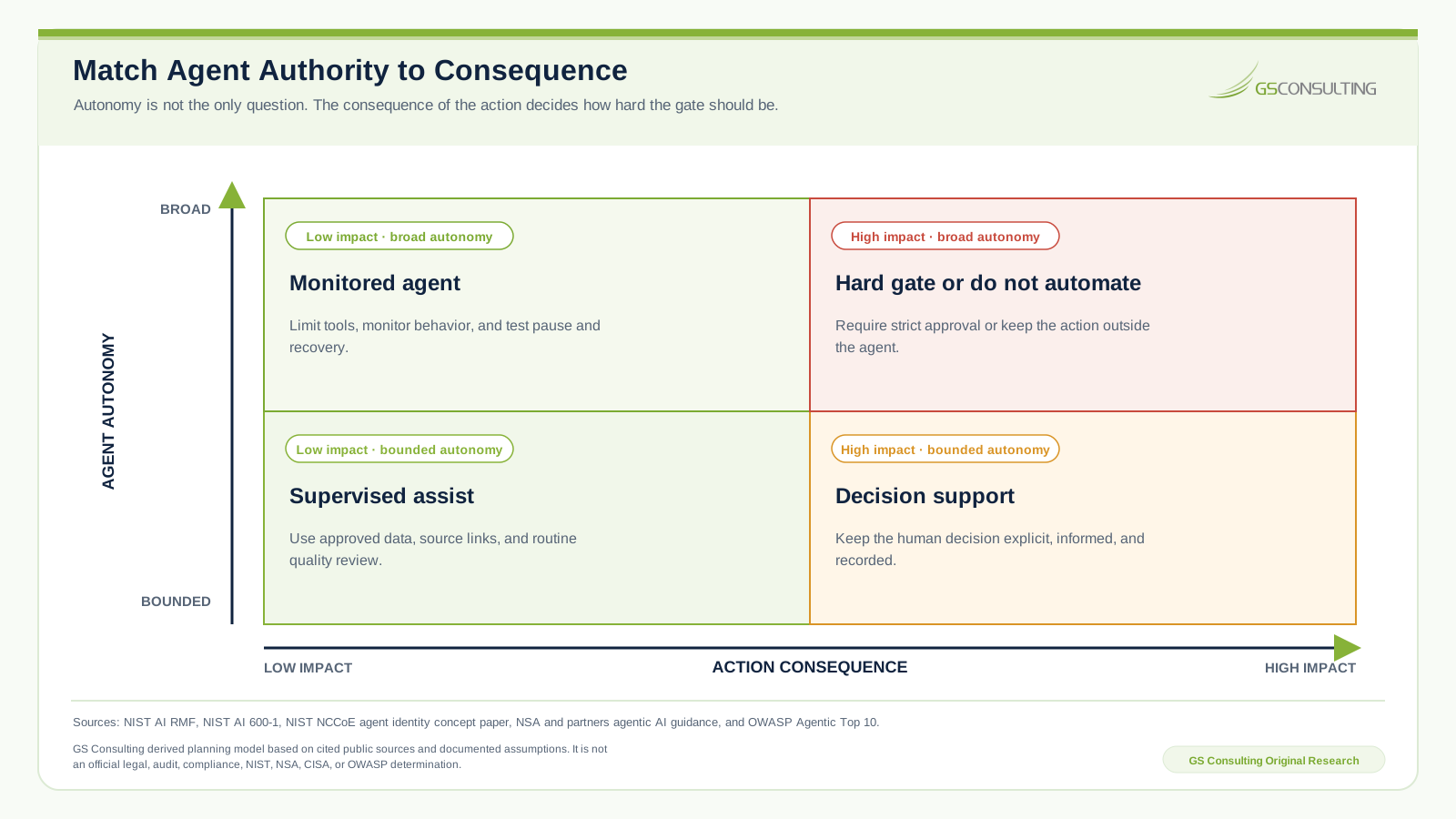
Approval should depend on consequence, not fashion. Low impact research can run broadly with source checks. A high impact decision with bounded autonomy may remain decision support. Broad autonomy in low impact work needs limits and monitoring. Broad autonomy in high impact work needs a hard gate or should remain outside the agent.
A Safer Rollout Plan
First, baseline the manual workflow. Record volume, cycle time, error types, handoffs, approval points, and exception rates. If you cannot describe the current work, you cannot prove the agent improved it.
Second, start read only. Let the agent gather context and recommend the next step. Test source fidelity, retrieval boundaries, refusal, malicious inputs, missing data, and operator understanding.
Third, add one bounded action. Choose an action with limited scope and easy reversal. Use a dedicated identity and a business level tool. Enforce limits outside the model.
Fourth, run in shadow mode. Compare the agent's proposed action to the human decision without executing it. Track disagreement by cause, not only overall accuracy.
Fifth, gate live actions. Require approval at the consequence boundary. Measure how often people approve without review. A rubber stamp is not a control.
Sixth, rehearse failure. Test stale context, tool outage, partial completion, duplicate requests, prompt injection, excessive retries, revoked access, and emergency stop. Recovery is part of the product.
Seventh, expand one permission at a time. New data, tools, destinations, or autonomy should trigger a fresh review. The operating standard is earned authority, not assumed maturity.
The Minimum Evidence Packet
A controlled agentic workflow should leave enough evidence to answer four questions: what acted, under whose authority, on which data, and with what result.
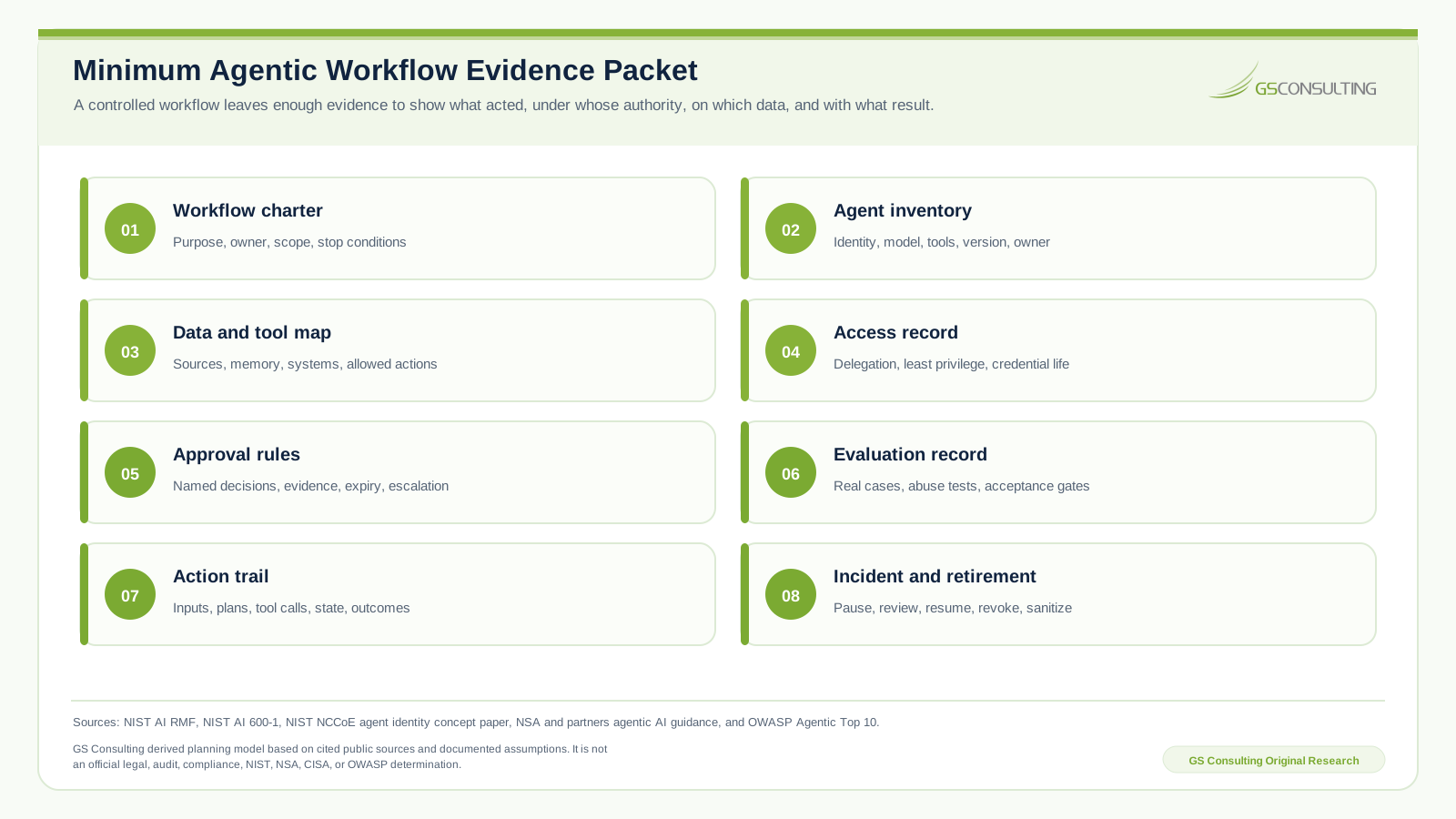
Keep a workflow charter with purpose, owner, scope, and stop conditions. Maintain an agent inventory with identity, model, version, tools, and owner. Map data sources, memory, systems, and allowed actions. Record delegation, least privilege, and credential life. Preserve approval rules, evaluation results, inputs, plans, tool calls, state changes, outcomes, incidents, pauses, and retirement decisions.
Do not call that packet compliance. It is preparation and operating evidence. The actual obligation depends on the contract, data, system, and assessment boundary.
Frequently Asked Questions
What are agentic workflows in plain English?
They are AI powered workflows that can choose steps and use tools to complete a bounded goal. They do more than answer. They act, check what happened, and continue or stop under defined rules.
What makes an agentic workflow safe?
No single feature does. Safety comes from narrow goals, approved context, dedicated identity, least privilege, policy enforced tool calls, consequence based approval, independent verification, full logging, tested recovery, and active ownership.
Should an agent ever deploy to production?
It can prepare, test, and recommend a deployment. Direct promotion is a high consequence action and scored 96.0 in the GS planning model. It should require strict approval, exact artifact identity, rollback readiness, and strong evidence unless a narrowly authorized operating case justifies otherwise.
Where should a regulated team begin?
Begin with read only research over approved sources. Prove the source boundary, evaluation, logging, pause, and incident path. Then add one reversible action. Broad autonomy should be the result of operating evidence, not the start of the pilot.
Before choosing an agent at all, use the AI agents vs RPA vs traditional automation comparison to confirm that the workflow actually needs variable path or tool selection.
Design authority before you deploy autonomy.
GS Consulting helps regulated organizations choose agentic workflows, map data and tools, design approval gates, test failure paths, and build the evidence needed to operate them with confidence.
Request an Agentic Workflow ReviewThe operating standard is simple: no agent gets more authority than the workflow can explain, observe, stop, and recover.